Courmayeur Mount Blanc : Ski, Cuisine, Cellars, and the Culture of Italy’s Aosta Valley
Every skier chooses a resort for a reason. Some chase black runs and off piste routes that test nerve and stamina. Others look for forgiving blues and long cruisy reds where confidence can build over a week. For some, it is about scenery and what fills the hours between lifts, winter walks, good food, a town with a pulse. And then there is the question of après ski. There are resorts where the party begins before the boots come off, and there are places that offer the opposite, where conversation replaces a DJ set and the bar feels like an extension of someone’s home rather than a nightclub at altitude.
In Courmayeur, you do not come here simply for pistes or parties. You come because it is a real Alpine town at the foot of Mont Blanc, shaped by generations where the experiences you’ll find and the food and wine you’ll love are not what they do, but who they are.
Courmayeur, Italy at Its Peak in the Aosta Valley
It is known as Italy at its Peak and home to the highest point in western Europe, Monte Bianco, or as the rest of the world calls it, Mont Blanc. Snow capped jagged peaks rise like a crown, framed by dark pine forests that cling to the slopes below. To the families of the valley, the mountain is not a view but a constant presence, woven into life and identity. Generations began as farmers, later guiding early explorers and skiers from Milan, Britain, and beyond, turning the mountain into a source of livelihood through tourism, food, and wine. Geographically, this is as far north as Italy goes. France lies just beyond the massif, and the cultural overlap is evident, unmistakably Italian yet shaped by its proximity to France and Switzerland.

Courmayeur sits at 1,224 metres in Italy’s Aosta Valley, directly beneath Mont Blanc. At 4,808 metres, it dominates every line of sight. You do not glimpse it between buildings. It is simply there, filling the horizon, its glaciers catching light even on flat grey days. Courmayeur is built at its foot, not near it. The centre is compact and coherent. Via Roma runs through it as a long pedestrian spine paved in worn stone. This is where you see designer storefronts, the kind you would expect in Milan, sitting comfortably beside small alimentari selling cured meats and local honey. You can buy a technical ski jacket for four figures, then step next door to taste Fontina aged in a mountain cave. Cafés spill out onto the street offering espresso in the morning and negronis in the late afternoon. The church at the centre of town, the Church of San Pantaleone, anchors it all, its bell tower rising above slate roofs. From the small square around it, you look straight down the valley, the mountains folding in layers beyond.
What is striking is the attitude. Courmayeur has long been Italy’s answer to the French Alpine resorts across the border, but the comparison only goes so far. The fashion is sharp, yes. You will see Moncler, Loro Piana, Zegna. You will also see people in older, well worn ski gear that has clearly done ten seasons. The difference is that no one goes there to show off or to seek attention. The Milanese who come here are not trying to prove they belong. They already do. It is their winter playground, the cold season equivalent of a Ligurian summer house. Some stay for weeks, working remotely before that was a trend. Others come and go across the season. They are not quite tourists and not exactly locals. They are something in between. It just is what you expect to find there.
The locals, the people of the Aosta Valley, identify as Alpine first, Italian second. The region is officially bilingual, Italian and French, and that dual identity adds another layer to the local character.
Skiing in Courmayeur Mont Blanc
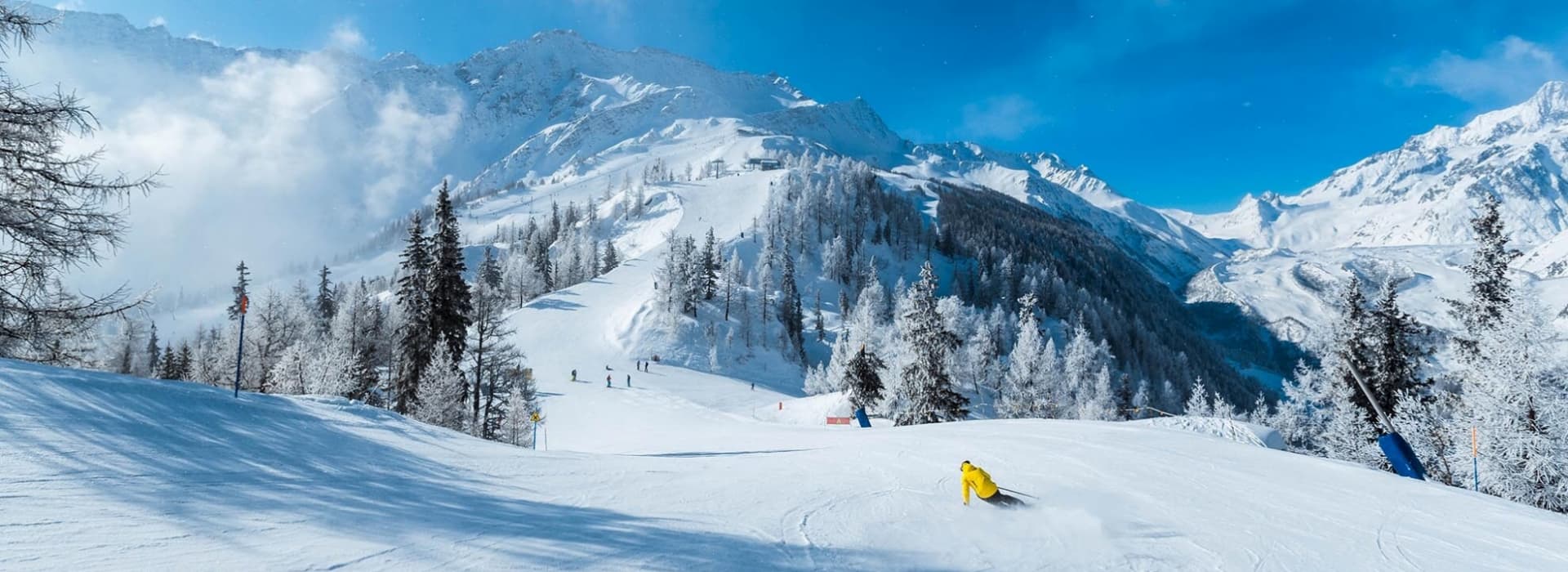
Skiing here is serious matter. The Courmayeur Mont Blanc ski area stretches across the slopes above town, with around 100 kilometres of pistes that favour intermediates but still offer enough challenge to keep advanced skiers engaged. The runs cut through forests before opening onto high ridgelines with clear views across to the jagged peaks of the Mont Blanc massif. On bright days, the light is almost blinding off the snowfields.
For intermediate skiers, Courmayeur makes immediate sense. The majority of the terrain is built around long, confidence building red runs that give you time to settle into a rhythm. You are not thrown onto narrow cat tracks or forced into intimidating drops. Instead, the slopes roll naturally, wide enough to practise proper carving, forgiving enough to recover if you pick up too much speed. On the Checrouit side especially, you can ski top to bottom without feeling rushed, linking turns through open sections and then gliding into tree lined stretches that break the wind and keep the snow consistent.

What stands out is the space. Even in peak season, the pistes rarely feel overcrowded. You can actually focus on your skiing rather than constantly adjusting for unpredictable traffic. The lift system is straightforward, so you spend more time moving and less time studying a map. And the backdrop changes your mood. You are skiing under Mont Blanc, with the massif always in view, which adds a sense of scale without adding pressure. For an intermediate skier who wants to improve, build stamina, and enjoy long, satisfying descents without intimidation, Courmayeur delivers exactly that balance.
Beyond the Slopes in Courmayeur, Skyway Monte Bianco and Alpine History
Then there is Skyway Monte Bianco, the rotating cable car that lifts you in stages from the valley floor up to Punta Helbronner at 3,466 metres. At the top, you are no longer looking at Mont Blanc. You are on its shoulder. The cold is immediate and unforgiving, brutal in fact. You cannot linger for long even with proper layers. But the panorama is extraordinary. The glaciers spill out below, crevassed and blue. Across the border, Chamonix lies on the French side of the massif, connected in spirit and geography even if separated by language and culture.

For those who want something more dramatic, helicopter tours offer a way to see the scale of the Mont Blanc range in minutes rather than days. From above, the valleys appear carved with surgical precision, the ridgelines sharp against the sky. It is a perspective that reinforces just how small the town is against the weight of the mountains.

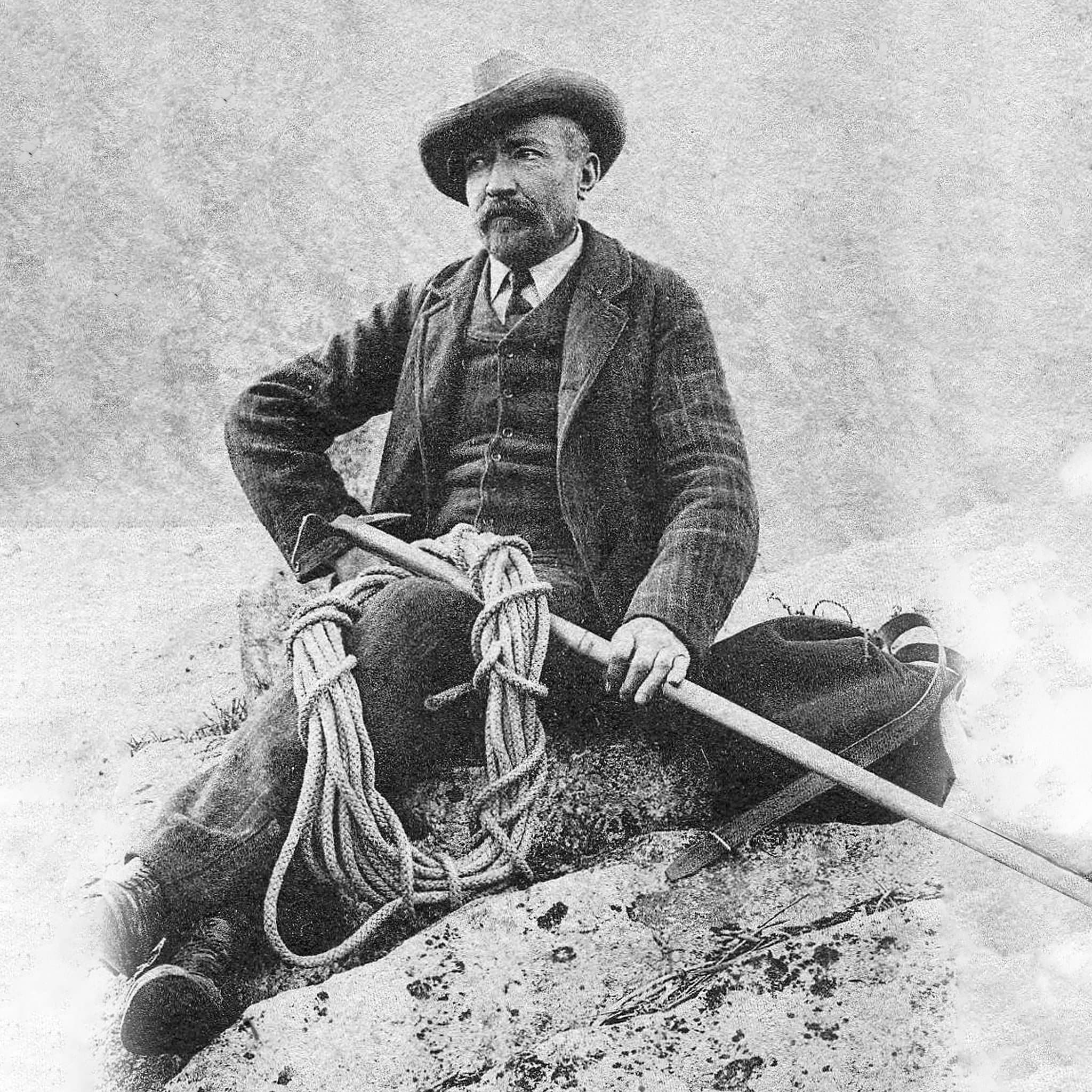
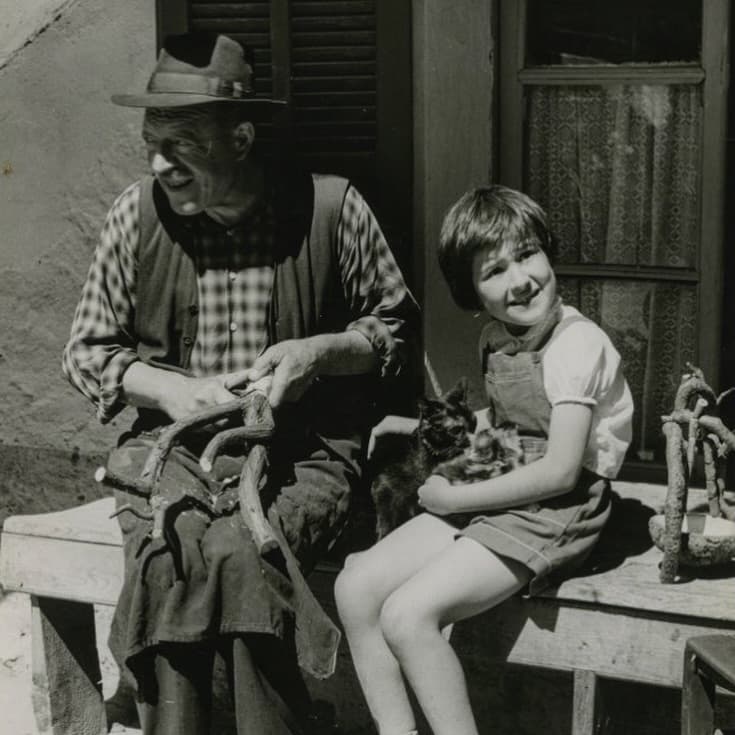
Yet Courmayeur’s identity is not built on tourism alone. This is a land of mountain guides and climbers long before ski passes and luxury chalets. In the centre of town, the Duke of the Abruzzi Alpine Museum documents that history. Guides have operated here since 1850, the oldest guiding society in Italy. Early guides, known as guides à mulets, climbed in wool shorts with rudimentary ropes and iron spikes hammered together by local blacksmiths. One of those blacksmiths forged the first crampons used in the region. Lead boxes containing summit books were left on peaks for climbers to sign, a quiet record of human ambition against overwhelming terrain.

Wine in the Aosta Valley, Cave Mont Blanc and High Altitude Vineyards
After skiing, aperitivo, the early evening Italian ritual of a pre dinner drink with small bites designed to stir the appetite, becomes the town’s informal parliament, where everyone gathers with a glass in hand before the night properly begins.

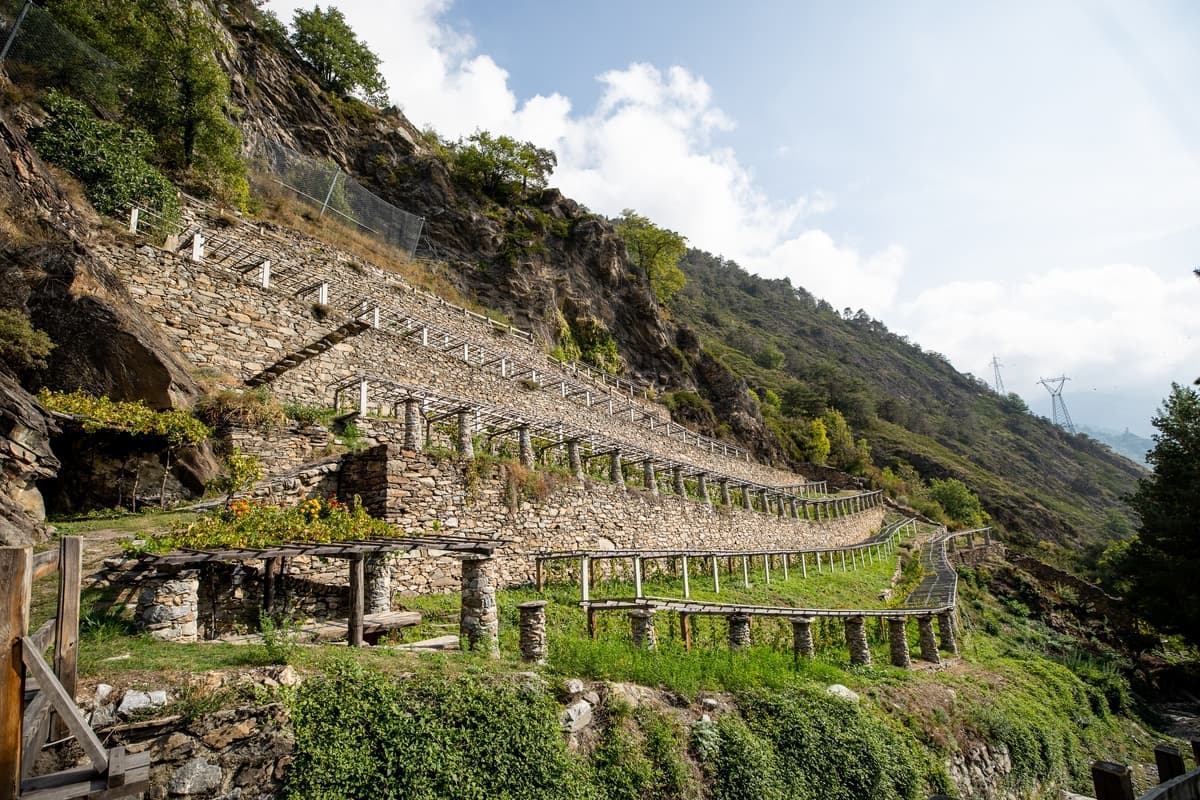
While an aperitivo is part of your ski day, wine, on the other hand, is part of life. It is a must to savor the wines while there as the Aosta Valley produces some of the smallest volumes in Italy, and much of it never travels far beyond the region. Production is limited by geography. Vineyards cling to steep terraces carved into the valley walls, many at altitudes that test both vine and vintner. Yields are low by necessity. What you drink here, in many cases, you will not find in London or New York.

Families have worked these slopes for generations, and that continuity shows in the structure behind the bottles. Cave Mont Blanc is the cooperative that represents many of the valley’s growers. The association is led by Nicolas Bovard, who serves as president and coordinates decisions among the principal wine families. He works with an advisory board drawn from those families, setting direction on harvest timing, production levels, ageing methods and pricing. Despite his relative youth, he carries the confidence of someone raised inside the system. He speaks about altitude, soil composition and climate variation with precision rather than romance.

Cave Mont Blanc is often described as the highest winery in Europe, with vineyards that reach well above 1,200 metres and experimental plantings even higher. The operational reality is pragmatic. Much of the bottling and movement of product takes place lower in the valley where logistics are manageable. The high altitude site functions partly as a symbolic statement, but it is still worth visiting. Displays explain the geology of the valley, the glacial soils, the specific grape varieties that thrive here such as Prié Blanc. In the tasting room, the wines are crisp, mineral driven, with a tension that reflects the cold nights and short growing season. A Blanc de Morgex et de La Salle shows sharp acidity and alpine clarity. A barrel aged cuvée adds texture without losing its edge.
Courmayeur's Mountain Cuisine: Fontina, Polenta and More

The food reflects it. Polenta appears often, sometimes topped with slow cooked venison or rich stews. Fontina, the valley’s most famous cheese, is melted into fonduta or layered into gratins. Wines come from steep terraced vineyards that cling improbably to the valley sides, producing crisp whites and structured reds that feel made for cold air and long evenings.
In Courmayeur, food and wine exist in a single ecosystem. A sharp Blanc de Morgex lifts trout from alpine streams, while melted Fontina, the nutty, supple cheese from the Aosta Valley, meets a structured local red, each enhancing the other. Fontina is made from cows grazing high mountain pastures, its flavor rich, slightly sweet, and when melted it becomes elastic and creamy, folding seamlessly into polenta concia or fonduta, Italy’s version of fondue.
Life in the mountains is built on self sufficiency, and that pride is on every plate. The food is generous, meant to fuel those who spend their days at altitude and in cold. Raclette appears in its Alpine form over potatoes and cured meats. There is game in winter, venison and chamois, along with cured meats that lean more toward the mountain than the Mediterranean. Venison tartare or slow cooked with mountain herbs, wild boar folds into ragù for agnolotti. Chefs may travel and absorb techniques from afar, but the foundation is always local. In Courmayeur, dining is not a sideshow to skiing, it is the valley itself on a plate.
Château Branlant, Mountain Lunch at Plan Chécrouit

You’ll find this common thread throughout your stay in Courmayeur, from the most rustic mountainside restaurants to the Michelin rated tables in town. For a mid ski lunch, Château Branlant sets the standard. Located on the slopes at Plan Chécrouit, it avoids the self service, turnover driven feel that defines most ski in restaurants. You step off the snow into a warm and welcoming environment, not only from the crackling fire and hearth but also from the genuinely friendly service and, of course, the food. The interior is arranged as a series of low, wood beamed rooms rather than one open hall. Dark oak rafters hover above stone fireplaces and tightly spaced tables. An attic lined with faded period posters feels untouched rather than redesigned. Rough stone walls and heavy timber give the place weight. It feels built for winter.
The menu follows the same logic. This is not light food. Zuppa alla Valpellinentze, a dense layering of cabbage, bread and Fontina baked until compact, arrives hot and substantial. Polenta is thick and properly seasoned, topped with slow cooked beef or a full layer of melted Fontina. Boards of charcuterie sourced from nearby farms reflect the valley’s French influence while remaining firmly rooted in local production.

I have not eaten everywhere on the mountain, but I would still say, without consulting a list, that Château Branlant serves the heartiest meals here. Portion control is clearly not part of the philosophy. Some dishes could feed a family of four, and no one seems inclined to reduce them. Service matches the setting. Whether you are a regular or walking in for the first time in ski boots, you are treated like you belong there.
La Clotze in Val Ferret, A Traditional Mountain Restaurant Near Courmayeur

Another favorite of locals and Courmayeur regulars in the know is La Clotze in Val Ferret, about thirty minutes from town. It was originally opened in 1972 by Elso and Clara Domaine after years managing the Belvedere hotel, and quickly became a reference point for traditional mountain cooking. After changing hands and eventually closing in 2017, it was reclaimed by the founders’ grandchildren, who brought it back with a lighter touch in the design but kept their grandparents’ recipes intact. The name refers to a cowbell, a detail that is integrated in the décor.
Today, the daughter in law of the original family runs the dining room. She is younger than you expect but moves from table to table with complete authority, recommending wines from nearby producers, giving the daily recommendations and making sure everyone feels welcomed and taken care of. The dining room is modest and warm. Fondue perfumes the air. Schnitzel arrives sizzling. Polenta with Fontina remains a constant, dense and properly seasoned, while dishes such as marinated guinea fowl with blackberries show that the kitchen is willing to stretch tradition without losing its footing. After lunch, a walk through the quiet village makes the short journey feel more than justified.
Il Marchese Courmayeur, Refined Dining and Late Night Lounge

Back in town, Il Marchese shifts the temperature to a level of refined dining. The dining room is polished and low lit, velvet banquettes, dark timber, brass accents and a marble bar that sets the tone before a menu is opened. It draws a well dressed, Milan leaning crowd who come as much for the atmosphere as the cooking. The kitchen works in a contemporary Italian register with Alpine references handled precisely rather than heavily, agnolotti sealed around slow braised Valdostana beef, fillet enriched with Bleu d’Aoste, crudo and carpaccio cut fine and finished with disciplined seasoning, risotto structured with local wine and mountain butter for depth rather than weight. Downstairs, the mood pivots again. A lounge club unfolds beneath the restaurant, tighter, louder, more decadent, where DJs carry the night past dinner and the bar moves from regional whites and Champagne to Negronis, aged grappa and serious spirits. It is one of the few addresses in Courmayeur where dinner slides seamlessly into after hours without a change of venue.
Pierre Alexis 1877, Fine Dining in Courmayeur’s Historic Stone Building

Pierre Alexis 1877 sits just off Via Roma in a stone building dating to 1877, once a stable and carpentry workshop. The original vaulted ceiling and thick masonry walls remain, lending weight to a dining room now pared back with pale timber, linen and restrained lighting. The restaurant opened in 2012 and operates as a tightly run family affair. Chef Stefano Alessandro Marchetto leads the kitchen, his wife Monica directs the floor with calm authority, and their son Egon oversees a wine list that is both local and far reaching.

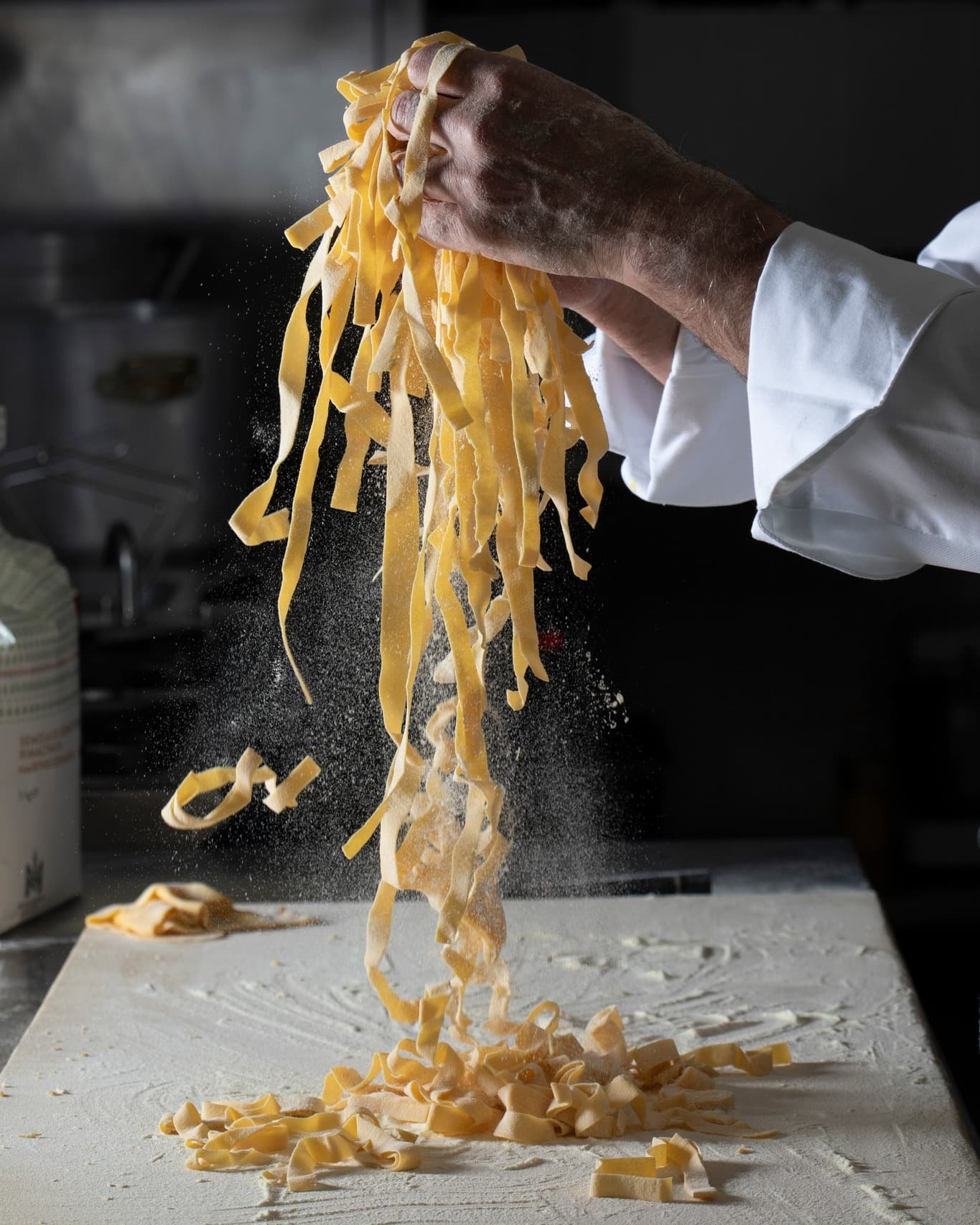
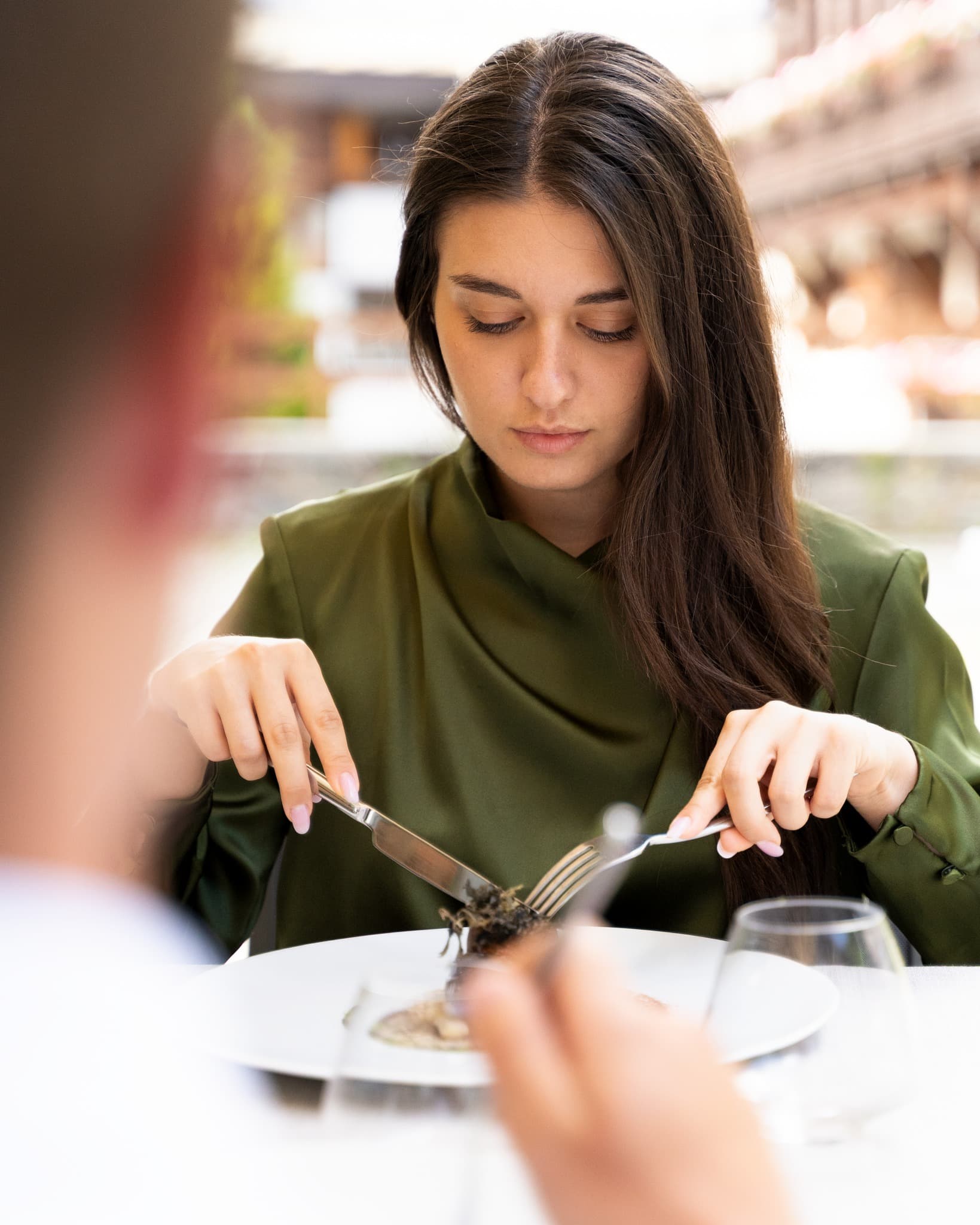
The cooking is grounded in the Aosta Valley but shaped by technical precision and Japanese discipline in the presentation. Menus change monthly, tracking season and altitude, with foraged herbs appearing when conditions allow. You may find foie gras with hazelnut and truffle, as well as venison tartare sharpened with barberry, occasionally paired with an unexpected cold element that heightens the game. Fresh pasta is cut in house, black cod cooked to a lacquered tenderness that holds its shape without dryness. The wine programme moves confidently from small Valle d’Aosta producers to structured Barolo, Burgundy and select bottles from Slovenia, with pairings that feel considered rather than obvious. The overall impression is of a serious kitchen operating with discipline, delivering mountain cuisine that is precise, intelligent and deeply rooted in place.
Where to Stay in Courmayeur, Auberge de La Maison Boutique Hotel

In the shadow of Mont Blanc, just above the hamlet of Entrèves, is a boutique hotel easy to recommend during your stay in Courmayeur. Auberge de La Maison looks and feels as though you are being welcomed into a home, a chocolate box chalet, where warmth comes not just from the crackling fireplaces. Founded in 1996 by Leo and Patrizia Garin, the property remains under the care of their daughter, Alessandra Garin, whose stewardship extends from interiors to cuisine with an unspoken clarity of purpose.

Throughout the hotel, the Garin family’s influence is evident in every choice. Inside spaces are defined by raw white fir, stone, and richly textured fabrics. Every corner carries the imprint of three generations of the Garin family, with hand carved wooden figurines, vintage mountaineering prints, oil paintings of the massif, and family collections of porcelain sculptures displayed throughout. This is a building that carries history, with carved wooden figurines, edition prints of early mountaineering expeditions, and personal objects that might have been gathered from family attics rather than design showrooms. The atmosphere is refined yet unpretentious.

Rooms follow the same philosophy, furnished with heavy pine and antique Valdostan chests. Textiles are richly textured, and balconies frame jagged peaks and glaciers. Some suites include mezzanines, separate living spaces, fireplaces, or outdoor hot tubs. Every accommodation is designed to feel lived in and functional, allowing space for ski gear, winter layers, and the rhythms of alpine life. The interiors retain wood floors, exposed beams, and family collections, making each stay feel simultaneously personal and rooted in local tradition.

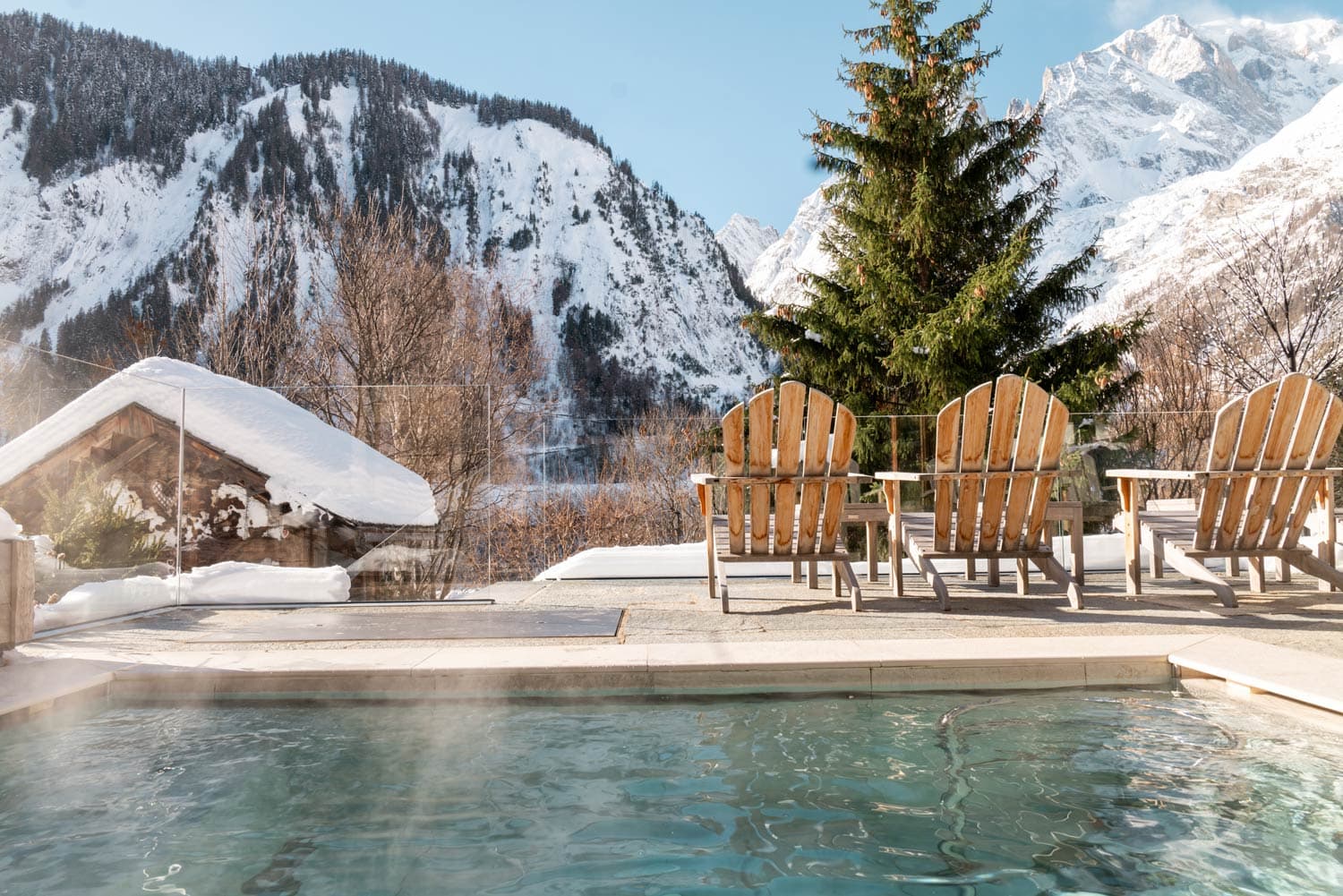
The spa, La Maison de l’Eau, integrates the mountain environment into recovery and relaxation. Its heated pool spans indoor and outdoor areas, offering direct views of Mont Blanc while you float. A sauna, steam room, and outdoor terrace provide additional spaces to unwind.
Why Courmayeur Is The Ideal Choice as One of the Best Ski Resorts in Italy
For me, Courmayeur is what I was after in a ski resort. It is a real place with heritage and culture, not something made up or trying to show off. It offers access to one of the most formidable mountain ranges in Europe while remaining a functioning town with a church, schools and year round residents. Many will come for the skiing, certainly. For the cable car rides into thin air. For the sight of Mont Blanc glowing pink at the end of the day. But you stay, and return, because Courmayeur is something special. It belongs to the mountains and to the people who have shaped their lives around them. That kind of place and experience cannot be created. It is something that becomes generation after generation and season after season.
Glenn Harris
Glenn Harris is an accomplished journalist focusing on luxury travel, fine dining, and exclusive lifestyle events. His wanderlust has taken him to over 128 countries where he constantly strays off the beaten path to uncover exotic locations, travel gems and exciting experiences to capture.
Read More
Lamu, Kenya: Low-Key Luxury on the Swahili Coast
Spain Cruise Review: Windstar Cruises Star Legend the Luxury Midsize Cruiseship
Inside Pabidi Lodge, Uganda's New Luxury Base for Budongo Forest Chimpanzee Safaris