Bovey Castle: Inside One of England’s Finest Country Estates
England has plenty of country getaways, from modest inns to grand manor houses, but at a certain point the difference stops being a matter of degree. Bovey Castle, set on wide grounds inside Dartmoor National Park, is a proper estate: architecture, land, food and service all pointed at one complete experience. The building and the moorland work as a single thing here. You don't really get one without the other.
Bovey Castle isn't a castle in the medieval sense. It's something more deliberate, more theatrical. Medieval castles were fortresses, shaped by the need to defend wealth and territory. Bovey Castle was built in 1907 as a grand estate house, a statement of ownership rather than defence. What it borrows from castle architecture isn't the logic of battlements but the logic of grandeur and landscape command.
Arrival: The Approach and First Presence
The drive into Dartmoor is direct. Narrow lanes walled in granite, hedgerows turning copper and rust in October. The moorland is simply there: rolling bronze grass, granite outcrops breaking the horizon, a quality of light that doesn't turn up anywhere else in England. Wild ponies graze without paying the traffic any attention. Stone walls carry lichen built up over centuries.

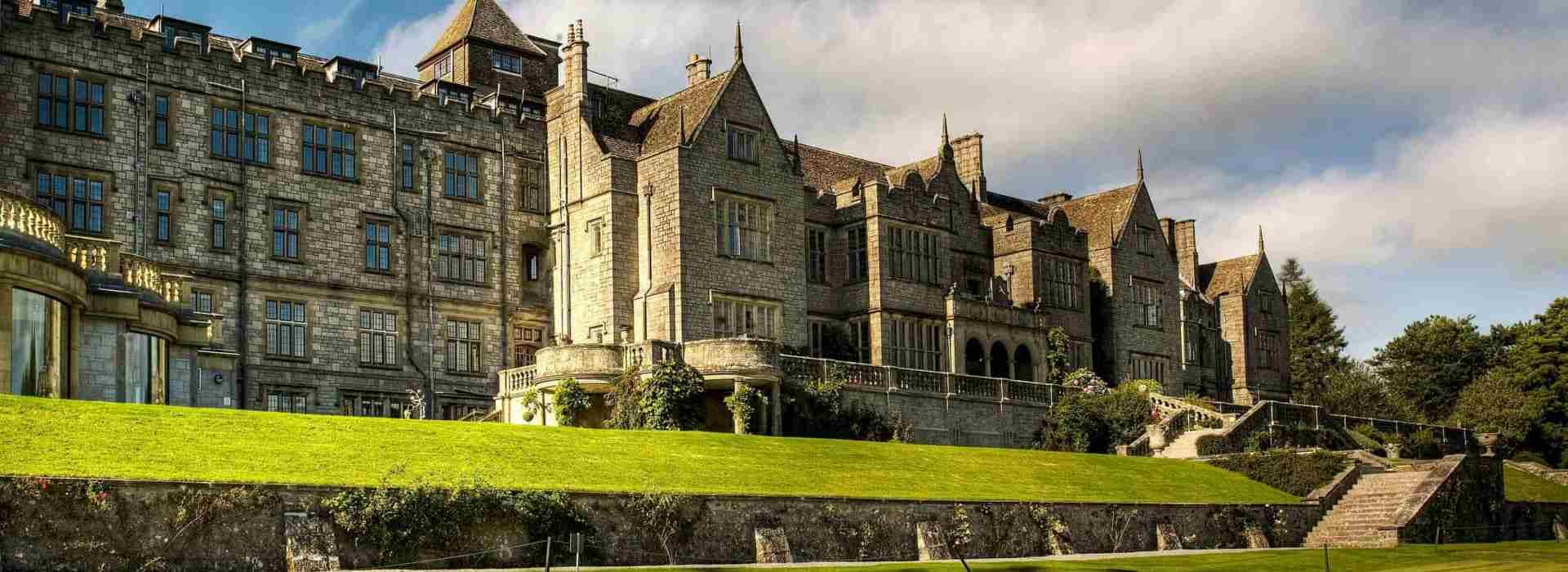
You don't actually see the castle straight away. The entrance brings through the gate and onto a driveway that makes sure you clock exactly how much land this is. It runs on past the golf course and lawns kept to an almost unnatural neatness. Then the building finally shows itself: granite set on a ridge, with stone has weathered into the landscape rather than sitting on top of it
The History and Architecture of Bovey Castle
Bovey Castle's construction is almost entirely local granite. Inside, that same material softens into light, wood detailing, high ceilings and rooms that open generously onto the grounds. The turrets and steep roofs create a silhouette that's meant to be theatrical.
Frederick Smith, son of newsagent magnate and First Lord of the Admiralty W.H. Smith, built the castle between 1907 and 1908 in the Neo-Jacobean style favoured by wealthy Edwardians keen to assert their place in the English landscape. W.H. Smith's portrait still hangs prominently inside, a deliberate nod to the family's commercial and political standing.
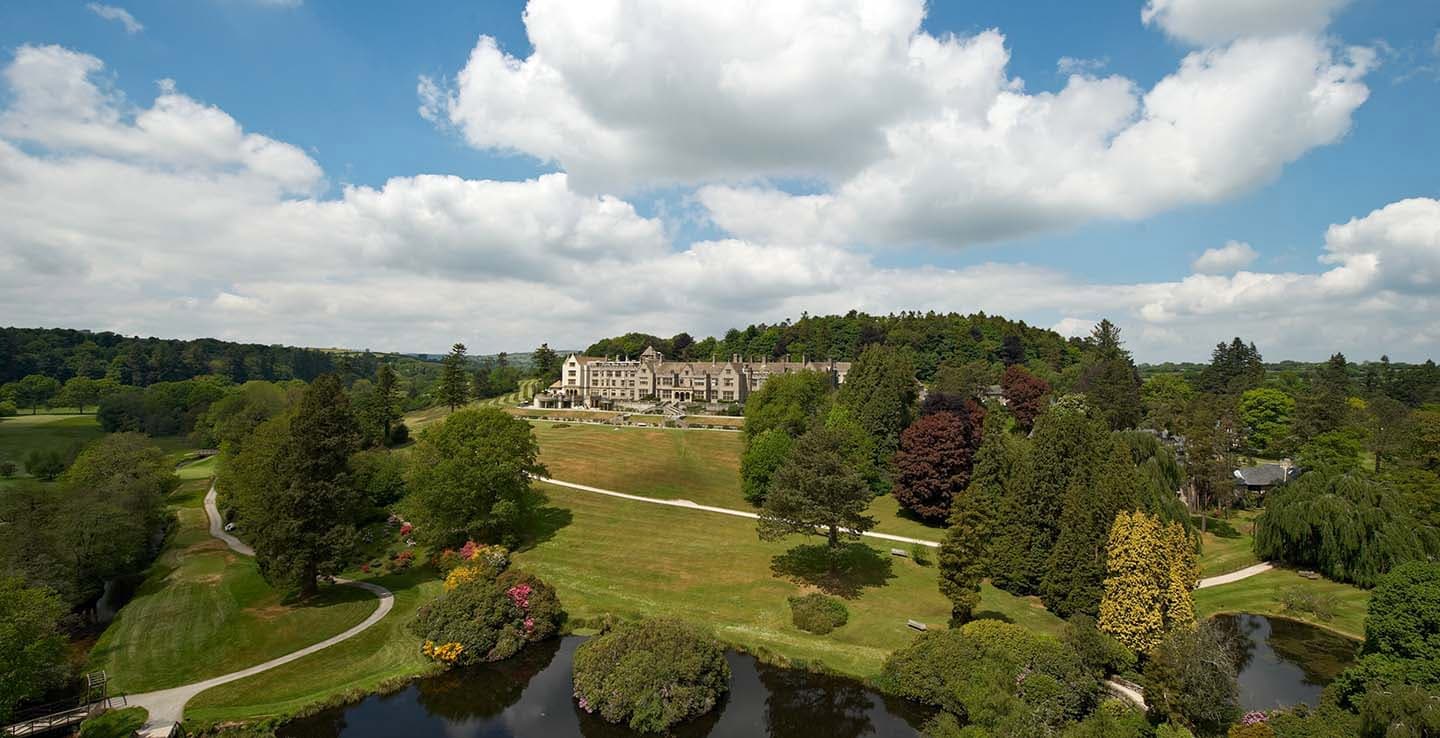
During both world wars the castle served as a convalescent home and military hospital. The Great Western Railway bought the property in 1928 and converted it into a hotel, installing a sprung dance floor and positioning it as a destination for golfers and travellers wanting a moorland escape. It passed through several owners after that until the Eden Hotel Collection acquired it in 2014 and put around £2 million into restoration, done carefully enough to respect the architecture while bringing the comfort and service up to modern standard.
The Grounds: 275 Acres
The grounds run to around 275 acres, sloping downhill into wooded valleys, parkland and ornamental water. A lake reflects the sky, woodland marks the perimeter, and beyond that the moorland simply carries on, with nothing marking where the cultivated land stops and Dartmoor starts.
The J.F. Abercromby championship golf course, laid out in the 1920s, threads through the grounds without taking them over. Fairways curve through parkland, the river creates its own strategic trouble, and the elevation changes force proper thought about club selection. From the higher points of the estate you can see toward Easdon Tor and the wider moor.
The gardens have clearly had a lot of care put into them, but nobody's tried to force them into anything too neat. Specimen trees, gentle slopes, statues turning up here and there. Wisteria and roses come through in their seasons and give the place scent and colour without ever boxing it in. A stream runs through parts of the estate, sometimes opening into still water, with woodland on one side and glimpses of the golf course on the other.
People tend to slow right down here, and that seems to be the point. The estate runs guided mindful walks across the grounds, which sounds like a lot until you realise it's really just an excuse to pay attention: what you can hear, what things feel like underfoot, what's in the air. Plenty of guests skip anything organised altogether and just sit on a bench, or wander a path without much interest in where it ends up.
Dartmoor is always somewhere in the background. Valleys, farmland, open moor, horses and sheep and hedgerows doing what they've always done. None of it's been tidied up for visitors. It's working countryside, and that's exactly why you come to this part of England.
The Grounds: Composition, Stillness and Attention
The gardens have clearly had a lot of care put into them, but nobody's tried to force them into anything too neat. Statues turn up here and there. Wisteria and roses come through in their seasons and give the place scent and colour without ever boxing it in. A stream runs through parts of the estate, sometimes opening into still water, with woodland on one side and glimpses of the golf course on the other.

People tend to slow right down here, and that seems to be the point. The estate runs guided mindful walks across the grounds, which sounds like a lot until you realise it's really just an excuse to pay attention: what you can hear, what things feel like underfoot, what's in the air. Plenty of guests skip anything organised altogether and just sit on a bench, or wander a path without much interest in where it ends up.
Dartmoor is always somewhere in the background. Valleys, farmland, open moor, horses and sheep and hedgerows doing what they've always done. None of it's been tidied up for visitors. It's working countryside, and that's exactly why you come to this part of England.
Inside Bovey Castle: A Real Castle in Dartmoor
The reception hall rises two storeys, with dark wood ceiling panels and a carved stone staircase that splits and curves upward. Tall arched windows frame the view outward. The carved stone around the doorways shows real attention to execution. Oil paintings hang at deliberate intervals.
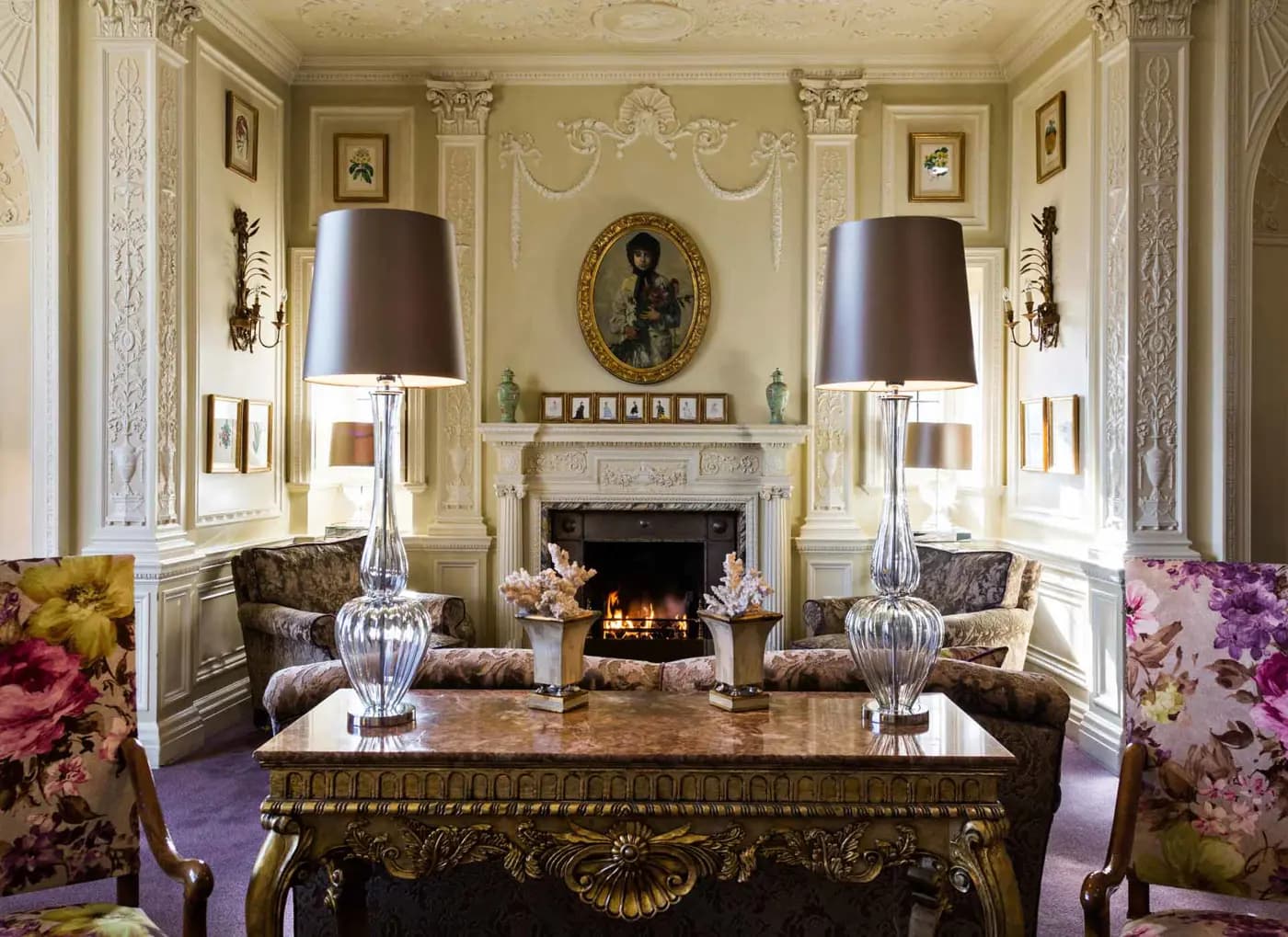
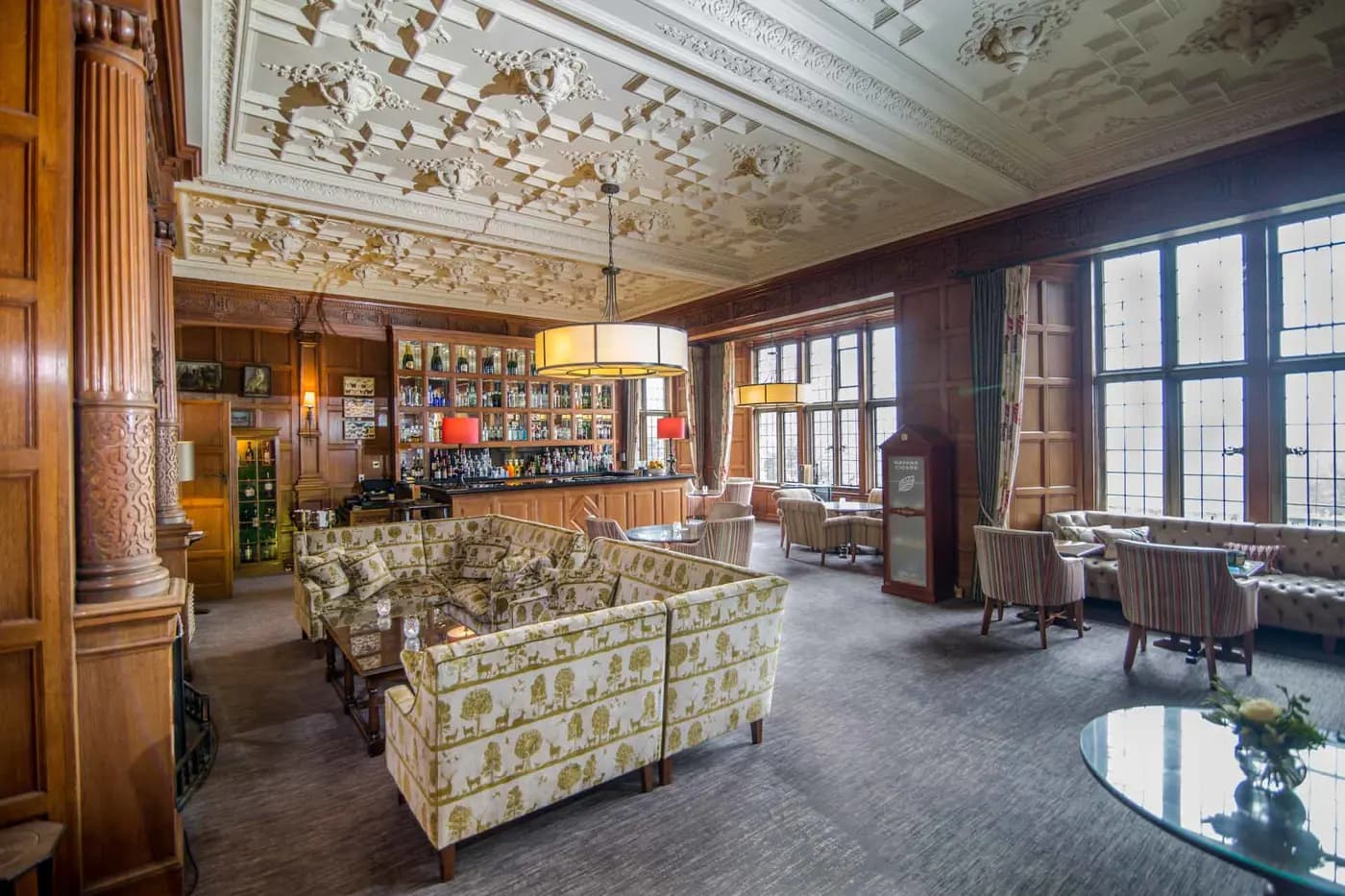
The Great Hall has the right proportions: generous without being cavernous, a solid fireplace, high ceiling. When the fire is lit in the evening, the room smells of burning wood and warming stone. The Cathedral Room has an oak-vaulted ceiling and proper scale without stiffness. The Adam Room and Palm Court add further dining and gathering spaces, each with a sightline out to the grounds.

The Oak Bar, panelled in heavy wood with an ornate fireplace, is the kind of room that makes you stay longer than planned. Throughout the spacs, leather wingback chairs bear the patina of genuine use, with worn armrests and springs settled by decades of actual sitting
The Art Deco revival styling in the public spaces feels lived in rather than precious, a legacy of the 1928 Great Western Railway transformation. The corridors are wide, lined with landscape prints of Dartmoor and photographs tracking the building through its various lives. They smell of beeswax and stone.
The Suites and Luxury Accommodation
The estate holds 60 individually decorated castle rooms, no two quite alike. The Valley Rooms are prized for their Dartmoor views, the windows framing the moor so the landscape becomes part of the room rather than something incidental beyond the glass. High ceilings, expansive windows, wallpaper in muted, particular patterns. The Grand State Room Suite sits at the top of that group, with separate living and dining areas, a king bed, a roll-top bath positioned to catch the view, and a decked balcony over the countryside. ESPA products round it out without tipping into flashiness.

The room that gets talked about most is the Easdon Suite, named for the tor it faces. From the private stone balcony the view runs across the golf course to the eastern horizon, where Easdon Tor sits on the skyline. The suite sits at the top of the mansion's main staircase, positioned so the tor is the room's focal point.

It's a large space: living area, dining space, fireplace, a four-poster bed, interiors leaning toward richness rather than restraint. There's a proper bathroom with a large bath and dual shower heads, plus a terrace out into the grounds, the only suite in the castle with that kind of outdoor threshold.
The furnishings serve the view rather than compete with it: mushroom-toned walls, damask curtains, recessed lighting. What registers isn't the room itself but the light changing over the landscape, the weather moving across the moor, Easdon Tor's granite catching the morning sun.

For guests who want more room and their own front door, the estate has 22 private lodges scattered across the grounds, three storeys each, built from the same local stone and under the same pitched roofs as the castle without trying to compete with its scale.

Inside, they run open-plan with stone flooring and a floor-to-ceiling stone fireplace anchoring the living space, three en-suite bedrooms, a full kitchen rather than a token one, and a sitting area angled toward whatever the lodge happens to face, woodland for some, the lake for others, open moor for the ones set furthest out. Families can run entirely on their own steam, cooking and managing the days themselves, or call on the hotel's housekeeping and dining service as often as they like.
Dining at Bovey Castle: Devon on the Plate
Dining at Bovey Castle reflects the character of the estate itself: refined, understated, and rooted in Devon. The culinary programme focuses on seasonal produce sourced from across the county, with ingredients arriving from Dartmoor's moorland, nearby rivers, surrounding farms, and the South Devon coast. Rather than relying on elaborate presentation, the kitchen lets the quality of the produce speak for itself.

The Great Western Grill, run by chef Mark Budd, offers a seven-course menu built around Devonshire ingredients. Smith's Brasserie is more casual, with a woodland theme, a theatre kitchen and a fire pit. Menus change with the seasons, allowing local ingredients to take centre stage throughout the year.

Expect carefully executed modern British cuisine featuring exceptional West Country meats, locally landed seafood, artisan cheeses, and vegetables grown by nearby producers. Dishes often highlight native Devon beef, line-caught fish, game during the autumn months, and ingredients foraged from the surrounding countryside. An extensive wine list complements the menu, balancing respected Old World classics with carefully selected New World producers, while experienced sommeliers guide pairings for tasting menus and à la carte dining alike.

Whether enjoying a multi-course dinner or a relaxed evening overlooking the estate, the experience feels authentic to the setting. Like the castle itself, the restaurant favours substance over spectacle, delivering elegant cooking that celebrates one of England's finest food-producing regions.
Afternoon Tea in a Historic Castle Setting
Afternoon tea here is a proper service rather than items arranged on a tiered stand for effect. The tea list is genuine: Earl Grey, English Breakfast, Darjeeling, sencha green, oolong, and a house blend called Bovey Gold, arriving in proper ceramic pots kept warm under knitted cozies, water heated correctly for whichever tea you've chosen.

Savoury items come first. Finger sandwiches with the crusts trimmed and discarded, fillings handled with real precision: smoked salmon with cream cheese and dill, egg mayonnaise with watercress, roast beef with horseradish cream, cucumber and butter. Porthilly rock oysters turn up seasonally, along with Plymouth gin-cured sea trout and West Country ham. Simple food, elevated by sourcing rather than technique.
Scones come next, split rather than cut, with clotted cream and jam. You can tell they're made in-house from the rise and texture alone. The jam is a proper fruit preserve, the cream carries the tang of actual dairy rather than a whipped substitute. Devon has its own view on cream placement, cream before jam, and the ritual carries more cultural weight than the size of the gesture suggests.
Sweet items follow: miniature macarons, a dark chocolate tart with a clean ganache, small fruit tarts and miniature éclairs, plated without fuss. The whole service runs across roughly two hours, tea topped up as needed, staff appearing and disappearing without hovering.
Golf, Country Pursuits and Estate Activities
Beyond the dining table, the estate's greatest attraction is its championship golf course. The 18-hole championship course, designed by J.F. Abercromby in the 1920s, runs about 6,800 yards through parkland that sits inside the landscape rather than fighting it. The River Bovey creates strategic trouble along several holes, mature oak, beech and pine interrupt fairways, and elevation changes demand attention to the terrain rather than raw power.
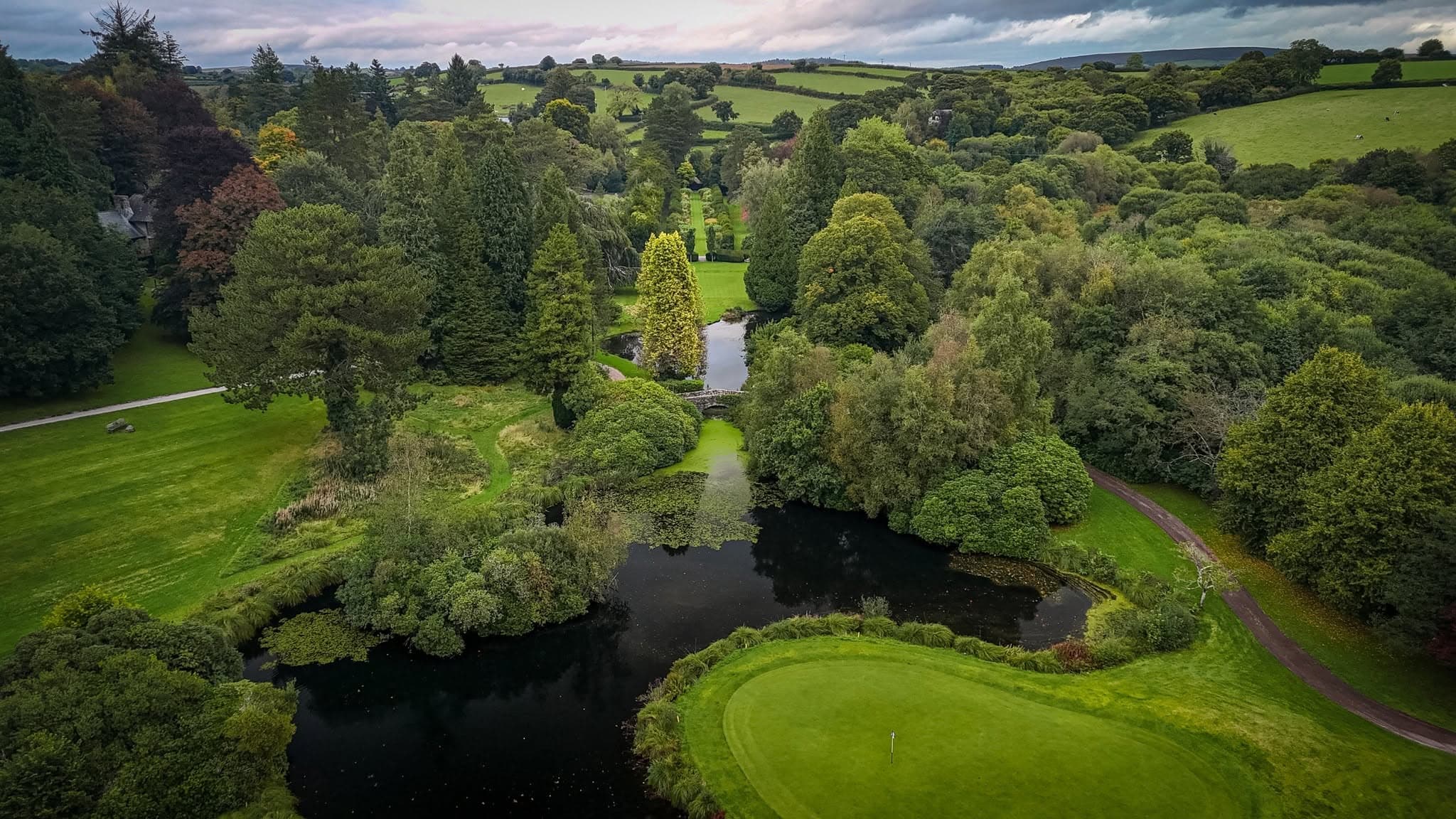
Views from the elevated tees stretch across the estate toward the moor and, on clear days, to Easdon Tor. The clubhouse has a proper pro shop, restaurant and locker rooms, and the staff treat every skill level with the same patience.
Back inside, the indoor pool is a proper 25-metre lap pool rather than a shallow plunge pool for show, with a spa attached that includes a steam room, sauna and treatment rooms. Massage, hot stone therapy and sports massage are all on offer, handled by therapists who work from consultation rather than a fixed menu. None of it tries to compete with a major wellness destination. It's there because you want to swim laps or get a massage after golf, not for spectacle.

However the great outdoors is the draw here. On arrival, guests are offered waxed jackets and wellingtons if needed, a small gesture that says something about how the estate expects you to actually use the outdoors.
There's a genuine range of countryside activity beyond the obvious. Beekeeping sessions at the estate's hives, early-morning chicken and ferret feeding, cider and sloe gin crafting in a candlelit barn using an antique press. Letterboxing, a pursuit specific to Dartmoor involving hidden boxes and stamp collecting, is available guided or on your own.

Falconry runs throughout the year, adjusted for season and bird availability. The morning I went, the falconer, a weathered man who's worked at Bovey for years, talked about the birds with the kind of detail that only comes from real experience rather than a script.
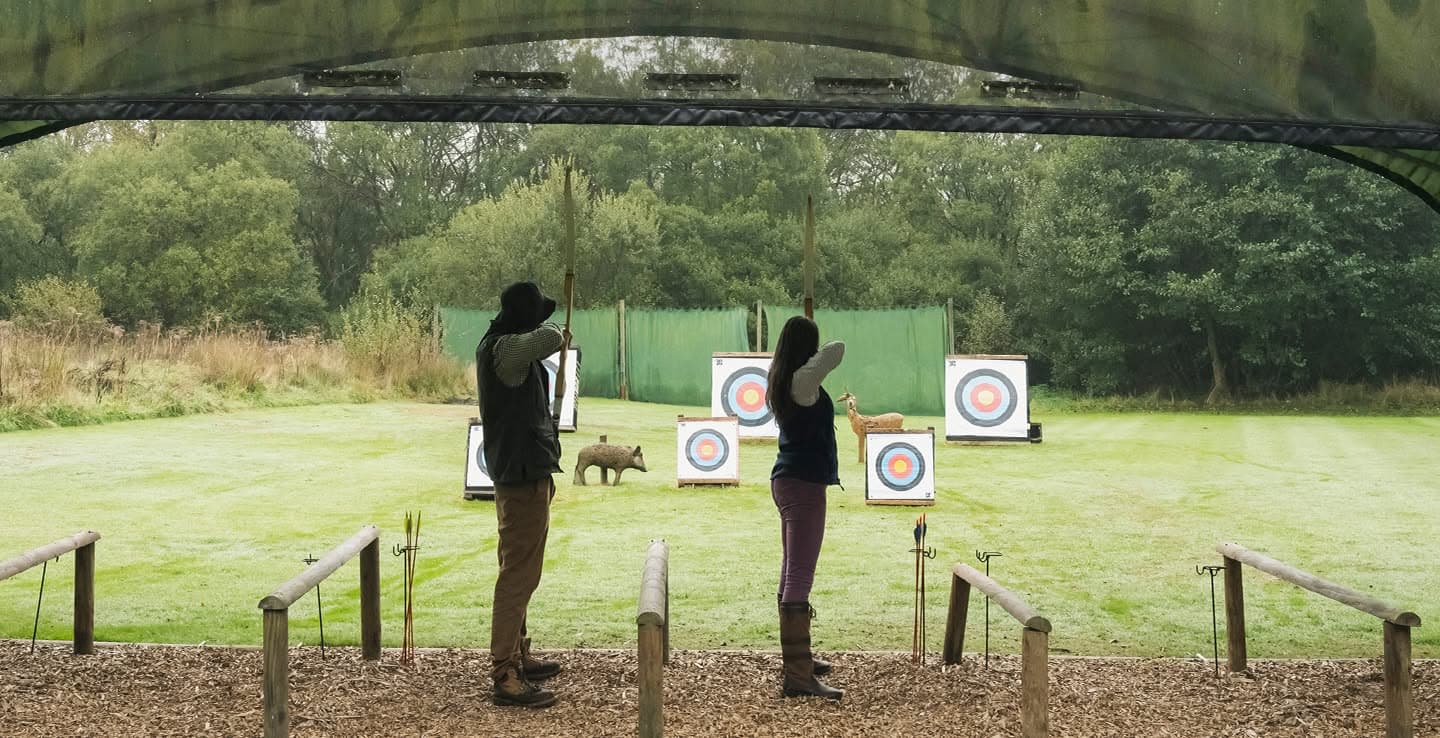
Archery runs daily for all levels, the repetition and focus doing something useful for the mind as well as the arm. Clay shooting is available for experienced guests or with instruction for newcomers. Crolf, a hybrid of croquet and golf, offers something lighter, alongside seasonal tennis and lawn games.
Walking Beyond the Castle: North Bovey and the Open Moor
When its time to don the wellies and wax jackets, the walks around and from the estate are worth doing. One heads through dense woodland along the River Bovey toward North Bovey, a village of thatched cottages, a Norman church and the Ring of Bells pub, which has served the community since the 17th century. There's no tourist infrastructure here, no fudge shops or photo signage, just a place people have lived in for centuries. The walk takes about 45 minutes each way, easy underfoot but often damp.

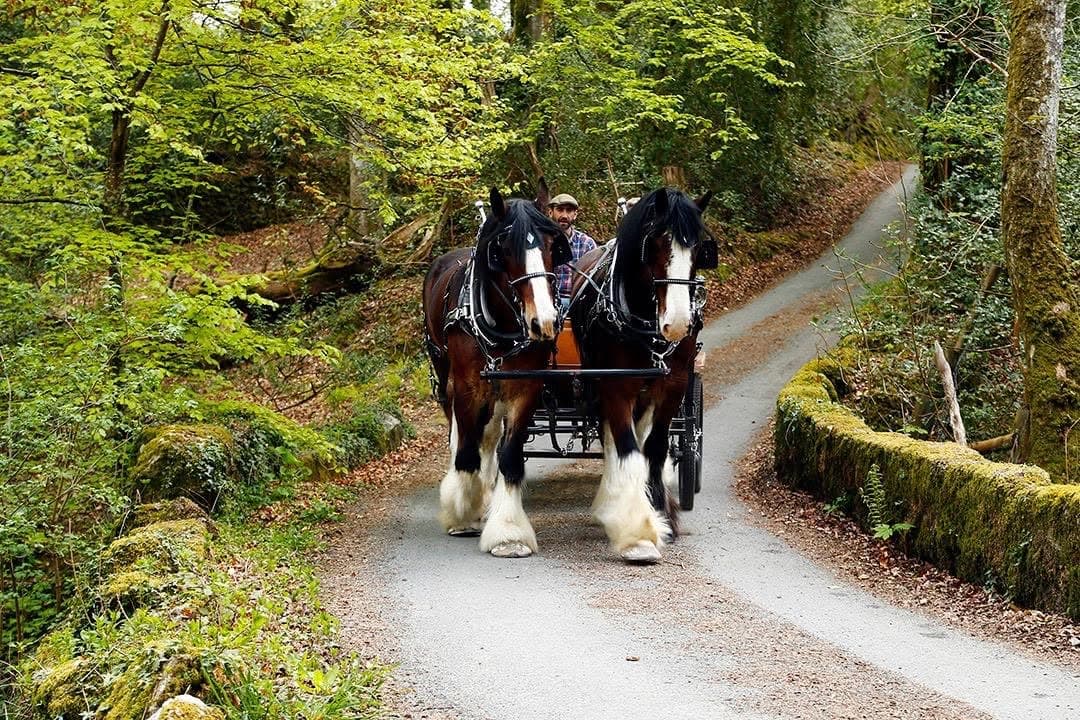
Beyond the estate, Dartmoor is right on the doorstep, and the best way to experience it is to get out and walk. Within minutes of leaving Bovey Castle, the lanes narrow, the stone walls appear, and the landscape opens into wide stretches of open moorland. Sheep wander across the road, wild ponies graze beside the tracks, and suddenly you are surrounded by the landscape that defines Dartmoor.
The walks up to the tors are where the experience really begins. The climb gets the heart rate moving as you make your way over uneven ground and scramble across the huge granite boulders that sit exposed on the hillsides. Reach the top and the views open out in every direction, with valleys, farmland, woodland, and Bovey Castle visible in the distance.
Hound Tor, Hay Tor, and Easdon Tor offer some of the best viewpoints on the moor. Standing among these vast granite formations, with the wind moving across the landscape and the countryside stretching out below, gives you a real sense of Dartmoor’s scale and character.
Bring good boots, a jacket, and be prepared for the weather to change. This is Dartmoor.
Exploring Dartmoor from Bovey Castle
If you’re still hankering for more trekking, Torquay is around 45 minutes from Bovey Castle, and the South West Coast Path here is genuinely worth the detour. This stretch of coast, part of a UNESCO Global Geopark, combines red sandstone cliffs with exposed geology.

Walking between Torquay and Babbacombe takes you along clifftops above the Channel, past small beaches reached by steps cut into the rock. The contrast with the moor is total: open exposure against interior stillness, wind and salt air against tree-canopy quiet. Bovey Castle's position, on the edge of the moor and within reach of the coast, means you get both without moving.
Why Bovey Castle Represents the Best of Devon
Bovey Castle understands that. It gives you all the comforts of a great country estate, but it never gets in the way of the reason you are here. The castle is impressive, but the setting is what stays with you.

The current owners haven't tried to reinvent the castle or impose a single design idea across every room. They've looked after it, preserved the architecture, and made sure the modern comforts work without taking away the character of the estate. The appeal of Bovey Castle is that everything feels connected to its surroundings. The rooms, the grounds, the food, and the experiences all lead you back to the same thing: Dartmoor itself.

Glenn Harris
Glenn Harris is an accomplished journalist focusing on luxury travel, fine dining, and exclusive lifestyle events. His wanderlust has taken him to over 128 countries where he constantly strays off the beaten path to uncover exotic locations, travel gems and exciting experiences to capture.