Stellenbosch South Africa: One of the World’s Great Wine Destinations
When we think of the world’s great wine destinations, names like Bordeaux, Tuscany, and Napa Valley tend to dominate the conversation. These are places defined not only by the quality of their wines but by the way wine is woven into daily life, into landscape, and into culture. They offer more than tastings at cellar doors. They invite visitors into a wider experience where vineyards stretch across the horizon, meals are shaped by local producers, and wine becomes part of a longer, slower engagement with place.
Delaire Graff Estate
There is another destination that belongs confidently in this company. South Africa, and in particular Stellenbosch, offers one of the most compelling wine routes in the world. For those unfamiliar with the region, the experience comes as a quiet surprise. The wines stand shoulder to shoulder with the best globally, the vineyard experiences feel deeply connected to the land, and the culinary offering reflects both precision and generosity. Stellenbosch represents the most complete expression of South African wine culture.
The origins of winemaking here date back to the late seventeenth century, when Dutch settlers recognised the potential of the land and began planting vines. Since then, the Cape has evolved into the heart of South African wine production. Soil diversity, varied microclimates, and generous sunlight create conditions suited to a wide range of grape varieties. In lower lying areas, white wines lean toward freshness and clarity. In the surrounding mountains, maritime air, altitude, and clay rich soils slow the ripening process, producing structured red wines with depth and character.
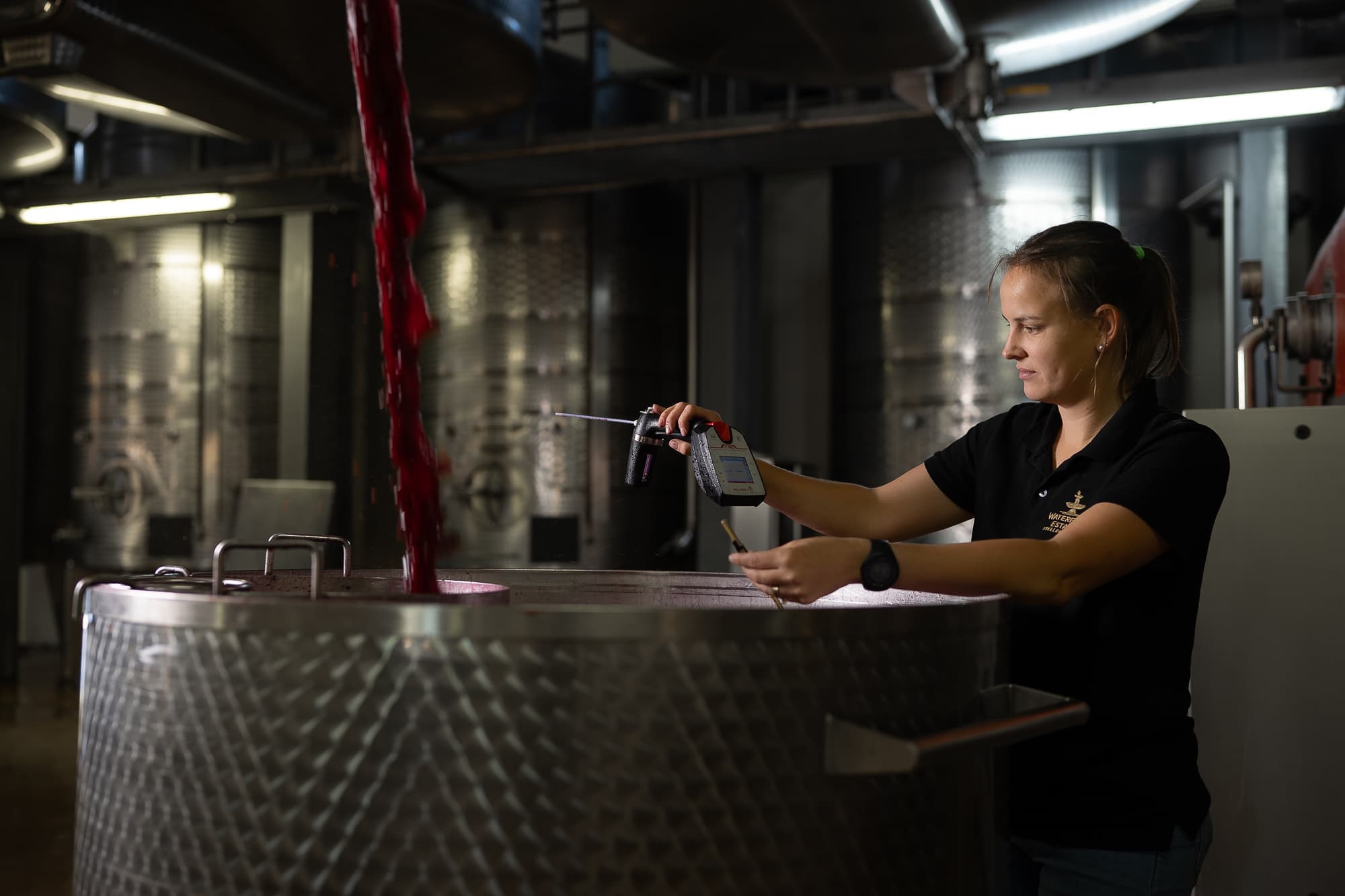
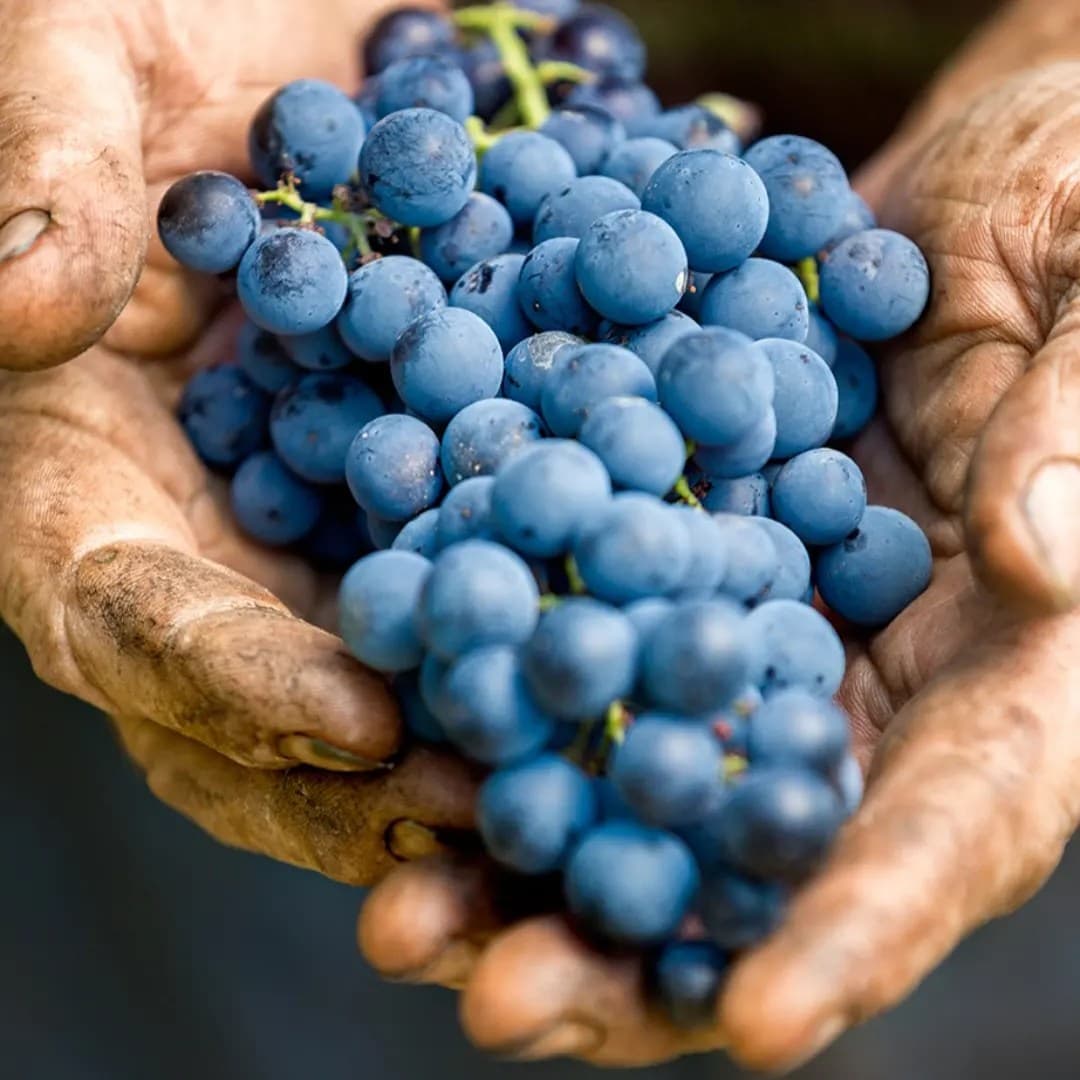
Stellenbosch lies less than an hour east of Cape Town, yet the contrast is immediate. Urban density gives way to open farmland, vineyards, rivers, and mountain backdrops that define the horizon. The town sits at the centre of one of the most concentrated wine producing regions in the world, home to more than two hundred wineries. Chardonnay, Chenin Blanc, Cabernet Sauvignon, Merlot, Pinot Noir, and Pinotage all find confident expression here, shaped by conditions that vary dramatically from one valley to the next.

With such density, navigating the region can feel overwhelming. Tastings quickly accumulate, and the temptation to rush undermines the experience. Stellenbosch Wine Routes offers a more considered approach, working closely with local estates to create tailored itineraries that remove the practical concerns and allow attention to remain on the wines themselves.
Waterford Estate

In South Africa, the Platter’s Guide occupies a position of real authority. Its five star rating is reserved for wines that achieve consistency, balance, and distinction over time. Bottles awarded at this level stand apart, and visitors would be wise to allow space in their luggage accordingly.
Waterford Estate reflects how European tradition has been absorbed and reshaped by South African conditions. Approaching the property, one could momentarily forget the continent entirely. Olive trees, lemon groves, gravel paths, and terracotta roofs evoke a Mediterranean sensibility, while the surrounding Blaauwklippen Valley firmly anchors the estate in Stellenbosch.

The winery remains very much a working environment, with vineyards climbing the surrounding slopes and production facilities integrated into the estate rather than concealed. Guests gather in the central courtyard, seated casually with a glass in hand, the sound of water moving softly at its centre.

Waterford offers several immersive experiences, though many visitors gravitate toward the chocolate and wine pairing. The estate’s Shiraz and Cabernet Sauvignon are presented alongside carefully selected dark and milk chocolates, allowing texture and flavour to evolve slowly on the palate.
Among the bottles to seek out is The Jem, the estate’s flagship wine, produced only in exceptional years. Built on Cabernet Sauvignon and supported by Mediterranean varietals, it delivers depth without heaviness, with layers of dark fruit, spice, and a long, measured finish.
Haskell Vineyards
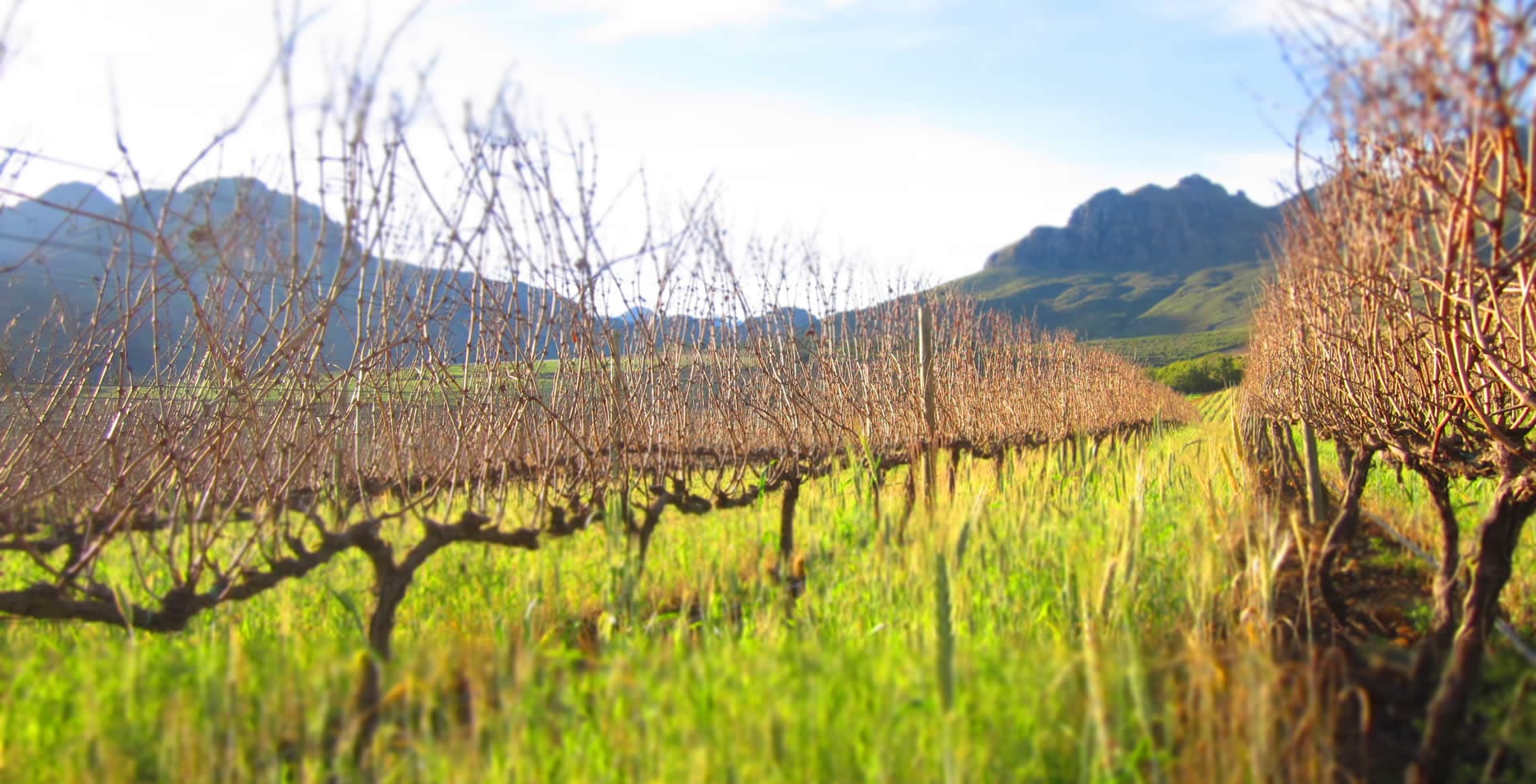
Haskell Vineyards stellenbosch review
Smaller, family run wineries remain central to the character of Stellenbosch, offering a more personal connection to the craft. Haskell Vineyards, set against the Helderberg mountain range, exemplifies this scale and approach.
The estate looks out over intersecting valleys and neighbouring vineyards, its position benefiting from cooling breezes and varied exposure. Chardonnay and Syrah thrive here, alongside Cabernet Sauvignon, Merlot, and Cabernet Franc. The conditions support wines that favour structure and longevity over immediate impact.
Winemaker Rudolph Steenkamp brings a directness to both his wines and his conversation. He speaks openly about each vintage, the challenges faced, and the decisions taken in pursuit of balance. Haskell’s focus on organic practices and minimal intervention results in wines that reflect their specific sites rather than a prescribed style.

The flagship Haskell IV and Haskell 11 are blends shaped by Bordeaux and Burgundy influences, with firm tannins and the capacity to develop over a decade or more. Production remains intentionally limited, with much of the output reserved for South Africa and select international markets.
Beyond the cellar, Haskell offers a long table dining experience that unfolds over several hours. Dishes are rooted in seasonal, locally sourced ingredients, presented with restraint and paired thoughtfully with the estate’s wines. On site accommodation allows guests to settle into the landscape rather than pass through it.
Delaire Graff Estate

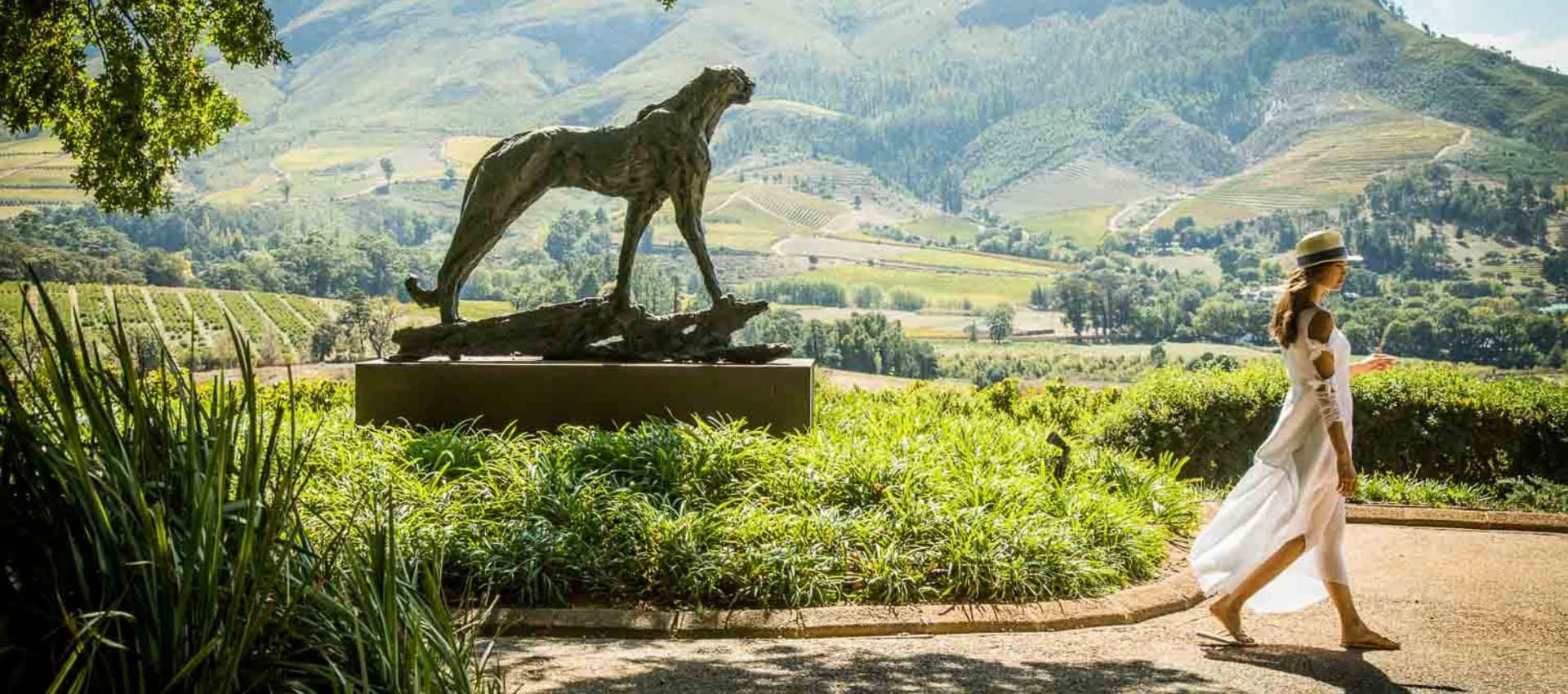
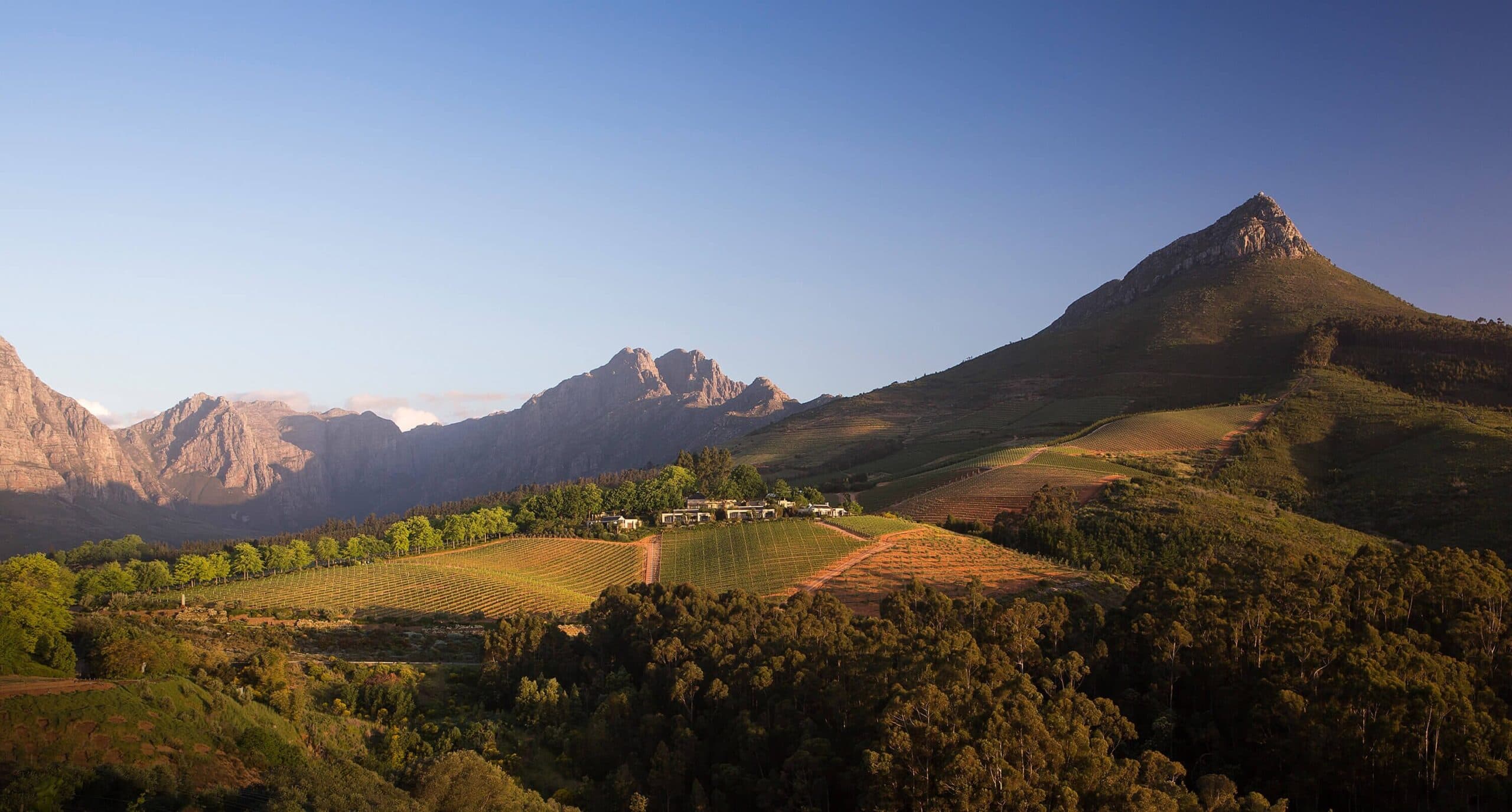
The Delaire Graff Estate occupies a dramatic position at the foot of the Helshoogte Mountain Pass. The Graff name is widely recognised for fine diamonds, and the same attention to detail is evident here, though the setting remains the defining feature.
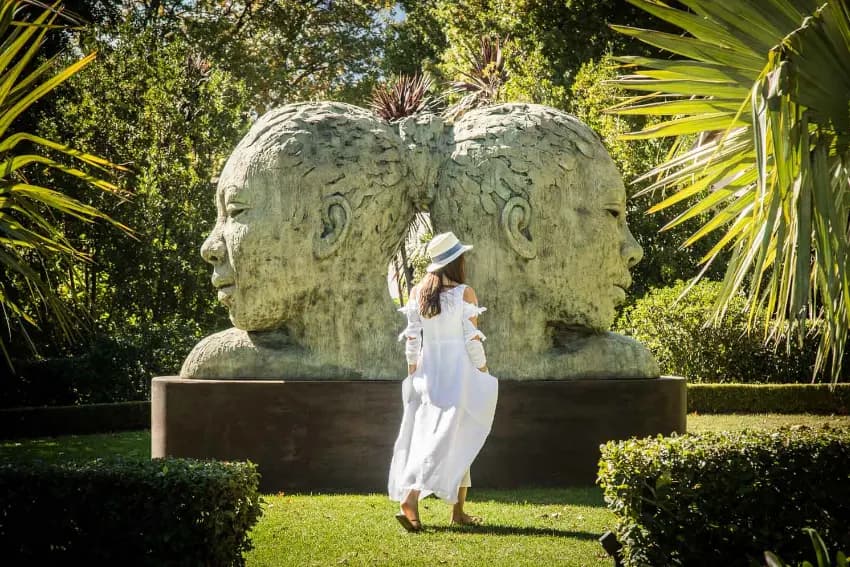
Gardens are meticulously maintained, sculptures are placed with intention, and views extend across vineyards to the surrounding mountains. The estate operates at a larger scale than many in the region, offering dining, tastings, and accommodation within a single, cohesive environment.

Most visitors arrive for a tasting followed by lunch, though longer stays reveal a quieter side to the property. Interiors favour contemporary design, with art integrated throughout. In cooler months, tastings take place indoors near the fireplace. Warmer days draw guests onto the veranda, where wines are enjoyed beneath mature trees.

The estate produces Bordeaux style red wines and Chardonnay from pesticide free vineyards, supplemented by carefully sourced fruit from other parts of the region. Tastings are guided with clarity rather than ceremony, covering whites, rosé, sparkling wines, and a range of reds that culminate in the estate reserves.
Several wines have earned recognition from the Platter’s Guide, reinforcing the estate’s standing within South Africa’s top tier of producers.
A Broader Perspective

South Africa offers exceptional wildlife, coastline, and cultural depth, but for those drawn by food and wine, Stellenbosch stands at the centre of the experience. The region rewards time and attention, revealing variety not only between estates but within them, from vineyard to table.

Stellenbosch belongs among the world’s great wine routes for the same reasons Bordeaux, Tuscany, and Napa endure. The wines are serious, the land is worked rather than styled, and the experience extends well beyond the tasting room into kitchens, cellars, and conversations that give context to what is in the glass. What distinguishes Stellenbosch is not imitation but confidence, a wine culture shaped by climate, agriculture, and people who remain closely involved in every stage of production. For travellers who measure a destination by depth rather than display, it earns its place without qualification.
Glenn Harris
Glenn Harris is an accomplished journalist focusing on luxury travel, fine dining, and exclusive lifestyle events. His wanderlust has taken him to over 128 countries where he constantly strays off the beaten path to uncover exotic locations, travel gems and exciting experiences to capture.
Read More
Lamu, Kenya: Low-Key Luxury on the Swahili Coast
Spain Cruise Review: Windstar Cruises Star Legend the Luxury Midsize Cruiseship
Inside Pabidi Lodge, Uganda's New Luxury Base for Budongo Forest Chimpanzee Safaris