La Belle Epoque: European Waterways’ Luxury Burgundy Barge Cruise
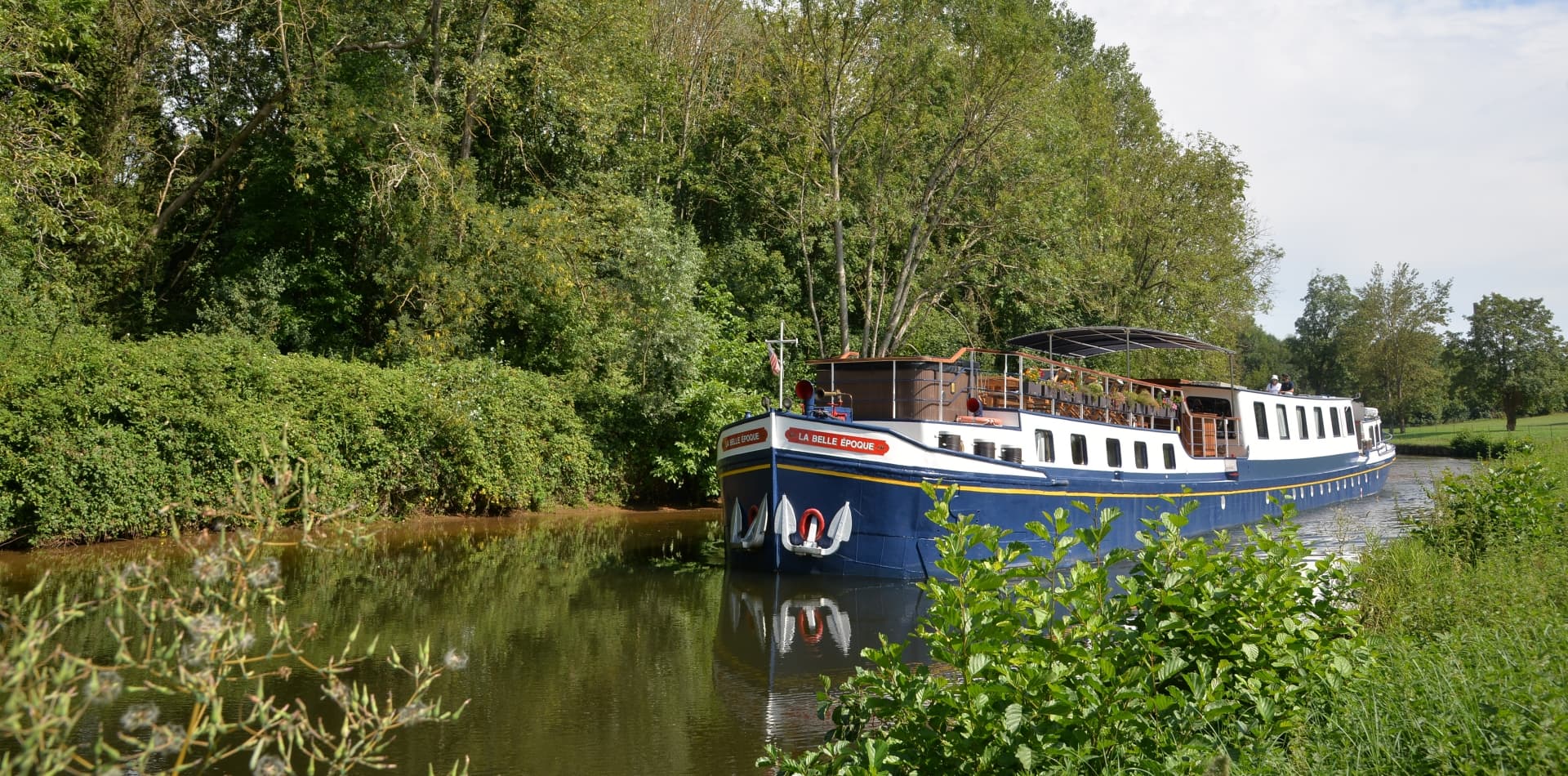
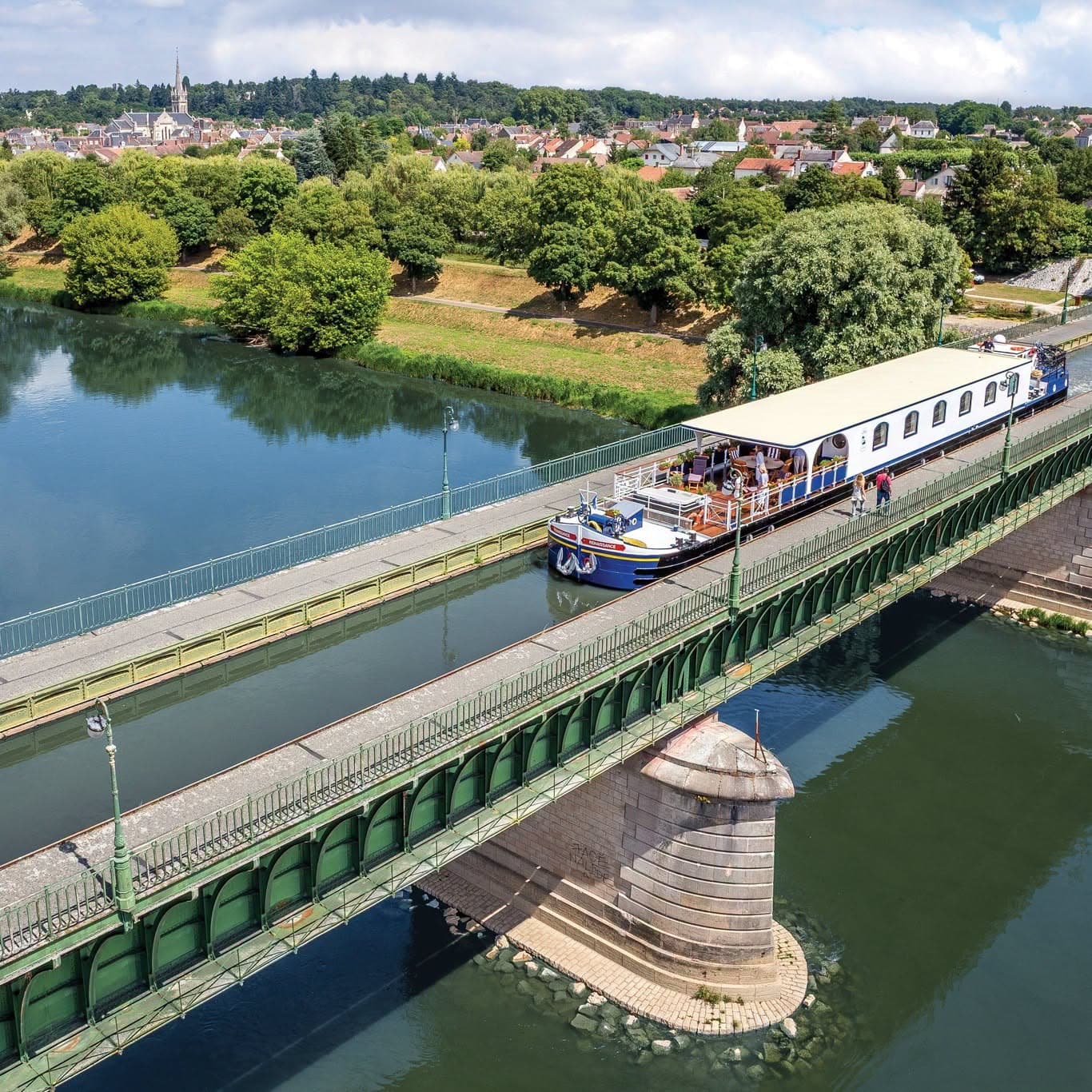
There are faster ways to see Burgundy than sailing on European Waterways’ La Belle Epoque. There are grander restaurants, more extensive wine cellars and more efficient ways of travelling around fifty miles between tiny Lezinnes and tiny Venarey-les-Laumes. Yet few journeys offer the same sense of privileged escape as this 12-berth hotel barge, drifting sedately along the Burgundy Canal at little more than five kilometres per hour.
For six nights and seven days, life aboard becomes an exercise in elegant slowness. The canal, once a busy industrial artery linking the rivers Yonne and Saône, is now tranquil and sedate: a ribbon of glass bordered by plane trees, willows, lockkeepers’ cottages and grazing Charolais cattle. Grey herons patrol the banks, kingfishers occasionally flash through the foliage and often the only sounds are birdsong, the gentle movement of water and the occasional clunk of a lock gate. It is a remarkably civilised way to travel.
The journey begins in Paris, where guests gather at the gilded Hotel Westminster in the Opera district before being collected by a Mercedes for the drive south. Within a few hours, the crowds and queues of the capital seem to belong to another world. Rural Burgundy replaces the Seine, and the elegant dark-wood lines of La Belle Epoque appear moored at Lezinnes.
La Belle Epoque: A Historic Barge with a Remarkable Past

Built in 1930 as a log-carrying barge, La Belle Epoque has had a more eventful life than her polished appearance might suggest. During the Second World War, she was secretly used by the French Resistance to transport downed Allied airmen towards Spain. Today, however, her role is considerably more indulgent. Dark polished wood, brass fittings, plush carpets and nostalgic artwork create an atmosphere somewhere between a private country house and a beautifully restored gentleman’s private yacht.
Guests are greeted with champagne and canapés before being introduced to the Captain and five-strong crew. Her affection for Burgundy is immediately apparent. Part captain, part raconteur, part gastronome; she is an enthusiastic guide to the region’s history, food and wine.

The cabins are compact but comfortable, with air conditioning, en-suite facilities, rainfall showers and generous touches that turn the former working barge into a floating boutique hotel. Luggage has already been delivered, leaving little to do but unpack, shower and head upstairs for cocktails on the sun deck.

And then there is the champagne. European Waterways’ approach to Burgundy is distinctly aristocratic, with unlimited drinks, gourmet dining and excursions that open doors into worlds most visitors would never ordinarily encounter.
Gourmet Dining and Slow Living on La Belle Epoque
The first dinner sets the tone. A Cromesquis of cheese leads into duck with raspberry sauce, followed by an assortment of French cheeses and a theatrical Norwegian omelette. Local wines accompany the meal, and the distinction between dinner, tasting and masterclass soon begins to disappear. Everything aboard La Belle Epoque is an opportunity to understand Burgundy through its pleasures.
Mornings begin with one of the Captain’s most important rituals: the bread run. Guests are welcome to accompany her to a local bakery, where armfuls of bread, croissants, brioche and pastries are collected for breakfast. Back aboard, they are served alongside fruit, coffee and eggs cooked to order. It is an uncomplicated pleasure, but one that captures the philosophy of the voyage: take something ordinary, source it exceptionally well and give yourself time to enjoy it.

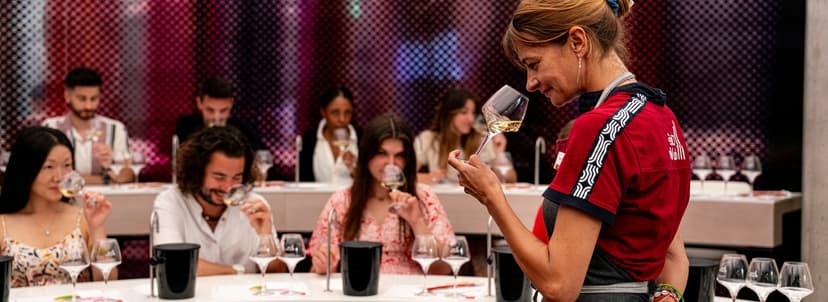
Lunches are equally leisurely. Hostesses Ema and Luna introduce wines and talk guests through aromas, flavours and finishes, while local cheeses provide a running education in French gastronomy. Over the course of the week, the cheeseboard covers around 30 varieties, from Chaource and Camembert to artisanal goats’ cheeses.
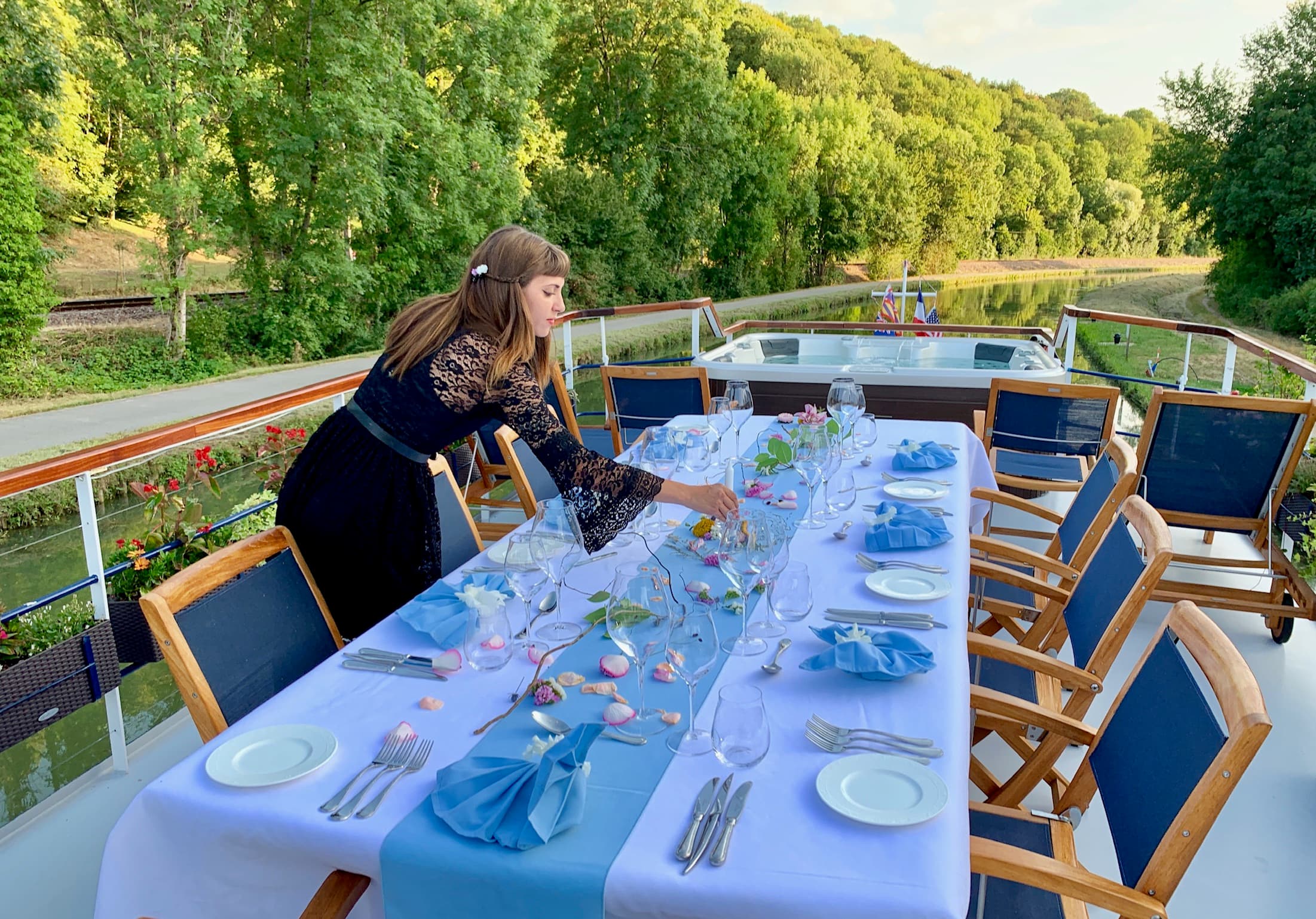
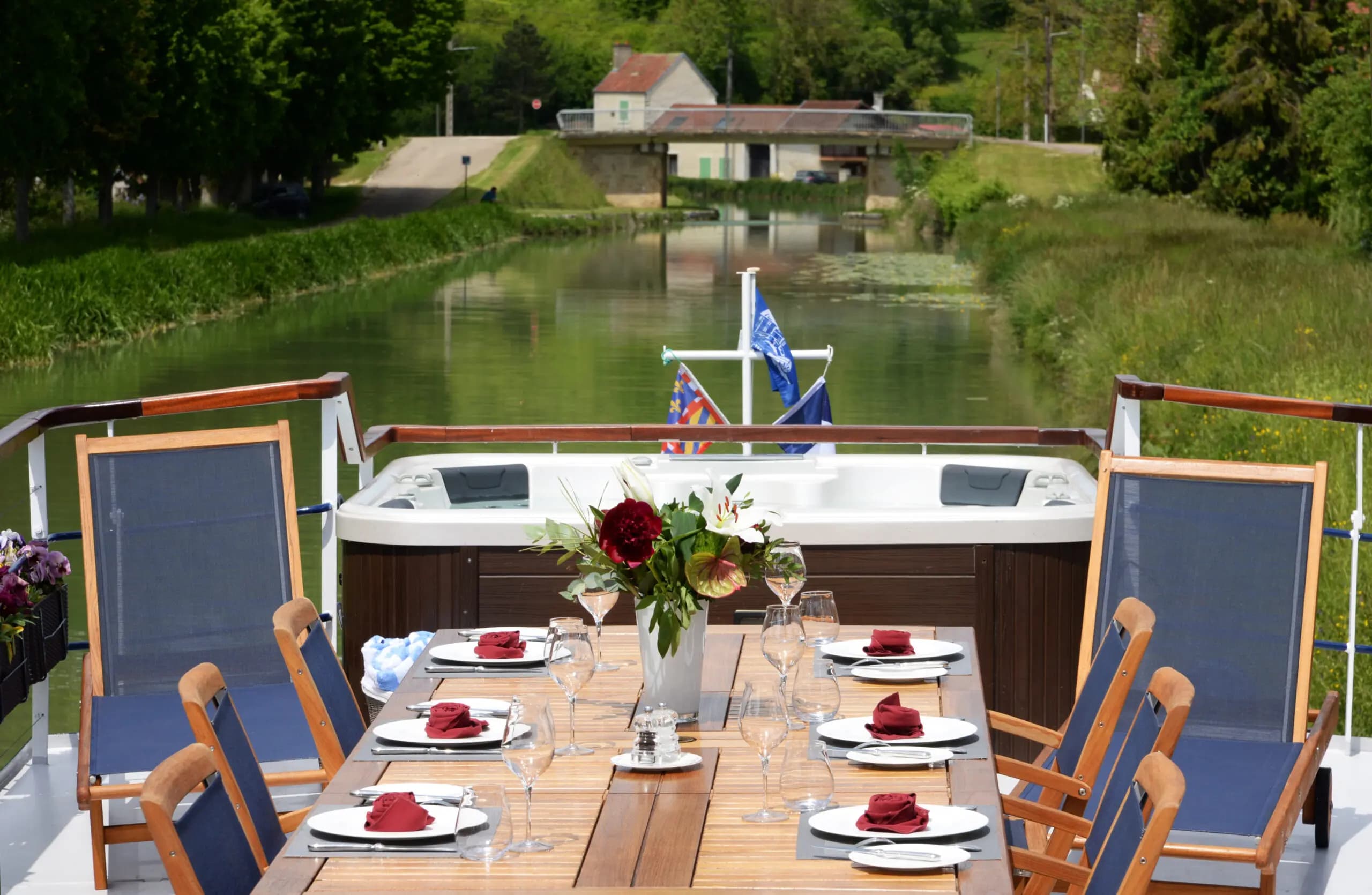
One memorable lunch is a Burgundian buffet served on the sundeck, laden with pâté en croûte, snails, charcuterie, salads, breads and cheeses. With the canal gliding quietly beyond the railings, it is difficult to imagine a more appropriate setting for a feast devoted to the region.

Chef Harris’s menus go beyond traditional French comfort food. Beetroot carpaccio, sea bass, risotto with caramelised hazelnuts and goats’ cheese, fresh fruit sabayon and inventive desserts demonstrate a contemporary approach to Burgundy’s culinary traditions.
Chablis: Burgundy’s Vineyards, Cellars and Grand Crus
One of the first major excursions takes guests from the canal into Chablis, where the landscape changes almost imperceptibly into rolling vineyards scattered across pale limestone hills.
Chablis itself is a small, elegant settlement of roughly 3,000 inhabitants, its weathered shutters and quiet streets suggesting a place that has retained its private character. Beyond the village, vineyards stretch across approximately 10,000 acres, their distinctive geology fundamental to the wines produced here.

The visit to Laroche is a lesson in just how much terroir can matter. Guests descend into historic cellars dating back to the ninth century, where guide Regis explains the relationship between the region’s limestone soils and the mineral character associated with Chablis.
Then comes the tasting. Five wines reveal the extraordinary variation that can exist within a relatively small area. A difference of only a few hundred metres, or the direction and timing of sunlight on a vineyard, can influence the resulting wine. The tasting progress towards a Grand Cru, demonstrating why Burgundy’s wines can inspire such fascination.

Yet the modern wine industry is not simply a story of ancient traditions. Regis discusses the practical challenges of climate and agriculture, from windmill heaters and electric warming systems used to protect vines against spring frosts to changing approaches to filtration and bottle closures. His observation that winemakers are essentially gamblers captures the precarious nature of viticulture. Frost, rain, heat, disease and hail can all intervene between vineyard and bottle. For the visitor, however, the rewards are deliciously simple: taste, compare and appreciate.
Burgundy’s Châteaux and the Theatre of Power
If Burgundy’s vineyards tell the story of the land, its châteaux reveal centuries of wealth, ambition and political calculation.
At Ancy-le-Franc, our guide turns a visit to a Renaissance château into a lesson in power. Built in the 16th century, the elegant residence was designed not merely as a home but as a statement. Its architecture, heraldic decoration, portraits and elaborate interiors communicated wealth, status and allegiance to the French Crown.

The building was completed remarkably quickly, partly through the clever use of trompe-l’œil techniques that created the impression of intricate carved stonework while reducing the time and expense of construction. The architecture was only the beginning: decoration continued for decades as the residence was transformed into a suitably magnificent seat of power.

There is an appealing intimacy to visiting these places with a small group. Rather than following a mass of jostling tourists through crowded rooms, La Belle Epoque’s guests can take their time, ask questions and absorb the atmosphere.
As we visit, the romance of aristocratic heritage meets the realities of modern conservation. Maintaining a historic château is expensive and preserving authenticity while attracting visitors is a delicate balancing act. The chateaux also underline the deep relationship between historic estates and their communities. During the Second World War, when Nazi forces arrived, local villagers helped conceal chateaux treasures, protecting pieces of the families’ heritage at considerable personal risk.

A Private Château Lunch with the Baron and Baroness
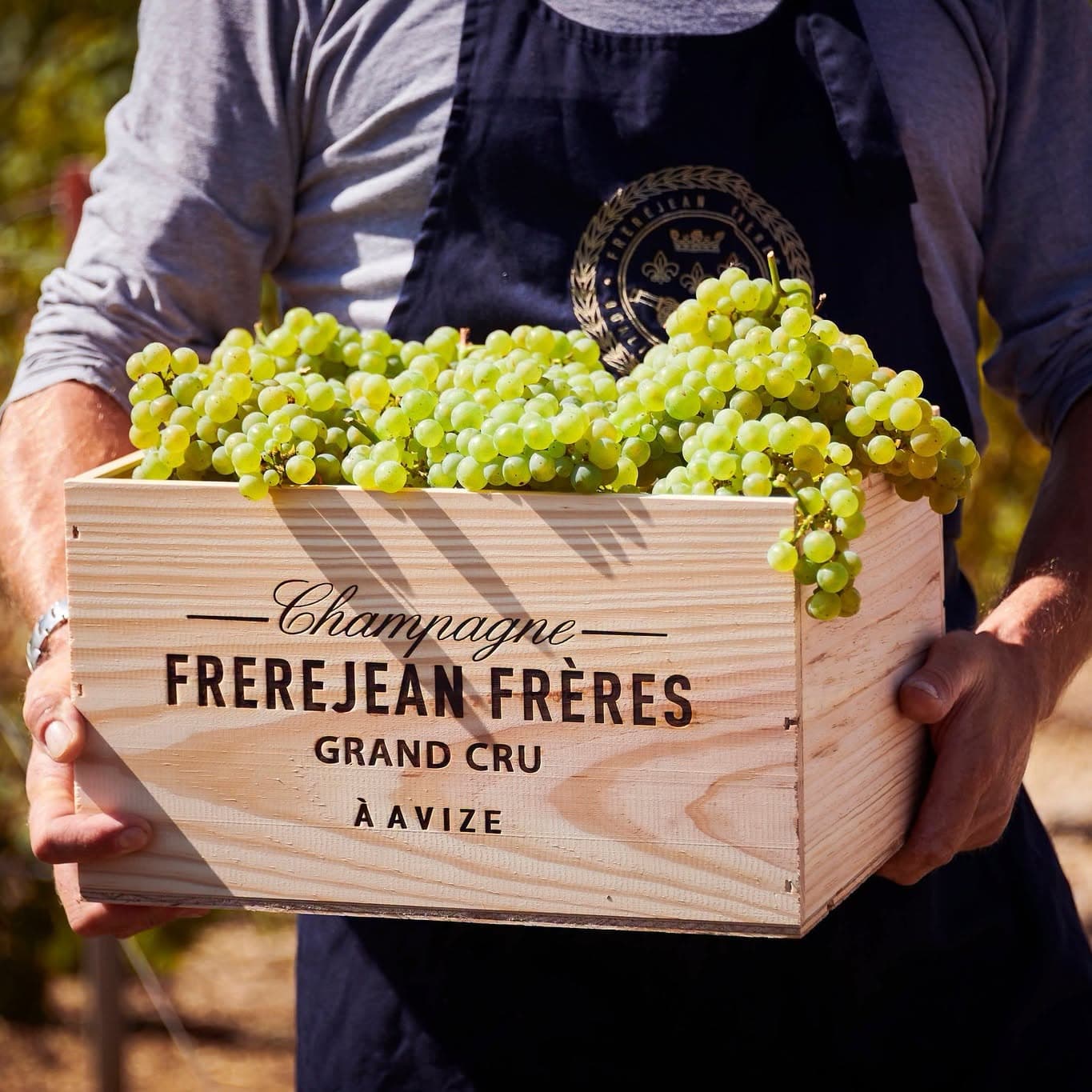
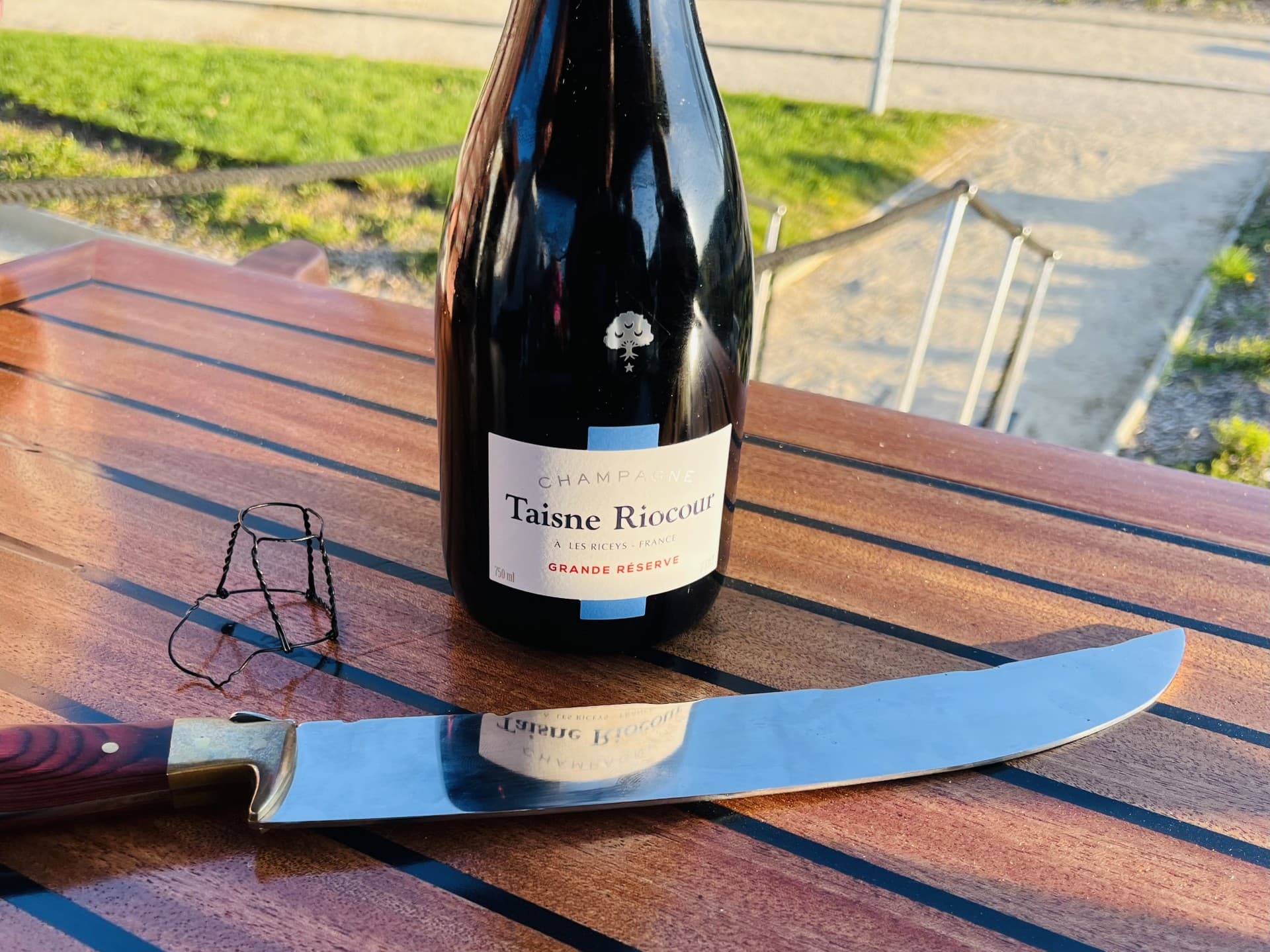
For many guests, the high point of the cruise comes with a visit to the House of Taisne Ricour. The vineyards lie in one of the southernmost parts of the Champagne region, where land can command extraordinary prices: an acre of vines may be worth around €1 million. Yet the value of the land does not make growing grapes any less hazardous.

Baron Charles de Taisne explains how late frosts, hail, mildew, disease and finally early frosts can threaten a harvest. His vineyards are distributed across different parcels, helping to spread the risks. Even the apparently minute details of Champagne production are regulated, from vine density to the size of lettering permitted on bottle labels.
Champagne, too, is an exercise in precision. Rather than relying solely on individual vintages, producers frequently blend wines from different years and reserve stocks to create a consistent house style. Achieving that consistency places enormous demands on the palate and judgement of the people responsible for the final blend.
After exploring the vineyards and winery, guests are taken to the local church, whose scale and stained-glass windows seem more cathedral than village church. Then comes the experience that has the unmistakable feel of a private invitation rather than a standard excursion.

At the Baron’s limestone château, caviar canapés and champagne await. Baroness Ségolène de Taisne welcomes guests beneath portraits of the family’s ancestors before a four-course lunch is served by the household staff. The tableware includes silver cutlery bearing the combined coats of arms of Charles and Ségolène, a wedding gift that provides a tangible link between personal history and centuries of aristocratic tradition.
From Alesia to the Abbaye de Fontenay
The itinerary is carefully balanced so that Burgundy’s indulgence is occasionally interrupted by reminders of a more austere past. We pass the site associated with the Battle of Alesia, where Julius Caesar’s forces defeated the Gauls in 52BC. It is a landscape that evokes a very different France from the one encountered over champagne and château lunches. More contemplative still is the Abbaye de Fontenay.
Founded by Cistercian monks who rejected what they regarded as the excessive indulgence of contemporary monastic life, Fontenay was built around principles of chastity, charity and silence. The monks’ existence was austere: simple beds, cold stone and long periods devoted to prayer.\
Today the monastery is UNESCO recognised, yet its most remarkable quality is not its status but its atmosphere. The immaculate gardens, restrained architecture and quiet courtyards offer a powerful contrast to the abundance elsewhere in the itinerary. After days of champagne, fine wine, elaborate meals and aristocratic interiors, Fontenay encourages a different form of luxury: silence. There is time to pause, wander and simply think.
The Captain’s Dinner: A Six-Course Celebration of Burgundy
By the final evening, the rhythm of La Belle Epoque has become familiar. Guests know the crew, the canal and the daily rituals. With appropriate theatricality, the captain opens a bottle of champagne in a flourish of a sabre, marking the beginning of the Captain’s Dinner.

The meal is a six-course celebration of Burgundy and French culinary tradition. Scallop carpaccio is followed by French onion soup, accompanied by a Chablis Grand Cru. A lemon sorbet receives a splash of champagne before Charolais steak arrives, cooked individually to order.
The final cheeseboard is almost an event in itself. After sampling dozens of cheeses during the week, guests are reminded that French cheese has its own mythology. Valençay, for example, is traditionally associated with Napoleon, who is said to have been displeased by its pyramid shape after returning from a disastrous Egyptian campaign. He sliced off the top of the with his sword.

Dessert brings the chef’s inventive mille-feuille, with pistachio adding an unexpected dimension to the classic French pastry. It is a fitting conclusion: traditional Burgundy interpreted with a contemporary touch, accompanied by fine wine and champagne, enjoyed slowly in the company of fellow travellers.
Why La Belle Epoque Is the Definition of Slow Travel
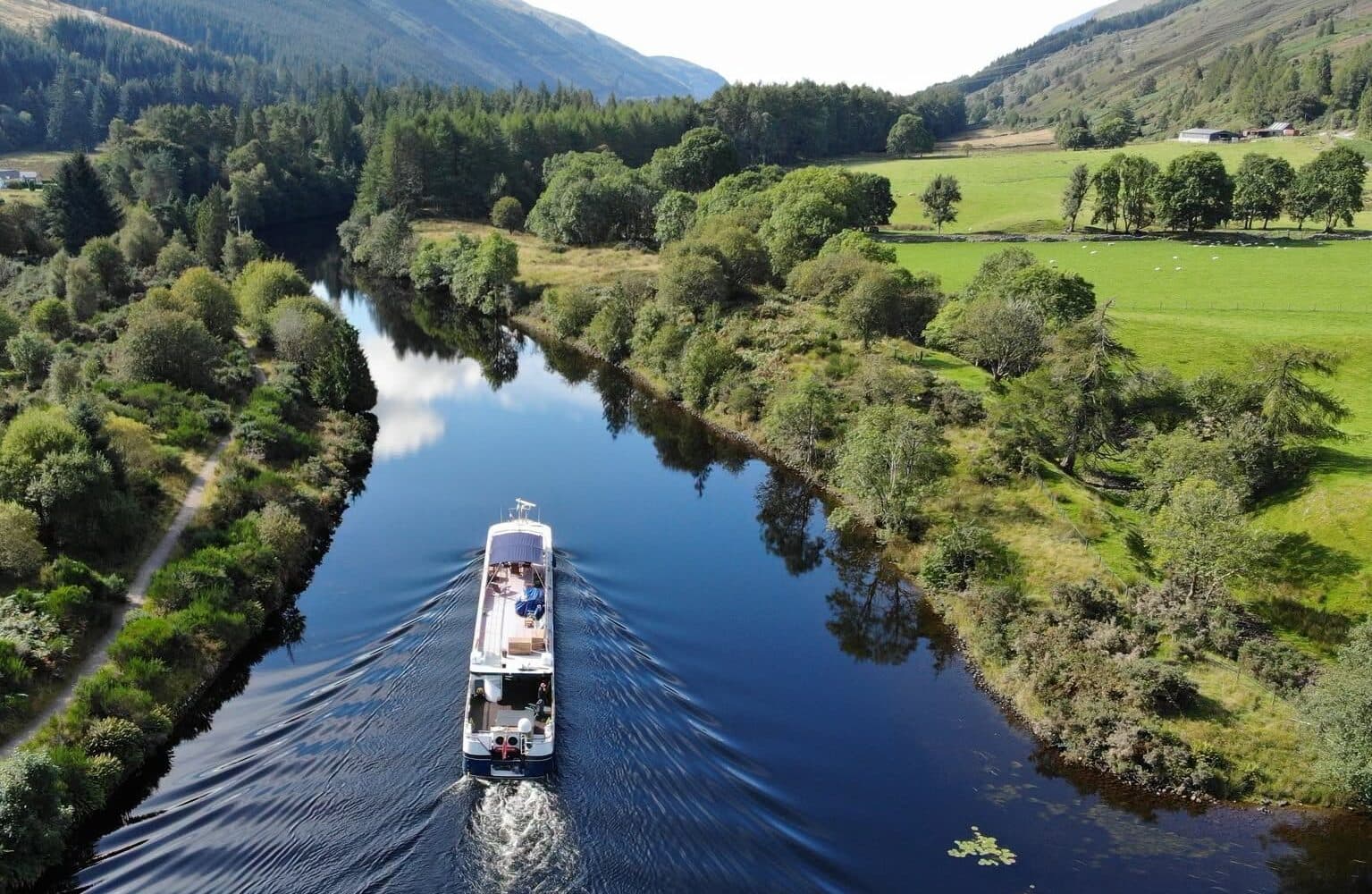
]La Belle Epoque moves slowly enough to make the journey itself an attraction. Guests can settle into a deck chair, read a book, watch the countryside pass or simply settle into the hot tub. At various points, it is possible to walk along the towpath while the barge continues at its leisurely pace, or borrow one of the bicycles for a few kilometres beside the canal.
Over six nights, La Belle Epoque has travelled less than 50 miles. Yet the distance is almost beside the point. This is not a cruise designed to maximise destinations. It is designed to present the true depths of Burgundy.

It is an intimate cruise too. People arrive as strangers and quickly become companions, sharing tables, excursions, tastings and stories. bFor families and groups of friends, the ultimate luxury is to charter the entire barge. The itinerary can then be tailored around particular interests, from wine and gastronomy to walking or golf. Ultimately, La Belle Epoque provides a luxuriously leisurely voyage through Burgundy.
Burgundy unfolds at the pace of the canal, revealing its vineyards, châteaux, cuisine and history one unhurried moment at a time. By the end, the greatest indulgence is perhaps the simplest. Living life like a true Burgundian. Walking to get the fresh bread. Lingering over lunch. Raising a glass of Chablis - or champagne - to the good life.
Michael Edwards
Michael Edwards had his first travel article published by The Independent in 1986, on Santa Catalina just off the Californian coast. Subsequently, he has written for The Guardian, Telegraph and many other media. He enjoys writing on restaurants, travel and golf. “In 1980 I read Lauren Van der Post’s Lost World of the Kalahari and never dreamed that one day I would be tracking through the desert with a Bushman before writing my own piece on The Land Made by The Devil,” says Michael.
Read More
Salon Privé 2026 at Blenheim Palace: Inside Britain’s Luxury Automotive Garden Party
Great Rail Journeys and Amadeus Rhine River Cruise: Exploring the Rhine by Rail and River
Valencia’s Ultimate Flamenco Experience: A Night at La Bulería