Salon Privé 2026 at Blenheim Palace: Inside Britain’s Luxury Automotive Garden Party
There is a particular kind of quiet that falls over a crowd when a rare car rolls past. I felt it again this year at Salon Privé, the UK's premier luxury automotive garden party, held every September on the South Lawn of Blenheim Palace. Not silence exactly, more a held breath, the kind you get in a gallery when someone stands in front of a painting they didn't expect to move them. I have felt that hush more times than I can count, and I still don't fully understand it. A car is, after all, just glass and metal and rubber assembled to a purpose. And yet the good ones, the truly great ones, carry something that feels closer to sculpture than machinery. They are engineering poetry, and every so often a piece of that poetry rolls past close enough to touch.
Cars sit in an odd corner of the luxury world. Watches get their glass cases and their loupes. Yachts get their marinas and their envy. Jewellery gets Boodles windows and quiet nods across a room. But a car, when it is rare enough, does something none of those other objects quite manage: it moves, it sounds a certain way, it carries the fingerprints of the person who commissioned or restored or simply loved it. A collectible car is a statement of taste, yes, but it is also a personal narrative on wheels. Which is why, once a year, the automotive elite of Britain and a fair few from further afield gather at Blenheim Palace to let those narratives out onto the lawn.
Salon Privé 2026 Dates and Attendance at Blenheim Palace
This year marked the 21st edition of Salon Privé, running from Wednesday 2 September to Sunday 6 September, and it has quietly become the UK's premier luxury automotive garden party and one of the leading concours events on the European calendar. What started life as a more compact gathering has grown into a five-day event that folds together classic elegance, modern hypercar theatre, fine dining and no small amount of fashion. More than 30,000 guests came through the gates this year, a mix that ranges from serious collectors with seven-figure cars in their own garages to people who simply wanted a good day out with a glass of bubbles in hand.
That range matters. Salon Privé could easily have narrowed itself into a closed shop for people who already know each other. Instead it has kept enough breadth in its programme that a first-time visitor and a lifelong Concours judge can both leave feeling like the day was built for them.
Blenheim Palace: The Perfect Setting for a Concours
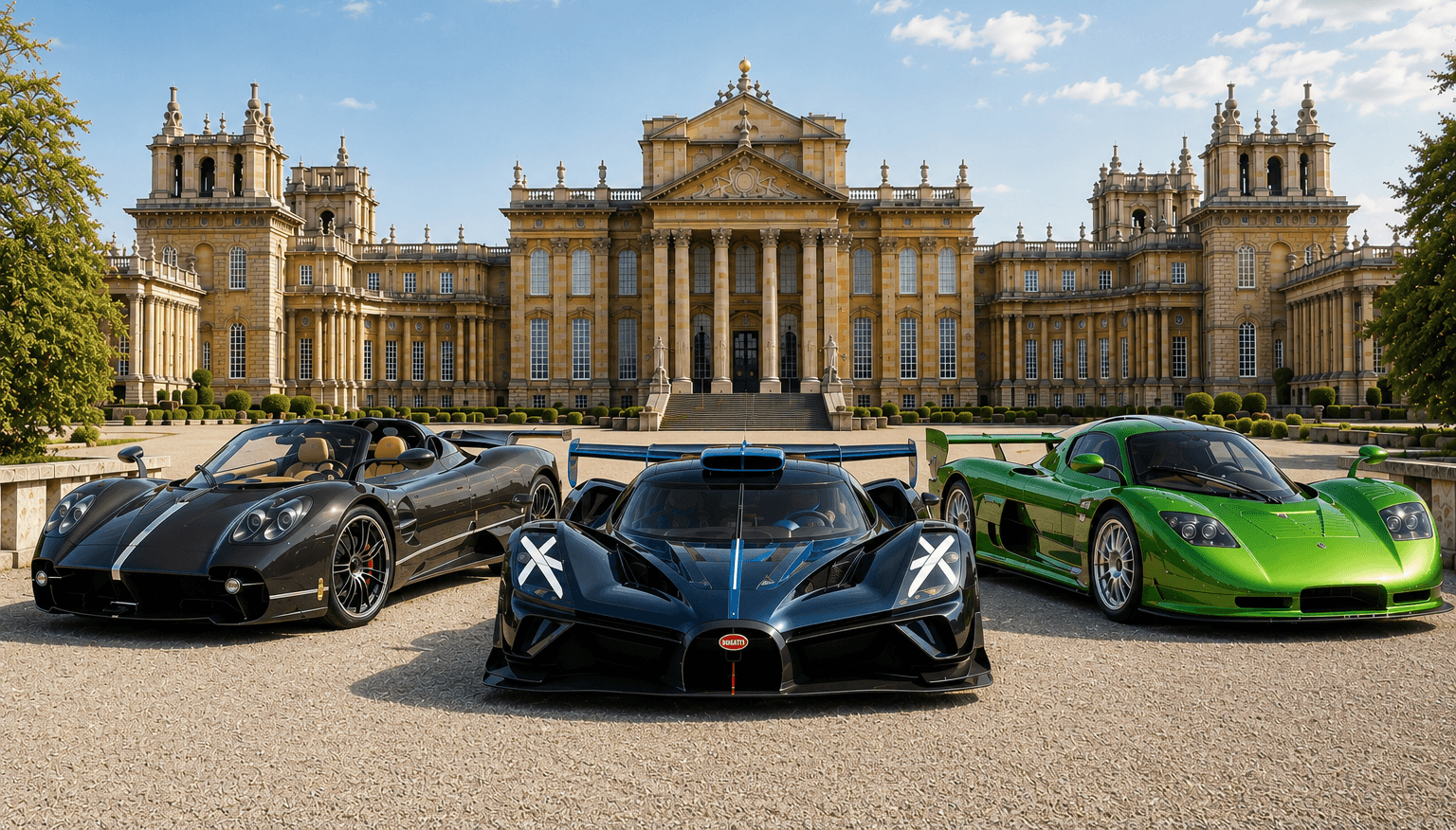
None of this would work half as well anywhere else. Blenheim Palace is a UNESCO World Heritage Site and the birthplace of Sir Winston Churchill, and it brings a kind of gravity that no purpose-built showground could fake. The South Lawn sweeps out in front of the house with the sort of scale that makes even a Bugatti look, briefly, like a toy. There is something in the contrast that does the real work here: centuries-old stone and formal gardens set against carbon fibre and forced induction. It should feel wrong. It doesn't.

Part of the trick is restraint. The covered Automotive Gallery, a glass structure that anchors the display, protects the most significant cars without boxing the whole event indoors. The open lawns stay the heart of it. You are not walking through a convention centre. You are walking through a garden party that happens to have a Duesenberg in it.
Salon Privé Concours 2026: Cars, Classes and UK Debuts
The cars themselves were grouped with real curatorial thought rather than dumped by marque. Seventy cars competed across twelve classes this year, spanning almost a century of design, and one of the standout clusters, The Italian Job, marked 60 years of the Lamborghini Miura. Alongside it sat new classes built specifically for the last three decades of limited-production machinery and the last two decades of what Salon Privé calls Hypercar Heaven, with Koenigsegg getting its own showcase and a deliberately staged Pagani versus Bugatti pairing that had people genuinely arguing on the lawn about which marque builds the more honest hypercar.

Go back further and the pre-war material did not disappoint either. A 1935 Duesenberg SJ Gurney Nutting Speedster sat among the Golden Age of Motoring entries, the kind of car that makes you stop mid-sentence. British heritage had its own moment too, with a class marking 80 years of Bristol Cars, a marque that rarely gets the spotlight it deserves outside Britain.

Then there were the debuts, and this year's crop leaned hard into UK firsts. The Lamborghini Revuelto SV had its UK debut here, a V12 hybrid claiming 1,065 CV, 1,425 Nm of torque and 0 to 100 km/h in 2.4 seconds, shown pointedly close to the Miura anniversary class it takes its SV name from. The Urus SE Performante made its own Blenheim debut alongside it, a reminder that Lamborghini's idea of drama now stretches to SUVs too.
Brabus: The BODO
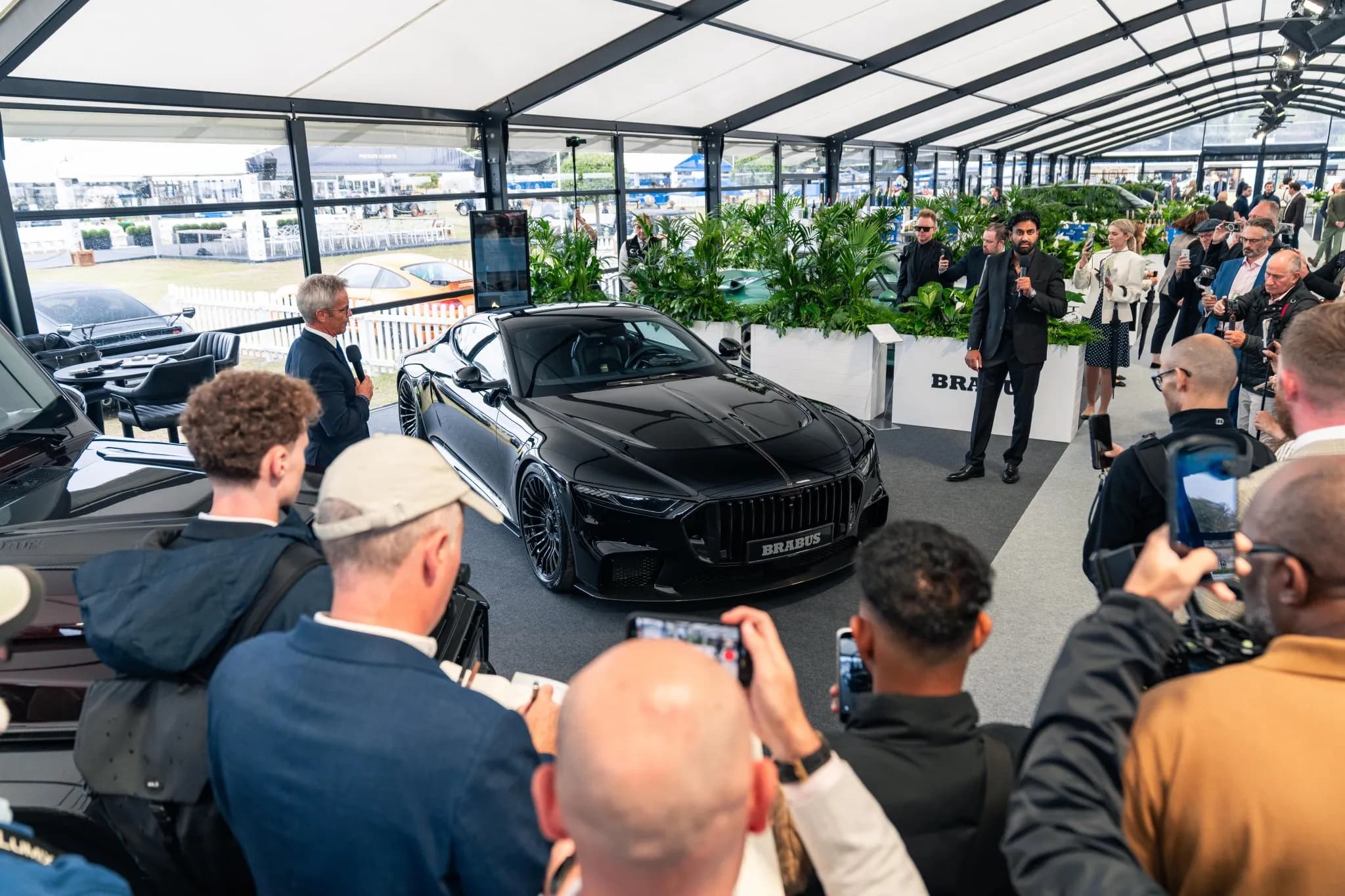
Brabus brought two UK debuts. The BODO is a carbon-bodied 2+2 limited to 77 examples, built around a hand-assembled 5.2-litre twin-turbo V12 with a claimed 0 to 62 mph in 3 seconds and a 223 mph top speed. The 800 Cabrio takes the more familiar Mercedes-AMG G63 and turns it into a 50-unit convertible with more than 500 newly developed components, which is either absurd or brilliant depending on how you feel about open-top off-roaders.
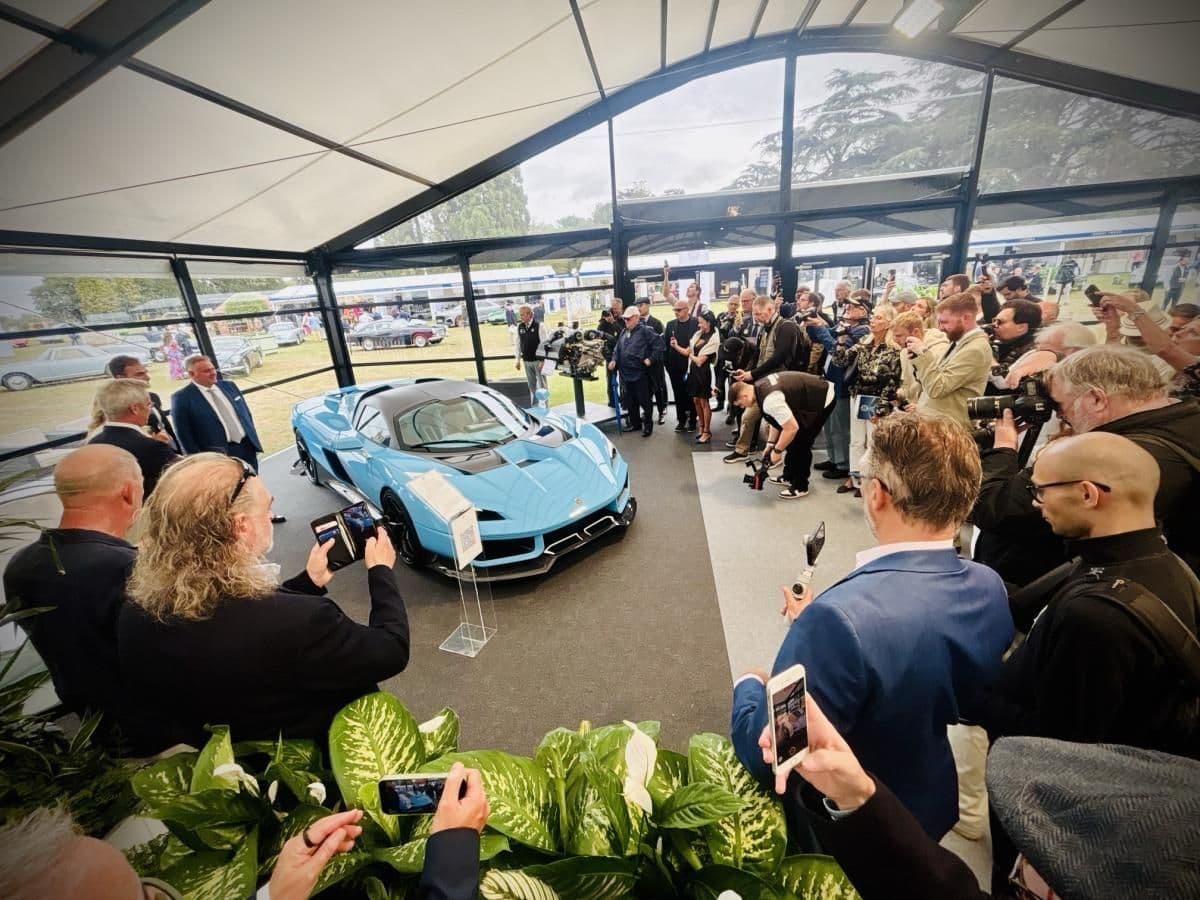
Polestar and the Giamaro Krafla rounded out the new-metal side of the lawn, the Krafla arriving in a Mediterranean livery of Azzurro Giamaro, Bianco Infinito and Grigio Cenere over exposed carbon fibre that made it one of the more photographed cars of the week.
Restomod and Electric Classics: Breathing New Life Into the Old Guard
Twenty years ago, the fascination at an event like this would have centred almost entirely on discovery: what rare survivors are still out there, who owns them, where have they been hiding. That story hasn't gone away, but the more interesting one now is what happens after a car is found. Watching a cherished classic get a genuine second life has become, for me, the more compelling thread running through modern concours culture.

Specialists such as Electrogenic sit right at the centre of that shift. Sometimes they go looking for a car worthy of a full restoration. More often, owners come to them instead, bringing in machines that were once a parent's or a grandparent's, cars that have sat quietly in a family for decades and are now being handed down. What follows is not a light refresh. It is new suspension, reworked interior electronics, air conditioning where there was none, and, most significantly, an entirely new engine and drivetrain. The result is a car that is more powerful, more efficient and easier to actually drive, with many of these conversions ending up hybrid or fully electric.
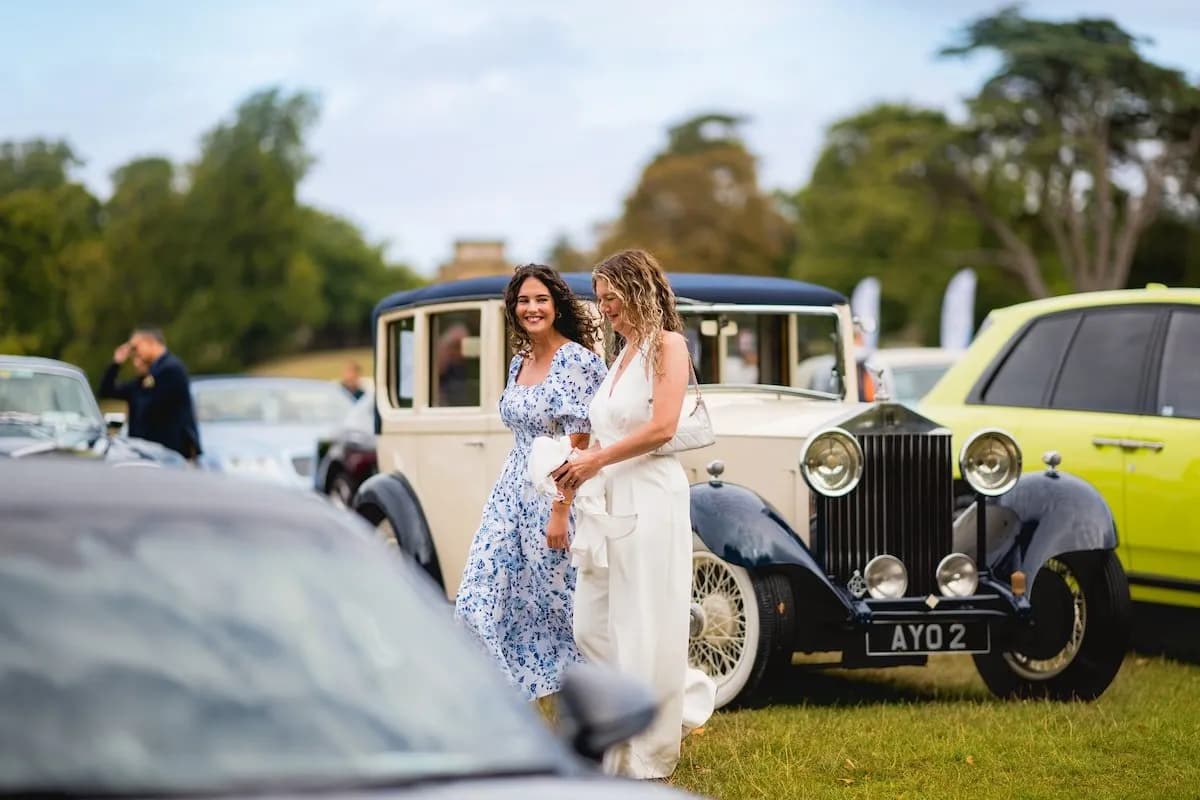
This year that thread was represented on the lawns by Electrogenic's electrified 1973 Rolls-Royce Phantom VI, a car originally commissioned for ceremonial duties with the City of London and now reborn with a modern drivetrain sitting quietly under its formal, unmistakably Rolls-Royce body. It is a strange kind of time travel, watching a car built for state occasions half a century ago now running on electricity.
Theon Design offers a different version of the same idea. Its work starts with an air-cooled Porsche 911, usually a 964, which gets stripped back and rebuilt with carbon fibre bodywork, a reworked flat six pushing past 400 horsepower, modern suspension and brakes, and an interior redesigned around the client rather than the original spec sheet. It isn't restoration in the traditional sense. It is closer to asking what a 964 could have been if nobody had needed to compromise. Where the definition of a great classic once began and ended with originality, it increasingly now includes how intelligently a car has been reinvented.

Supercars vs Hypercars: What Actually Separates Them
Walking the lawn long enough, you start to notice that "supercar" and "hypercar" get used almost interchangeably by people who should know better, and the two things are not the same at all. A supercar is still, at its core, a flagship. It is the fastest, most dramatic version of what a major manufacturer already builds, produced in the hundreds or low thousands, and while it is extraordinary, it is still recognisably part of a normal model range. A hypercar sits a level above that. It is built in the tens rather than the hundreds, priced from seven figures upward, and engineered around a single obsession, whether that is a lap time, a top speed record or an idea nobody else has been mad enough to try. Buying one is less a purchase than an application for membership.

A handful of cars on the Blenheim lawn made that distinction impossible to miss. The Koenigsegg Regera is about as pure a hypercar as exists anywhere. Its hybrid powertrain produces more than 1,500 combined horsepower, and instead of a conventional multi-speed gearbox it uses Koenigsegg's Direct Drive system, sending power to the rear wheels without the usual string of ratios in between. Body panels open themselves through the Autoskin system, and active aerodynamics reshape the car as it moves. None of that is showmanship for its own sake. It is what happens when a small, obsessive engineering team is allowed to ignore every convention a normal manufacturer has to respect.
The Delage D12 makes the same point from a different angle. Delage was a French marque that went quiet in 1953, and its revival exists for one purpose: to chase a production car lap record at the Nürburgring. The D12 pairs a hybrid V12 producing over 1,000 horsepower with a fighter jet-style canopy and a tandem seating layout that puts the passenger directly behind the driver rather than beside them. Nobody accidentally ends up with a seating arrangement like that. It is a car designed around a single, near-obsessive brief, which is precisely the hypercar temperament.
Talos Vehicles told a slightly different version of the same story, proving the line isn't only drawn in horsepower. Its Talos XXT starts life as a Ferrari 599 GTB before being stripped and rebuilt into a track-inspired road car limited to five examples worldwide. It doesn't chase four-figure power outputs, but the bespoke engineering, the tiny production run and the price tag well north of a million pounds push it into hypercar company on exclusivity and craftsmanship alone.
Then there is the third route in: heritage marques deliberately building future collectibles rather than waiting for the market to decide. The Porsche 918 Spyder Sonderwunsch and Ferrari Daytona SP3 were both designed knowing exactly what they would become, and the Bugatti Bolide takes the idea to its logical, track-only extreme. Between the four of them, they cover most of what separates a hypercar from a very fast car: obsessive purpose, absurd rarity, motorsport-derived engineering, and a level of ambition that a mainstream flagship, however brilliant, simply isn't built to carry.
Electric Cars Enter the Concours: The Rimac Nevera Moment
Perhaps the clearest sign of where this is heading was the 2025 Rimac Nevera Time Attack, the first fully electric car to compete in the Salon Privé Concours itself, rather than simply appearing among the modern debuts. It sat there on the same lawn as the Duesenberg without anyone treating it as a novelty act, which says something about how quickly the collector world's assumptions are shifting.
Photography by Chris Cooper/ ShotAway/ www.ShotAway.com/ #shotawaydotcom
The Daily Parades: Salon Privé's Best Moments
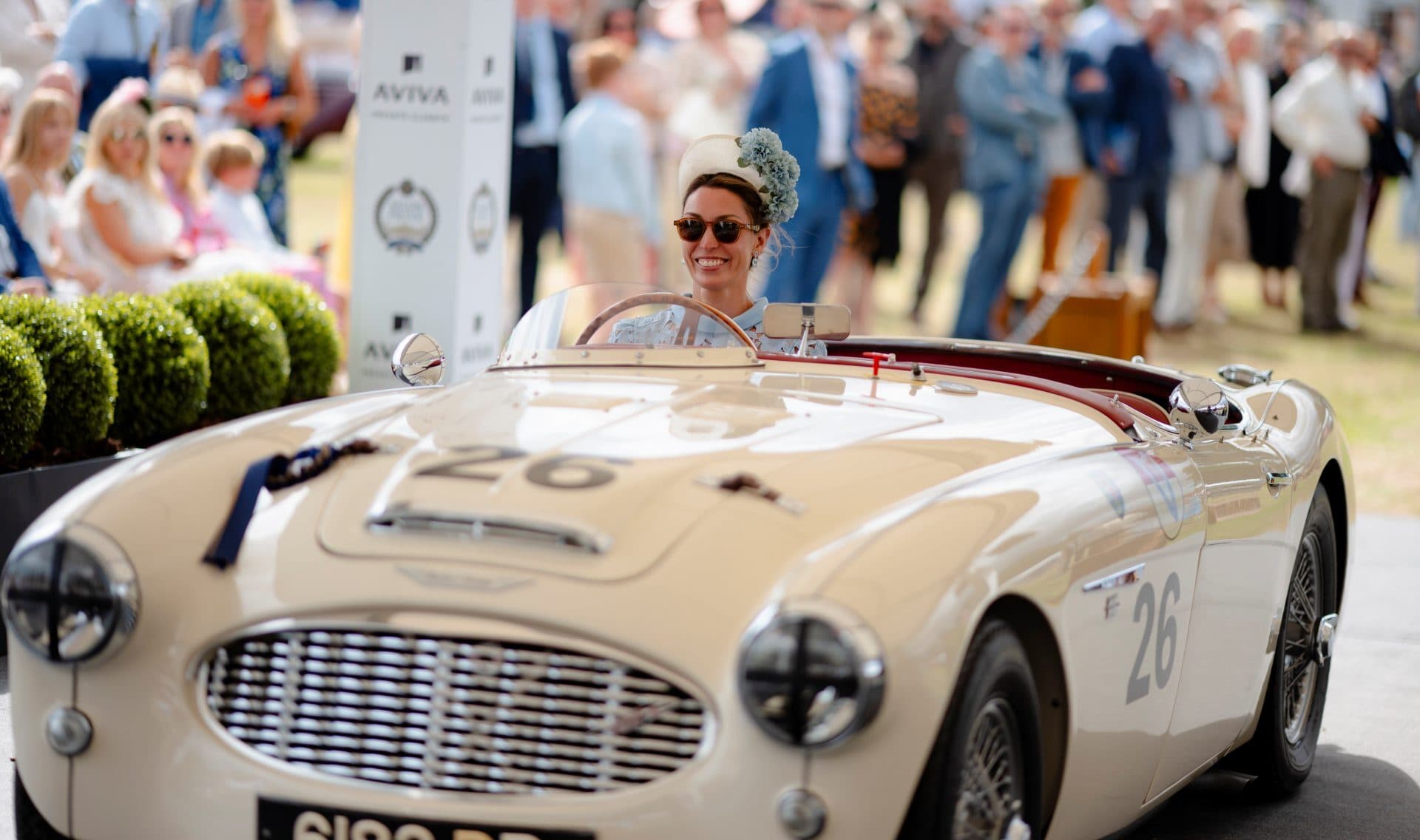
Static displays are one thing, but the daily parades are where Salon Privé actually earns its reputation. Each day, a procession of Concours cars and supercars moves through the tented and lawn areas, and watching a crowd's reaction is honestly as interesting as watching the cars.

There is that same hush I mentioned earlier, then a ripple of noise as something particularly rare or particularly loud comes into view. It is the moment the static becomes theatre, and it is the reason people who have already walked every display twice will still push to the front of the rope for a parade they have already watched once that day.
Beyond the Cars: Helicopters, Jewellery and the Luxury Village
Of course, an event this size is not only about horsepower. Helicopters, a Bell 407GXi and a 505, sat on display for anyone weighing up their next big purchase. Fashion and jewellery, with Boodles a prominent presence, threaded through the luxury retail village alongside watches and wheel and accessory specialists. Saturday brought the Club Trophy by Lockton, which pulled in more than 1,500 privately owned sports, super and hypercars from owners' clubs across the country, and Sunday's Lifestyle Club Day kept that community spirit running right to the end of the week.
What struck me, walking through it all, is how deliberately un-showy the atmosphere manages to stay given the value sitting on that lawn. It is exclusive, certainly, but it never tips into cold. People here still stop to talk to strangers about a paint colour or an engine note. That garden party feeling is not marketing language. It is genuinely what it feels like to be there.
Inside the Glass House: Salon Privé's Private Hospitality
The public dining village does its job well, with street-food-style stalls sitting alongside more considered gourmet offerings and bars pouring Pommery Champagne and cocktails from midday. But the two premium spaces are where the event's social gravity really sits. The Spencer Pavilion offers a more relaxed gourmet buffet lunch with alfresco seating and drinks included, a good option if you want the quality without the formality.

The Glass House is the one people talk about afterwards. Private, raised above the lawns with proper views back towards the Palace, it runs to a four-course seated lunch with wine, afternoon tea later on, a steady stream of Pommery Champagne and its own private terrace. This is where the actual business of the week happens, quietly, over coffee rather than across a negotiating table. If you want to understand who really runs the collector car world in Britain, this pavilion is a better place to start than the show field.
Salon Privé Best of Show 2026: Lamborghini Miura vs McLaren F1
Every edition needs a handful of moments that end up being what people remember, and this year gave up two big ones on the Concours field itself. The 1969 Lamborghini Miura P400 S, owned by Amir Ravan and the RLC Collection and restored over four years by Tom Hartley Junior's team, took Best of Show in the Concours d'Élégance. Ravan called the Miura a genuine turning point in automotive history, and standing in front of that gunmetal grey example, it was hard to argue.

Alongside it, in a genuine first for the event, a second Best of Show was awarded. Terry Bramall's 1995 McLaren F1, designed by Gordon Murray and restored by Lanzante, took the inaugural Concours d'Excellence, the first time in the Concours' 21-year history that two cars have shared the top honour. The Miura is sensual and almost romantic, all clean proportions and very little visual clutter. The F1 is more severe and more technical, built by people who cared about driving above everything else. Putting them together at the top of the same competition was a deliberate acknowledgement that a 1990s supercar can now carry the same historical weight as a sixties icon.

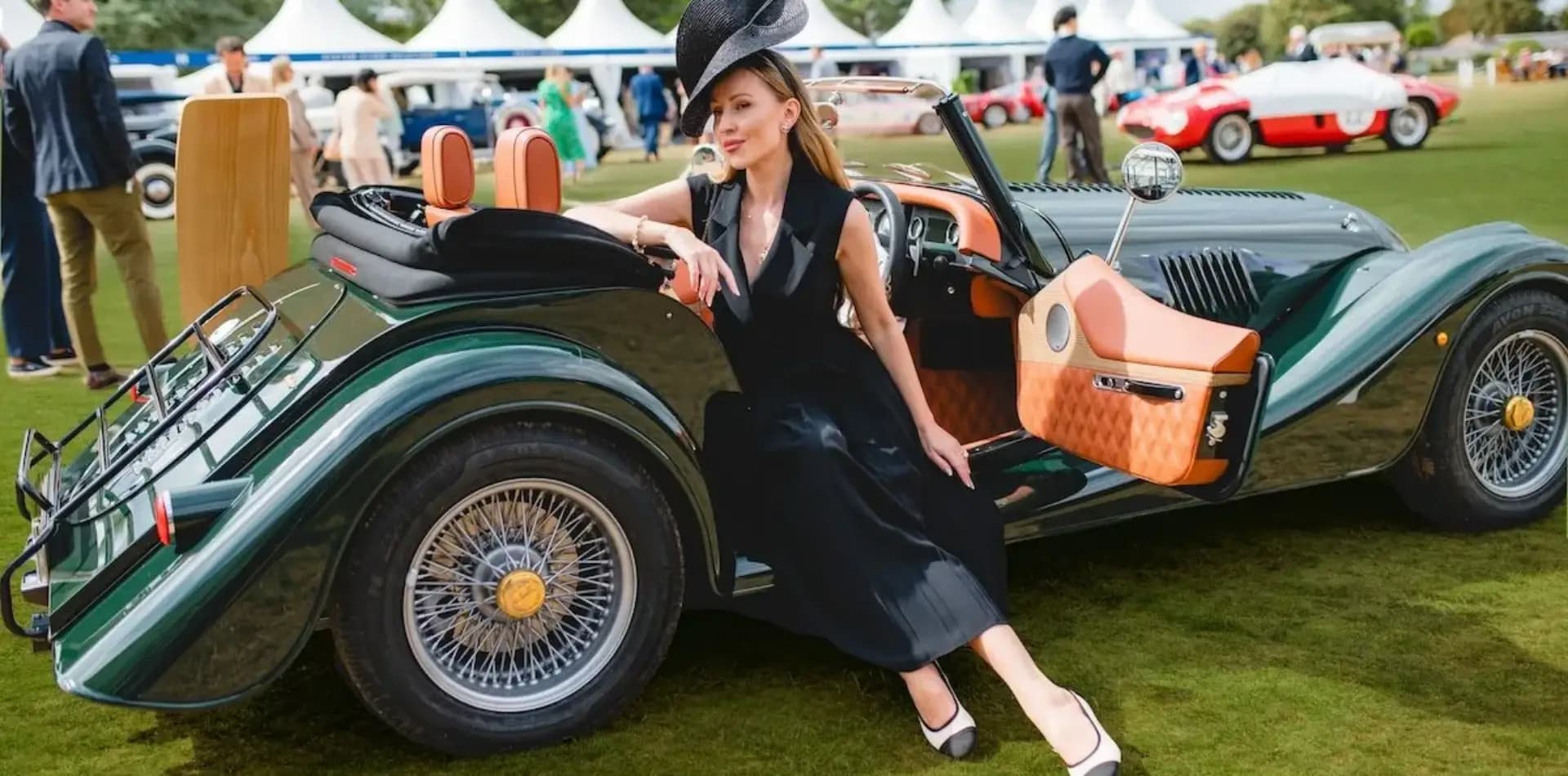
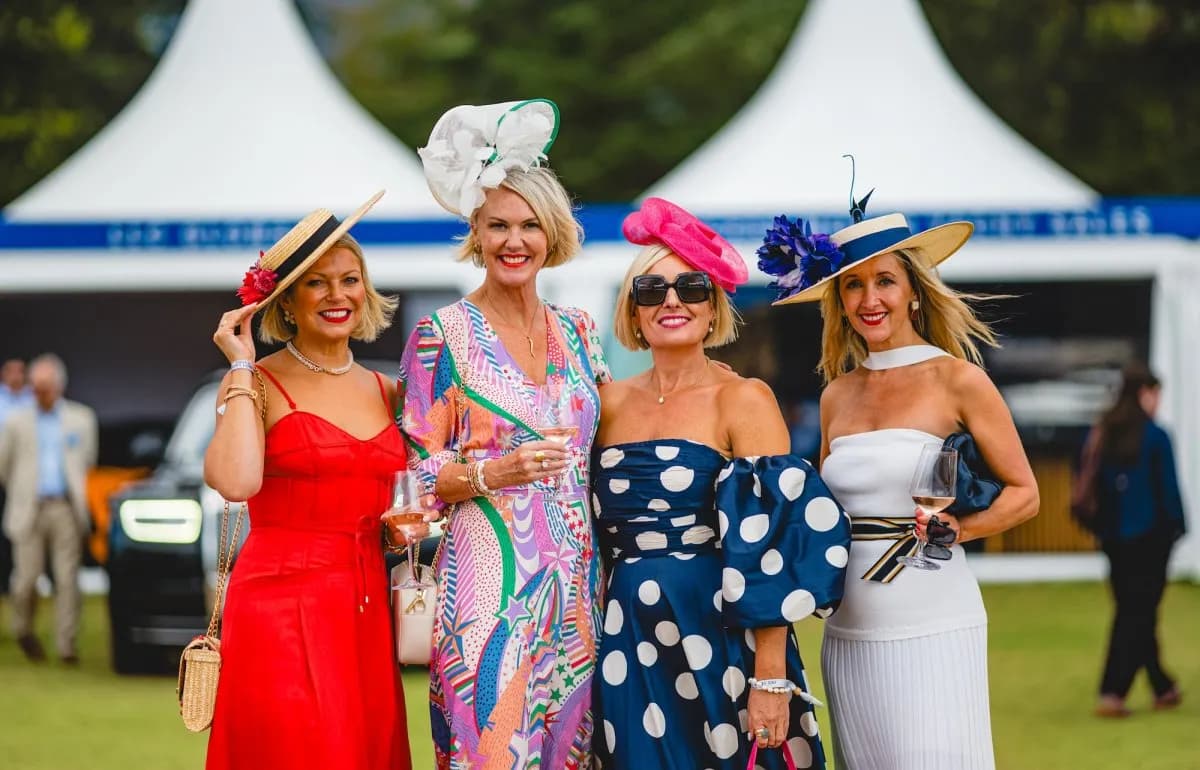
Style had its own winners too. Billy Hibbs took the Concours Style Award, and Gillian Carpenter walked away with the Boodles Best Hat on Ladies' Day, a competition that gets more competitive and more inventive every year. Richard Hammond, judging the Concours de Vente across the weekend, remained his usual mix of genuinely knowledgeable and happy to stop for a photo, which goes some way to explaining why fans keep turning up for him specifically.
Salon Privé: More Than a Car Show
Salon Privé is not really a car show, not in the way that phrase usually gets used. It is a refined intersection of heritage, performance, style and a very particular kind of social exclusivity, and it happens to be set on one of the most beautiful historic estates in Britain. That combination is hard to fake and harder still to replicate, which is presumably why nobody else in the UK has managed it.

What I keep coming back to, driving away from Blenheim each year, is that fascination with cars I mentioned at the start. It never fully makes sense on paper, why an assembly of metal and glass should move a grown adult to silence. But then a Miura rolls past against the stone of a Churchill birthplace, or a fifty-year-old Rolls-Royce hums past on a modern electric drivetrain, and the whole thing clicks into place again. That is the lasting impression Salon Privé leaves behind: not the numbers, not the price tags, but the shared oohs and aahs on a lawn that has seen three centuries of history and still finds room for one more good story every September.

Glenn Harris
Glenn Harris is an accomplished journalist focusing on luxury travel, fine dining, and exclusive lifestyle events. His wanderlust has taken him to over 128 countries where he constantly strays off the beaten path to uncover exotic locations, travel gems and exciting experiences to capture.