The Freycinet Experience Walk: Tasmania’s Ultimate Coastal Adventure
There is a walk in Tasmania that ruins you for ordinary travel, and it does so in the very best way. Four days on the Freycinet Peninsula on Tasmania's wild east coast will do that to a person. You hike through ancient pink granite mountains and along deserted white-sand beaches with not another soul in sight, sleep each night in an award-winning eco-lodge hidden in coastal woodland with no Wi-Fi and no phone signal, and eat the finest local produce by candlelight with nine strangers who feel like old friends by day two. The Freycinet Experience Walk is a four-day, three-night guided adventure covering the entire length of the Freycinet Peninsula. It is also, by any honest measure, one of those rare experiences that gets deeper into your soul than you ever thought a walk could.

For many, Australia sits at the far end of the bucket list. A destination so far away on the other side of the planet that for most it will remain a dream never quite realised. But for those who do endure the long flights and multiple connections, it couldn't be more worth the effort. And if Australia is far away, Tasmania is farther still. There you will find the land down under the land down under. A fascinating island with even more individuality and character than the larger continent they simply refer to as the mainland. Tasmania is staggeringly unspoiled. There are more sheep than people and beyond Hobart and a handful of small towns, only villages and wilderness. The island feels like Australia before Australia was discovered by the western world. Ancient. Unhurried. Completely itself.
The Freycinet Peninsula
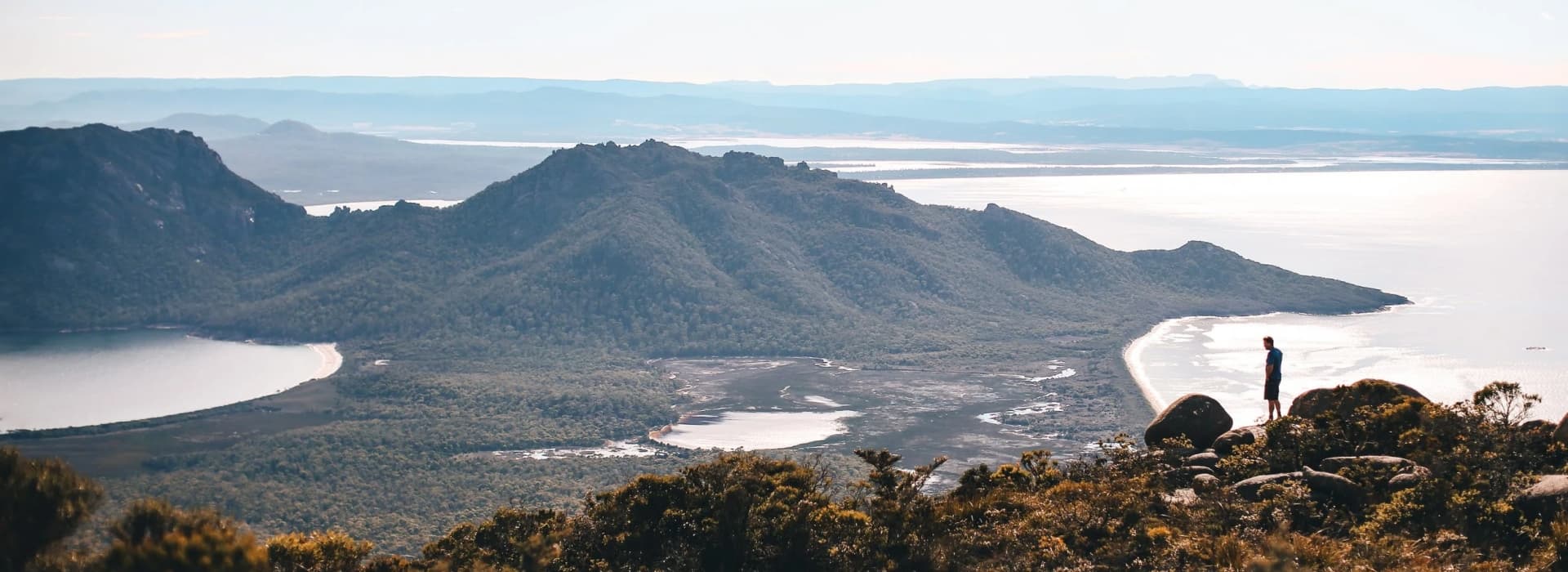
Freycinet is a dramatically shaped peninsula on the mid-east side of the island, about a two-hour drive northeast of Hobart. Measuring roughly 23 kilometres long and just six and a half wide, it juts into the Tasman Sea like a granite fist, its high point at Mount Freycinet rising to 613 metres above the ocean. It is rightfully regarded as one of the most beautiful places on this already beautiful island, blessed with countless bays and beaches where you will probably have the entire stretch of sand entirely to yourself and walking tracks where you are unlikely to see another soul.
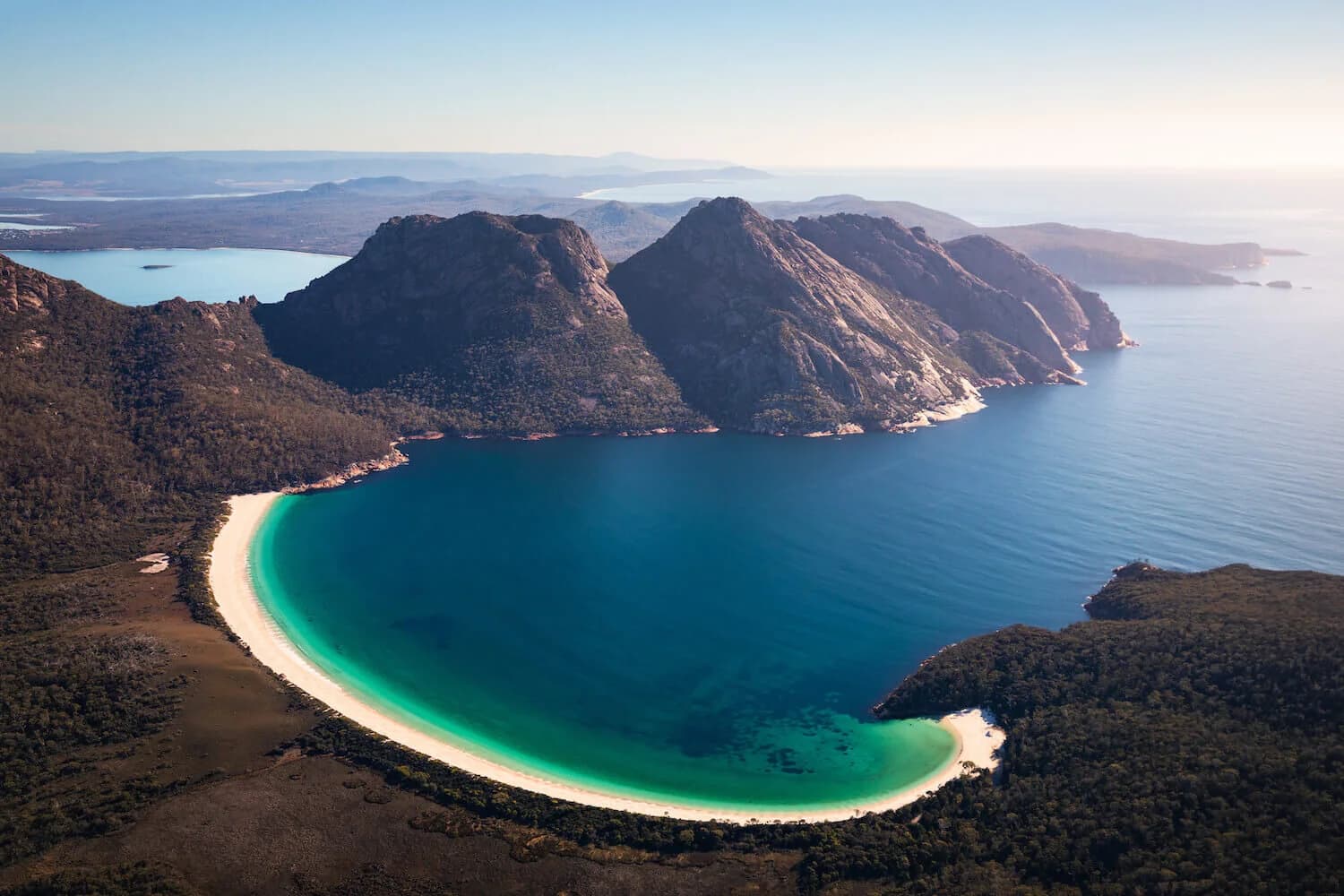
Because of its well-earned reputation, most tourists will come here to tick the box. They will hike the steep trail up to the lookout over Wineglass Bay, a perfectly curved crescent of powder-white sand and crystalline turquoise water framed by the dramatic pink-hued Hazards mountains. From there, Honeymoon Bay offers a gentler counterpoint, a sheltered cove ideal for picnicking and snorkelling, before the journey continues on to Hobart or the island's other sights. And who could blame them. From that lookout, Wineglass Bay is one of the most photographed beaches on Earth for very good reason.
But that experience does not come close to scratching the surface of what this extraordinary peninsula has to offer. For those after a slow travel experience where days are not rushed and where you can take the time to fully appreciate all of the beauty and hidden wonders of what this one small place on this one island in this massive country on the other side of the planet has to offer. This is the opposite of a check-the-box holiday. This is a deep dive into the beauty, the hidden secrets, and the soul of Freycinet.
The Walk: Four Days, One Entire Peninsula
The Freycinet Experience Walk is the original walk of its kind, founded in 1992. It is a member of the Great Walks of Australia as well as one of Tourism Australia's Signature Experiences. Over four days and three nights, hikers cover between 24 and 37 kilometres, exploring a peninsula that formed over 400 million years from ancient granite. Two eroded granite blocks, the Hazards mountain range and the peaks of Mt Graham and Mt Freycinet, are connected by the narrow sand isthmus that cradles Wineglass Bay, the whole extraordinary formation rising dramatically from the sea. The signature pink granite glows copper-rose in the late afternoon light in a way that makes even experienced travellers stop mid-stride.
Groups are kept deliberately small, a maximum of ten guests, with four dedicated staff focused entirely on the group at all times. And forget about lugging a heavy backpack. Guests carry only a small daypack containing water, lunch, a rain jacket and walking poles, while everything else is taken care of. Transfers from Hobart CBD or airport are included, as are all meals, drinks, park fees, and gear. The walk runs October to April, with December through March the warmest months, though each season brings its own gifts: wildflowers and orchids in spring, amber light in autumn, and some of the clearest night skies on Earth year-round.
Nature's Masterpiece
No matter the time of day or point along the trail, there is always something special, memorable, and at times even magical that awaits. The landscapes shift almost by the hour. One moment you are moving through dry sclerophyll forests of white gum, swamp gum and Tasmanian blue gum, the coastal air heavy with eucalyptus. The next you are stepping onto nine kilometres of pristine sugar-white Friendly Beaches with barely a footprint in the sand. Then comes a clifftop path with the Tasman Sea roaring below, followed by the vivid-blue stillness of Bluestone Bay. Former logging regions are threaded through with towering Oyster Bay pines and the coastal forests of Banksia, Kunzea and Casuarina give way to open coastal heathlands speckled with wildflowers. For flora enthusiasts the guides will point out some of the 83 orchid species, the critically endangered Freycinet waxflower found nowhere else on Earth, sunshine wattle, spinifex, and the ancient Xanthorrhoea grass trees standing like sentinels along the ridge lines.

As for the wildlife, you are never the only ambulatory creature on the trail. Wallabies appear silently at the forest edge. Wombats graze at dawn like slow, furry boulders. White-bellied sea eagles and wedge-tailed eagles trace the escarpment on ancient thermal currents overhead. Dolphins arc through the bay on the boat trip to Schouten Island, and seals laze on the rocks in the sun. The birdlife alone is extraordinary: over 130 species including several Tasmanian endemics, yellow-tailed black cockatoos, hooded plovers, pied oystercatchers, bronze-winged pigeons and masked owls. At night, Tasmanian devils can be heard in the dark, their presence felt rather than seen, while spotted-tailed quolls, long-nosed potoroos and eastern pygmy possums go about their business nearby.
History: Beautiful and Brutal
This land is beautiful, but not without its scars. The guides will tell you the history of the peninsula with honesty and empathy, and it is important that guests understand both sides of it. This place has a deep and extraordinary story on one hand, and a dark and painful one on the other.
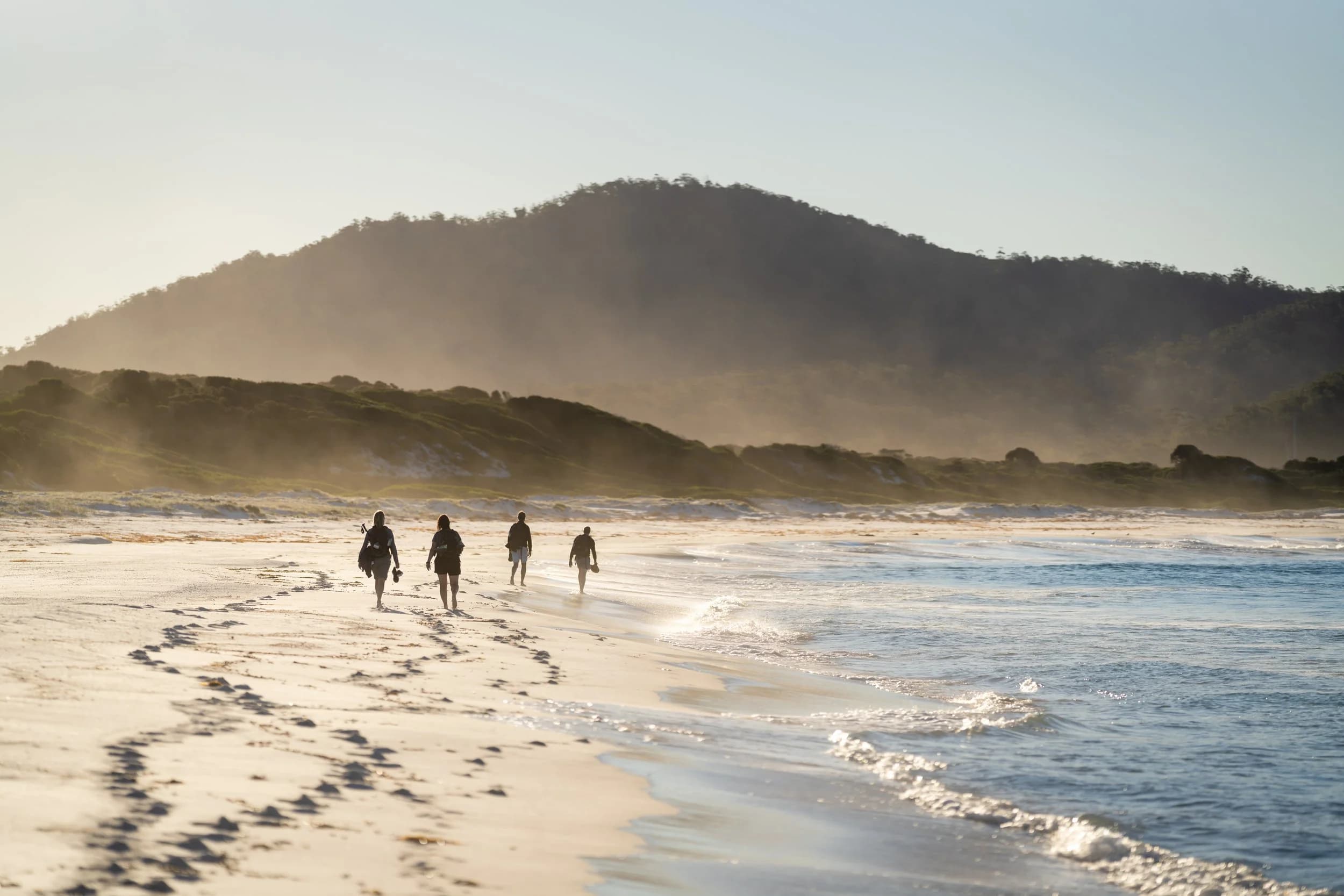
Tasmania's Aboriginal people arrived over 42,500 years ago, crossing a land bridge from the mainland before rising seas isolated the island around 10,000 years ago. The Freycinet Peninsula was home to the Toorernomairremener clan, part of the Oyster Bay Nation, seasonal coastal dwellers who gathered shellfish and marine vegetables along this stretch of east coast before moving inland as the year turned. Shell middens several metres deep still line the dunes at Richardsons Beach and Hazards Beach, rich with oyster shells, stone artefacts and the evidence of a sophisticated and sustainable way of life stretching back millennia.

European arrival began with Dutch navigator Abel Tasman in 1642, followed by French explorer Nicolas Baudin in 1802 to 1803, whose expedition gave the peninsula its name. Sealing and whaling soon followed, with American captain Richard Hazard lending his name to the Hazards range in 1824. Mining, grazing, and bark stripping reshaped the land, while European settlement brought violence, disease, and devastation to the Oyster Bay people. By the mid 1830s, the local Aboriginal population had been largely destroyed. Remnants of mines, whalers’ camps, and abandoned huts still remain across the park, which was declared Freycinet National Park in 1916, Tasmania’s oldest national park alongside Mount Field National Park.
On one day of the walk, the group follows a private trail through sacred bushland that once traced the ancient paths of the Oyster Bay Tribe, a track now used exclusively by Freycinet Experience Walk guests, where not another soul will be encountered all day. It is a genuinely moving experience to walk in those footsteps, and the guides take the time to pause and give the history the weight it deserves.
Joan's Vision: The Story Behind the Walk

The Freycinet Experience Walk began as a passion project, and it shows in every single detail. Joan Masterman, whose love of the Australian outdoors was forged during an idyllic childhood spent on her family's sprawling wool station in central western New South Wales, founded the walk in 1992 alongside architect Ken Latona. The choice of the words 'Freycinet Experience' was deliberate. Joan's ethos was that guests were embarking on something far deeper than a walk. She was pioneering a new kind of tourism, one that offered a genuine connection with Tasmania's unique and precious values.
The effect on guests was often profound. As former guide Reuben Wells has described it: 'You saw people change over the four days of that journey. An internal unwinding would happen. By changing pace and focus and learning how to look at what was around them, they would find themselves opening up to the place emotionally.' That philosophy is still very much at the heart of the experience today.
In 2019 Joan was awarded an Order of Australia for her contribution to tourism and conservation. The Freycinet Experience Walk, once a novel concept that barely raised an eyebrow and at a time when sustainability was considered a fringe idea, gradually became the template for high-end, lodge-based walks that bloomed across Australia, from Margaret River's Cape to Cape to Norfolk Island's Seven Peaks Walk. Now in her eighties, Joan's family carries the legacy forward. Son Michael and daughter-in-law Holly, grandson Isaac who began as a nature guide before moving into marketing and sales, and his sister who joined as lodge host, run the operation with the same warmth and purpose Joan embedded from the very beginning. It remains entirely family-owned and family-run, and guests feel that from the moment they arrive.

The Hike: What to Expect Day by Day
The adventure begins not on foot but on water. After transferring from Hobart, the group boards the Naturaliste at Coles Bay for a scenic cruise down the western length of the Freycinet Peninsula to uninhabited Schouten Island, a largely untouched wilderness at the southernmost tip of the national park. Glide past deserted beaches, watch seals basking on the rocks, scan the surface for dolphins. On the island, guests summit Bear Hill for sweeping panoramic views of the entire peninsula stretching north. Not a bad way to start.

Day 2 presents a choice that generates no small amount of deliberation over breakfast. The coastal walk meanders from Bryan's Beach through sclerophyll forests and along beaches to Wineglass Bay, a 14-kilometre, seven-hour journey of pure coastal discovery. The alternative is the climb from Cook's Beach to the summit of Mt Graham at 579 metres, descending to Wineglass Bay via the spectacular Quartzite Ridge, 16 kilometres and eight hours of genuinely demanding terrain. More fit members of the group will choose the ladder. Both groups reunite at Wineglass Bay in the afternoon for a well-earned swim in its crystalline waters and a cup of tea before the climb to the lookout. The views from there, across the bay you have just walked to reach, and over the dusky pink rock outcrops of the Hazards, are all worth every burning step of the ascent.

Day 3 is many guests' favourite. Starting at Bluestone Bay with its smooth rocks, vivid-blue water and the strange, fascinating geological formations of White Water Wall, the group climbs to the cliff tops before joining the ancient Oyster Bay Tribe trail through sacred bushland.
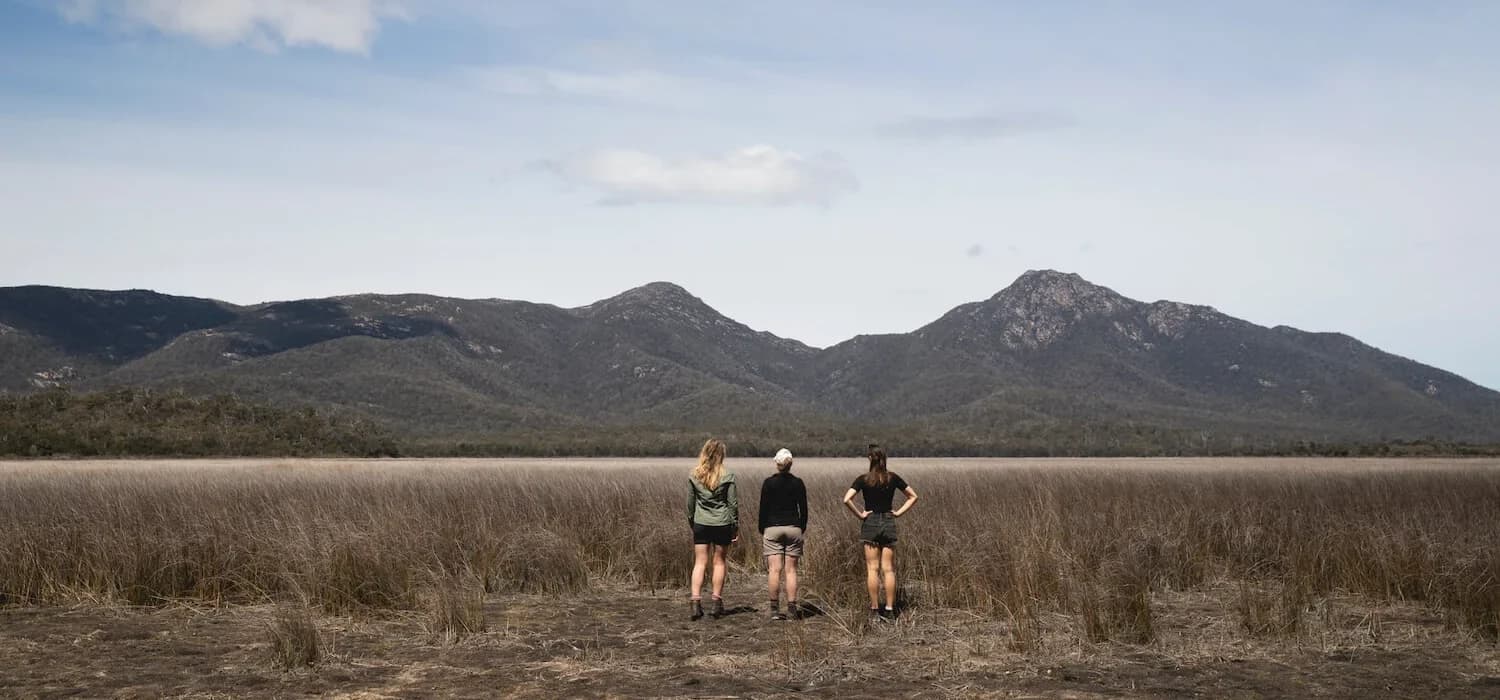
This is a private track and not another soul will be seen all day. The headland is dense with endemic flora, the clifftop views stretch endlessly toward Cape Tourville, and the day ends back at the lodge on foot, emerging from the bush onto the white sands of Friendly Beaches. The celebratory dip in the ocean at the end of that day is cold, bracing, and utterly perfect.

Day 4 is gentler, as if the peninsula is letting you down softly. A walk along the fossil-rich ridgeline of Mt Mary descends to Saltwater Lagoon, where wallabies and pelicans dwell in quiet harmony and black swans glide across the still water. Then a stroll along the beach to Isaac's Point, where the vehicle is waiting to carry the group back to Hobart, though nobody rushes toward it.

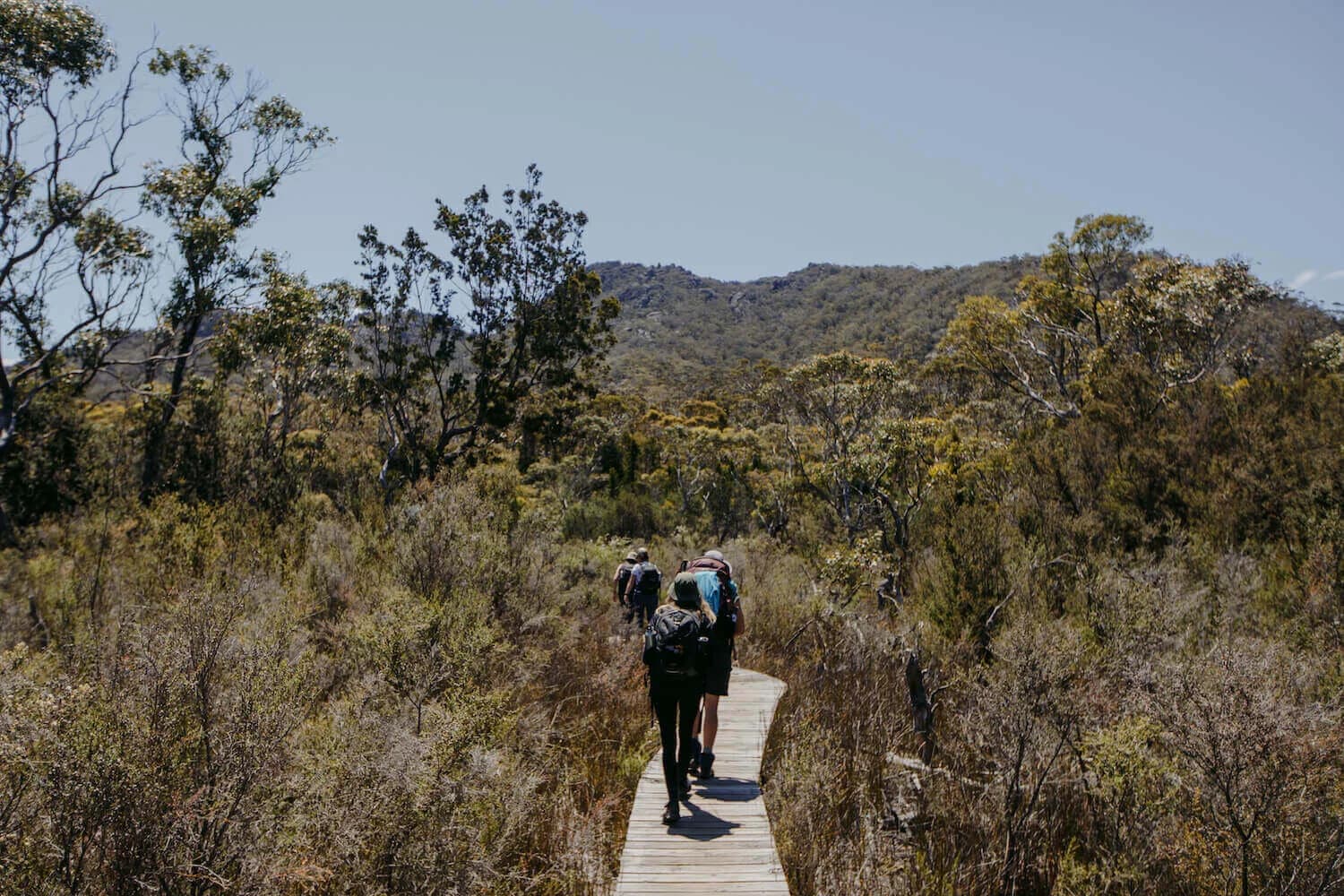
The hike is challenging but entirely doable for those with a moderate level of fitness, with four to seven hours on the trail each day. The terrain ranges from soft beach sand to rocky coastal paths to steep granite climbs on uneven ground. The summit options are genuinely strenuous and will bring out what the Australians call a bit of moaning and groaning, but each challenge is always met with a well-earned reward. Throughout each day, guides pause for morning tea, a proper spread of cake, fruit, cheese, smoked salmon and good coffee at a scenic vantage point, as well as catered picnic lunches in spectacular locations and frequent stops for wildlife, flora identification, bush tucker knowledge, and the kind of storytelling that makes you realise how little you knew about this landscape before you arrived.

There is also a section called the mindfulness walk, where guides ask guests to spread out along the well-marked trail, several minutes between hikers, to feel entirely alone with their thoughts and the natural world. The Japanese call it shinrin-yoku, or forest bathing, and it has been scientifically proven to lower blood pressure, stress levels and heart rate. Whatever you call it, standing alone on a clifftop above the Tasman Sea with only bird calls and breaking waves for company, it is the kind of stillness that most of us have entirely forgotten is possible.
The Lodge: The Invisible Sanctuary
They call it the invisible lodge, and the name is earned. Friendly Beaches Lodge is tucked into a forest of kunzea and sheoak 100 metres from the shore, and you genuinely cannot see it until you are almost upon it. Coming off the beach after a long day's walk, the guide points to a small gap in the shrubbery and there it is, a warm, beautifully designed eco-lodge. It is the only building on the coastal side of Freycinet National Park, which means the beach is almost always entirely yours.

The lodge sits on a 130-hectare private sanctuary and is entirely off-grid: solar power, rainwater collected from the roofs, composting toilets. No Wi-Fi. No mobile signal. A technology detox, full stop. Built entirely from local Eucalyptus obliqua timber and constructed solely on previously disturbed land to prevent any degradation of the pristine forest, follows the natural contours of the coastal landscape, and was designed to blend so completely into its surroundings that it is invisible from above.

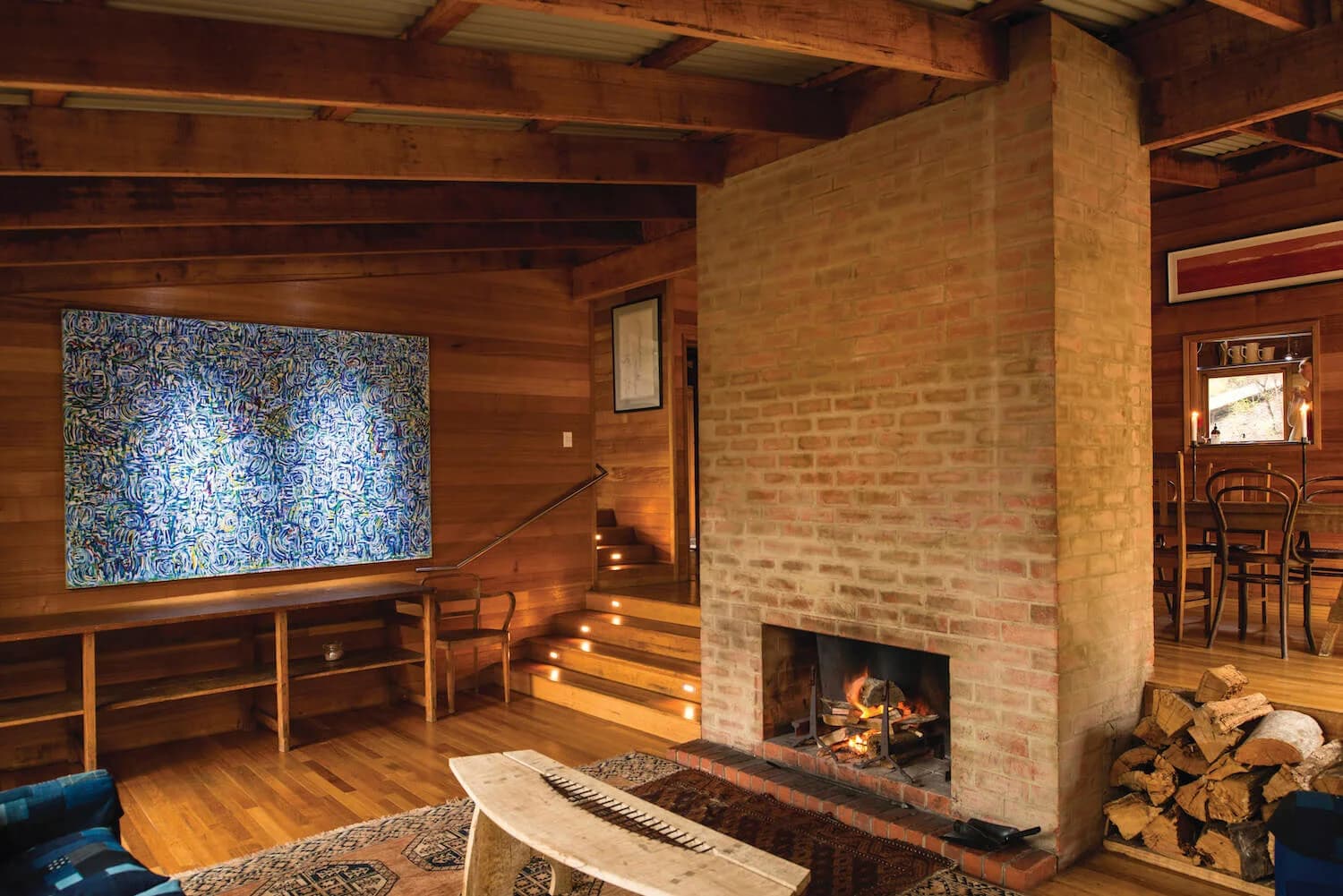
The accommodation is split between two lodges, North and South, each with four private bedrooms, a shared lounge with a wood-burning fireplace, a clawfoot bath and a separate shower. The beds are the real thing: goose-down doonas, Egyptian cotton sheets, the kind of proper sleep that only comes after a day of fresh air and genuine physical effort. Decks face the surrounding forest. The common areas are warm and inviting, the walls hung with Joan's private collection of works by prominent Tasmanian artists, a well-stocked library filled with books about the island completing the picture. This is authentic outdoor living: delightfully everything you need, complemented by not having what you don't. At night you will sleep soundly in the fresh crisp air, though you may well hear possums and other creatures of the night scampering across the roof or nosing about nearby. This is nature, and you are right in the middle of it. That is entirely the point.

With the lodge's surrounds protected under an environmental covenant, wildlife intrudes pleasantly and often: echidnas, wallabies and wombats scampering in and out of sight near the lodge at dusk, spotted-tailed quolls and long-nosed potoroos moving through after dark, and on the very best nights, the improbable glow of an aurora australis above Friendly Beaches.
The Meals: Tasmanian Feasting Around the Long Table
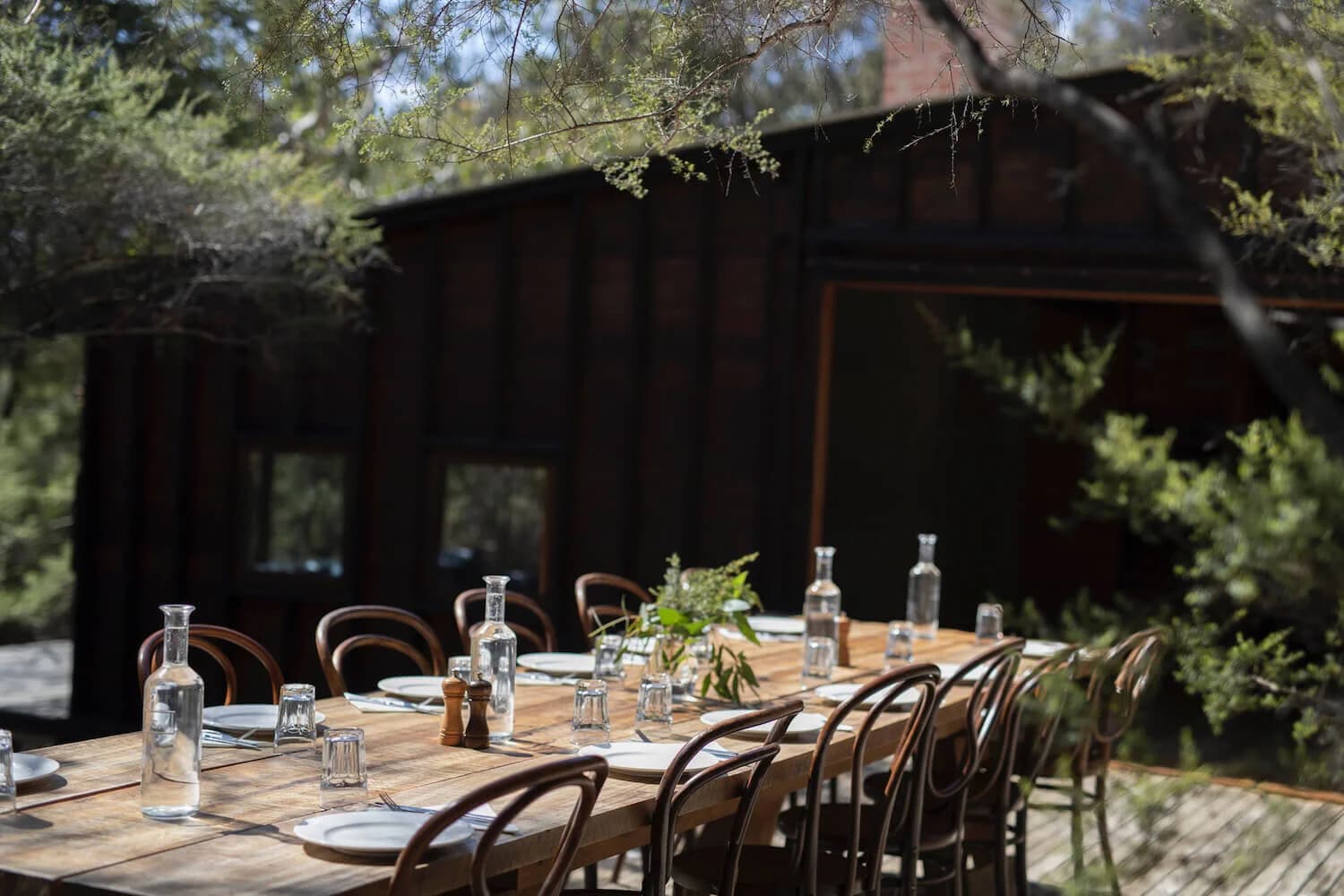
The meals are a highlight, full stop. Long-table dinners by candlelight at the Tasmanian Oak communal table, with lively conversation flowing alongside the food, are a nightly celebration only made better by what arrives in front of you. Lodge hosts prepare everything from scratch using the finest local Tasmanian produce, and Tassie, as most refer to it, is renowned throughout Australia for the extraordinary quality of what it grows, raises and pulls from the sea.

Local oysters from Freycinet Marine Farm, served with just a splash of lemon and a glass of sparkling wine. Grass-fed lamb, sustainably farmed wallaby, abalone, mussels, handmade chocolates, sharp local cheeses and fresh seasonal fruit. The kitchen has incorporated native Tasmanian ingredients including pepperberry, lemon myrtle, wattleseed and sea parsley into the menus, and dinner could best be described as haute homemade: beautifully conceived dishes built from the best the land and sea can offer, without unnecessary fuss or pretension. Every plate tells you where you are.

And speaking of wines, Tassie is equally well-regarded for a lovely drop. Each evening's dinner is paired with premium Tasmanian wines and local spirits, and no one ever goes hungry. There are canapés on arrival back at the lodge after each day's hike, a proper morning tea spread out on the trail, substantial picnic lunches in spectacular locations. One lunch in particular stays with every guest: oysters, fresh bread, cheese and a glass of Tasmanian sparkling at Wineglass Bay, turquoise water and pink mountains as the backdrop. You swim after. Cold. Perfect.
The Company: Ten Strangers Become a Tribe
Something happens when you take a handful of strangers, remove their phones, put them through shared physical effort, feed them extraordinarily well and sit them around a candlelit table each evening with excellent Tasmanian wine. By day two they are no longer strangers. By day four the group photograph at Isaac's Point carries a genuine sense of melancholy that it is all nearly over.

The maximum group size of ten is not an arbitrary number. It is a deliberate choice, and it works. The intimacy of a small group means conversation is easy and natural, that shared effort on a steep climb creates real bonds, that the laughter around the firepit after dinner feels earned. Solo travellers are given their own private room at no extra charge, and the group quickly feels exactly the right size to get to know everyone properly.

And yet for all the warmth of the group, there is always space for solitude. The mindfulness section of the walk, a sunrise stroll on Friendly Beaches before anyone else is up, ten minutes alone on a headland watching waves carve through 400-million-year-old rock. These private moments deepen the experience as much as the shared ones. Both are offered freely. Both are remembered.
The Last Morning
On the final morning, blankets are spread on the beach, coffee poured, fresh baked muffins shared as the sun climbs above the water. There is laughter and there are stories, favourite moments passed around like the food between them. But it is the silence that says the most. That collective stillness when words fall away and everyone is simply there, together, quietly aware that something extraordinary has just happened to them.

There is nothing quite like a walking holiday while fully immersed in the wild and untouched beauty of one of Australia's most extraordinary places. Thanks to Joan Masterman's vision, and thirty years of her family refining and protecting that vision, the Freycinet Experience Walk offers an exclusive group of travellers the chance to know this peninsula as it truly deserves to be known. Not as a lookout to photograph and leave, but as a living, breathing, ancient, deeply complex place with stories worth staying for.
"Never underestimate the restorative power of the Australian bush." -- Joan Masterman
She is right. The peninsula's light lives under your skin long after you have left. Tasmania has a way of reframing your perspective. And the Freycinet Experience Walk is the finest way to let it.
Glenn Harris
Glenn Harris is an accomplished journalist focusing on luxury travel, fine dining, and exclusive lifestyle events. His wanderlust has taken him to over 128 countries where he constantly strays off the beaten path to uncover exotic locations, travel gems and exciting experiences to capture.
Read More

Salon Privé 2026 at Blenheim Palace: Inside Britain’s Luxury Automotive Garden Party
La Belle Epoque: European Waterways’ Luxury Burgundy Barge Cruise
Great Rail Journeys and Amadeus Rhine River Cruise: Exploring the Rhine by Rail and River