MYR Hotel Palacio Vallier : Valencia’s Most Refined Boutique Hotel
"Qui no ha vist València, no ha vist res." The saying goes back generations in Valencia, and it translates simply enough: who hasn’t seen Valencia hasn’t seen anything at all. It sounds like the kind of line a tourism board invents about itself, and in most places it would be. Here it holds up. The history runs from Roman foundations through to a skyline confident enough to have built the City of Arts and Sciences. The sea sits twenty minutes away by tram. And the whole place carries a vibe that is hard to fake: alive, optimistic, and entirely justified in feeling that way. The place to take all of it in is arguably its most luxurious boutique hotel, MYR Hotel Palacio Vallier.
MYR Hotel Palacio Vallier: A 19th Century Palace on Plaza de Manises
Housed inside a masterfully restored 19th century palace in the heart of Ciutat Vella, MYR Hotel Palacio Vallier sits on Plaza de Manises, directly across from the Palau de la Generalitat, the seat of Valencia's regional government, so the neighbours alone tell you what kind of address this used to be. You are not just near Old Town here. You are truly in it, inside the historic centre rather than adjacent to it, with a considerably better mattress than history usually offers.
First Impressions: Arriving at a Palace Hidden Inside Ciutat Vella
From across the square, the hotel still looks like it always has, not what someone turned it into. Four floors of pale gold stucco, trimmed in white stone, with wrought iron balconies running the length of every window and a row of stone urns lined up along the roof like they have been standing guard for a century. The bottom floor is solid stone, built to carry everything above it, and the front door sits inside a deep stone archway. It shares the square with an old Roman column topped by a weathered statue and a row of tall cypress trees, and it holds its own against both.

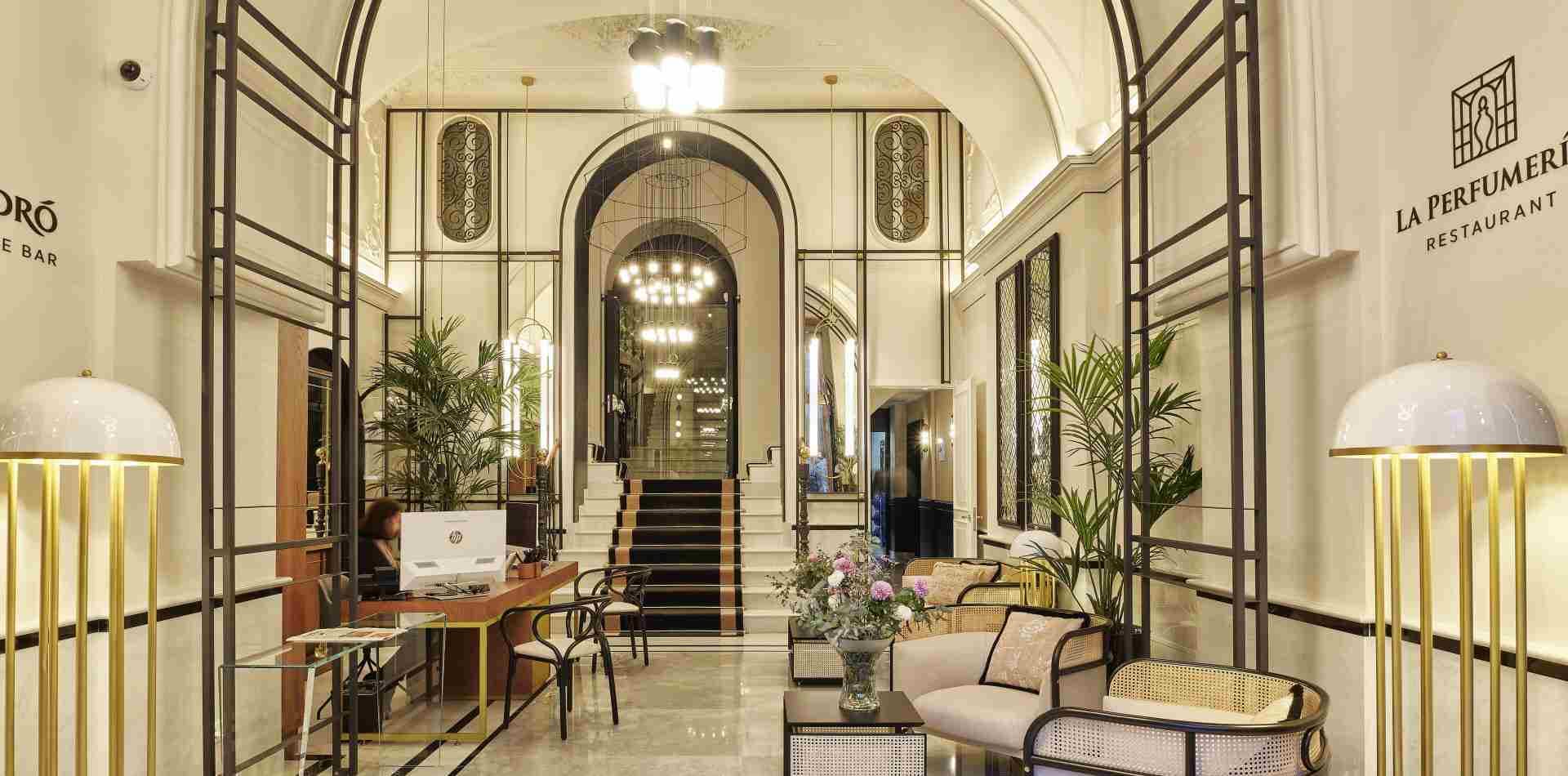
Once inside, the contrast between the façade and the interior startles: a lobby that has clearly decided restraint is for other hotels. Deep colour on the walls where a safer designer would have gone cream. Brass and gilt catching what little light there is, on purpose. It has the bones of an old family seat and the confidence of somewhere that has just been redecorated by the family's most stylish grandchild: aristocratic, a little bit of bling, nothing apologetic about any of it. A Lladró piece sits almost directly in your line of sight at the desk. Check-in happens somewhere underneath all this, unhurried, one member of staff actually looking at you rather than at a screen.
MYR Hotels is a homegrown Valencian group built around a single idea: sharing the best of local hospitality with the rest of the world, rather than importing someone else's formula and dropping it into the old town. Palacio Vallier is the crown jewel of that collection. This is not a hotel. It is a source of pride, a showpiece of Valencian hospitality that rivals the finest addresses anywhere in the world.
From Roman Perfumery to Royal Residence: The History Behind Palacio Vallier
The facade dates to 1883 built to hold its own on a square full of government buildings, and it has done exactly that ever since. Before it was a hotel, the building worked through a small stack of official lives: a private residence grand enough for nobility, then the headquarters of the Supreme Court, then the American House, then the seat of the Valencia Provincial Council. Whoever has held the keys, this address has never once been ordinary.

The find that mattered most, though, turned up underneath all of it. During restoration, archaeologists uncovered the remains of a 3rd century Roman perfumery beneath the foundations, a relic of ancient Valentia, and MYR Hotels, the group behind the property, built the restaurant's entire identity around it rather than filing it away in a display case.
Inside the Palace: Art Deco Design and the Lladró Partnership
The lobby's design carries through the rest of the building, and it has a name: 1920s Art Deco, filtered through Valencian rather than Parisian instincts. Carrara marble does the obvious, expensive work on floors and surfaces, veined and pale under the light. Custom bronze fixtures and geometric detailing carry the period through doorframes and lamp bases rather than staying confined to one showpiece corner. The walls run champagne and warm neutral, then get interrupted, deliberately, by shades most hotels would never risk. Elsewhere in the hotel, framed porcelain bas-reliefs stand in for the paintings a building like this would normally hang.

MYR set out to share the finest of Valencian hospitality with the world, the kind that rivals the most prestigious hotels anywhere, and that ambition meant aligning with a brand that represents the finest luxury craftsmanship in the world too. You will see it on display the moment you look up the staircase. The hotel rises five storeys, and the staircase well carries a single installation from top floor to ground: hundreds of white porcelain Lladró fairies, gold-tipped wings, hanging as though they had simply drifted down and stopped there. Walk past it once on the way to a room and you will find a reason to walk past it again.

The Lladró installation in the staircase is not an afterthought, and it, along with the other pieces you will see, is not the usual hotel decoration either. Valencia's most recognised porcelain house has work placed with intention here, in corridors, in the lobby, in the spots you would otherwise walk straight past without your eye catching anything. It tracks that Valencia's most famous luxury brand ends up inside its most prestigious hotel address: both are built on the same instinct, taking something old and rooted and refusing to let it look tired. Guests curious for more can head to the Lladró boutique across town, but nobody at Palacio Vallier needs to make that trip to understand what the house is capable of.

The partnership goes further than decoration, though, in the Lladró Lounge Bar, a small showroom dressed up as a place to drink. Order something off a genuinely inventive cocktail list and you do it surrounded by porcelain sculpture worth stopping to look at properly, much of it available to buy on the spot rather than fixed there as fittings. It draws a mixed room, hotel guests and stylish Valencians who came in just for the bar, which is usually the best sign a hotel bar is working. The kind of room where the drink and the art are given equal billing rather than one propping up the other.

One floor up from that bar, the hotel makes its other case for a drink with a vie
Rooftop Views Over Valencia Cathedral
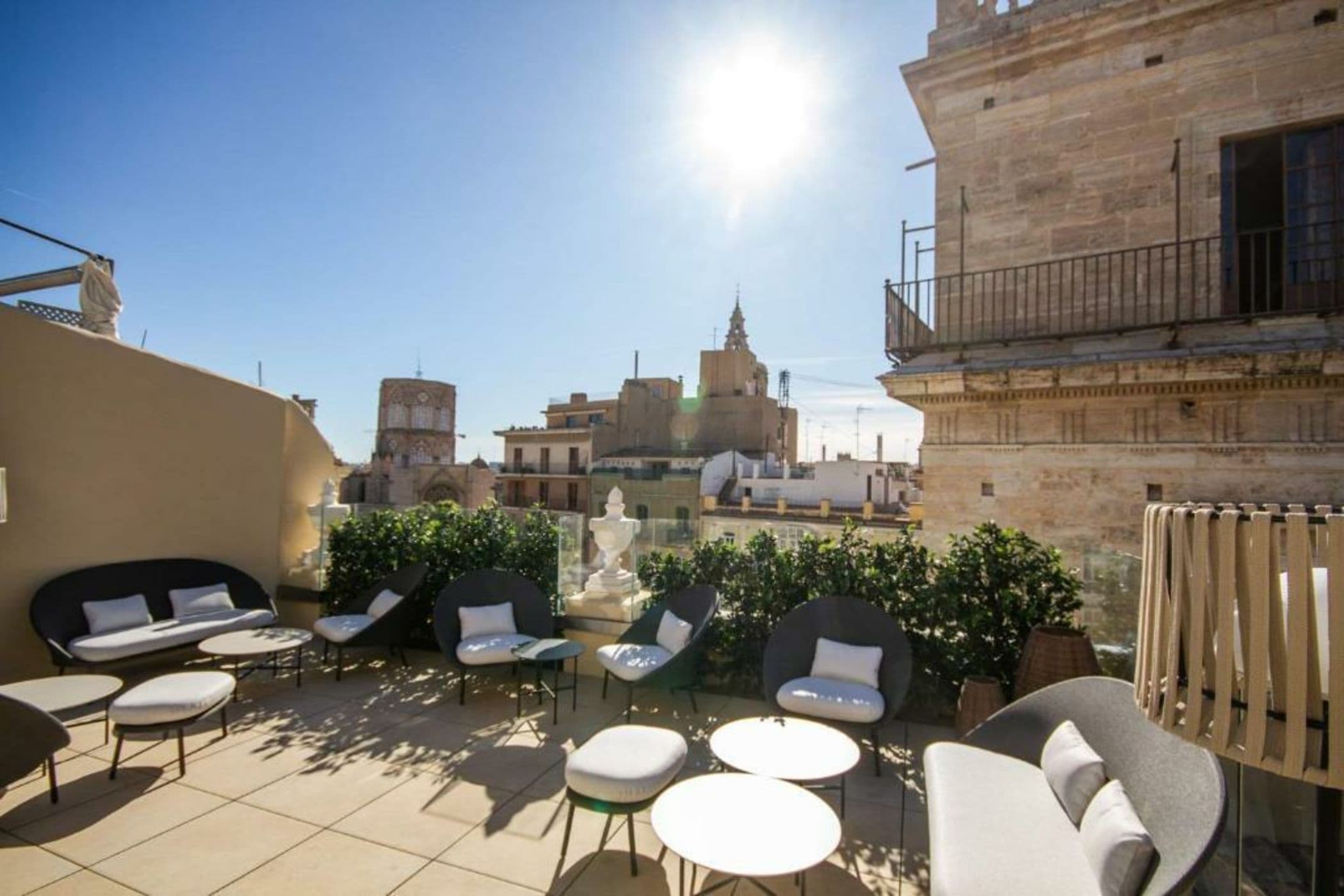
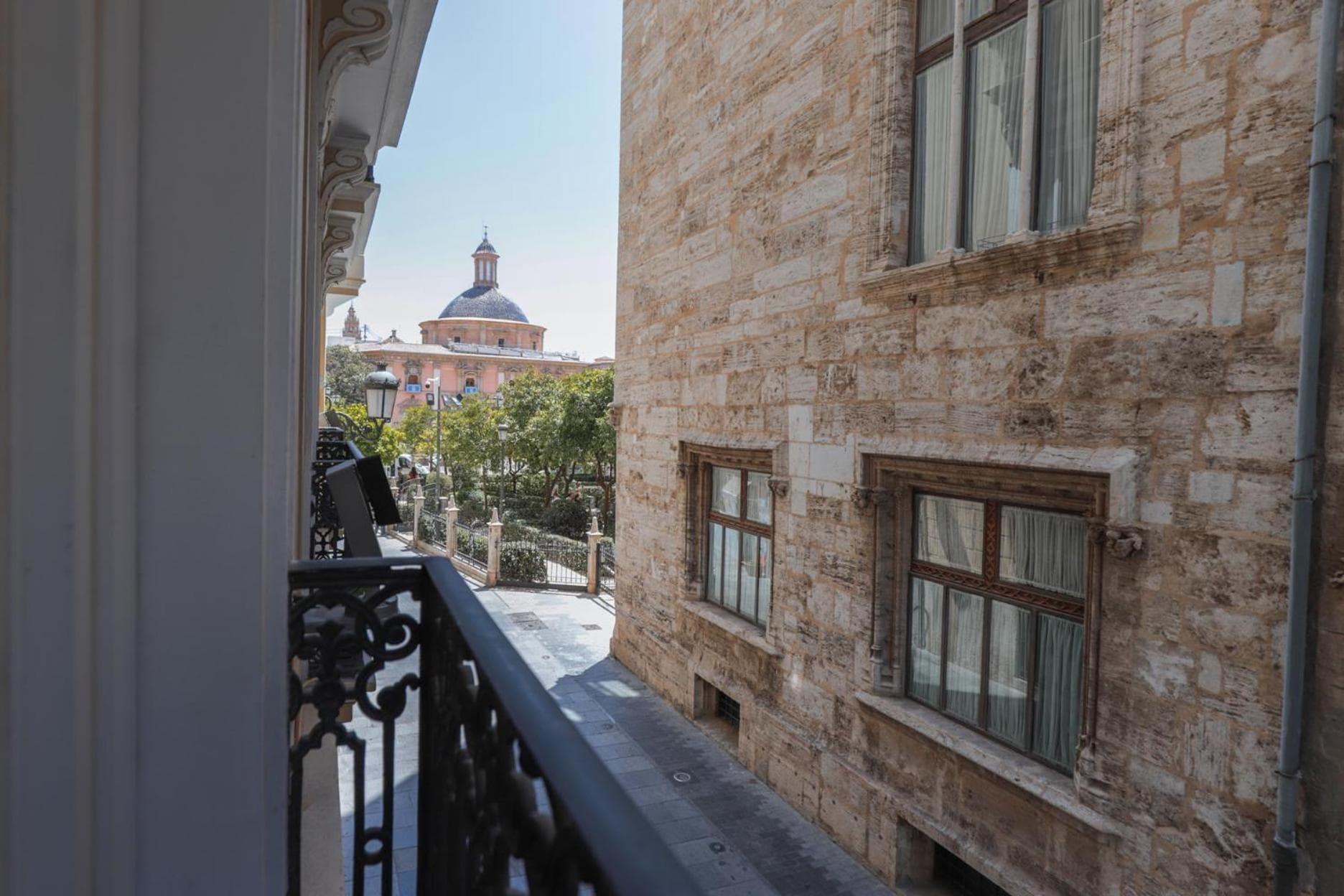
The rooftop terrace is small, just a handful of tables, and the view does most of the work. The dome of Valencia Cathedral sits close enough to feel within reach, the square below carries on with its own business, and historic rooftops stretch out in every direction from up there. At midday the light is flat and full, by evening it turns gold across the old town before it fades. Either way, it is one of the few spots in the neighbourhood where you can see that much of the city at once.
Eventually, though, you have to go back down, and that is where the hotel spends most of its actual square footage.
Inside the Guest Rooms and the Lladró Suite

Guest rooms hold the same generous proportions as the rest of the building, shaped by the original palace layout, not a standard hotel floor plan, and there are only 31 of them across the whole property, which keeps the place feeling more like a residence than a business. High, ornate ceilings and rich wood flooring run through most categories, and because this is a heritage building rather than a purpose-built hotel, no two rooms are laid out quite the same way. Floor to ceiling windows and private balconies look straight over the square below, keeping you connected to the street even once you are back in the room. On the top floor, the suites pick up vaulted ceilings on odd, interesting angles, exposed rafters left visible rather than boxed in. The furniture is not generic hotel-supplier stock: Jaime Hayon's Aleta chairs sit on brass bases in several rooms, and a low Burin Mini table by Patricia Urquiola turns up beside the marble bathtubs, doing quiet, functional work rather than sitting there for show. Every room is soundproofed against the street below, the minibar comes stocked with local products rather than the usual imported snacks, and the technology stays tucked away.

The most prestigious room in the building is the Lladró Suite, which some on staff still call the bridal suite, and both names are earned. The ceiling is the reason why. It survives fully intact from the original palace, divided into panels by gilded moulding, each one painted in soft sage green, ivory and a faint blush pink, with a central gold and white rosette medallion where a crystal chandelier now hangs. Scrollwork and floral relief trace every border, gilt catching the light rather than sitting flat, and the effect is closer to a formal salon ceiling than anything you would expect to find above a hotel bed. A second chandelier is visible through the doorway into the bathroom, so the scale of the room is obvious before you have even walked its full length.

The rest of the suite plays a quieter game against that ceiling. A black marble fireplace, no longer working but left in place, carries one of the Lladró pieces on its mantel, a black porcelain horse with a blue and gold saddle painted in the same fine detail as the fairies on the staircase. The seating area sticks to soft grey upholstery and warm wood trim, a glass and brass coffee table doing the only truly contemporary work in the space. It is paired with grand proportions, a king-sized bed, and select Lladró pieces placed through the room rather than added as an afterthought. It is built for a bride getting ready on the morning of her wedding as much as for anyone else marking an occasion, and it holds the architectural integrity of the original building better than almost any other room in the hotel.
None of that matters much on an empty stomach, though, and the hotel's strongest argument for staying in rather than going out for dinner sits just off the lobby.

La Perfumería: A Tasting Menu Built on Roman History
The dining programme was built with the same mission as the hotel itself: a stage for sharing the best of Valencian gastronomy with the world. La Perfumería backs that up, right down to the name. Its kitchen carries some genuine weight behind it: chefs Germán Carrizo and Carito Lourenço both come out of Fierro, the Michelin-starred Valencia restaurant, which places La Perfumería in that same orbit of technique and standards without needing to claim a star of its own. Produce comes largely from the Central Market, a five minute walk away, and the kitchen is open to the room, so you can watch the connection between that market stall and your plate happen in real time. The cooking is Mediterranean and ingredient-led rather than technique-driven, built on Valencian produce and worked through fine dining precision instead of plating designed to impress on sight.

The room itself matches the kitchen's restraint. Carrara marble, brass and gold-toned fixtures against darker accents, lighting kept low and controlled. Service is precise, present without hovering, closer to a well-run private dining room than a hotel restaurant working through covers. The overall feel lands somewhere between a fine dining room and a refined townhouse salon.

The seven-course tasting menu, Memories of a Perfumería, is where the building's history actually earns its keep on a plate. It opens with Diana's Water, a welcome cocktail named for an old apothecary formula built on orange blossom, bergamot, and clove, reworked here with Mediterranean botanicals as a scented prelude before the food even arrives. From there it moves through courses built on ancient trade routes and Roman technique read through modern hands: a marinated oyster dressed in homemade garum with a melon veil, a cube of transparent salmorejo topped with Santa Pola scarlet shrimp, monkfish cured in bitter orange salt and served over an almond pil pil. Dessert closes on an elixir of honey and chocolate filled with rose and jasmine ricotta, alongside a muscat grape sorbet. The tasting menu can be taken with a wine pairing, each course matched rather than left to guesswork, and the wider list runs deep into Spanish producers before it reaches for anything imported.
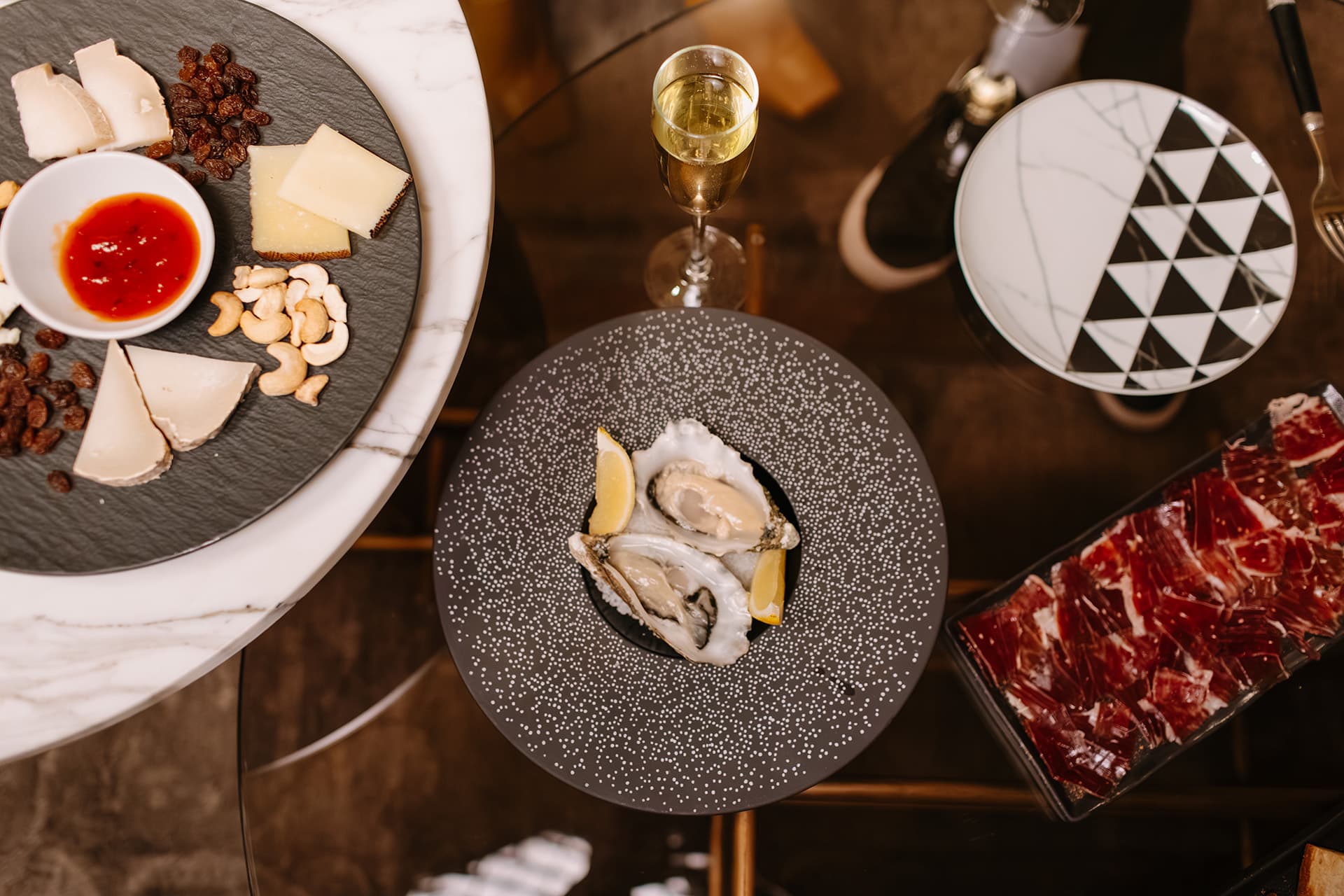
La Perfumería does not lean on the hotel's name to get people through the door. It has its own standing in Valencia's restaurant scene, and it would draw a crowd regardless of the address.
Eventually, though, even the best hotel in the world is only half the story. The other half is on the other side of that front door.
Walking Valencia's Old Town: Cathedral, Silk Exchange and Central Market

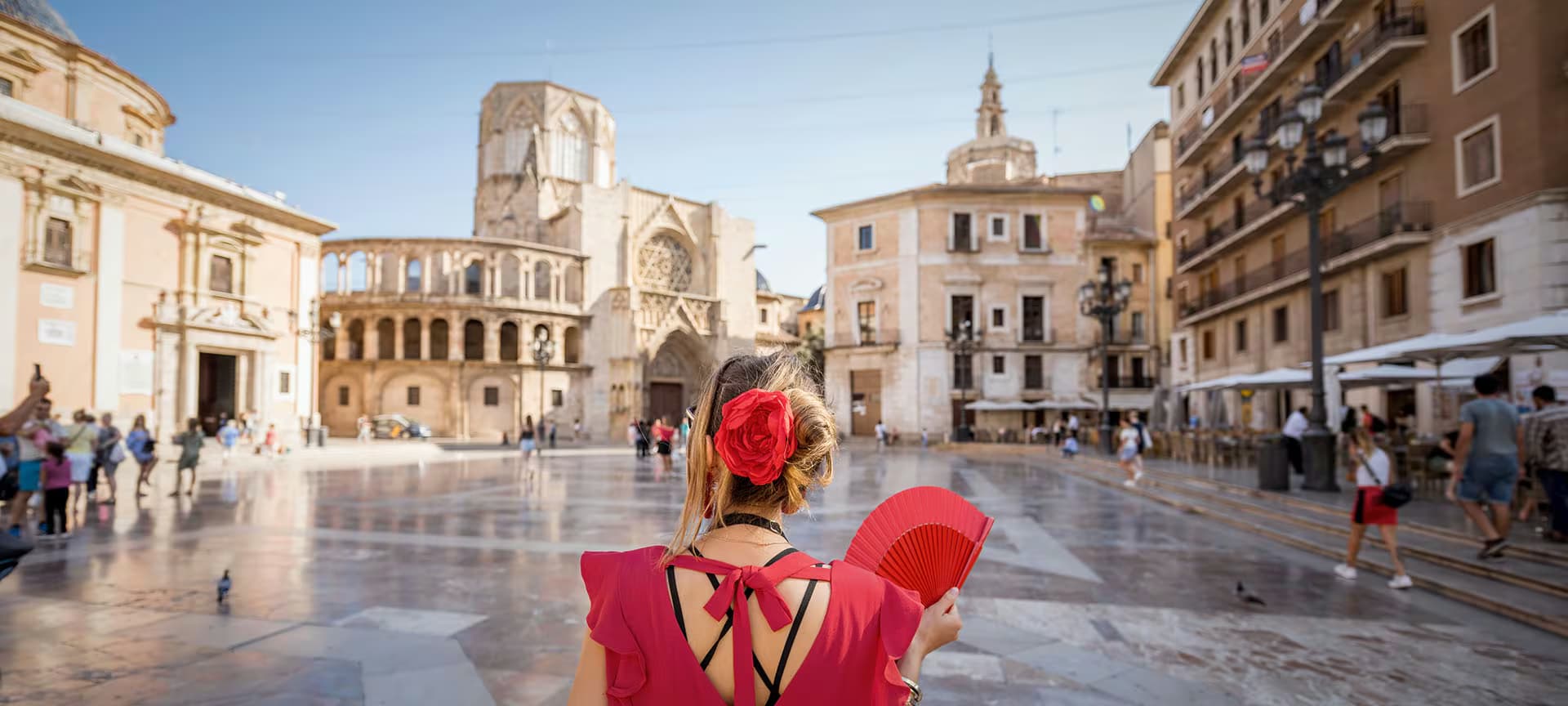
Every landmark worth seeing in old Valencia sits within walking distance of the hotel's front door, and that single fact reshapes the whole visit. The streets of Ciutat Vella still follow their medieval layout, with narrow lanes leading into lively squares lined with cafés, independent boutiques and centuries old buildings. At its heart, Plaza de la Virgen brings together some of Valencia's most significant landmarks, framed by the cathedral, the Basilica of the Virgin of the Forsaken and the Palace of the Generalitat Valenciana, with café terraces keeping the square lively throughout the day.

No visit is complete without time at the Central Market, where soaring ironwork, colourful ceramic tiles and stalls laden with seafood, cheeses, cured meats and fresh produce create one of Europe's finest food markets.
Beyond the old centre, Valencia's story continues through the Turia Gardens, the City of Arts and Sciences, the marina and Mediterranean beaches, revealing a city where centuries of history and contemporary design exist side by side.
Sunset Rituals at the Luna de Valencia Rooftop
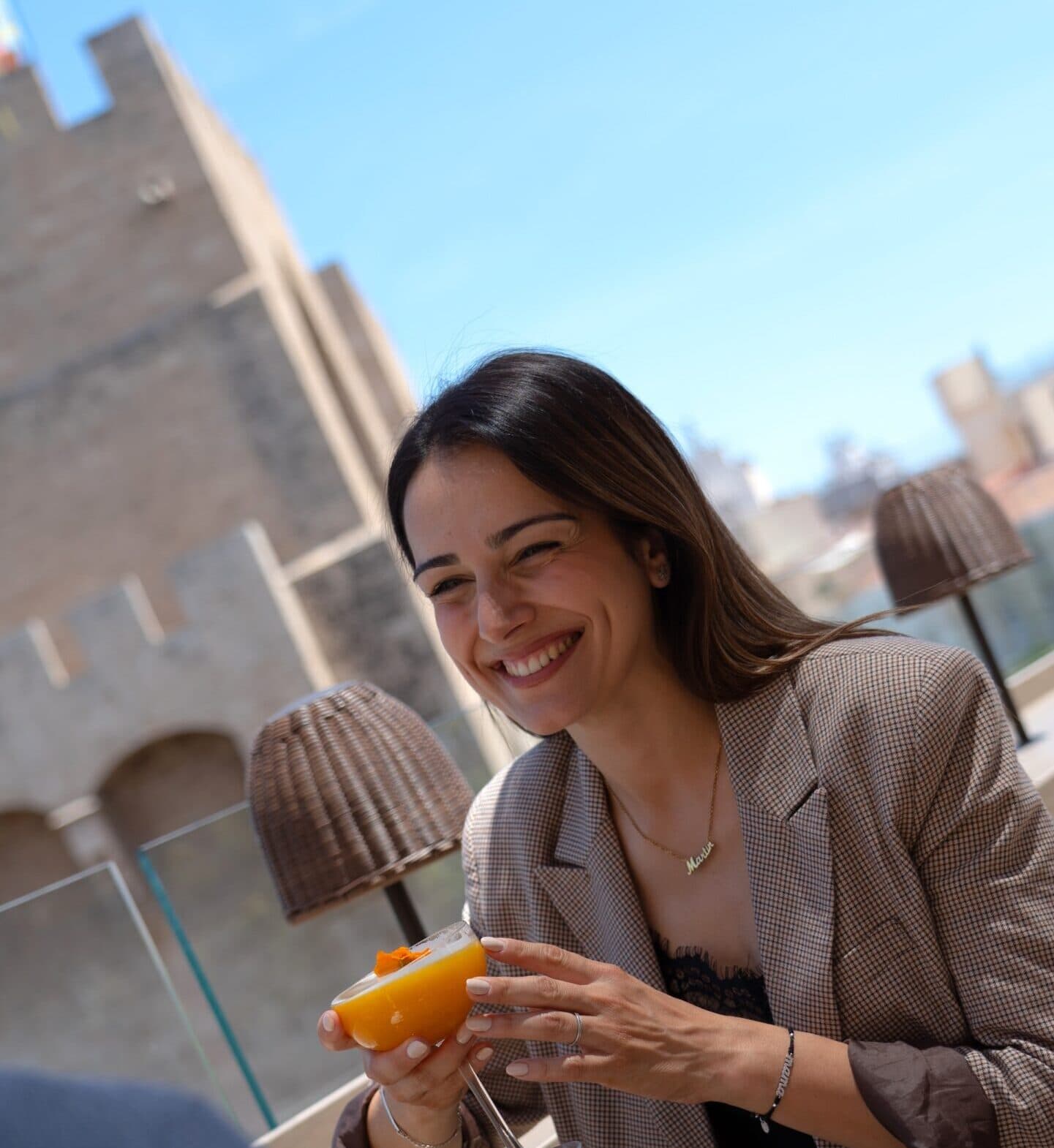
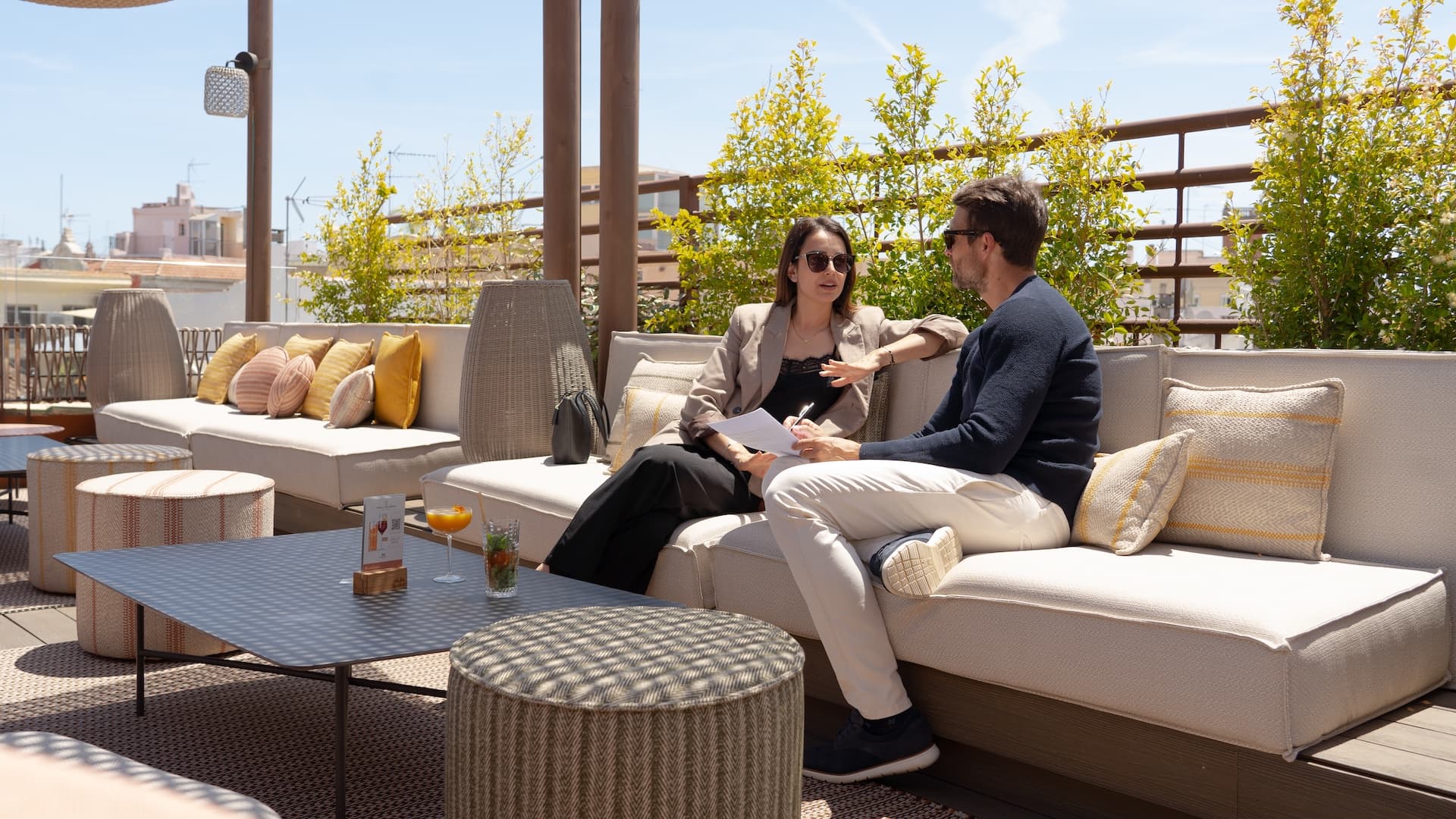
After a day of exploring, the perfect end is to take in the sunset from one of the Old Town’s chicest rooftops. The evening ends at Luna de Valencia Rooftop, atop MYR Puerta Serranos, the sister hotel to MYR Palacio Vallier. Looking out across the historic Torres de Serranos, the former city walls, and the tree-lined Turia Gardens, it offers a perspective of Valencia that contrasts with the rooftops of the Old Town.
As the sun sets, the terrace draws a relaxed mix of locals and visitors for expertly crafted cocktails, wines, and Mediterranean small plates, including the city’s signature Agua de Valencia, a blend of fresh orange juice, cava, gin, and vodka. It is a memorable way to end the day, with one final view over the city’s historic skyline before returning to Palacio Vallier.
Spain’s most handsome city
There is another saying in Valencia, less famous than the first but just as telling: "El dia que et fa bo, et fa bonic." The day that is good for you makes you handsome. It is a small, sunny piece of local wisdom about weather and mood, the idea that a good day actually changes how you carry yourself, and it translates just as easily to what a few days here can do to anyone on holiday.

The Palacio Vallier is where that feeling gets its address. A place that does everything right, from the design, accommodation, gastronomy and service. It is a hotel that exhibits the finest example of Valencian hospitality in one of the most alluring cities that this part of the world has to offer.

Glenn Harris
Glenn Harris is an accomplished journalist focusing on luxury travel, fine dining, and exclusive lifestyle events. His wanderlust has taken him to over 128 countries where he constantly strays off the beaten path to uncover exotic locations, travel gems and exciting experiences to capture.