Afternoon Tea at The Royal Crescent, Bath
In the UNESCO listed city of Bath stands one of Britain’s most recognisable Georgian landmarks, the sweeping curve of The Royal Crescent. Within this celebrated architectural composition sits The Royal Crescent Hotel & Spa, where one must visit to partake in one of Britain’s most enduring social rituals. The setting could not be more ideal for afternoon tea. The ambiance, the attentive service, and the carefully prepared tiers of savouries and sweets combine to capture why the tradition still holds such affection. Time slows naturally as guests gather with friends and savor the pleasant indulgence.
Exploring Bath

Bath itself contributes greatly to the experience. Few cities in Britain carry such a strong sense of history. The Romans first discovered the city’s thermal springs nearly two thousand years ago and built the baths that continue to draw visitors today. Those warm mineral waters remain one of the defining elements of the city’s identity.

The city also holds an important place in British literary history. Jane Austen lived here for several years and used Bath as a setting in both Northanger Abbey and Persuasion. Another unexpected literary connection also belongs to the city. Mary Shelley spent time here while working on Frankenstein, adding a darker note to the otherwise refined Georgian setting.
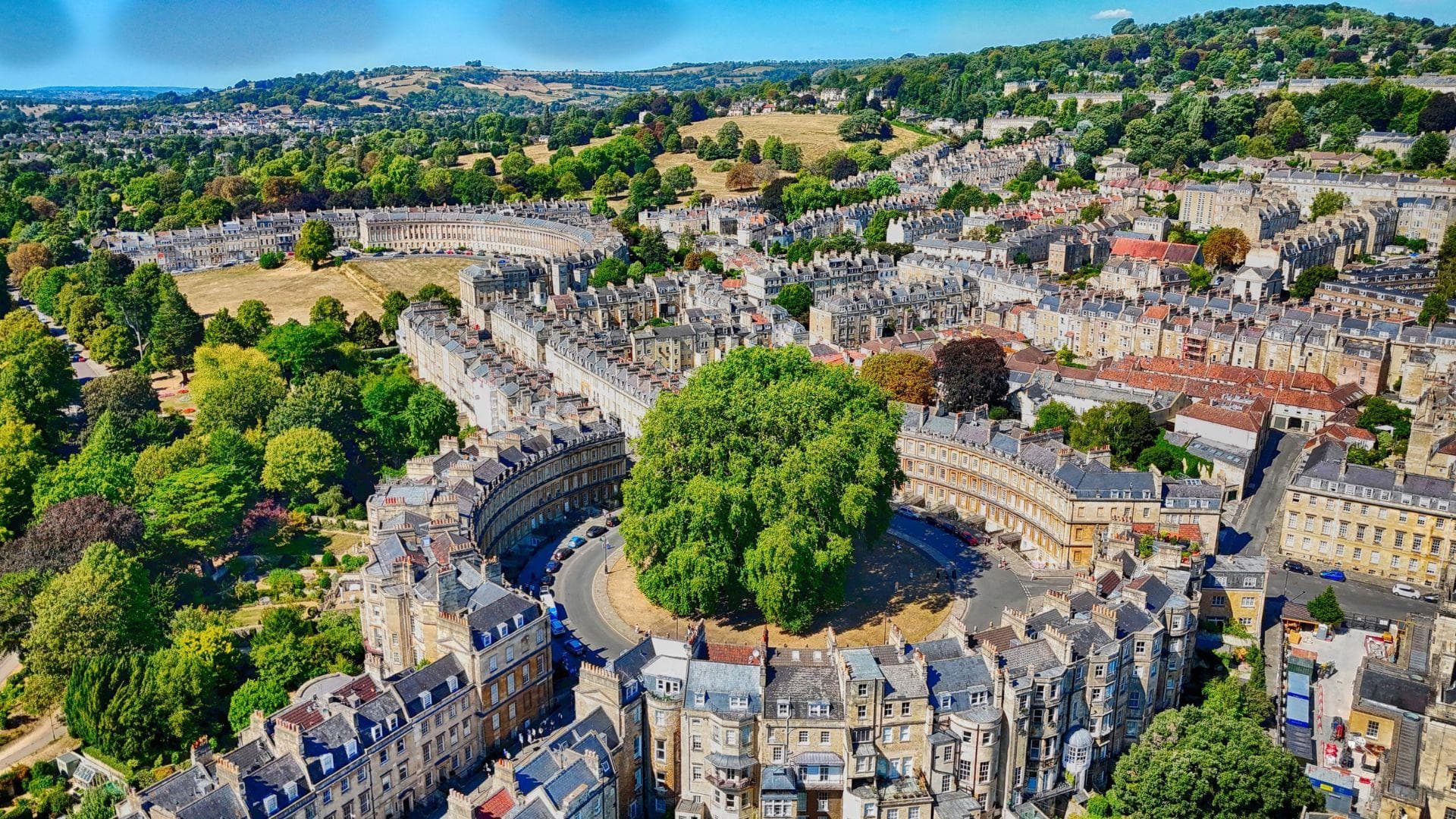
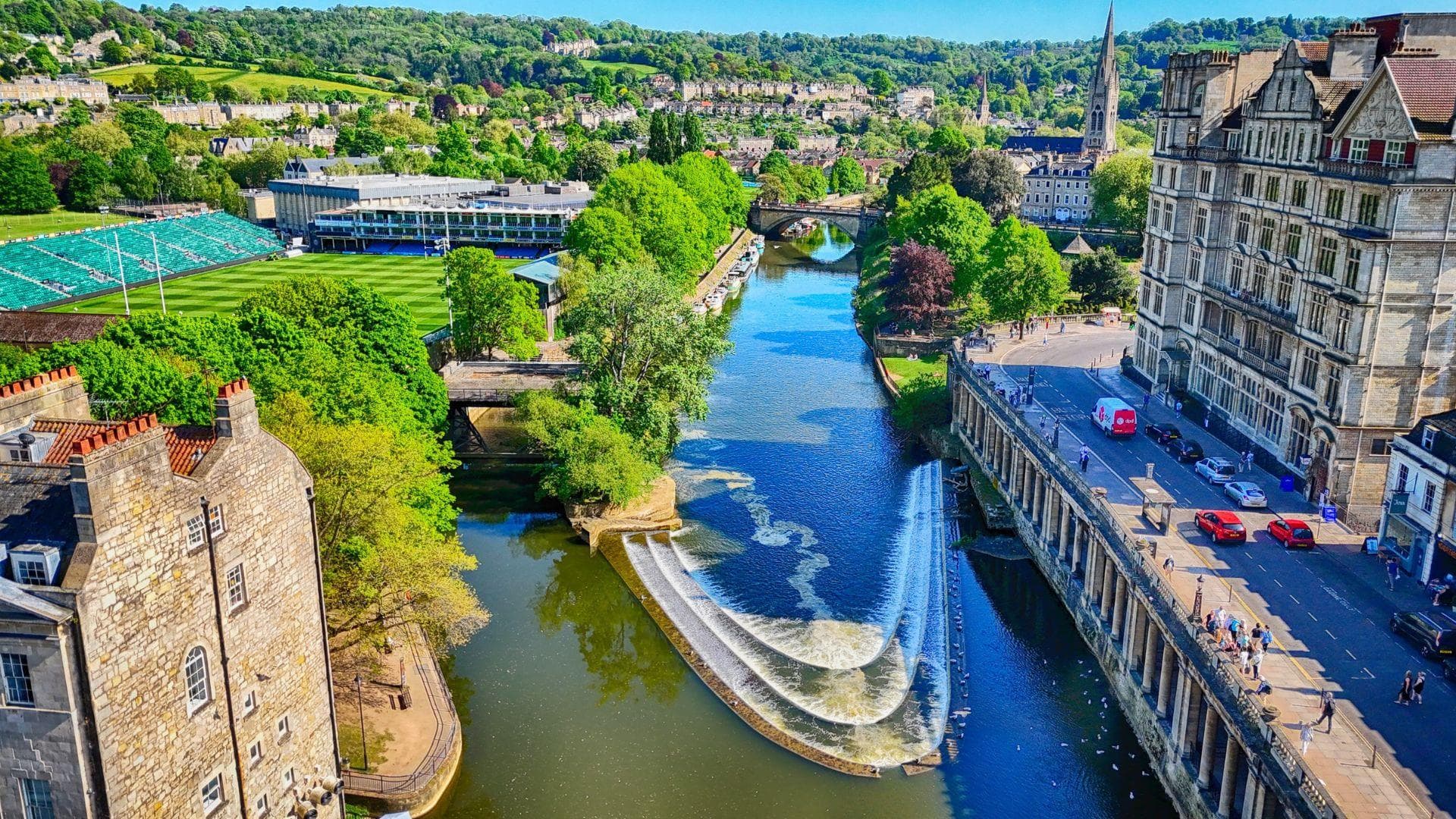
The river Avon flows through the centre of the city beneath stone bridges and past elegant terraces that remain largely unchanged since the eighteenth century. Walking through the old town, visitors encounter rows of buildings constructed from Bath’s distinctive honey coloured limestone, giving the city a visual harmony that few places in Britain can match.
The architecture reflects the ambitions of Georgian planners who envisioned Bath as a place of leisure, health, and social life. Sweeping crescents, terraces, and townhouses form an urban landscape designed for the beau monde.
The Royal Crescent and the Hotel

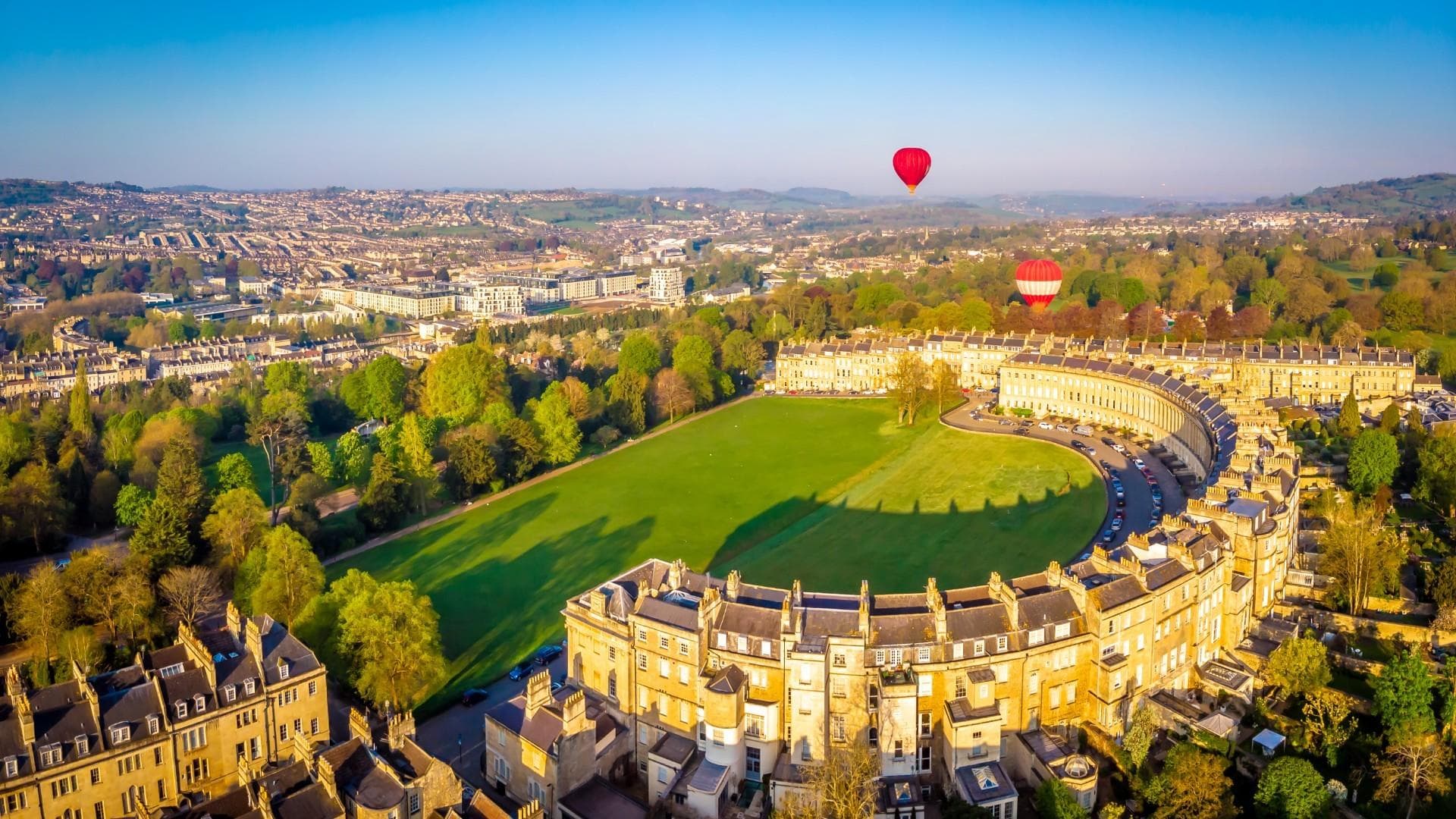
Among these architectural achievements the Royal Crescent stands as the most famous. Completed in 1774 and designed by John Wood the Younger, the crescent forms a sweeping curve of thirty grand houses facing an expansive lawn. It remains one of the most celebrated examples of Georgian architecture anywhere in Britain.

Within this remarkable structure sits The Royal Crescent Hotel and Spa, one of only two Grade I listed hotels in the United Kingdom. Behind the imposing façade lies a surprisingly tranquil retreat. The hotel opens onto an acre of private gardens filled with trees, flowers, and quiet corners that feel far removed from the activity of the city outside.
Montagu’s Mews, Design, and Service

Afternoon tea is served inside Montagu’s Mews Restaurant. Inside, the interiors feel closer to a grand private residence than to a conventional hotel. Several smaller rooms connect together rather than forming one large dining hall. Colourful patterned wallpaper adds character to the space, while crisp white tablecloths and polished silver preserve the formality expected of afternoon tea.

In summer many visitors choose to sit in the garden. Surrounded by trees and flowers, the terrace offers a peaceful setting that feels surprisingly secluded given the hotel’s location within one of Bath’s most famous landmarks.
Service reflects the confidence that comes from long experience. Antonio moves quietly between tables greeting returning guests and making sure everything runs smoothly. Tea pots are refreshed, pastries are described, and the pace of the afternoon remains unhurried.

Sipping and Savoring Hoogly Teas
The tea selection comes from Hoogly Tea, a Brighton based company known for its whole leaf blends and carefully sourced ingredients. The range includes classic black teas such as English Breakfast and Earl Grey alongside lighter and more aromatic varieties.

Apricot Blossom white tea combines the delicate character of Chinese Pai Mu Dan with subtle stone fruit notes that work beautifully alongside the pastries. A blossoming green tea slowly unfurls inside the pot to reveal a chrysanthemum flower scented with jasmine and lavender, echoing the gardens outside. Other blends incorporate ingredients such as rhubarb and vanilla, creating flavours that pair naturally with the desserts. The variety encourages guests to experiment with more than one pot during the course of the afternoon.
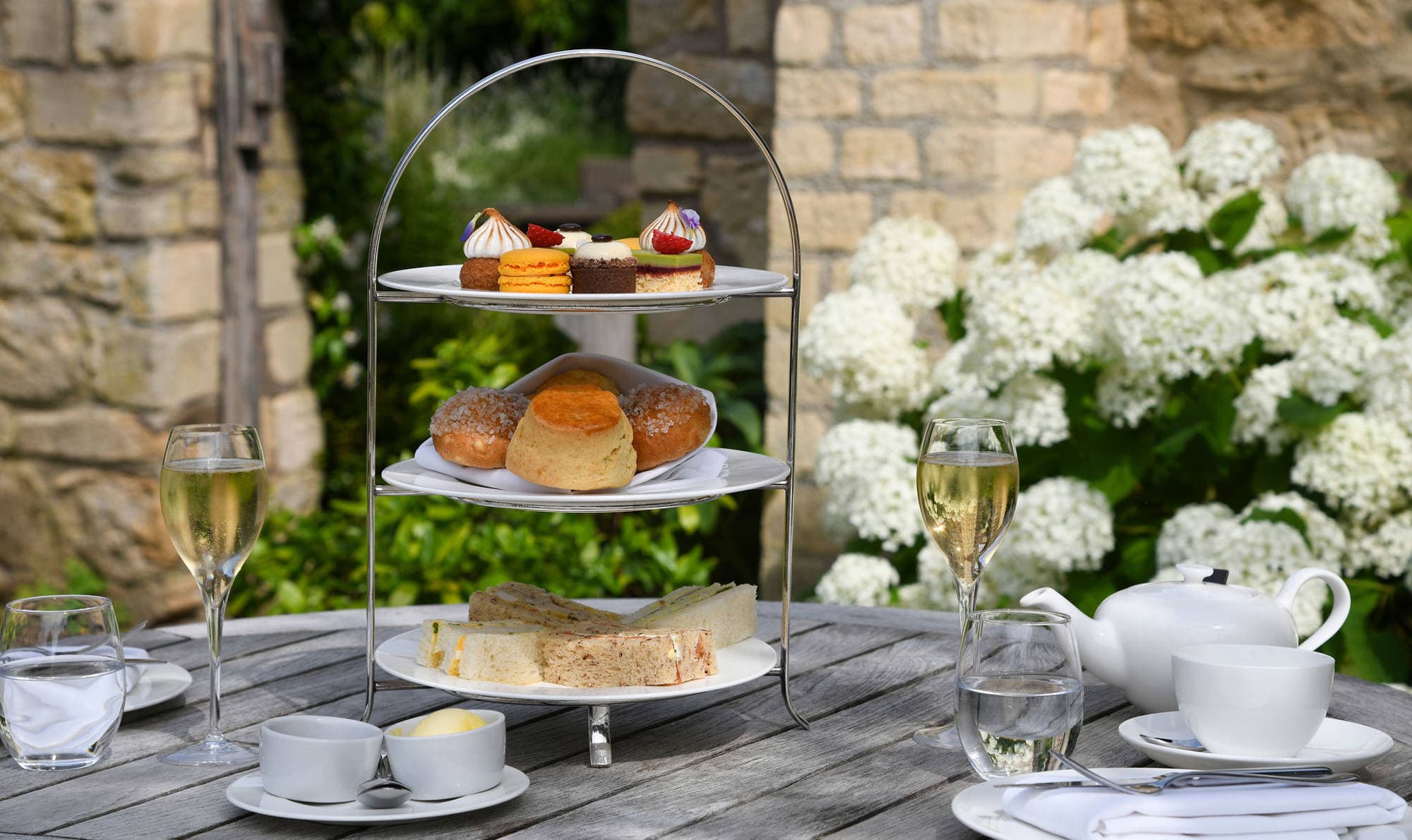
Afternoon tea at The Royal Crescent Hotel & Spa
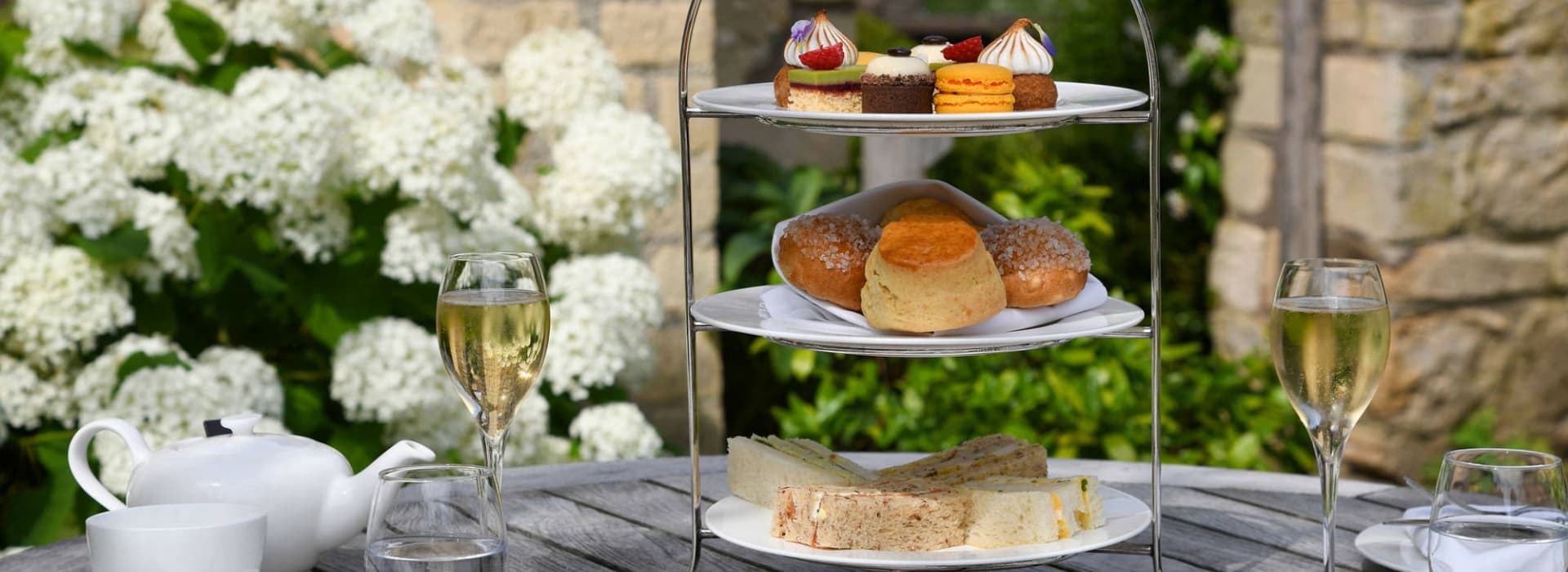
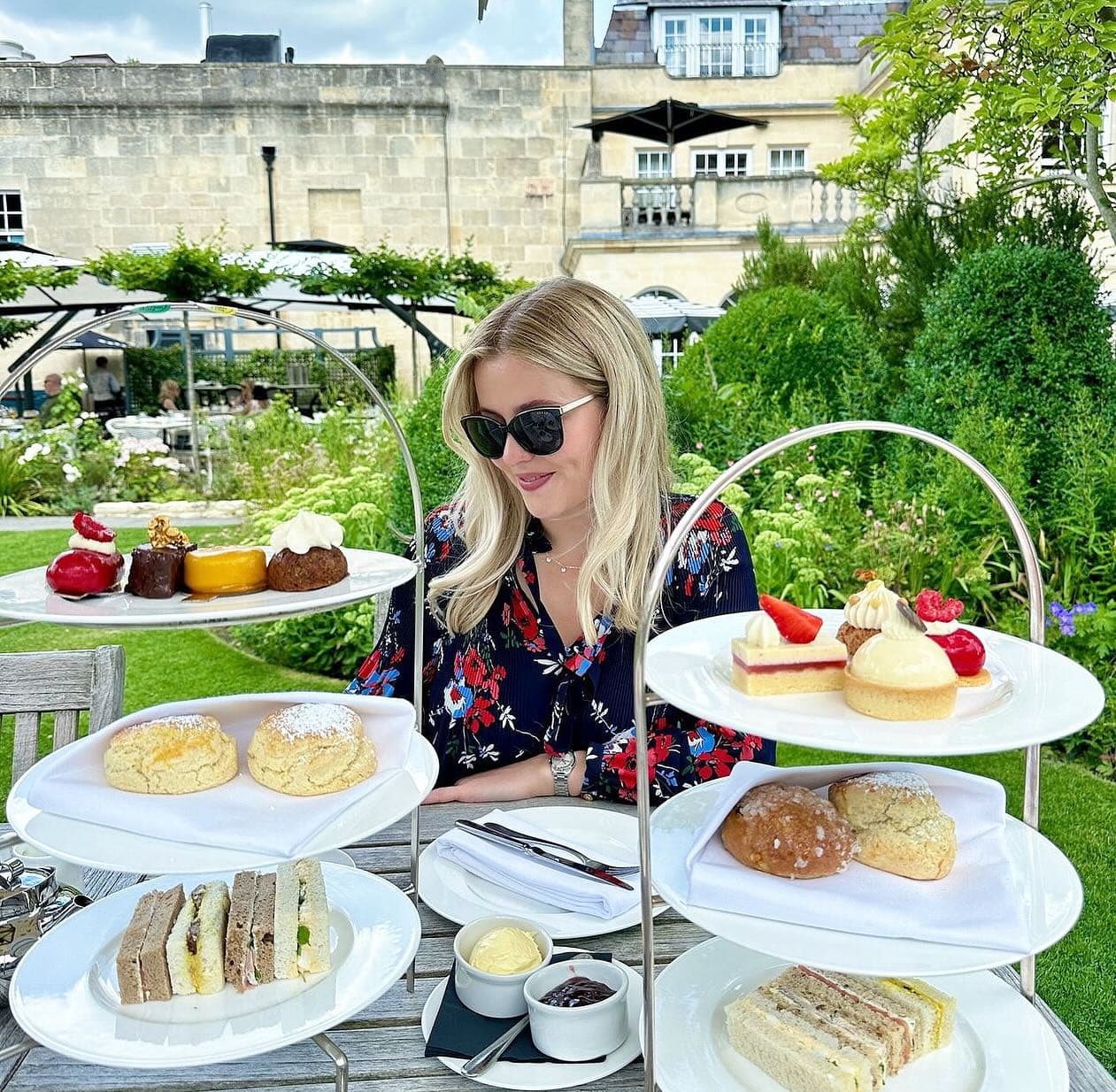
Afternoon tea at The Royal Crescent Hotel & Spa arrives in the form most closely associated with the ritual itself, a classic three tiered stand. Each level carries a different element of the tradition, allowing guests to move through the experience at their own pace.

The lowest tier holds the sandwiches, cut into neat finger sized portions. Smoked salmon with cream cheese and chive offers a delicate savoury opening. Clarence Court egg with mustard cress and mayonnaise provides a familiar comfort, while coronation chicken introduces gentle spice. Wiltshire ham paired with sweet mustard mayonnaise adds a slightly richer note.
Above this sit the warm baked elements. Light scones with a tender crumb are served with Devon clotted cream and strawberry preserve, accompanied by a Bath bun, the local sweet bread that connects the tea to the city of Bath itself. At the hotel the bun arrives warm with cinnamon butter, which melts into the soft crumb and releases a subtle spice.
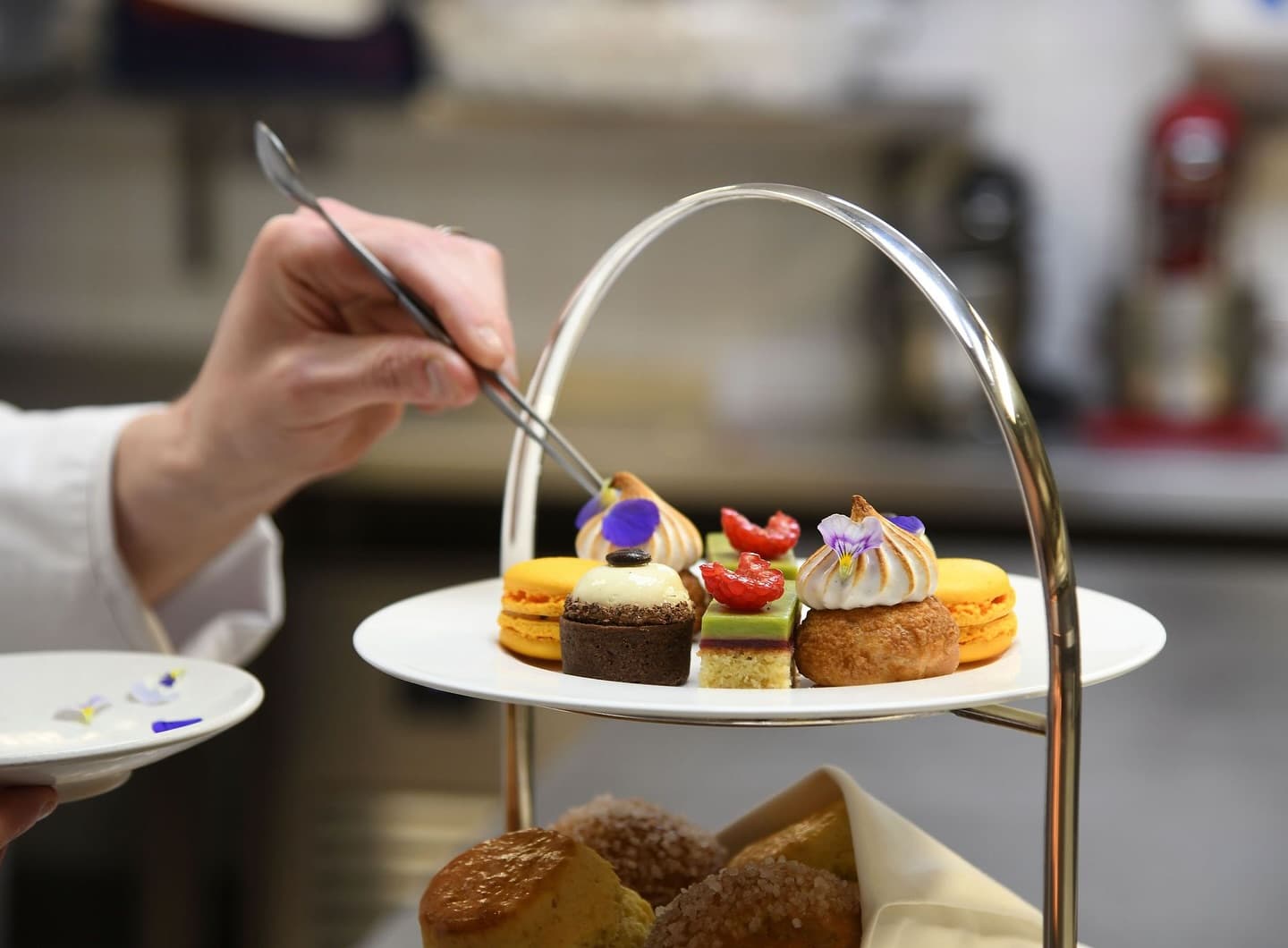
The top tier holds the pâtisserie created by the hotel’s pastry chef, who focuses on classical patisserie with a contemporary touch and a strong emphasis on seasonal ingredients from the southwest of England. The selection changes throughout the year, but it often includes desserts that combine traditional techniques with local flavours. A rhubarb and custard slice may appear in spring, its gentle tartness balanced by soft vanilla cream. A panna cotta infused with Bath gin and kaffir lime offers a more unexpected combination, accompanied by a crisp juniper biscuit shaped like a small crescent. And of course, a macaron to complete the sweet ending.

Antonio, who has worked at the hotel for more than twenty five years, explains the rivalry with quiet amusement as he moves between the tables greeting guests. In Devon the cream traditionally comes first. In Cornwall the jam takes precedence. What matters most, he says with a smile, is that the scone is never assembled like a sandwich. That particular interpretation would be entirely unacceptable.
The Taittinger Champagne Flight
For those wishing to elevate the experience further, the hotel offers a champagne flight from the house of Taittinger. Three glasses arrive in sequence, allowing guests to compare different expressions from the historic Champagne producer while the afternoon tea unfolds.

The Brut Réserve introduces crisp citrus notes and bright freshness that pair naturally with the savoury sandwiches. The Prestige Rosé follows with gentle red berry flavours that complement the pastries and sweets. The final glass, Nocturne Sec, carries a slightly softer sweetness that works beautifully with the desserts that conclude the tea. Tasting the three together alongside the traditional tiers of afternoon tea turns the meal into something closer to a small celebration, one that unfolds gradually across the afternoon.
Why Afternoon Tea at the Royal Cresecent is a Good Idea

Afternoon tea at The Royal Crescent succeeds because everything about it feels appropriate to its setting. Bath carries centuries of social history within its streets and terraces. The Royal Crescent represents one of the most important architectural statements of Georgian Britain. Within that setting the ritual of afternoon tea feels entirely natural. Warm scones, carefully prepared pastries, and well brewed tea are enjoyed without hurry while the afternoon moves quietly forward. Some traditions remain popular because they continue to offer exactly what people are looking for. Afternoon tea at The Royal Crescent is one of those traditions, and in Bath it feels exactly where it belongs.

Glenn Harris
Glenn Harris is an accomplished journalist focusing on luxury travel, fine dining, and exclusive lifestyle events. His wanderlust has taken him to over 128 countries where he constantly strays off the beaten path to uncover exotic locations, travel gems and exciting experiences to capture.
Read More
Francisco Quintas: The Chef Behind Largo do Paço’s Michelin Star at Casa da Calçada, Portugal
Le Pont de la Tour Review: London's Most Iconic French Restaurant Beside Tower Bridge
etch. by Steven Edwards, Restaurant Review: The Discipline of Less