Colonel Saab Trafalgar Square Review, A Journey Through India in the Heart of London
There is nothing quite like eating a cuisine in the place it comes from. Pizza tastes different in Italy. Sushi carries a certain purity when enjoyed in Japan. Yet every so often a restaurant far from those origins manages to recreate the experience in a way that feels remarkably real.
Just off Trafalgar Square, tucked along the short stretch of William IV Street that links the square with Covent Garden, sits a restaurant that has quickly become a destination for lovers of Indian cuisine. Colonel Saab delivers an experience that moves far beyond the predictable Indian restaurants in Britain. The space is impressive, the service makes you feel welcomed and taken care of, and the and the kitchen produces regional dishes that feel both authentic and that are absolutely delicious.
 Colonel Saab immediately demands that you to forget any assumptions about takeaway counters or basic curry houses. This is a serious dining room operating at the same level as many of London’s most polished restaurants. The location alone places it among the city’s cultural centre, surrounded by theatres, galleries, and historic streets. It feels entirely appropriate that a restaurant celebrating Indian heritage would take up residence in such a grand setting.
A Tribute to Travel and Family History
Colonel Saab was created by restaurateur Roop Partap Choudhary as a tribute to his father, Colonel Manbeer Choudhary. During his military career the Colonel travelled extensively across India with his wife Binny, collecting recipes, letters, and artefacts along the way. Those journeys became the inspiration for the restaurant’s concept. The result is a dining experience that tells a personal story through both food and design.

The Trafalgar Square location opened in 2023 in the former Trafalgar Square Post Office. From the street the building appears fairly restrained, but stepping inside reveals a dramatic interior that feels more like a private estate than a commercial dining room. The restaurant draws from the family’s archive of collected objects and heirlooms. Every corner of the room contributes to the sense that you are dining within someone’s carefully assembled collection.
Dining Inside a Living Museum
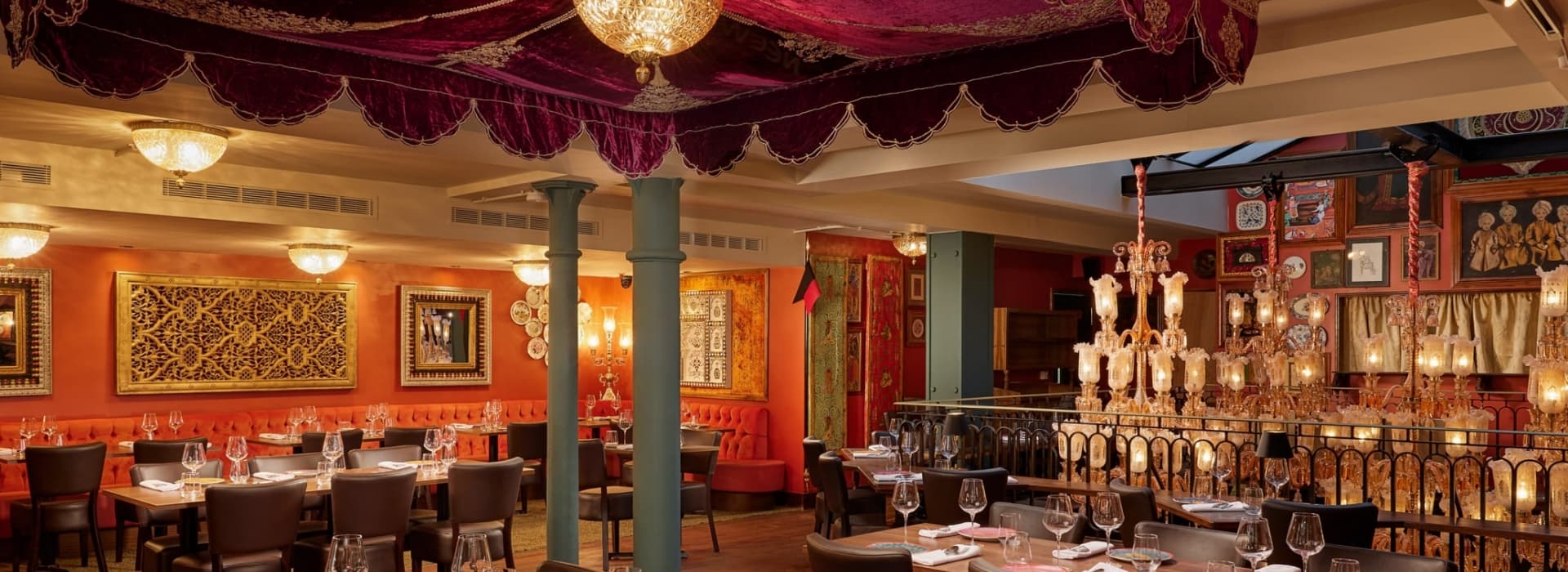
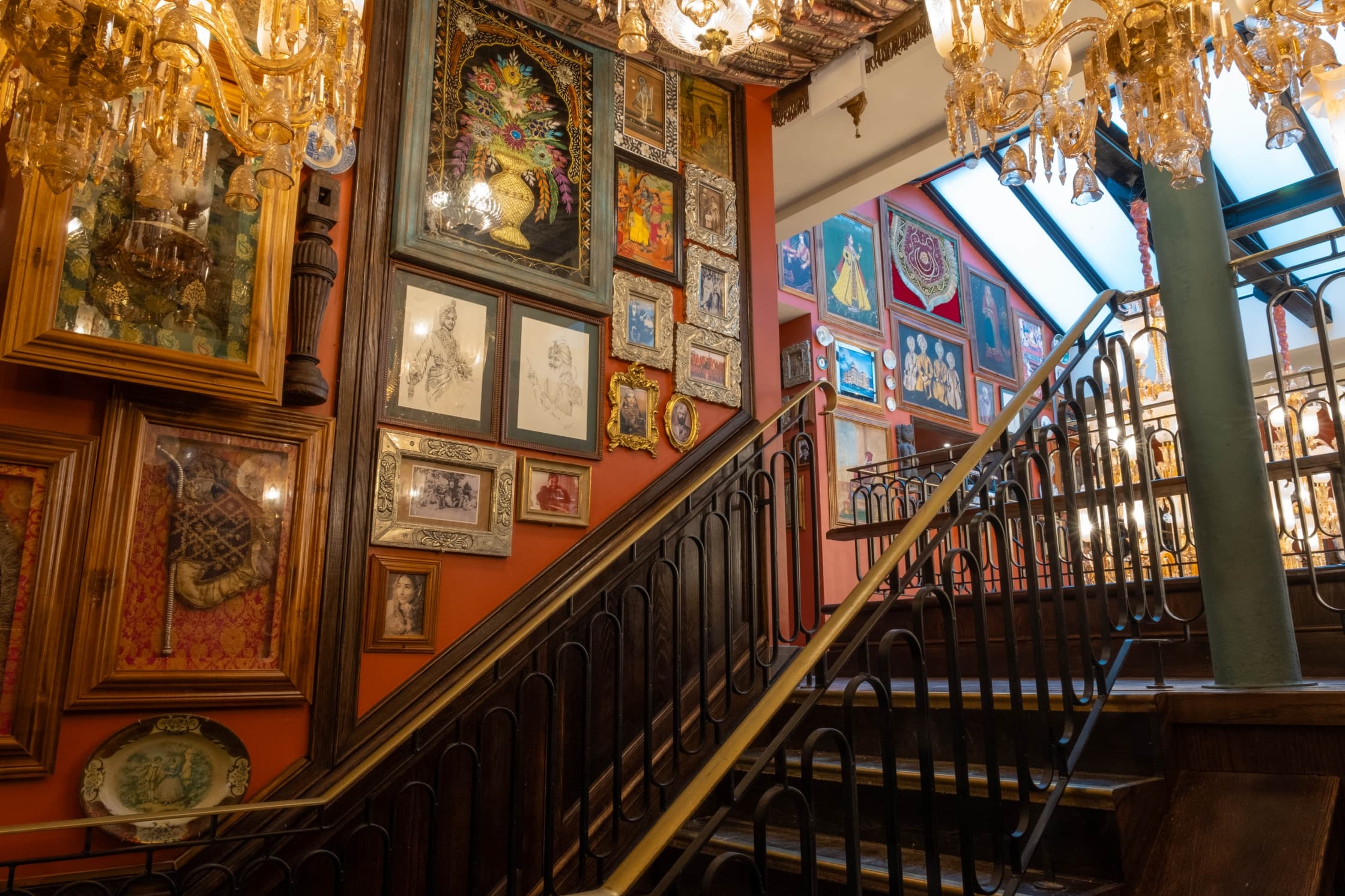
The décor is bold and unapologetically decorative. Walls in warm burnt orange tones frame an eclectic display of paintings, textiles and china, antique doors, and historic photographs gathered during decades of travel across India. Persian silk carpets soften the dark wooden floors while carved temple doors from Gujarat and Nepal have been repurposed as tables. Everywhere you look there something to look at and that you’ll pause to wonder about.
Above the dining room hang remarkable hand blown chandeliers from Firozabad in northern India. Their softly pink glass catches the light from the atrium above and spreads a warm glow across the entire room. The effect immediately draws the eye upward, adding both colour and atmosphere to the space. In many ways they serve as India’s answer to the famous glass of Italy’s Murano, whose chandeliers appear throughout grand houses and hotels across Europe. Elsewhere around the room sit Tanjore paintings from southern India, antique silver pieces, and cabinets filled with porcelain collected during the family’s travels. A marble bar crafted by the historic luxury house Asprey once belonged to the Maharaja of Patiala. Details like this transform the space into something closer to a gallery than a restaurant.
 Despite the grandeur the atmosphere still feels comfortable rather than intimidating. The crowd reflects the location and the restaurant’s growing reputation. Theatre goers settle in for dinner before evening performances while couples share cocktails across small tables near the bar. Local Indian diners appear regularly as well, which always offers reassurance about the quality of the kitchen. The overall mood remains lively yet relaxed.
Cocktails With Theatrical Flair
Before the first dish arrives it is worth spending time with the cocktail list. The drinks here carry a level of creativity that matches the visual drama of the room. Presentation alone often turns heads as glasses arrive surrounded by smoke or crowned with elaborate garnishes. Diners at nearby tables frequently lean in to ask what has just been delivered.

Fortunately the drinks taste just as good as they look. The Pretty Princess combines sake with lime juice, mint, and delicate white peach, producing something bright and refreshing that works perfectly as a first drink. The Santra Sling moves in a more citrus driven direction, bringing orange and rhubarb together with Champagne to create a crisp and lively aperitif.
For something deeper the Kunwar offers a barrel aged combination of whisky, Campari, vermouth, and subtle Indian spices. The result feels bold but balanced, pairing comfortably with the richer dishes that follow. It becomes clear that the bar program is designed to complement the food rather than compete with it.

A Tasting Menu That Travels Across India
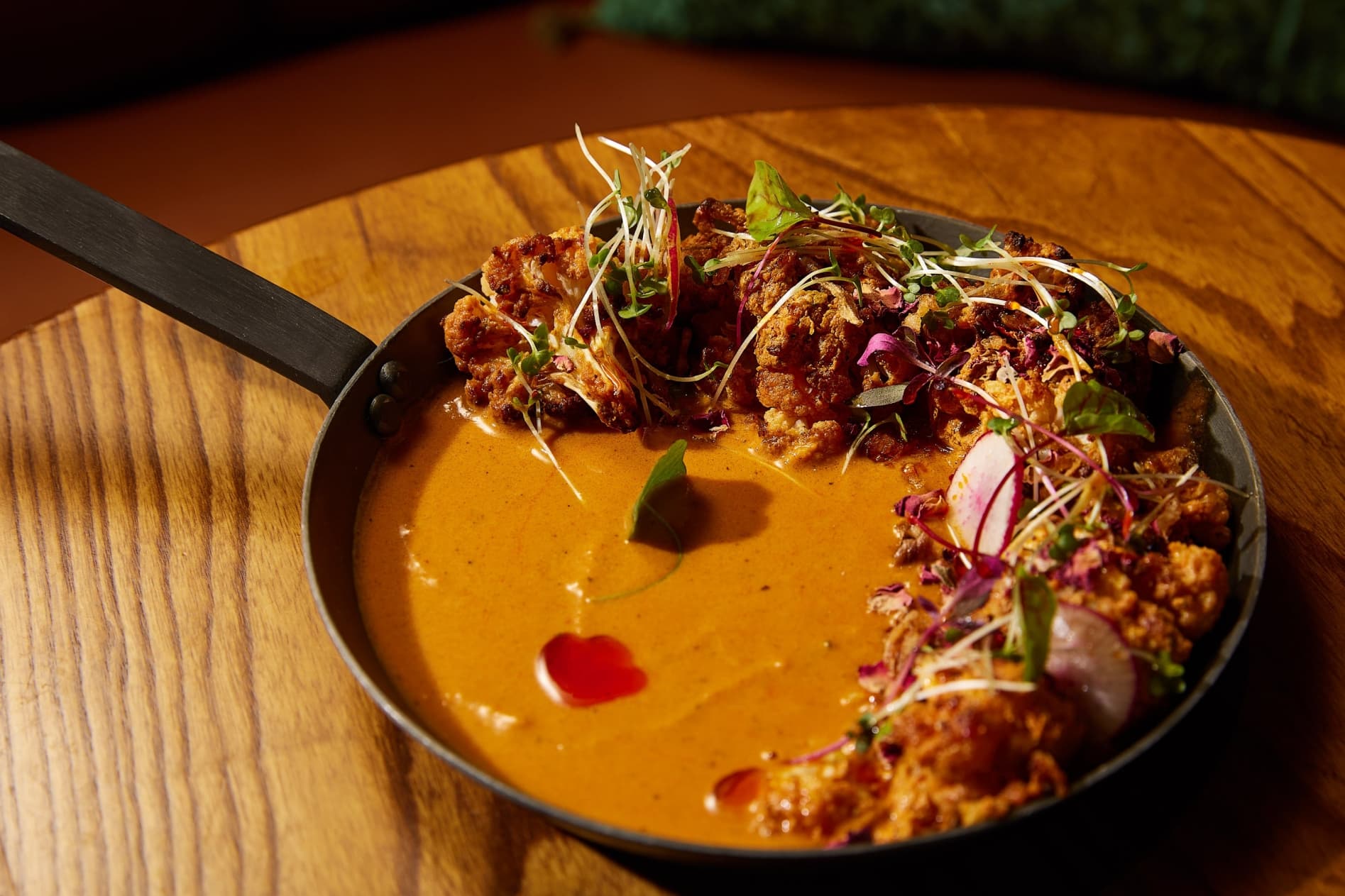
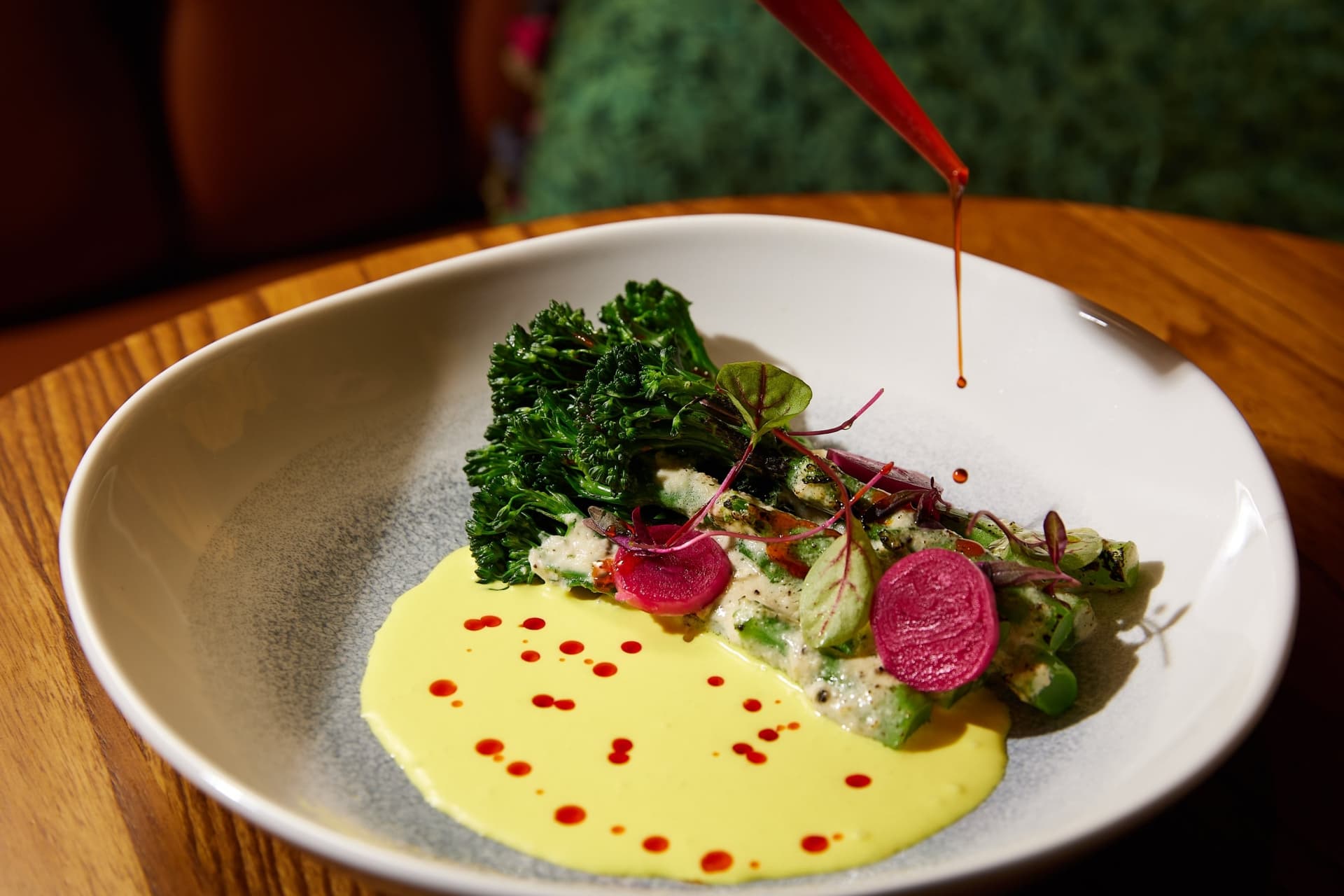
The cooking at Colonel Saab reflects the same philosophy that defines the room around it. Rather than relying on the familiar handful of dishes many British diners associate with Indian restaurants, the menu pulls from regional traditions across the country. The kitchen moves comfortably between street food snacks, coastal seafood, and slow cooked curries. What emerges is a menu that feels expansive without becoming overwhelming.

With that range in mind, the tasting menu quickly becomes the most satisfying way to approach the kitchen. Known as the Memsaab tasting menu, it unfolds across several courses and gives the chefs space to move through different regions and techniques. The structure allows the meal to build gradually, beginning with lighter street food dishes before arriving at richer curries. It also makes the progression of spices and textures easier to appreciate.

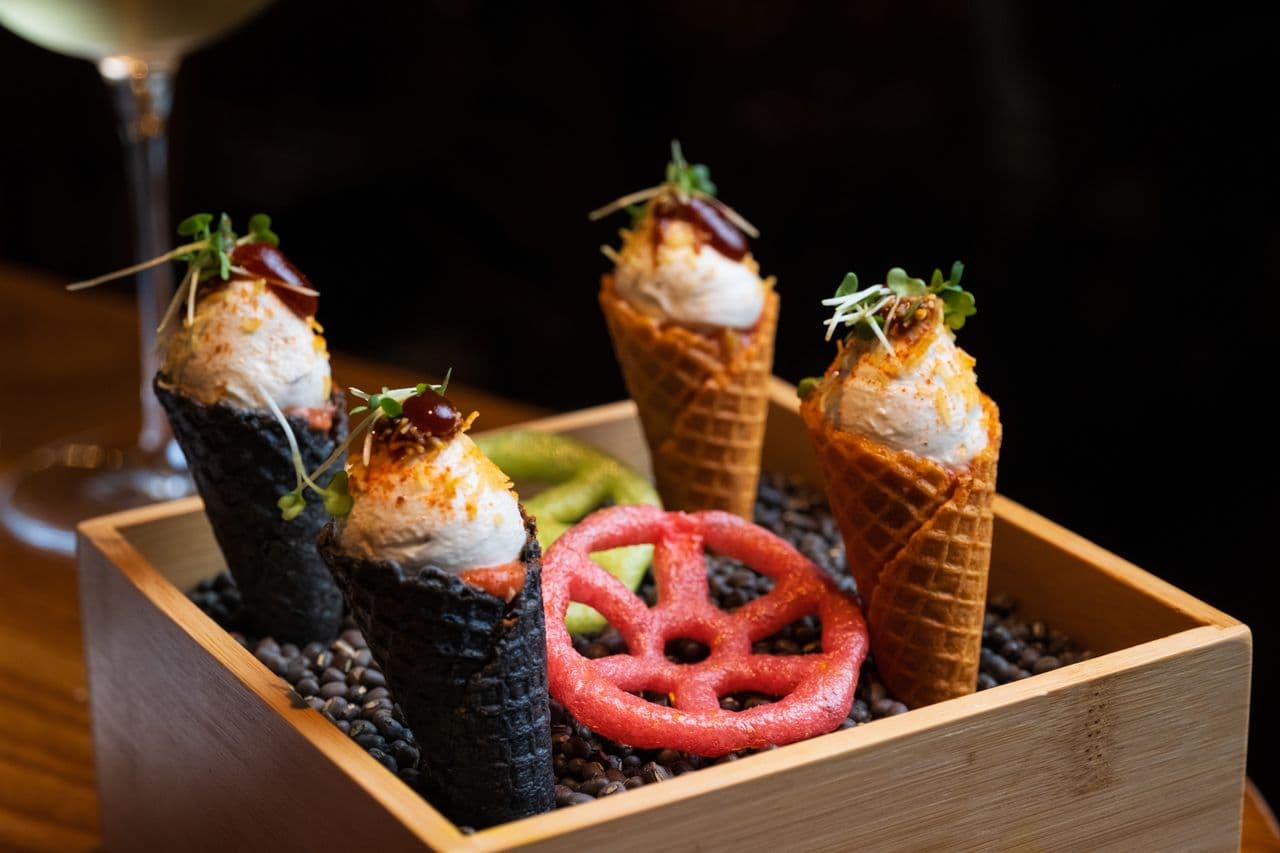
The opening courses lean toward India’s street food traditions. A Raj Kachori arrives as a crisp shell filled with chickpeas, potatoes, yoghurt, tamarind chutney, herbs, and pomegranate seeds. The first bite delivers crunch followed by sweetness, acidity, and warmth in quick succession. It is the sort of dish that immediately wakes up the palate.
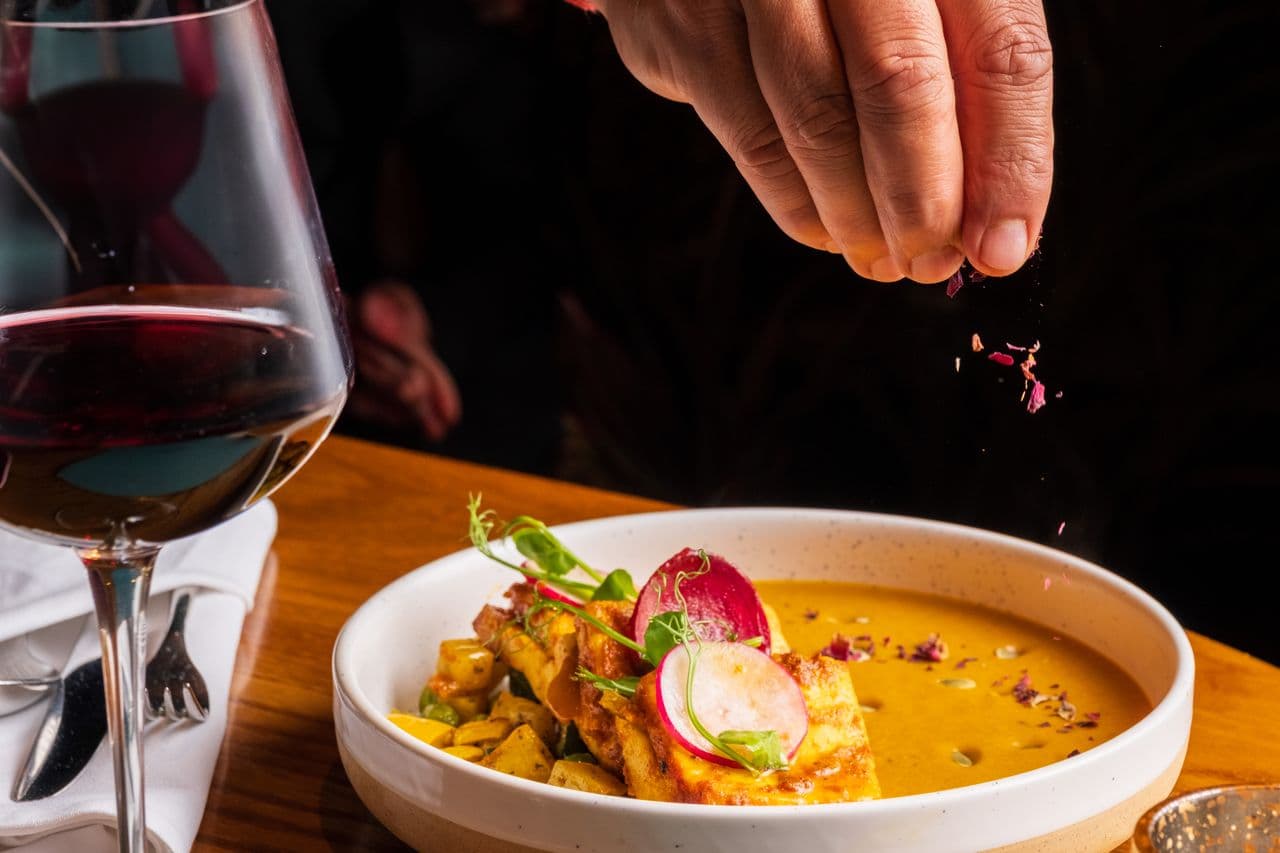
Another highlight early in the meal is the Kandhari Paneer Tikka. The paneer is grilled until the edges carry a light char while the centre remains soft and creamy. Inside sits a mixture of pomegranate and prunes that introduces a gentle sweetness against the smoky exterior. It is a thoughtful dish that shows how carefully the kitchen handles texture.

From there the flavours begin to deepen. Seafood dishes such as Kerala style fish moilee bring coconut based sauces layered with aromatic spices rather than aggressive heat. The curry is fragrant and rounded, with the coconut softening the sharper edges of the spices. Between courses the pacing allows the flavours to settle before the meal moves forward.

The heart of the tasting menu arrives with the meat course. Slow cooked lamb is prepared until it yields easily to the fork, the meat carrying the deep fragrance of cardamom, clove, and long simmered spices. Alongside it comes rice with perfectly separate grains and warm naan fresh from the oven. Tear the bread apart and steam escapes while it soaks up the sauce on the plate.
One of the more thoughtful touches arrives before the meal even begins. The staff ask diners how much heat they prefer, adjusting the dishes accordingly. The goal is balance rather than bravado. Good Indian cooking should carry warmth that builds gradually, not a blunt intensity that overwhelms the rest of the flavours.

Dessert closes the meal with something lighter. A coconut panna cotta arrives beneath a small cloud of aromatic steam before revealing a soft, creamy finish. The sweetness is restrained and the spices remain delicate. After the richness of the earlier courses, it provides a calm and satisfying end to the evening.
Hospitality That Feels Personal
Service at Colonel Saab reflects the storytelling nature of the restaurant itself. Staff move through the dining room in burgundy and black uniforms, offering guidance on both the menu and the artefacts displayed around the room. Their knowledge adds context to the experience without ever becoming intrusive.

Servers happily explain the origins of dishes or recommend cocktails to match particular courses. The pace of the evening feels relaxed but organised, allowing diners to enjoy each plate without feeling rushed. That balance contributes greatly to the restaurant’s overall sense of hospitality.
Occasionally the staff offer curious guests a short look at some of the objects scattered throughout the space. These moments reinforce the feeling that the restaurant operates as a personal tribute rather than simply another commercial venture.
A Standout in London’s Indian Dining Scene
London offers no shortage of excellent Indian restaurants. Yet Colonel Saab manages to stand apart through the strength of its concept. The restaurant combines genuine family history with serious cooking and a setting that feels unlike anywhere else in the city.

Step outside afterwards and the lights of Trafalgar Square glow only moments away. Inside the dining room, however, the experience feels as though it has travelled much farther. The flavours, colours, and stories scattered across the room create a vivid portrait of India brought to life in central London.
When a restaurant manages to engage every sense from the moment you arrive until the final course, the evening becomes memorable for all the right reasons. Colonel Saab achieves exactly that.

Glenn Harris
Glenn Harris is an accomplished journalist focusing on luxury travel, fine dining, and exclusive lifestyle events. His wanderlust has taken him to over 128 countries where he constantly strays off the beaten path to uncover exotic locations, travel gems and exciting experiences to capture.
Read More
Francisco Quintas: The Chef Behind Largo do Paço’s Michelin Star at Casa da Calçada, Portugal
Le Pont de la Tour Review: London's Most Iconic French Restaurant Beside Tower Bridge

etch. by Steven Edwards, Restaurant Review: The Discipline of Less