Le Pont de la Tour Review: London’s Most Iconic French Restaurant Beside Tower Bridge
Not long ago, this stretch of the Thames south bank was nobody's idea of a destination. Butler's Wharf was a working dockland in the fullest, rawest sense: vast Victorian warehouses packed with tea, coffee, spices, and sugar hauled in from the far reaches of Empire; longshoremen, noise, grime, and the permanent smell of the river. When the trade died in the 1970s and the ships moved east, it became something arguably worse than rough. It became empty. Derelict warehouses, broken gantries, cracked cobbles, and the kind of silence that accumulates in places the city has given up on.
Today, that same postcode is one of the most sought-after restaurant addresses in Europe. White tablecloths. Oysters and Kings Caviar. Tower Bridge filling the windows like a painting someone had the audacity to make real. The transformation is so complete that it takes a conscious effort to imagine what stood here before.
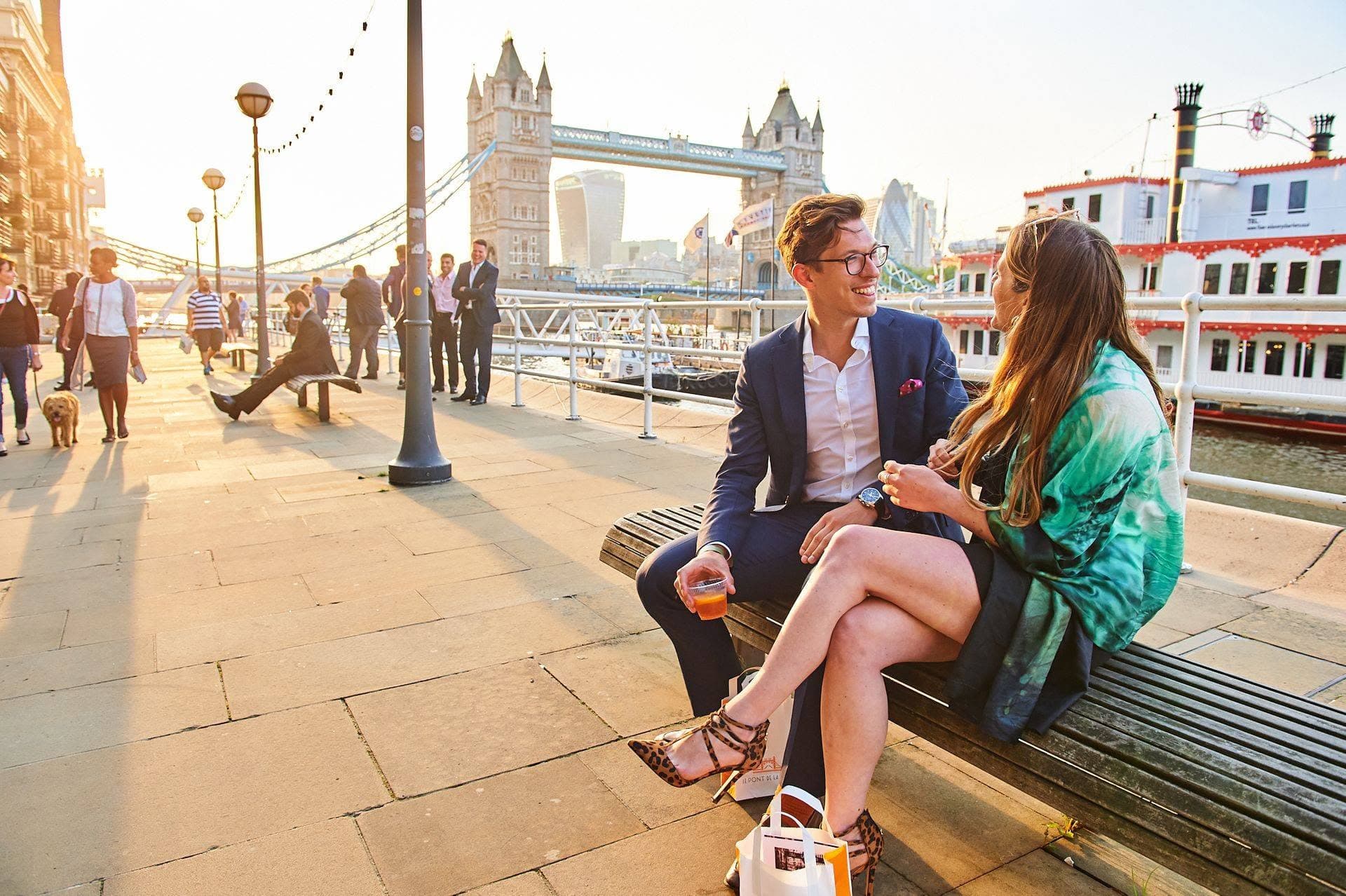
At the centre of it is Le Pont de la Tour: the restaurant that, more than any other single establishment, made this address what it is. It has been here for over thirty-five years, it holds a place in the Michelin Guide, and on any given evening its terrace is one of the most coveted patches of outdoor dining in the city. It earned all of it. The view is extraordinary, but this is a serious French restaurant first. The view is simply where it happens to be.
Le Pont de la Tour London Restaurant Overlooking Tower Bridge
The address is 36D Shad Thames, SE1: a cobbled lane on the south bank, east of Tower Bridge, running through the iron-bridged canyon of the old Butler's Wharf warehouse complex. The overhead gantries and connecting walkways that now carry restaurant canopies and trailing greenery were built in the Victorian era to move barrels between storage floors. The bones of the building are industrial. The experience of dining here is anything but.

The restaurant faces the river directly. Tower Bridge is not glimpsed or suggested; it is the immediate, full-scale view from every table, every window, and the entire terrace. The bridge opened in 1894, its Gothic Revival towers and steel framework deliberately designed to echo the nearby Tower of London, and from this side of the water it is presented at its most imposing. At night, illuminated against the sky, with riverboats moving beneath the raised bascules and the lights of the city reflected on the Thames, it is one of the more genuinely spectacular things London puts in front of you. Book an evening table, and do not be late for sunset.
London Bridge station is a seven-minute walk. River taxis stop nearby. For guests who want to make a full evening of the approach, arriving by water is the obvious choice.
Butler’s Wharf From Industrial Docklands to Dining Destination
Butler's Wharf was built between 1871 and 1873 as the largest wharf complex on the River Thames: a commercial hub where tea, coffee, spices, and sugar arrived from the far reaches of Empire and were stored in towering Victorian warehouses before distribution across the city. London's larder. By the 1970s, containerisation had killed the trade, the ships had moved east, and the whole stretch had fallen derelict. Then Sir Terence Conran bought it.

His vision was a Gastrodome: a cluster of restaurants, a wine shop, a delicatessen, and a coffee house built into the fabric of the converted warehouses, with a flagship French restaurant at the centre. The name he gave it was not an accident. Le Pont de la Tour translates as "The Bridge of the Tower," precisely how French speakers refer to Tower Bridge. A London landmark, named in the language of Paris. That collision was deliberate: in 1991, a French name carried immediate cultural weight, announcing grand brasserie ambition, serious wine, and a tier of hospitality that a more literal title would have squandered. Tower Bridge itself takes its name from the Tower of London nearby, so the restaurant's title folds the river, the bridge, and the ancient fortress into three words of French. Conran conceived the space almost as an extension of the bridge, the terrace positioned practically beneath its towers, the dining room oriented around it. The name and the architecture made the same argument.

The restaurant opened in 1991 and quickly became one of London's defining rooms. Its most celebrated moment came in 1997, when President Bill Clinton lunched here with Prime Minister Tony Blair, and Tower Bridge opened mid-departure, splitting Clinton's motorcade in two. Some addresses write their own history.
Le Pont de la Tour is now part of the Evolv Collection, formerly D&D London, which traces its lineage directly back to the Conran restaurant business and manages the site today with the same founding ambition intact.
The Company It Keeps
The clientele at Le Pont de la Tour reflects the restaurant's dual identity as both a business address and a destination for significant personal occasions. The City is close, and the midweek lunch trade draws senior figures from finance, law, and the professional services. Weekend tables skew toward celebrations: anniversaries, milestone birthdays, marriage proposals, and the kind of dinner that needs to be remembered. International visitors who have researched rather than stumbled arrive knowing what they are walking into, and the restaurant is repeatedly recommended for overseas guests precisely because it delivers such a distinctly cinematic image of London.

The restaurant also welcomes dogs on the terrace, offers a dedicated children's menu, and maintains a loyal local contingent among Shad Thames residents and the broader Southwark neighbourhood. In London, that kind of repeat loyalty is hard-won. Here it has been earned over decades.

The Dining Rooms Bar and Terrace at Le Pont de la Tour
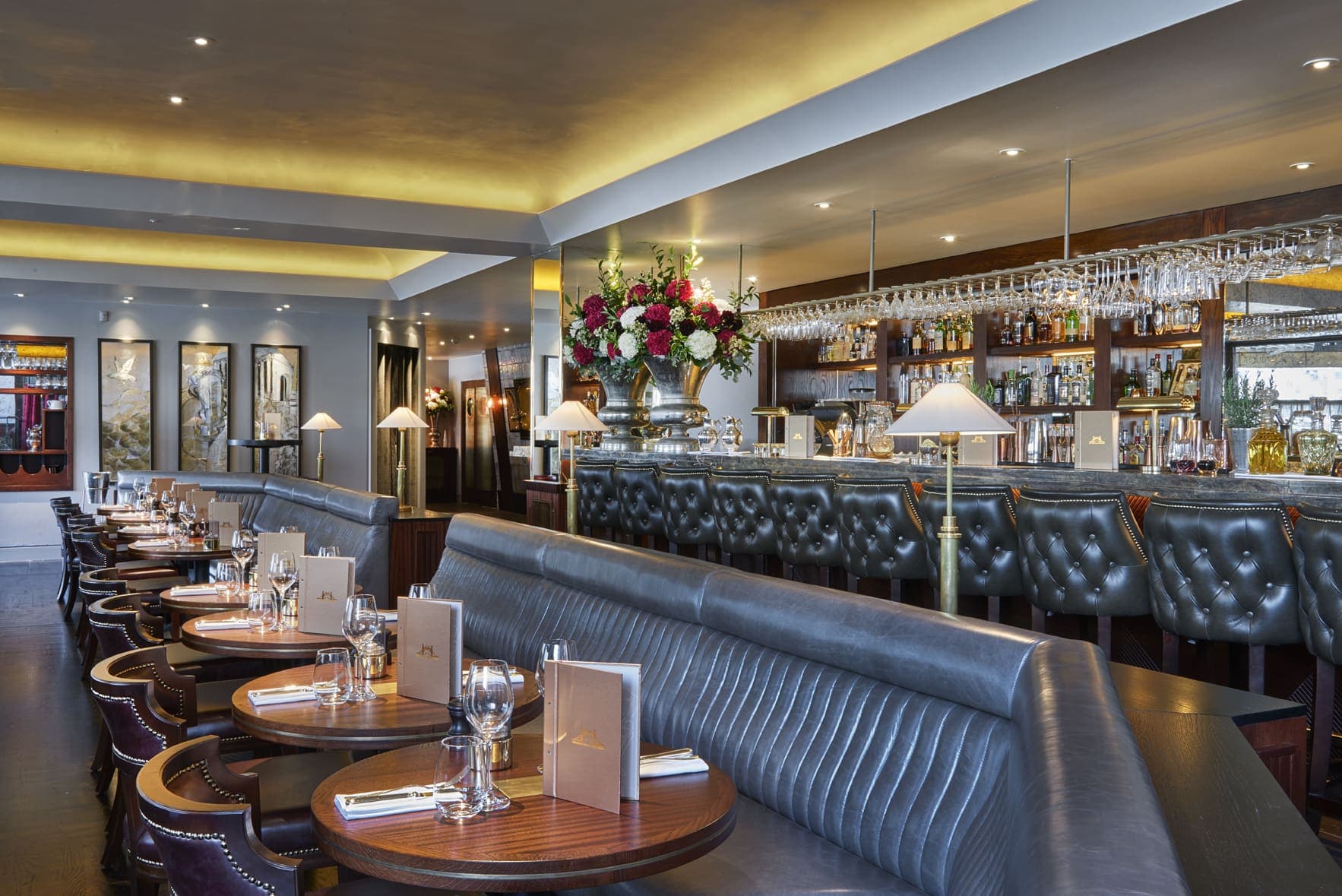
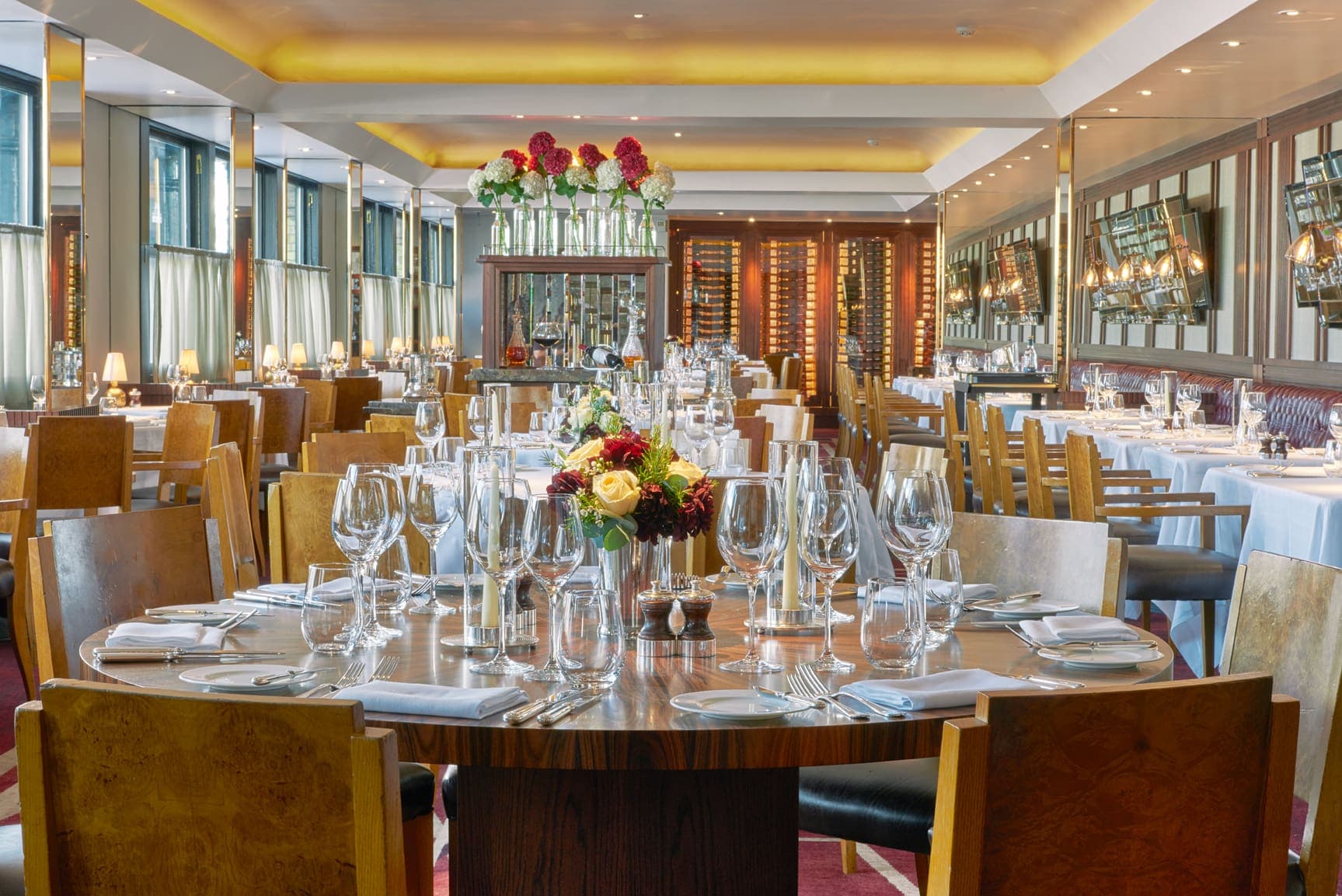
The main dining room was redesigned by Russell Sage Studio, introducing a darker, moodier palette that critics have compared to the grand saloons of 1930s ocean liners: think the SS Normandie rather than a Parisian brasserie. Dark lacquered finishes, brass accents, claret leather banquettes, patterned ceilings, amber lighting, and polished timber run throughout. The river-facing windows ensure Tower Bridge dominates the room despite the intimate atmosphere, and the overall effect is of a space that takes dining seriously without requiring guests to match it with formality. The service reinforces this: old-school French in its attentiveness and ceremony, warm enough that the white-cloth formality never tips into stiffness.

The bar is a destination in its own right rather than a holding area. The cocktail menu draws on the Victorian spice trade history of Shad Thames, the same cargo that once passed through these very warehouses, and the mixology is serious. It is worth arriving early enough to sit with something well-made before moving through to dinner.

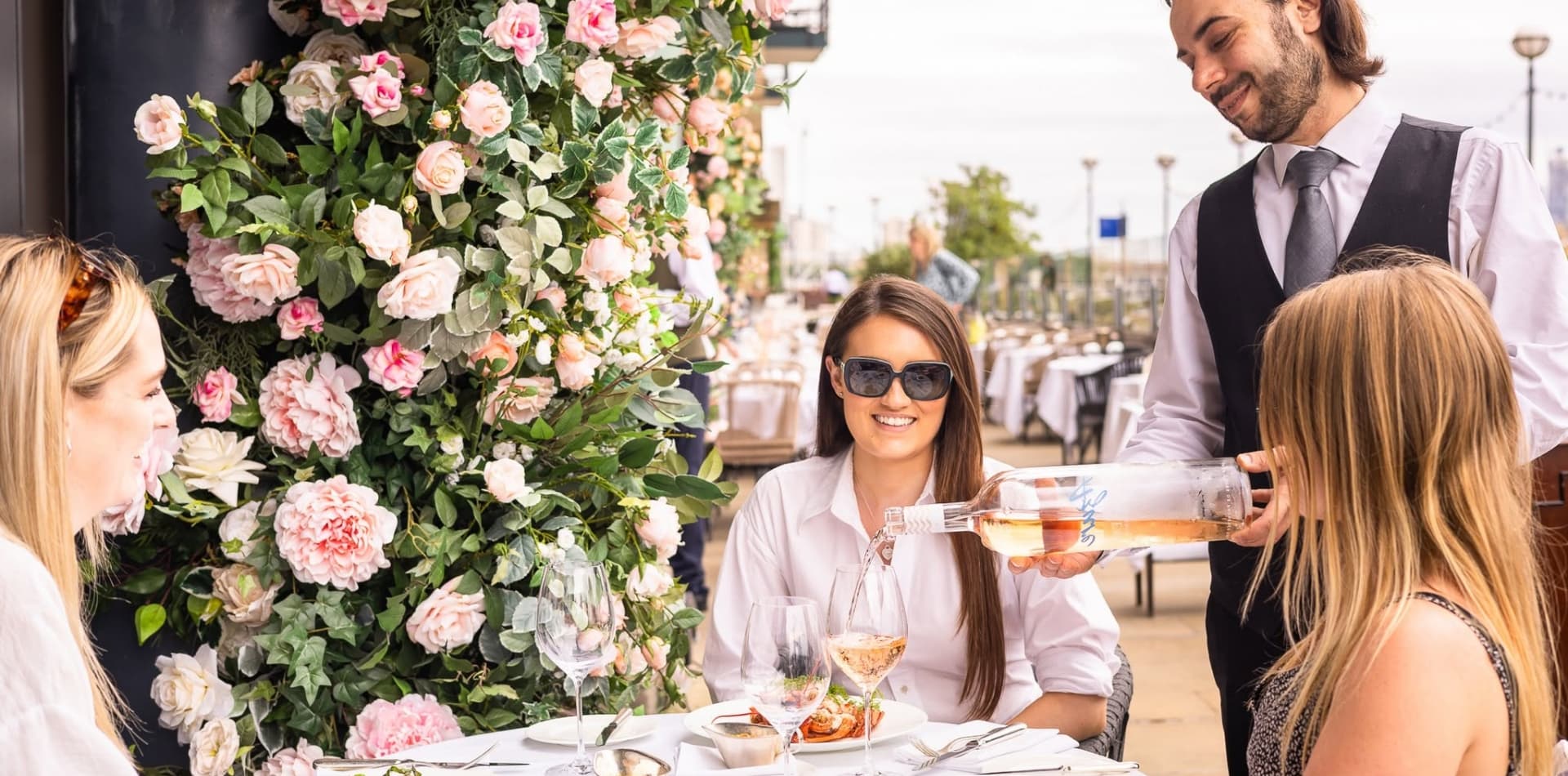
The terrace is where Le Pont de la Tour shows its full hand. White-clothed tables, fairy lights strung overhead, and Tower Bridge at immediate range: the combination is direct and unapologetic. In summer, the terrace becomes La Plage du Pont, bringing imported sand, deck chairs, St-Germain Hugo Spritzes, and Riviera-style sharing plates to the riverside. It has become a fixture of the London summer calendar for those who know about it. In the shoulder seasons, fire pits take over the bar terrace, making it possible to sit outside long into cooler evenings with the bridge lit up overhead. The private dining room, set back from the main restaurant, features a long polished table, velvet chairs, and wine racks covering the walls from floor to ceiling: the right setting for anything that warrants a room of its own.
French Culinary Tradition at Le Pont de la Tour
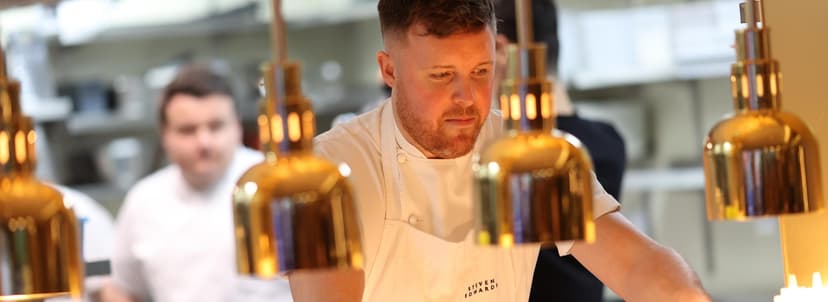
The kitchen is anchored in classical French technique, and makes no apology for it. In an era when London restaurants aggressively chase trends, Le Pont de la Tour has remained committed to the tradition that made it: sauces, seafood, luxury ingredients, tableside preparations, and technical precision over conceptual theatre. It is a position that requires confidence to hold, and the kitchen holds it well.

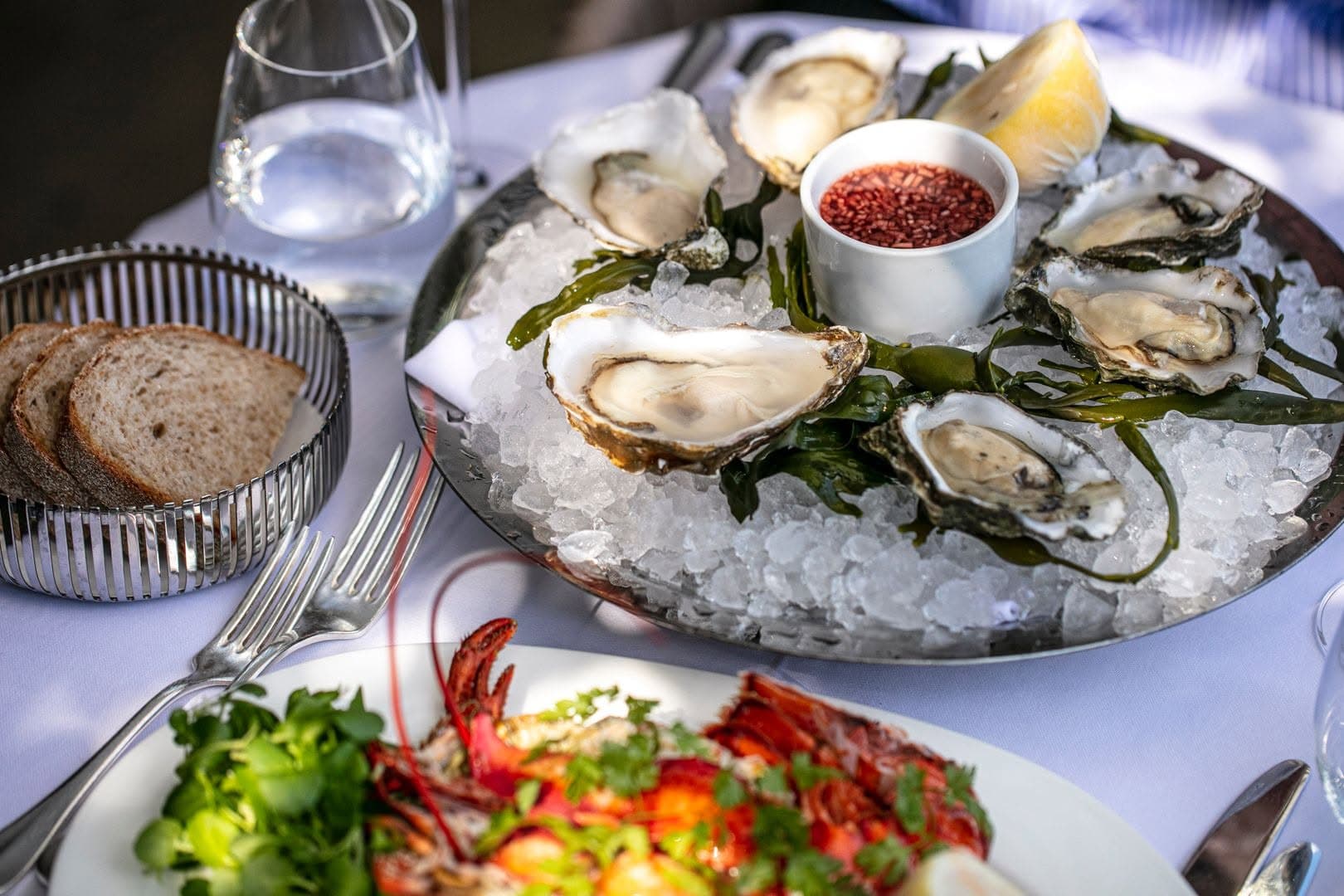
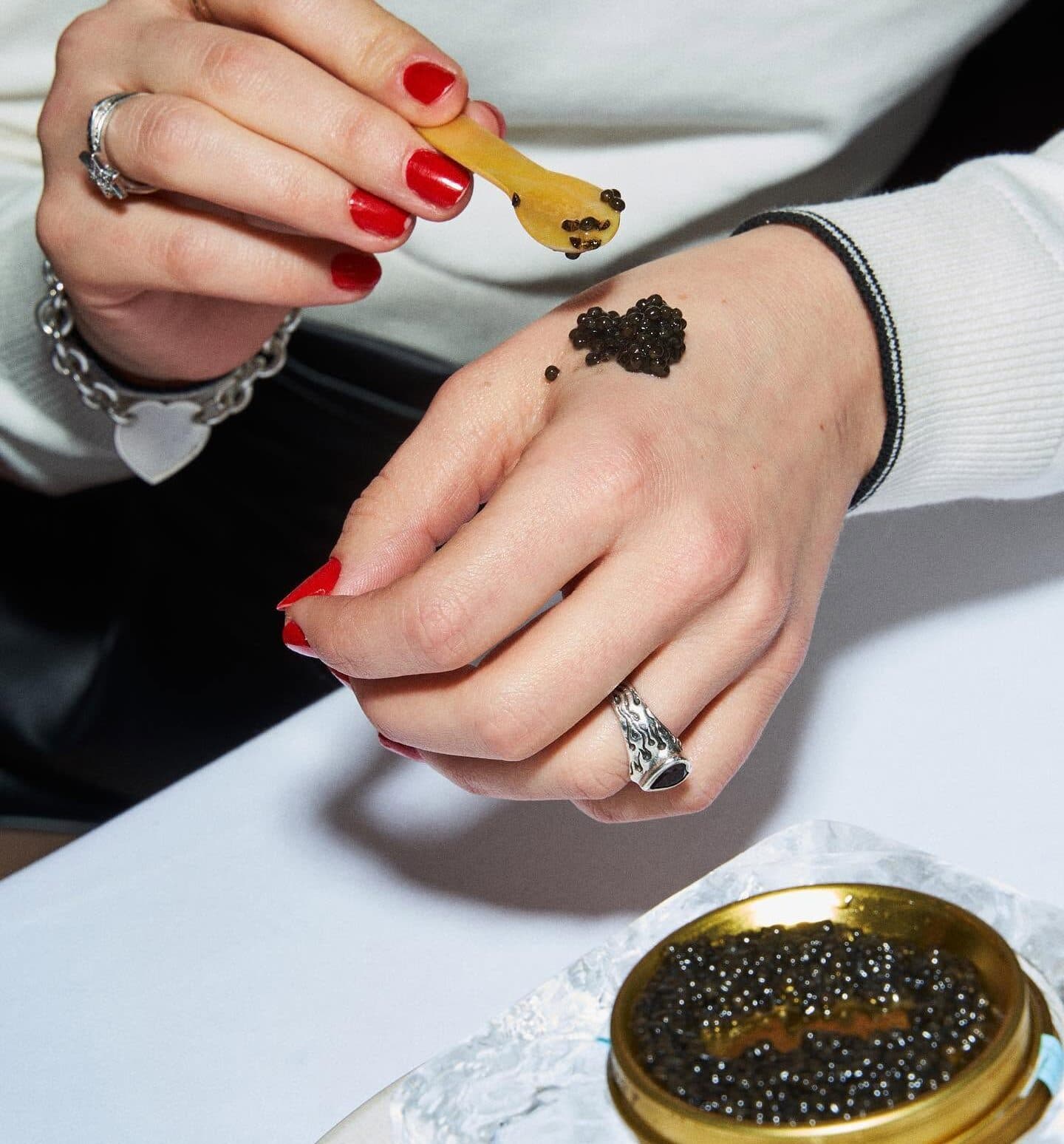
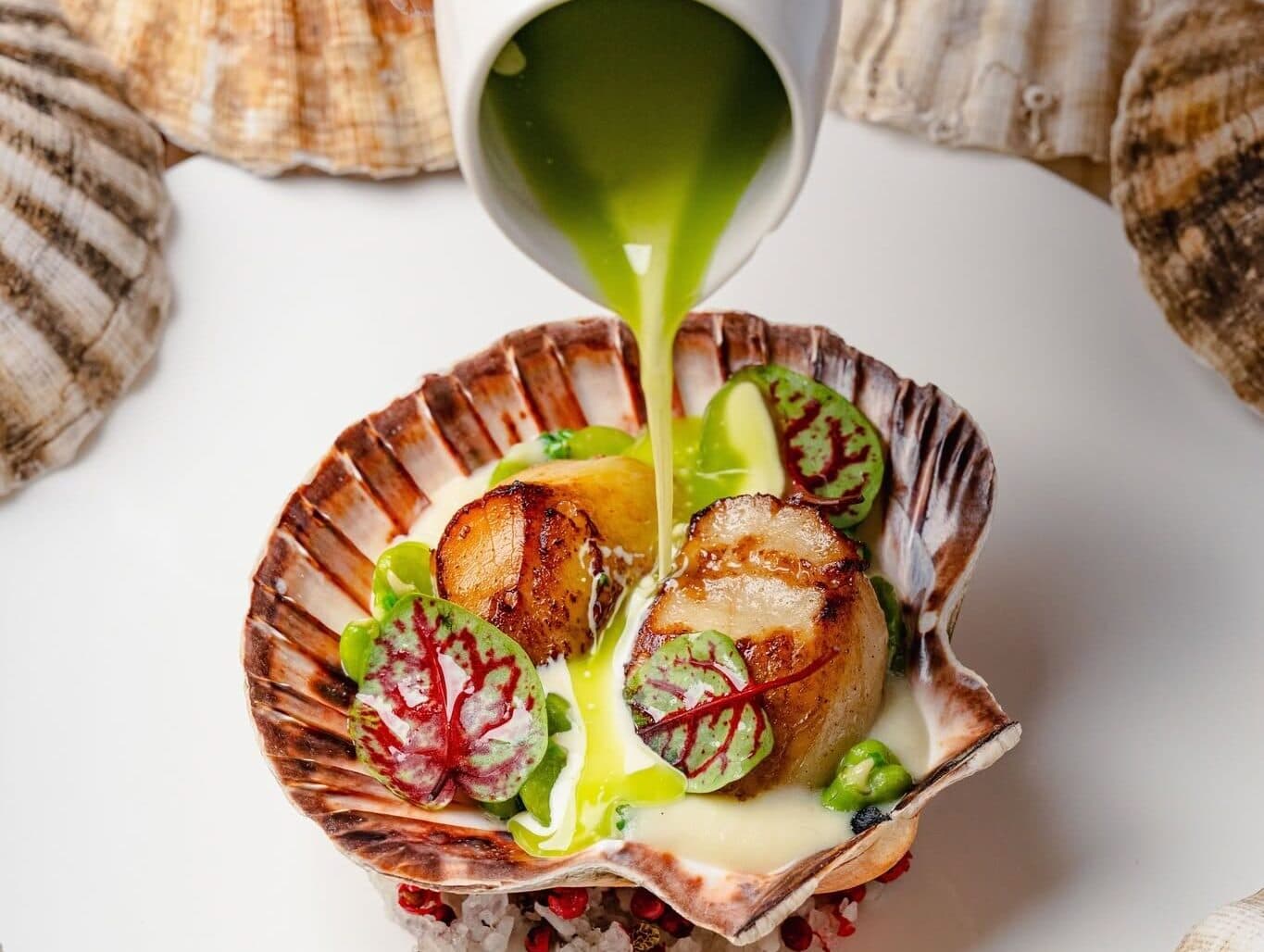
Seafood is central to the identity of the menu. The crustacean section alone is worth treating as a dedicated course: fresh oysters from Mersea or Porthilly, a Plateau de Fruits de Mer stacked with dressed crab, langoustines, lobster, crevettes, and shellfish, and four varieties of caviar served with blinis and sour cream. Devon white crab arrives as a refined tartlet with guacamole, Granny Smith apple, frisée, and cocktail sauce. These are dishes that understand their own register and deliver on it without fuss.

Among the mains, Dover sole prepared meunière or Grenobloise is one of the restaurant's defining dishes, and filleted tableside when ordered whole. Whole Cornish turbot for two, flame-grilled and served with hollandaise, is the choice for the table that wants something ceremonious. For meat, the kitchen reaches equally high: Tournedos Rossini, Chateaubriand with Béarnaise, and a 750g dry-aged Cumbrian fillet with fries speak to a kitchen comfortable in the classical register at every level.
The red wine-braised corn-fed chicken with pommes tournées, glazed baby onions, mushrooms, and bacon is the dish that surprises people: a braise of real depth, the kind that takes time and cannot be faked.

Desserts are where the room comes alive. The Crêpe Suzette is flambéed tableside, the sauce adjusted with seasonal fruit and spirits throughout the year, and it is theatrical in the best sense: the kind of thing that makes the whole dining room briefly look over. The crème brûlée is a benchmark version, and a cheese trolley rounds out the menu in proper French style.

The wine programme is one of the stronger classic lists among London's riverside restaurants, weighted heavily toward France: Bordeaux, Burgundy, Loire, Rhône, and Champagne, with access to rare vintages and sommelier-led pairings for those who want to go further. Coravin systems allow the better bottles by the glass. The list rewards time spent with it.
The average spend on food is approximately £116 per person, which accurately reflects the quality of the produce, the skill in the kitchen, and the singular circumstance of where you are eating. Set lunch and pre-theatre menus offer a more accessible entry point without compromising the experience.
Is Le Pont de la Tour Worth It? A Verdict on London's Best Special Occasion Restaurant

Think back to what this place was: broken warehouses, cracked cobbles, the silence of a neighbourhood the city had written off. The longshoremen gone. The spice ships gone. Nothing left but the river and a bridge that nobody was eating beside.
Thirty-five years ago, Terence Conran looked at that wasteland and put white tablecloths on it. He gave it a French name, a serious kitchen, and the confidence to insist that one of London's most neglected corners was, in fact, one of its finest addresses. The city took some convincing. Then it came for dinner and never really left.
That is the actual story of Le Pont de la Tour. Not the view, though the view is extraordinary. Not the famous lunches, though they happened. Not the celebrity names or the Michelin recognition or the decades of critical approval. The story is simpler and more audacious than any of that: someone decided that rough and forgotten could become refined and essential, and then proved it.
The view is the invitation. The kitchen, the wine list, the tableside Crêpe Suzette, the Dover sole, the terrace on a summer evening with Tower Bridge lit against the sky: those are the argument. Le Pont de la Tour has been making it, convincingly and without interruption, since 1991.
The Practical
Address: 36D Shad Thames, London SE1 2YE Telephone: 020 7403 8403 Reservations: lepontdelatour.co.uk Hours: Open daily, noon onwards. La Plage du Pont terrace runs through the summer season. Private dining: Available for groups requiring an exclusive space. Enquiries via the Groups and Events page. Loyalty: The Evolv Rewards programme is available to regular guests.
Glenn Harris
Glenn Harris is an accomplished journalist focusing on luxury travel, fine dining, and exclusive lifestyle events. His wanderlust has taken him to over 128 countries where he constantly strays off the beaten path to uncover exotic locations, travel gems and exciting experiences to capture.
Read More

Pétrus by Gordon Ramsay Review: A Michelin Starred Restaurant in London
The Penn at Stoke Park: Tom Sellers Brings Fine Dining to a Historic British Estate
Francisco Quintas: The Chef Behind Largo do Paço’s Michelin Star at Casa da Calçada, Portugal