Barcelona Beyond the Bar: Discover the City’s Hotel Bars, Rooftops and Beach Clubs
Barcelona is one of those cities that can feel familiar very quickly. There is the Sagrada Família, the Gothic Quarter, the beach and the restaurants that appear on every first-time visitor's list. Come back, though, and there is usually something new to find.
Hotel bars are one of them.
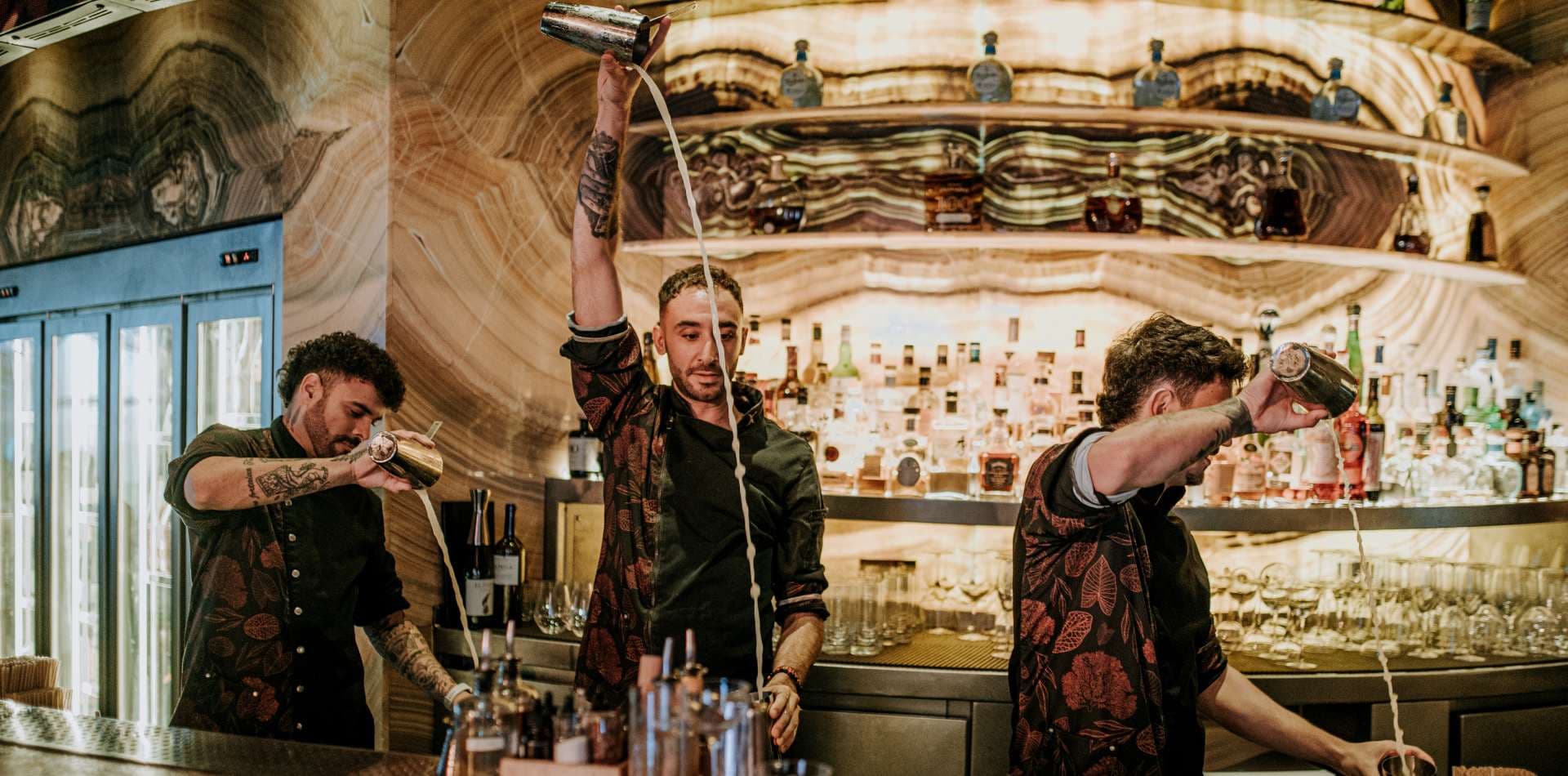
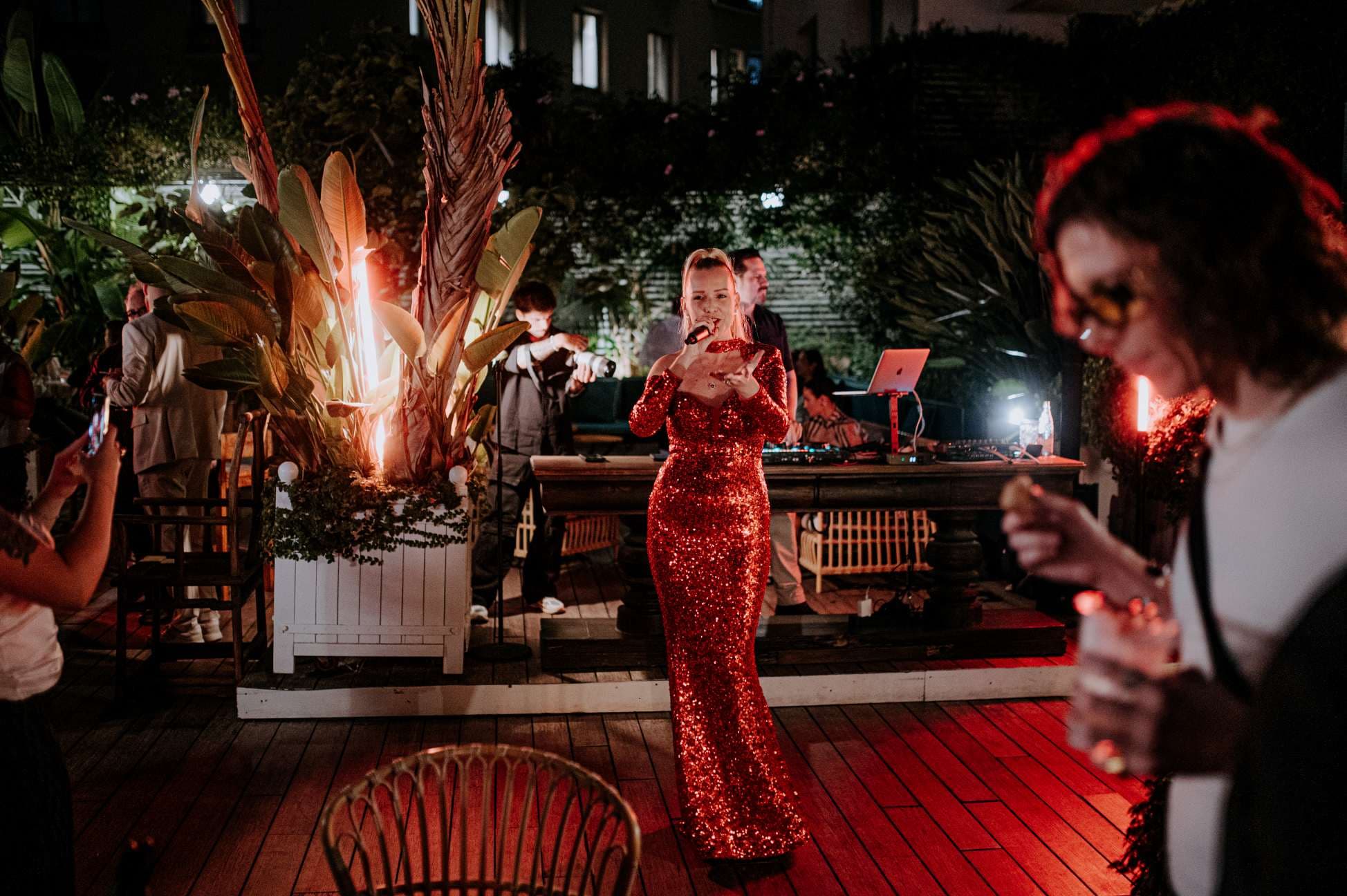
Barcelona Hotel Bar Week brought more than 30 of them together across the city, with bartenders coming in from London, Madrid, New York, Athens and Belgrade. It was a good excuse to walk into hotels that might otherwise be passed by and see what was happening inside.
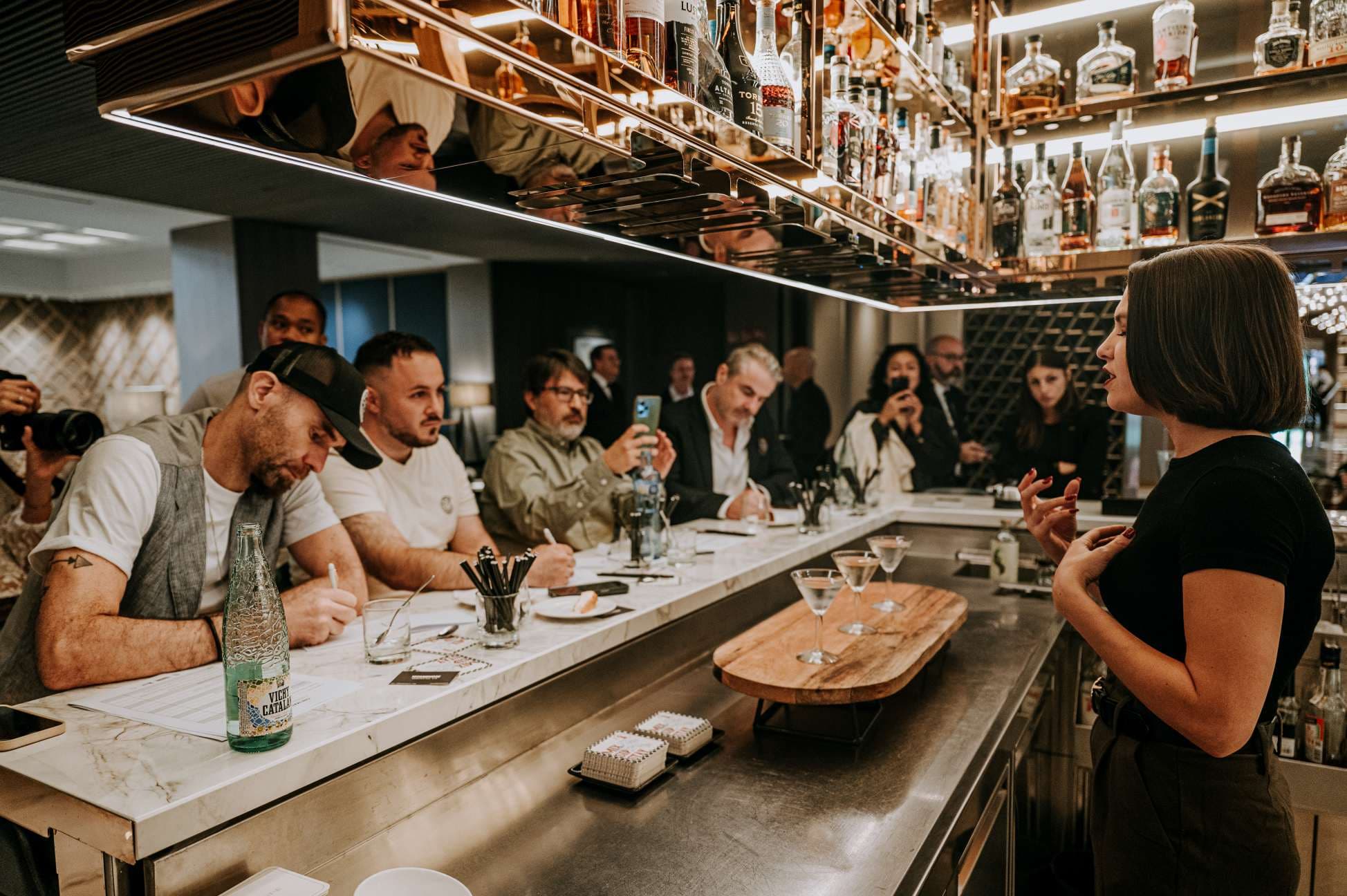
Bianca Grisolia, who founded the event, had noticed that hotel bars were often treated as somewhere to drink only if a guest happened to be staying upstairs.
“I just saw none focusing on the hospitality that hotels and their services can give,” she says. “Here in Barcelona, we’re still seen as just an accessory, so we wanted to change that.”
There was also a standard price. The special cocktails were €12, whether they were being served in a grand Eixample hotel or somewhere overlooking the sea. Each bar also had to offer a low- or no-alcohol drink.
“The price eliminates the competition between them,” Grisolia says. “The customer's choice is no longer economic, but curiosity, which is exactly what we want.”
It made moving around the city fairly simple. Pick a bar, see what was happening, then move on.
Cotton House
Cotton House Hotel is on Gran Via in the Eixample, in what was once a 19th-century palace and the headquarters of the Cotton Textile Foundation. The marble staircase is hard to miss. So are the high ceilings and the old-fashioned grandeur of the building.
Batuar, the hotel's bar, had Esteban Valera and Pablo Briceño behind it during the week. Both came from Gabo in Madrid, and their evening involved Martinis, oysters and French fries. It was not complicated food. That was part of the charm. Later, the bar was handed over to London bartenders Markus Basset from The Savoy and Leon Gasco from Four Seasons Hotel London at Park Lane.

Anna Sebastian was there too. Sebastian is the founder of Celebrate Her, a group that supports women working in drinks and hospitality. The idea came about in 2019 after Sebastian finished a shift at London's Artesian Bar and began talking with other women in the industry about how little visibility they were getting.
They decided to do something about it. The first Celebrate Her event took place later that year. It has since grown into a wider community covering careers, education, wellbeing and networking.
Having Sebastian at Cotton House made the evening about more than another visiting bartender. There were people in the room who knew each other from different parts of the industry, along with people meeting for the first time.
Bartenders from New York to Belgrade
The guest bartenders came from all over. Andrea Grujic travelled from Sips & Guzzle in New York to Kyara at SLS Barcelona, the hotel on the seafront. Sips & Guzzle is known for its cocktails and is part of New York's serious bar scene, so it was a long way from Manhattan to Barcelona for one evening behind the counter.
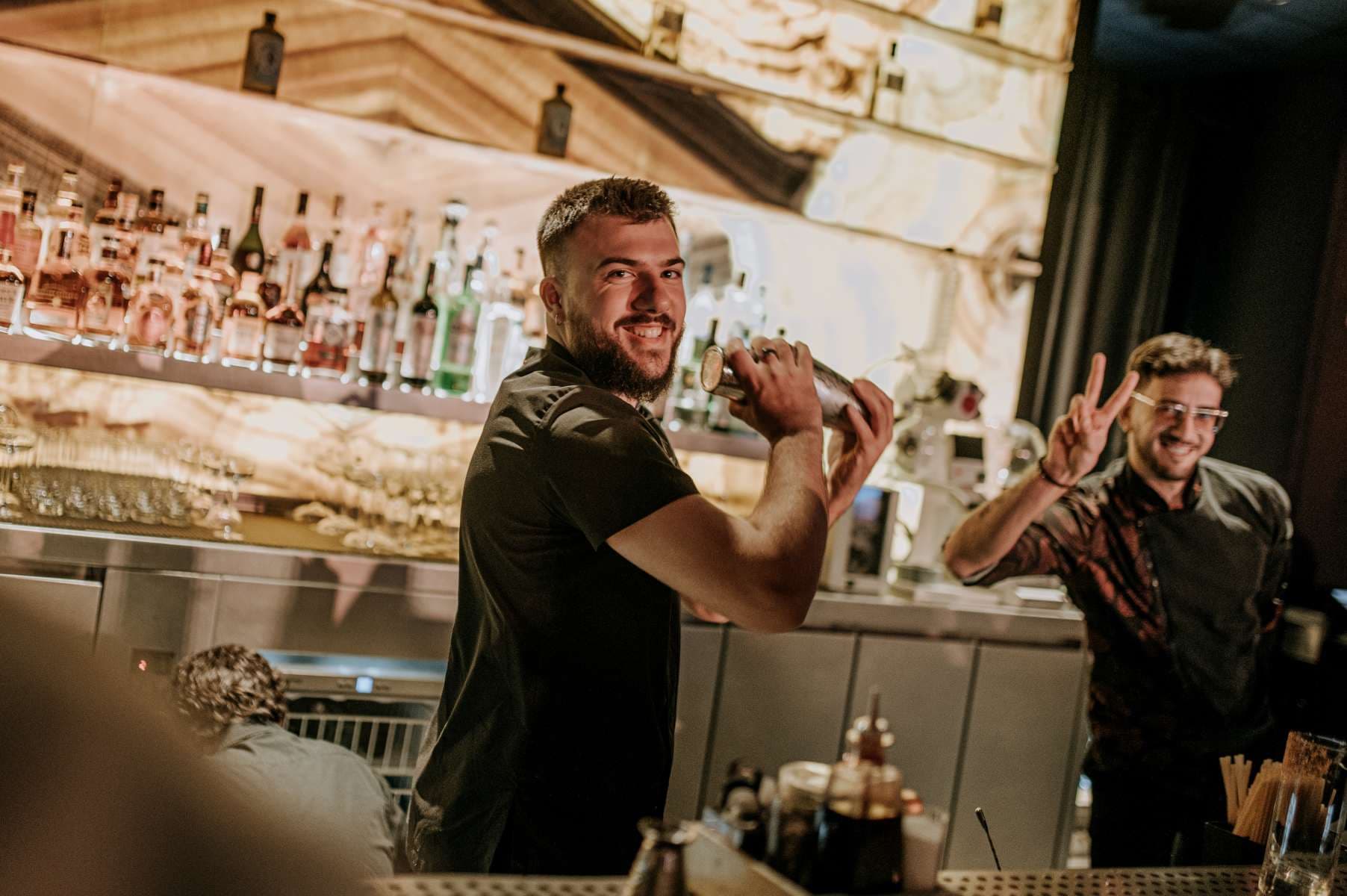
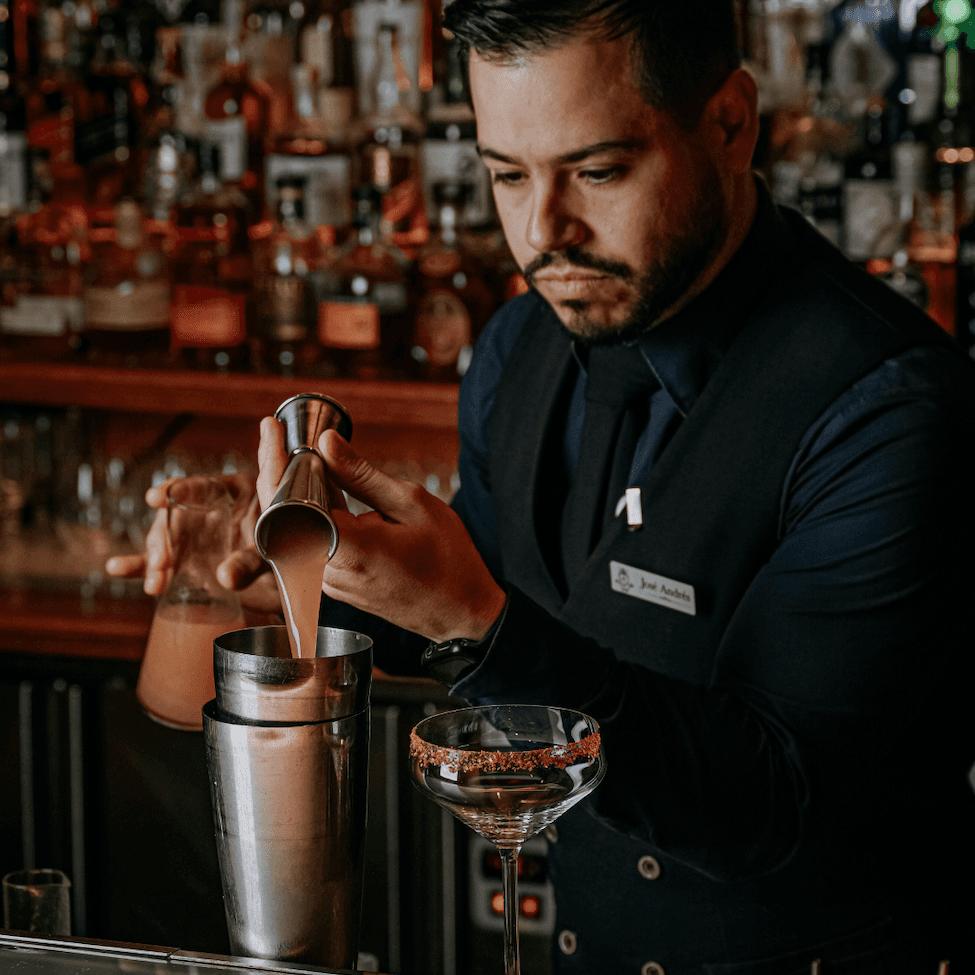
At Noxe at W Barcelona, Matt Merzet came from Employees Only, the New York bar that became one of the city's best-known cocktail names and later opened in other countries. Noxe is on the hotel's 26th floor, high above the waterfront.
Punch Room at The Barcelona EDITION, in the Gothic Quarter, hosted Georgios Komninakis from Barro Negro in Athens and Lazar Ruzicic from Riddle Bar in Belgrade.
And in El Born, Alberto Martínez and Mayte Esbrí came from Madrid's 1862 Dry Bar to Volta Restaurant & Bar.
For anyone interested in drinks, it was an unusually easy way to sample bars from several cities without leaving Barcelona.

Not drinking is part of the story
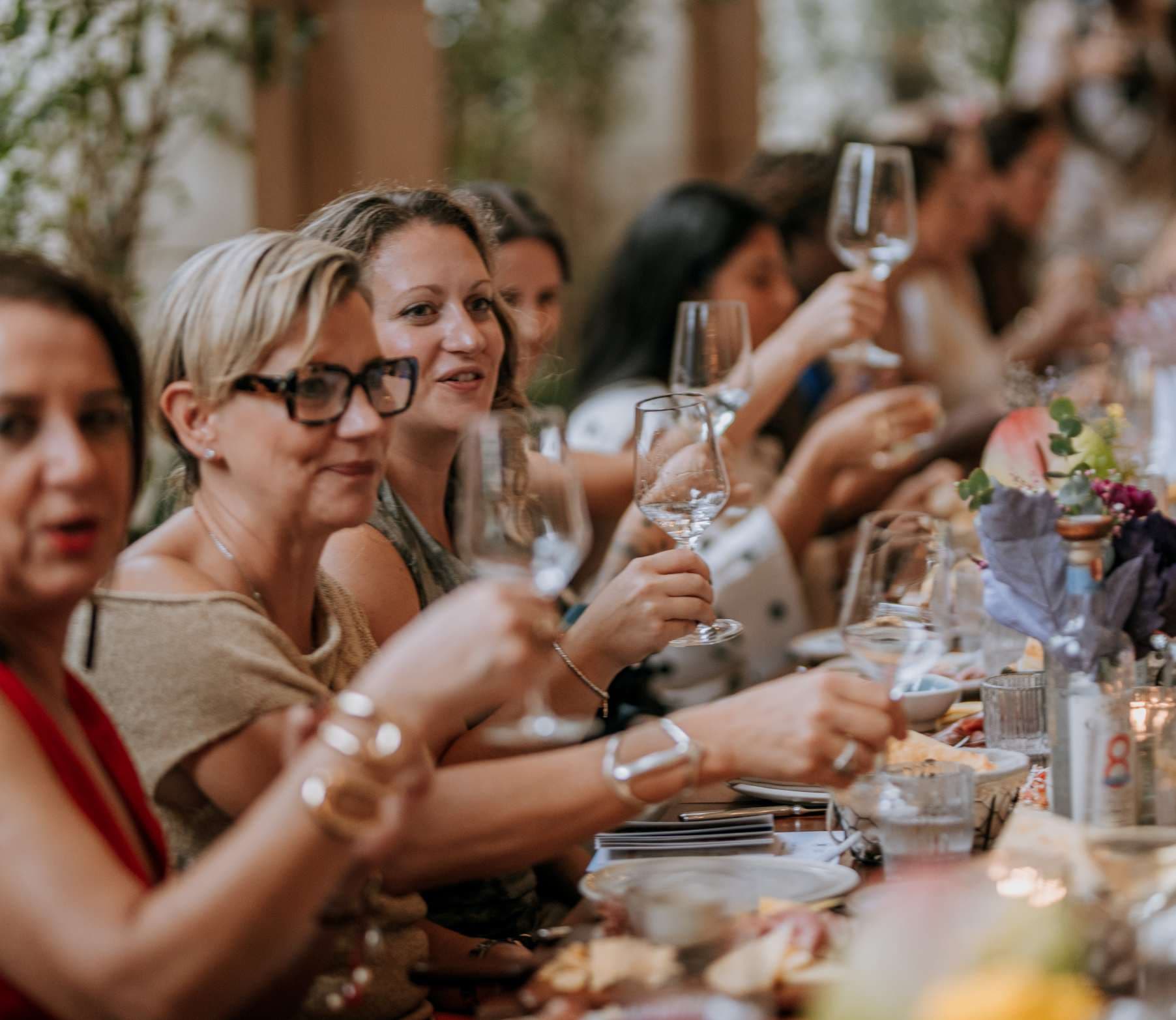
The alcohol-free cocktails were not there simply to tick a box. Grisolia says hotels already get plenty of requests for drinks without alcohol. “Hotels receive many requests for alcohol-free drinks in their day-to-day business,” she says. The bartenders were therefore asked to come up with something properly considered rather than simply removing the alcohol from an existing cocktail.

“The teams have taken it as a creative challenge,” she says, “and the results have been very different from one another.” It suits hotel bars. They are used throughout the day, not just after dinner. Someone may want a drink after sightseeing, before a meal or while waiting for friends. Not everyone wants alcohol at every point.
Nobu and the train station next door

Nobu Hotel Barcelona is in an unusually handy position. Barcelona Sants, the city's main railway station, is right beside it.
For anyone arriving by train, that means no long journey across town with luggage. It is also useful for travellers using Barcelona as a base for trips elsewhere in Catalonia.
Inside, the hotel feels very different from the station next door.
The building was redesigned by Rockwell Group, the New York architecture and design studio led by David Rockwell. The interiors mix Japanese details with references to Barcelona. There is bamboo, wood, bronze and Japanese artwork, while the Japanese art of kintsugi, in which broken pottery is repaired with gold, has been used as a design idea throughout the hotel.

The Nobu restaurant is on the 23rd floor. From the tables, the view stretches towards the Sagrada Família and the Mediterranean. The food is the familiar Nobu mix of Japanese and Peruvian cooking, with black cod miso, yellowtail sashimi and rock shrimp tempura, alongside local ingredients.
During Hotel Bar Week, Nobu Bar also had a guest bartender behind the counter for one evening. It gave the bar its own moment rather than leaving the hotel simply as another stop on the cocktail list. The rooftop is another reason to go upstairs. There is a plunge pool, cocktails and small Nobu dishes, and the view becomes particularly good later in the day. The spa is quieter, with a sauna, steam room, water circuit and treatments.
Over to Poblenou
The Hoxton, Poblenou is in a completely different part of town. Poblenou was once full of factories and textile businesses and became known as the “Catalan Manchester”. The area has changed considerably. Technology companies, designers and creative businesses now occupy many of the old industrial spaces.
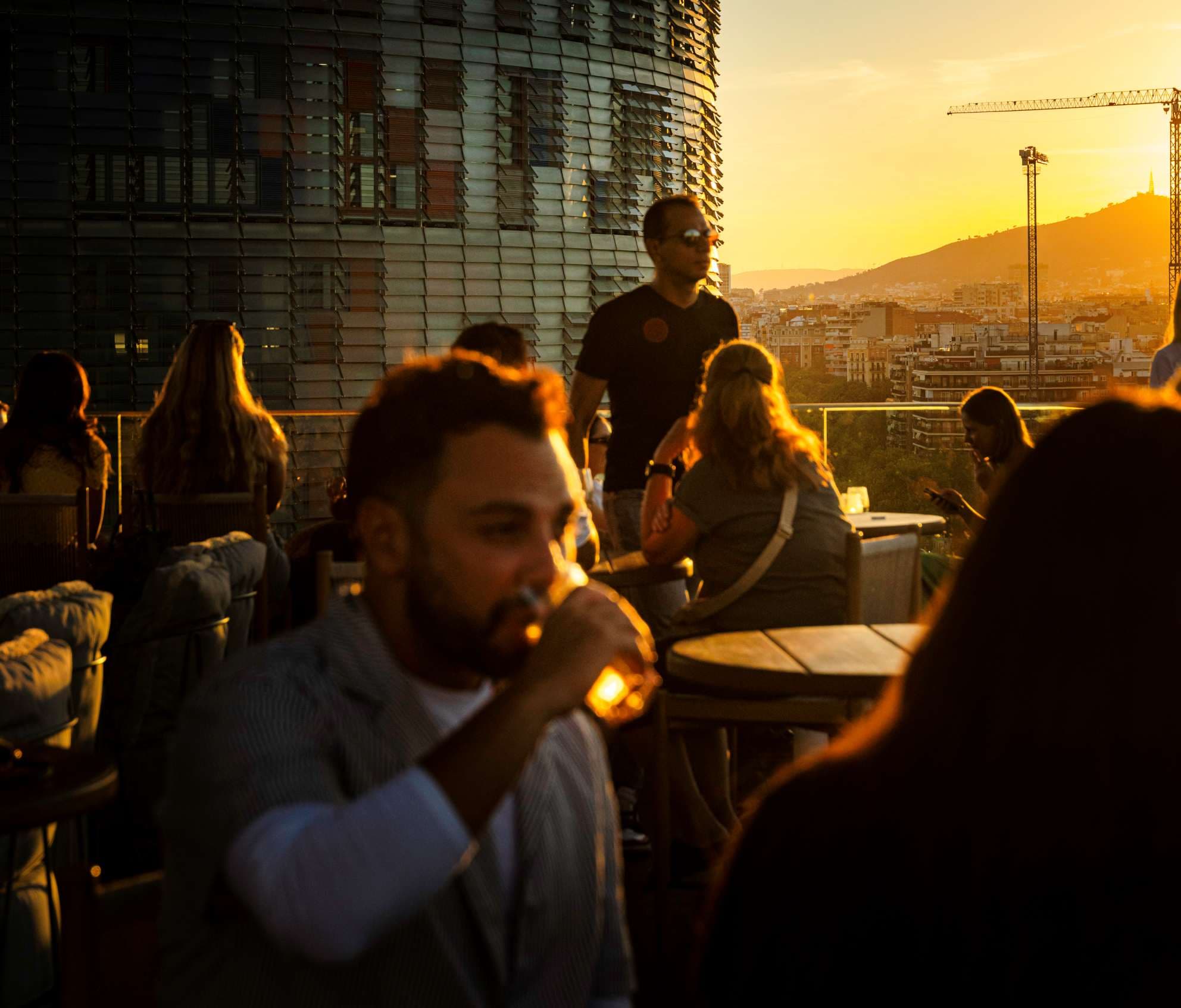
The hotel's rooftop, Tope, has a pool and serves tacos and margaritas. The view is the best reason to go up. Torre Glòries is close by, the Sagrada Família can be seen in the distance and the sea is beyond it all. It is a useful reminder that Barcelona is much bigger than the old centre.

At Hilton Diagonal Mar, the pool is home to Purobeach Barcelona. During the day it is all sunbeds, daybeds and cabanas. At weekends, DJs start in the afternoon and the atmosphere changes as the evening approaches. The hotel is close to the sea and Diagonal Mar, so a pool day does not mean giving up the rest of Barcelona.
Lunch on the beach
Bastian Beach sits on San Sebastián beach and has a pool alongside its restaurant. The cooking is Mediterranean, with paella and grilled octopus among the dishes. Then there are the more extravagant choices: Gillardeau No. 2 oysters with caviar, rigatoni with 30 grams of caviar, mini brioche with caviar and a smoked salmon and caviar bikini.

There is Champagne, wine and a selection of premium spirits. It is easy to imagine lunch stretching into the afternoon. The beach is right there and nobody seems to be in much of a hurry.
Dinner at Casa Bonay
Casa Bonay is on Gran Via in the Eixample. Its Bodega Bonay restaurant is run by Giacomo Hassan, a Milan-born chef who has worked at some of the world's more ambitious restaurants. His CV includes Relae in Copenhagen, Boragó in Chile and Disfrutar in Barcelona, as well as time working with chef Francis Mallmann in Miami.

The food at Bodega Bonay is more interesting than a list of those restaurants might suggest. There is sea urchin royale, glazed eel with cabbage and braised pork cheek with tomato bread. An artichoke tatin comes from a recipe belonging to Hassan's Tunisian grandmother.

Spanish food writer Philippe Regol has written that Hassan seems to have found more freedom at Bodega Bonay. The food gives that impression. It is serious cooking, but it does not feel as though it is trying to prove anything.
A different side of the Mandarin
Mandarin Oriental Barcelona sits on Passeig de Gràcia, one of the city's smartest streets. During the week, the hotel brought in Alex Scrimgeour, a practitioner who works with acupuncture, massage, Traditional Chinese Medicine and Dien Chan facial reflexology. Scrimgeour has worked at properties including Four Seasons Mallorca at Formentor, Soneva Jani in the Maldives and Mandarin Oriental Hong Kong.

It is an interesting way for a hotel to change its wellness offering. Rather than giving guests the same treatment list all year, specialist practitioners can come in for a period and bring their own approach. Downstairs, the hotel's Banker’s Bar also took part in the week, with guest bartender Nelson Matos serving low- and no-alcohol drinks.
Seeing another side of Barcelona
What made the week work was the variety. One night could begin with a Martini and oysters in a former palace. Another might involve a guest bartender from New York high above the sea. The next could be spent beside a pool in Poblenou, followed by dinner overlooking Barcelona from the 23rd floor. The hotels also gave a better sense of how the city has changed.

Poblenou is no longer the industrial neighbourhood it once was. The waterfront is not simply somewhere to visit for a walk. Barcelona Sants puts a major hotel right beside the city's main railway connection. And hotel bars that once felt reserved for guests are increasingly becoming part of the local social scene.
For anyone who already knows the big sights, these are the places that can make a return trip feel new. Sometimes it is not another landmark that changes the way Barcelona looks.
It is simply knowing which door to walk through.

Jenny Eagle
Jenny Eagle has been a journalist for more than 20 years, writing for The Daily Mail, OK! magazine, The Sun, The Mirror, the Mail on Sunday, the Press Association and The Sunday Telegraph. Jenny has lived and worked in Montpellier for 10 years and in her spare time writes travel articles for France Today, The Good Life France and Culture Trip.