London’s Fun Night Out | The Murder Express Dinner Theatre Experience
There are evenings in London when you want something that feels less composed and far more alive. Not another predictable dinner reservation, and not a conventional theatre performance where the audience remains firmly in the background. The Murder Express Part Deux: Jewel of the Empire sits somewhere in between, combining performance, dining, and interaction in a way that feels deliberately energetic from the outset. It sets the tone early, this is not about restraint, it is about participation, humour, and a shared sense of occasion.

A Whodunnit That Doesn’t Take Itself Too Seriously
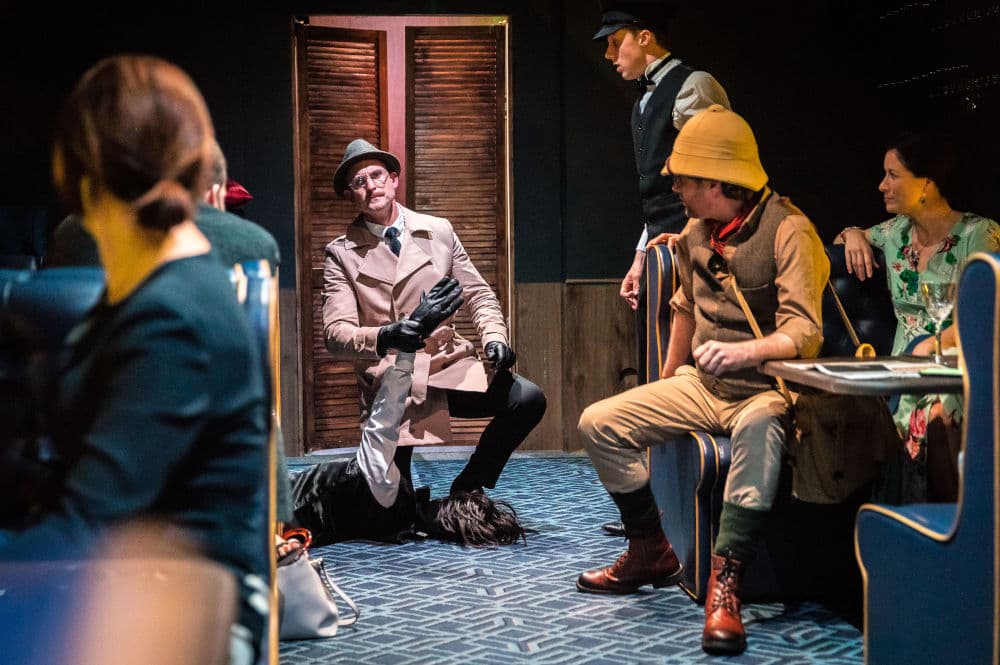
The narrative unfolds aboard a glamorous 1930s train journey, where a diamond of enormous value, the Jewel of the Empire, is being transported under less than discreet circumstances. The carriage is filled with passengers who appear, at first glance, to be exactly what they claim. It does not take long for that illusion to unravel. The jewel disappears, a murder follows, and what began as a theatrical setup quickly shifts into a full-scale investigation unfolding in real time around the room.

The production leans into its own sense of play. The humour is knowingly exaggerated, the characters are heightened, and the dialogue carries just enough wit to keep the atmosphere light without undermining the mystery itself. It is not trying to be a tightly wound, serious drama. Instead, it invites the audience to enjoy the absurdity of it all, to engage with the clues, and to take part in the speculation.
The Setting, A Railway Arch Turned Theatre
The experience is produced by Funicular Productions and staged within Pedley Street Station, a venue that makes full use of its East London setting. Located beneath railway arches near Shoreditch and Whitechapel, the space carries a sense of continuity with the area’s industrial past, where rail infrastructure once defined both the landscape and the pace of daily life.
Historically, the nearby Shoreditch railway station served as a terminus for trains arriving into the city before its closure in 1940. While the station itself no longer exists, the surrounding arches remained and have gradually been repurposed over time. What were once functional, industrial spaces now form part of a different kind of cultural infrastructure, housing venues that reinterpret the city’s past in unexpected ways.
The wider East End context adds another layer to the setting. Only a short distance away, the events associated with the Jack the Ripper murders unfolded, shaping much of the mythology that still surrounds the area today. While not directly referenced within the performance, that history quietly informs the atmosphere, grounding the theatrical experience in a location that already carries its own narrative weight.
Inside the Carriage, Where the Story Plays Out
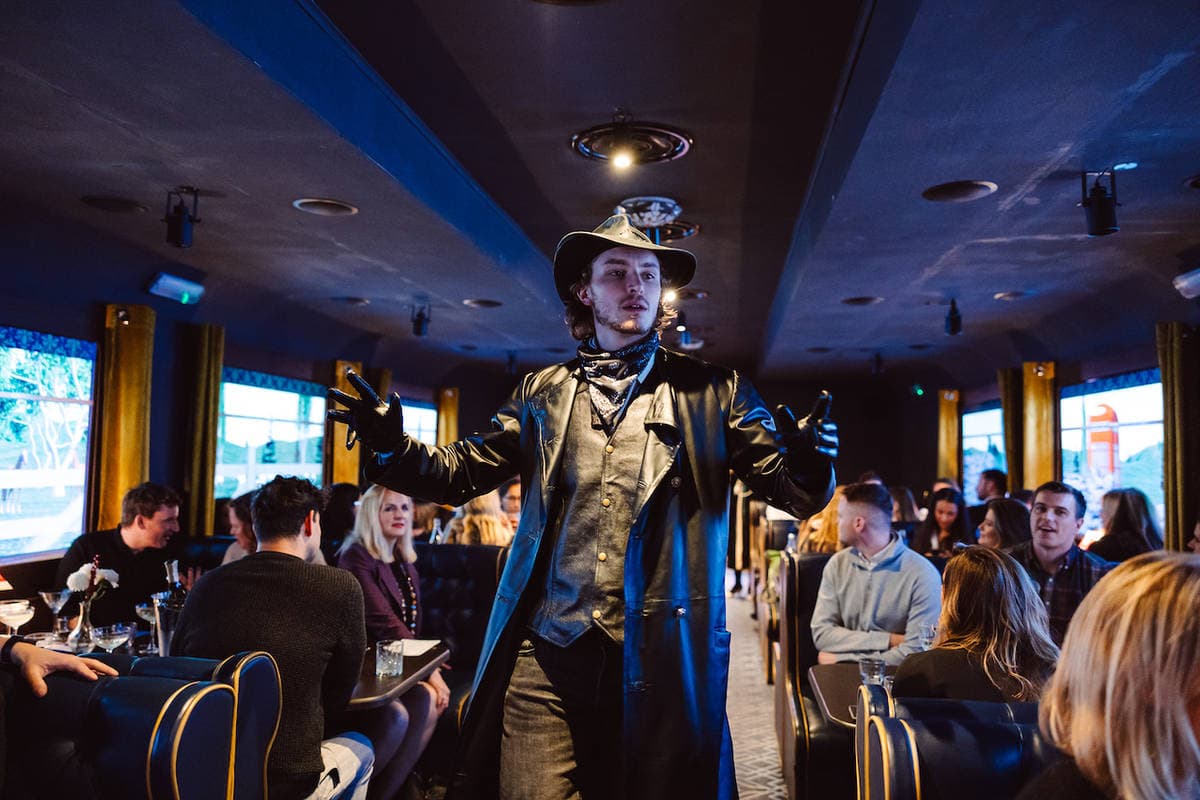
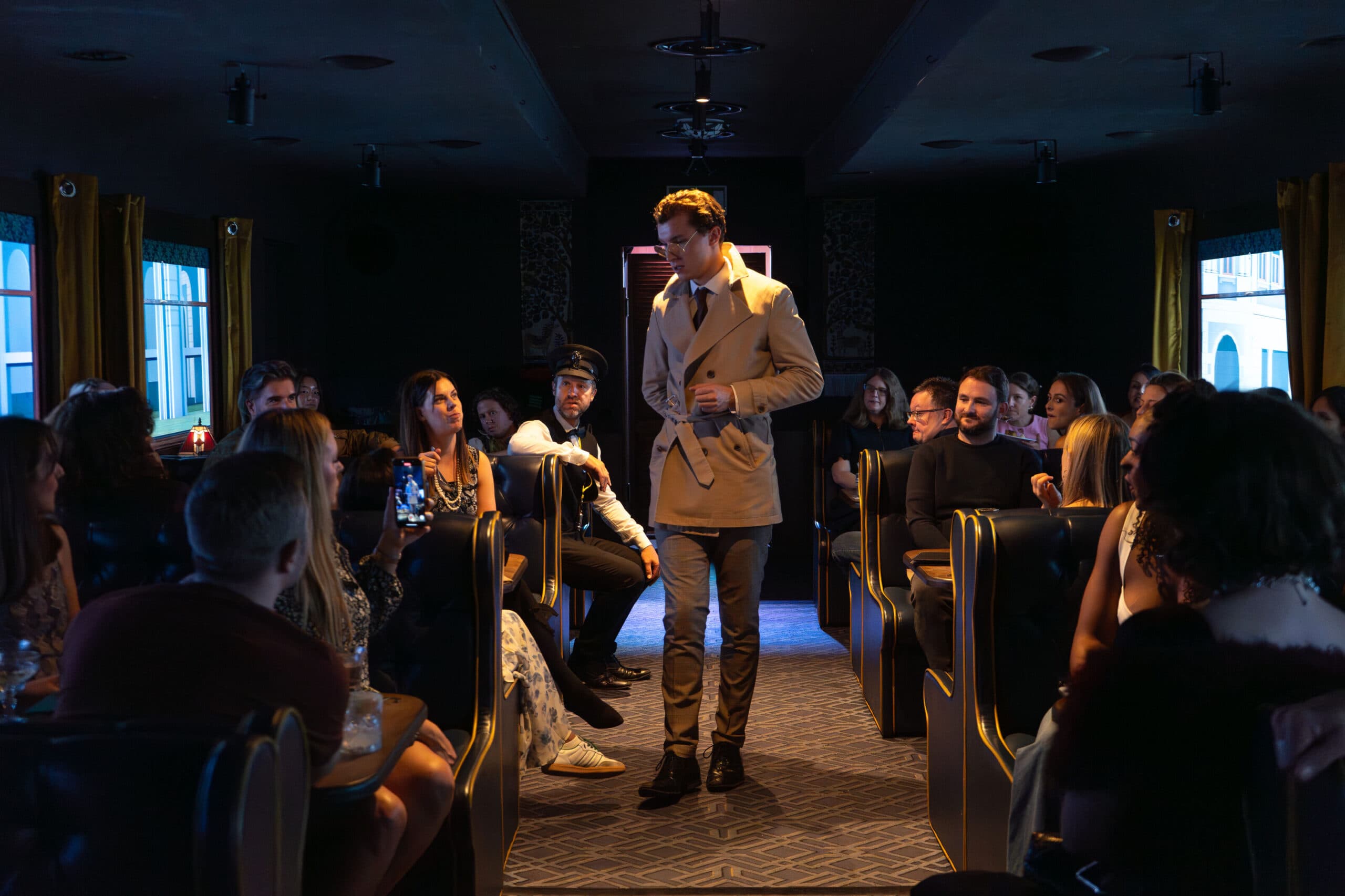
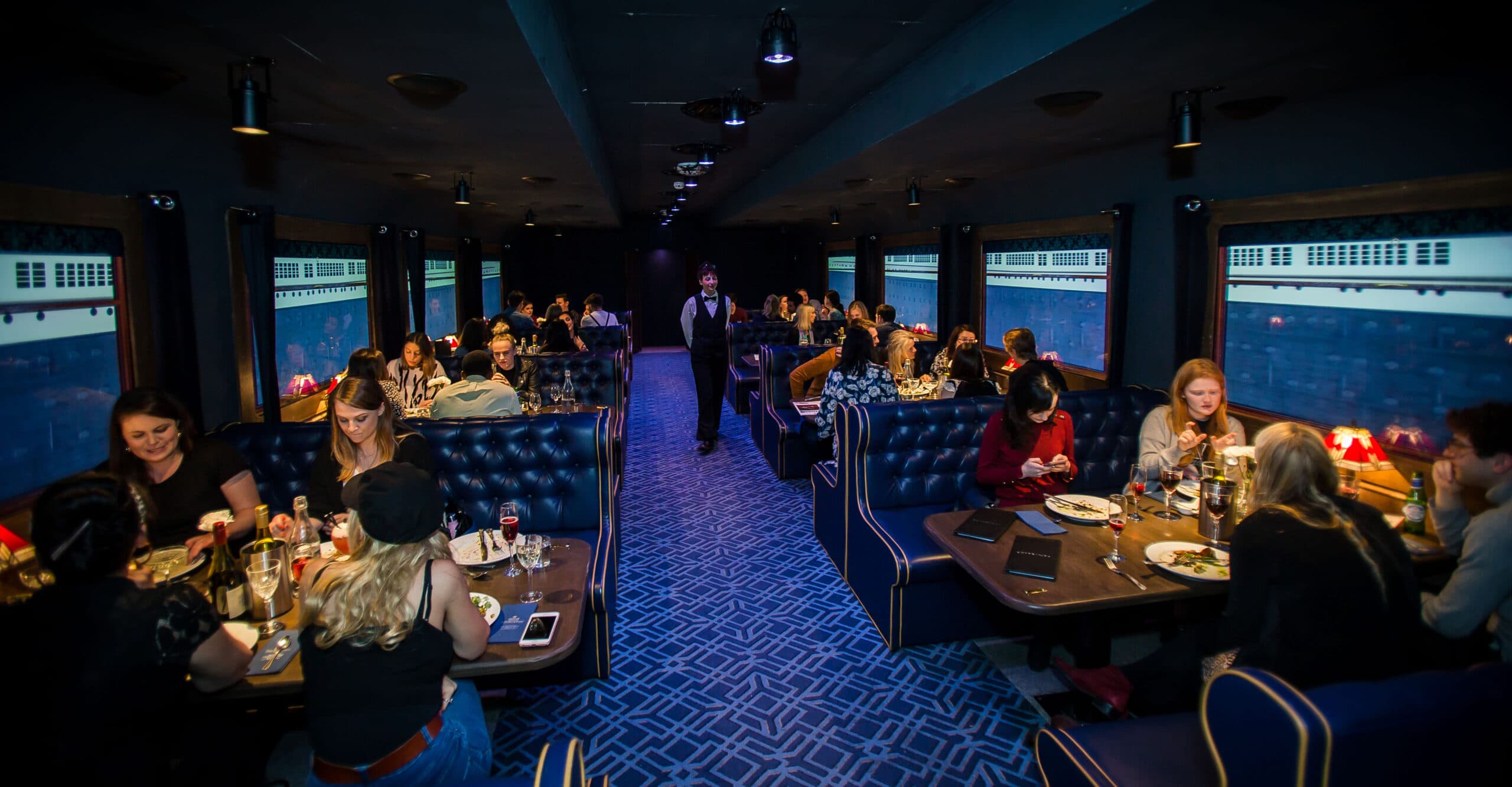
The transition from station to carriage is handled with a sense of timing that mirrors the structure of the show itself. Guests gather initially in a departure-style bar before being called to board, at which point the experience becomes more focused. Inside, the dining carriage is arranged with banquette seating along both sides and a central aisle that serves as the primary performance space.

The design makes effective use of the railway arch, creating a layout that feels both intimate and functional. Projected windows suggest movement through passing landscapes, while sound and lighting reinforce the illusion of travel. The result is not a perfect recreation, but it does not need to be. It is convincing enough to draw the audience in, while the visible structure of the arch above maintains a subtle connection to the real space.

A Cast That Keeps the Energy Moving
The performances are what carry the evening forward. The cast presents a series of characters that feel deliberately larger than life, from the sharply observant socialite to the slightly unreliable adventurer, the watchful outsider, and the composed detective working to make sense of it all. Each role is played with a clear understanding of tone, balancing scripted moments with spontaneous interaction.

What stands out is the constant movement. The actors do not remain fixed in place but circulate through the room, shifting between scenes and direct engagement with the audience. Conversations unfold at close range, clues are delivered in passing, and moments of humour often land through unexpected interactions at individual tables. This fluidity keeps the experience from ever feeling static.

Dinner Between the Drama

The meal is integrated into the structure of the evening with careful pacing. Courses arrive during quieter moments, allowing the performance to continue without interruption while still giving guests time to enjoy what is in front of them. It is a practical approach that works well within the format.
The menu itself is straightforward and satisfying, offering familiar dishes that suit the setting without attempting to dominate the experience. The focus remains on the interplay between dining and performance, rather than positioning the food as the central feature. Drinks, available from the start and throughout the evening, contribute to the social atmosphere that gradually builds across the room.
Everyone Becomes a Detective
As the story develops, the audience begins to shift from passive observers to active participants. Conversations between tables become part of the experience, with theories forming, evolving, and occasionally collapsing as new information comes to light. The structure encourages this kind of engagement, making each table feel like its own small investigation team.
By the time the final moments arrive, there is a collective sense of involvement that extends across the entire room. The reveal brings that shared experience to a close, tying together the narrative while also settling the many competing theories that have emerged throughout the evening.
A London Night Out That Knows Exactly What It Is
The Murder Express Part Deux: Jewel of the Empire succeeds because it understands its purpose. It is not trying to present itself as serious theatre, nor is it relying solely on spectacle. Instead, it focuses on delivering a complete evening that feels engaging, social, and consistently entertaining.
For those looking for something that sits outside the usual London routine, it offers a different pace and a different kind of interaction. The Murder Express is the sort of experience where the room becomes part of the performance, and where the line between audience and cast is intentionally blurred from beginning to end.

Glenn Harris
Glenn Harris is an accomplished journalist focusing on luxury travel, fine dining, and exclusive lifestyle events. His wanderlust has taken him to over 128 countries where he constantly strays off the beaten path to uncover exotic locations, travel gems and exciting experiences to capture.
Read More

Salon Privé 2026 at Blenheim Palace: Inside Britain’s Luxury Automotive Garden Party

La Belle Epoque: European Waterways’ Luxury Burgundy Barge Cruise

Great Rail Journeys and Amadeus Rhine River Cruise: Exploring the Rhine by Rail and River