Chateau de Siran: The Boutique Retreat in France’s Languedoc Wine Country
France's less flashy wine sister is Languedoc, and it is arguably the country's most compelling region for the traveller who wants authenticity over prestige. No marquee names, no bling of Champagne, no Bordeaux price tags. Just exceptional wines shaped by ancient soils, garrigue-scented hillsides, and a slower, more grounded rhythm of life. At the heart of it all, in a small fortified village in the Minervois, sits one of the region's finest small hotels: Chateau de Siran.

The village was built as a fortress, encircled by thick stone walls that still stand today. Built into these walls are homes, businesses, shops, and one hotel, where the ancient stonework is not merely a backdrop but part of the structure itself. The hotel is quite literally woven into the fabric of the village.

This is not a glitzy hotel. There is no grand lobby, no place to see and be seen. But what it offers is something a bit more real. Eleven individually designed rooms, a gastronomic restaurant, an intimate spa, and a pool surrounded by shaded alcoves carved from centuries-old stonework. The experience is closer to staying in a private family home than checking into a formal hospitality brand, and that is precisely the point.
A Village with Deep Roots: Location and Setting
Chateau de Siran sits just thirty minutes from both Carcassonne and Narbonne, an hour and a half from Toulouse and Montpellier. Worlds away from either in pace and atmosphere. Siran itself stands at the heart of the Minervois vineyards, surrounded by villages whose names read like a roll call of great Languedoc wine: Olonzac, Aigne, Minerva, Homps, Caunes-Minervois, La Liviniere.

The property sits within a wider cultural and geographical corridor linking medieval Carcassonne with the Roman heritage of Narbonne, and the surrounding landscape is working agricultural country rather than a stylised rural backdrop. The whole area falls within the future Grand Site de France "Minerve, gorges de la Cesse et du Brian," a designation reserved for landscapes of exceptional natural and cultural heritage.
A Thousand Years of History in Stone and Mortar
Siran traces its roots back to Roman Gaul, its name derived from one of Caesar's generals to whom these lands were granted. For centuries the village lived in relative autonomy, until the Cathar period brought upheaval, royal reclamation, and a succession of lords who each left their mark on the stone. What stands today is a sixteenth-century country house built upon medieval walls, its ground floor still anchored by the original vaulted rooms. Those thick defensive walls that once ringed the village now form the very foundations and outer skin of the hotel.

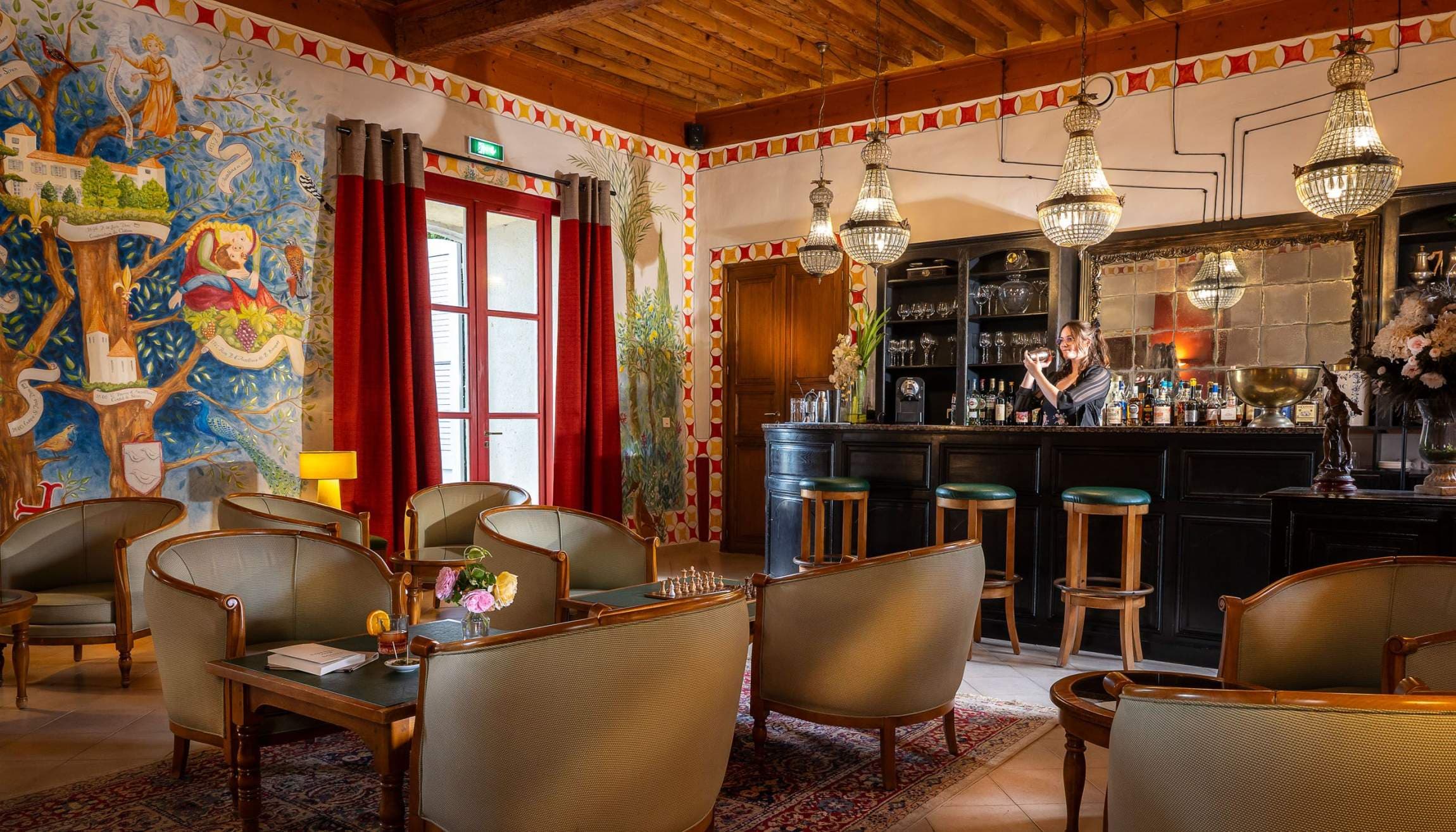
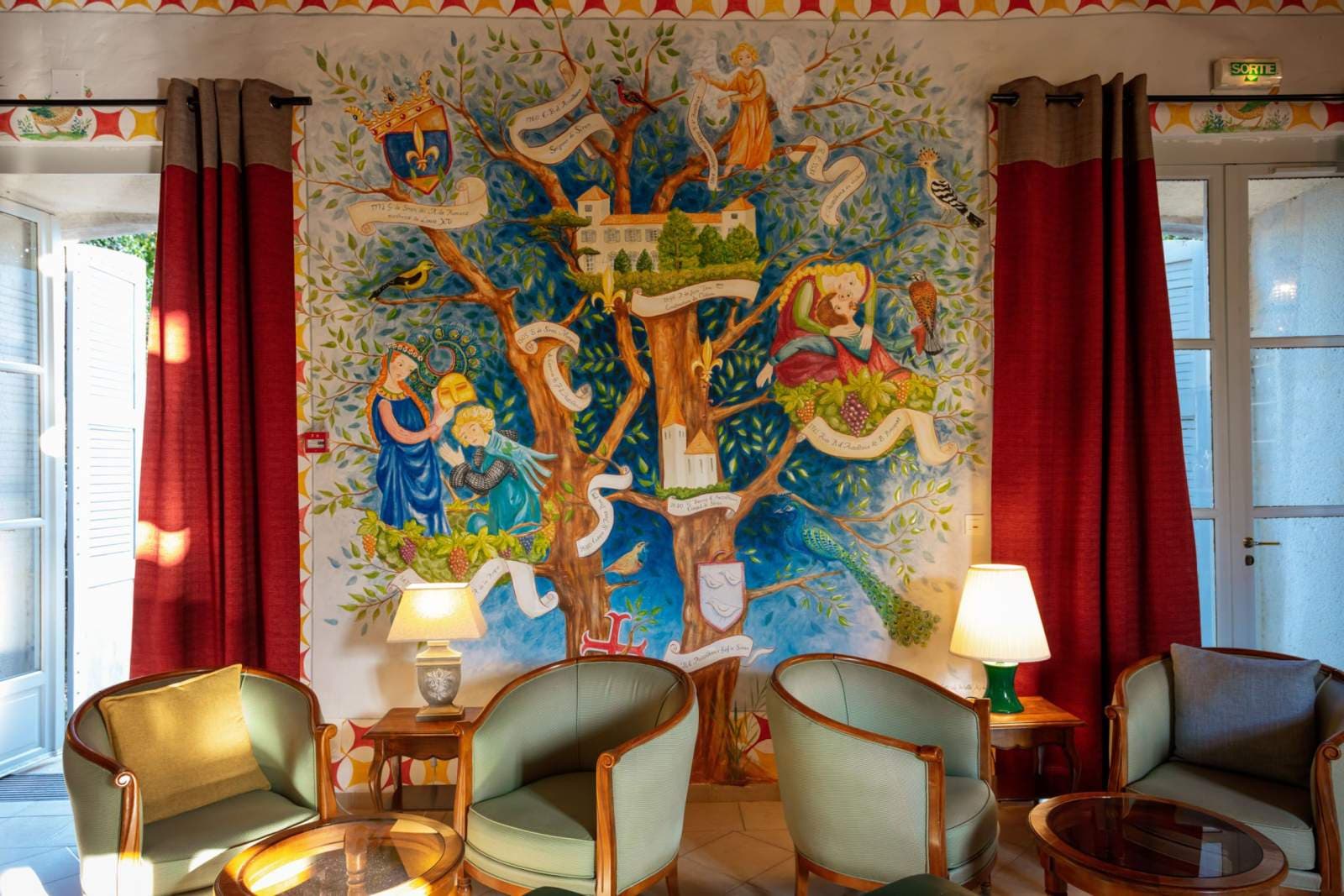
This is not a preserved monument or a single restoration project. It is a house that has never stopped being used, its layered construction of stone walls, towers, and Romanesque elements evidence of uninterrupted occupation across centuries. Inside the restaurant, beneath exposed timber beams, a hand-painted mural fresco by artist Stephanie Van de Walle retraces the story of the village and its lords from the Cathar wars to the present day.
The Blet Family: The Heart of the House
It is a family operation in the most complete sense: mother, father, and son. Since 2010, Nadege, Gerard, and Thomas Blet have run this house with warmth, high standards, and a hospitality that is genuinely personal. Nadege is the keeper of the chateau's stories, guiding guests through its history with the ease of someone who has lived inside it for years. Gerard is the kind of host who seems to be everywhere at once: concierge, bartender, sommelier, and waiter, all done with elan.

Thomas is in the kitchen, forging relationships with local producers, breeders, and winemakers, listening to their stories and translating them onto the plate. Guests interact directly with the family rather than through a layered service structure which more than anything else that defines the experience.
Art, Antiques, and Interiors: A House That Has Been Lived In
Original sandstone staircases and vaulted ceilings anchor the building in its sixteenth-century origins, while the rooms layer antique French furniture alongside carefully chosen contemporary pieces. Nothing here was assembled in a hurry.
Some rooms are painted with frescoes in the manner of Tuscan masters. Others feature hand-painted trompe l'oeil works by Stephanie Van de Walle, the same artist whose brush fills the common areas with arabesques inspired by period trumeaux and graceful birds painted in flight across the dining room ceiling.
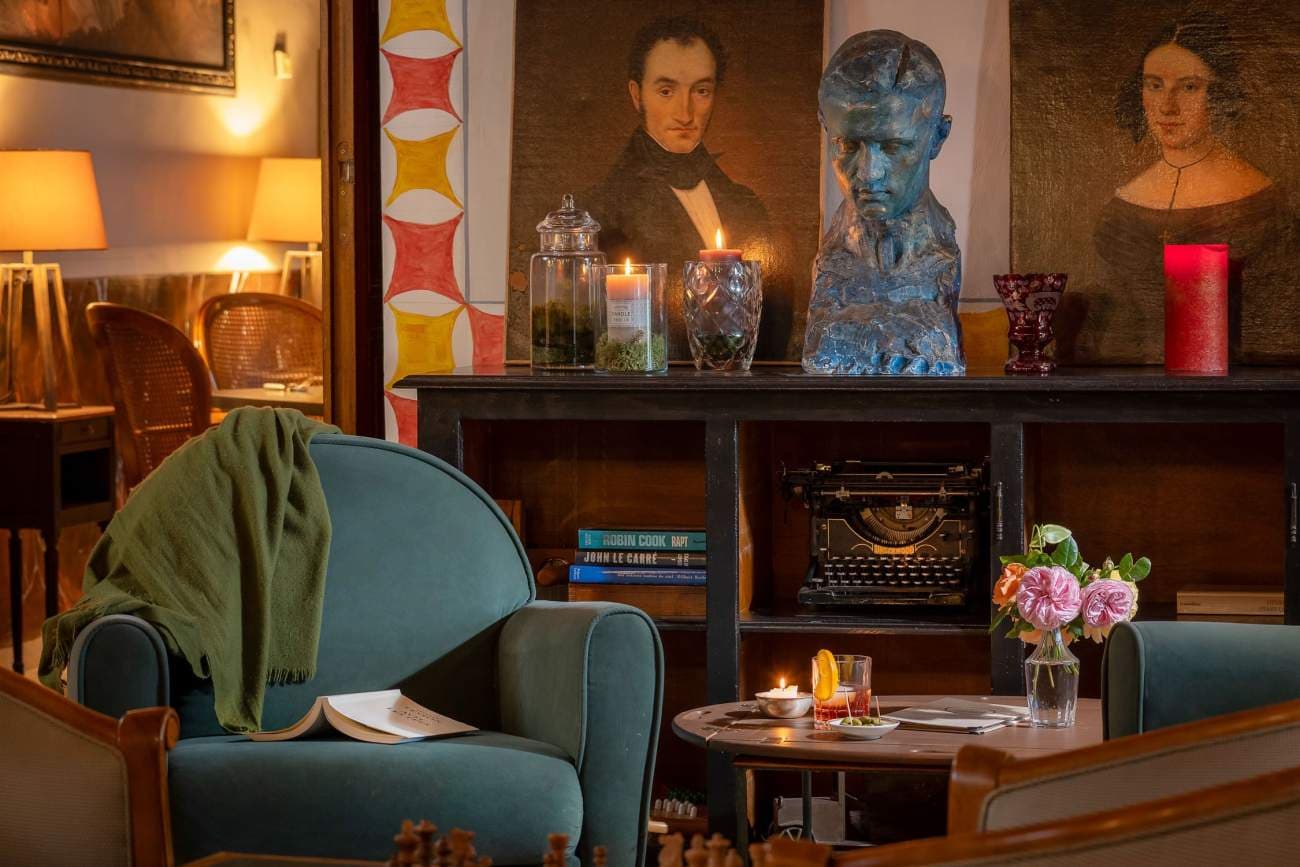
Parquet floors, antique headboards, richly chosen fabrics, and lamps by designers including Achille Castiglioni, Philippe Starck, and Ferruccio Laviani sit alongside period furniture and inherited details. Real art on the walls, real history in the stone, and real care in every room.
Eleven Rooms, Each One Individual
With only eleven rooms, no two are the same. Each is individually shaped by the building's original structure rather than a uniform design system, and the interiors vary significantly as a result.

The Charmantes rooms come with their own private terrace, ideal for a morning coffee or a late evening glass of Minervois. The Incomparables junior suites are more generous in scale, richly appointed, and well suited to both couples and families.

Every room comes with bathrobes and slippers, a Nespresso machine, teas from Palais des Thes, a complimentary mini-bar, and a safe. The variation between rooms is part of the appeal, though it is worth knowing that character and consistency are not always the same thing here, and some rooms are more refined than others. Suite four, with its vast forty-square-metre private terrace, is the one returning guests tend to request before they have even unpacked from the last visit.
Seasonal, Local, Exceptional: The Restaurant at Chateau de Siran
In summer, dining is best enjoyed alfresco under the stars. In winter, the vaulted dining room with its open fire takes over. Neither setting disappoints.
Thomas Blet trained first in environmental biology, then in pastry, building his culinary path at his own pace. His cooking reflects both his technique and his deep attachment to the land around him.

The olive oil comes from the Oulibo cooperative in Bize-Minervois, the cheeses from the Combebelle goat farm, and the truffles from the Villeneuve-Minervois market. An open kitchen means Thomas prepares his gourmet and tasting menus in full view, in an atmosphere that is convivial rather than ceremonial.

Breakfast, served fireside in winter or on the rose-filled terrace in fine weather, has earned its own devoted following. More than one guest has declared it the finest they have encountered anywhere in France.

Minervois in the Glass: Wine at Chateau de Siran
The wine list at Chateau de Siran is built on relationships, not contracts. Winemakers stop by to share a new vintage, and the team collects bottles directly from estates they know personally.

The appellations of Minervois and Cru La Liviniere anchor the list, offering some thirty grape varieties. Tannins that can be powerful or silky, notes of fresh or candied fruit, wines from Siran, Pepieux, La Liviniere, Feline, and Aigne, each one rooted in the soil and light of this part of southern France.
Beyond Minervois, the list reaches into Saint-Chinian, Faugeres, and Corbieres-Boutenac, growing each year. One historical footnote worth noting: Chateau Siran is the only Bordeaux on the list, included because during the Cathar wars, Guilhem de Siran left the Minervois to settle later in Margaux, making it a wine with a direct bloodline to this village. It is also worth clarifying that Chateau Siran in Margaux is an entirely separate estate and a frequent source of confusion for first-time visitors.
The Spa and Pool: Unhurried Indulgence
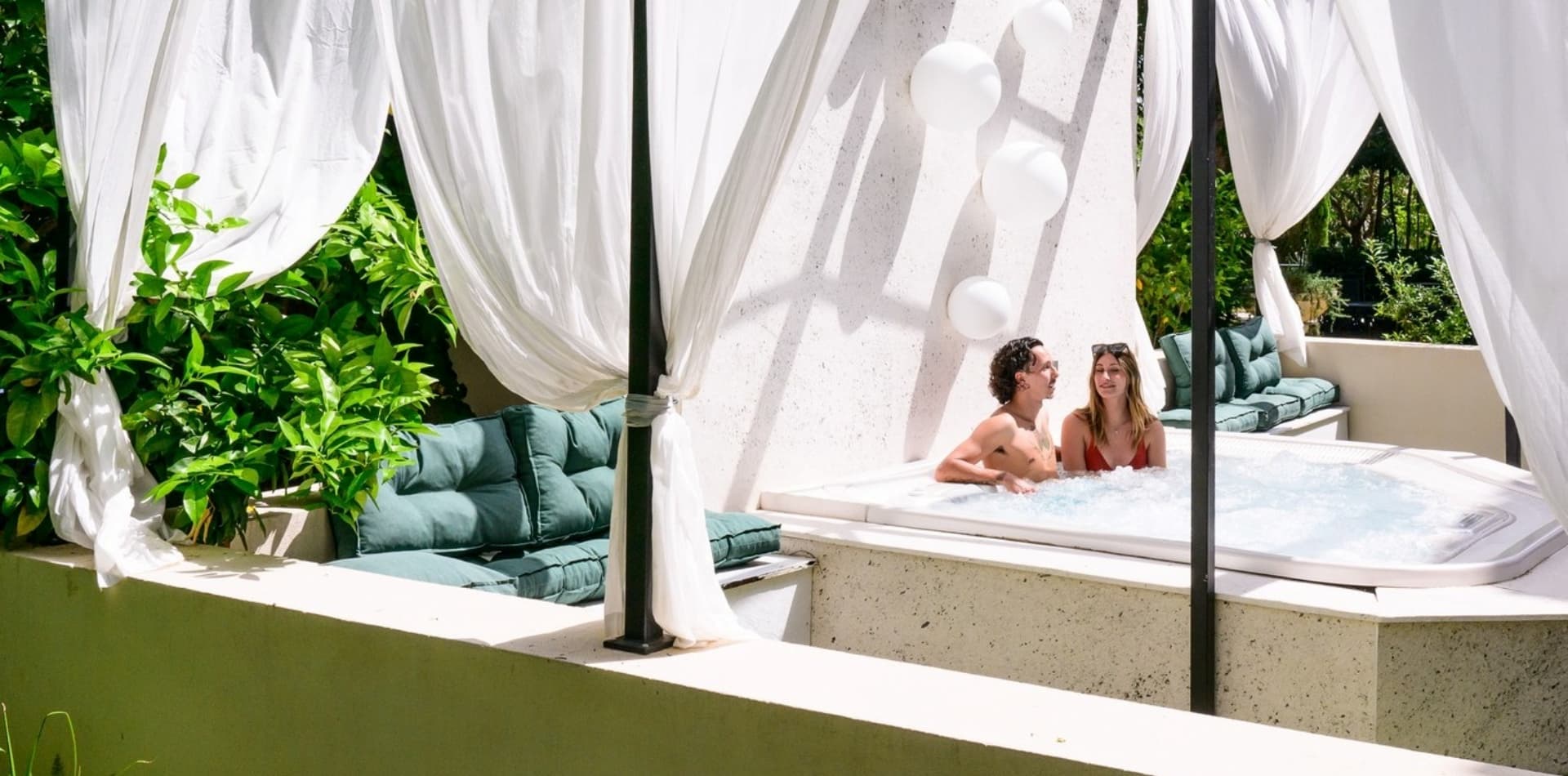
The spa at Chateau de Siran is notably more substantial than the size of the property might suggest. A full thermal circuit includes a whirlpool, hammam, sauna, sensory shower, and ice fountain, alongside two treatment rooms offering massages and therapies using French plant-based ingredients.
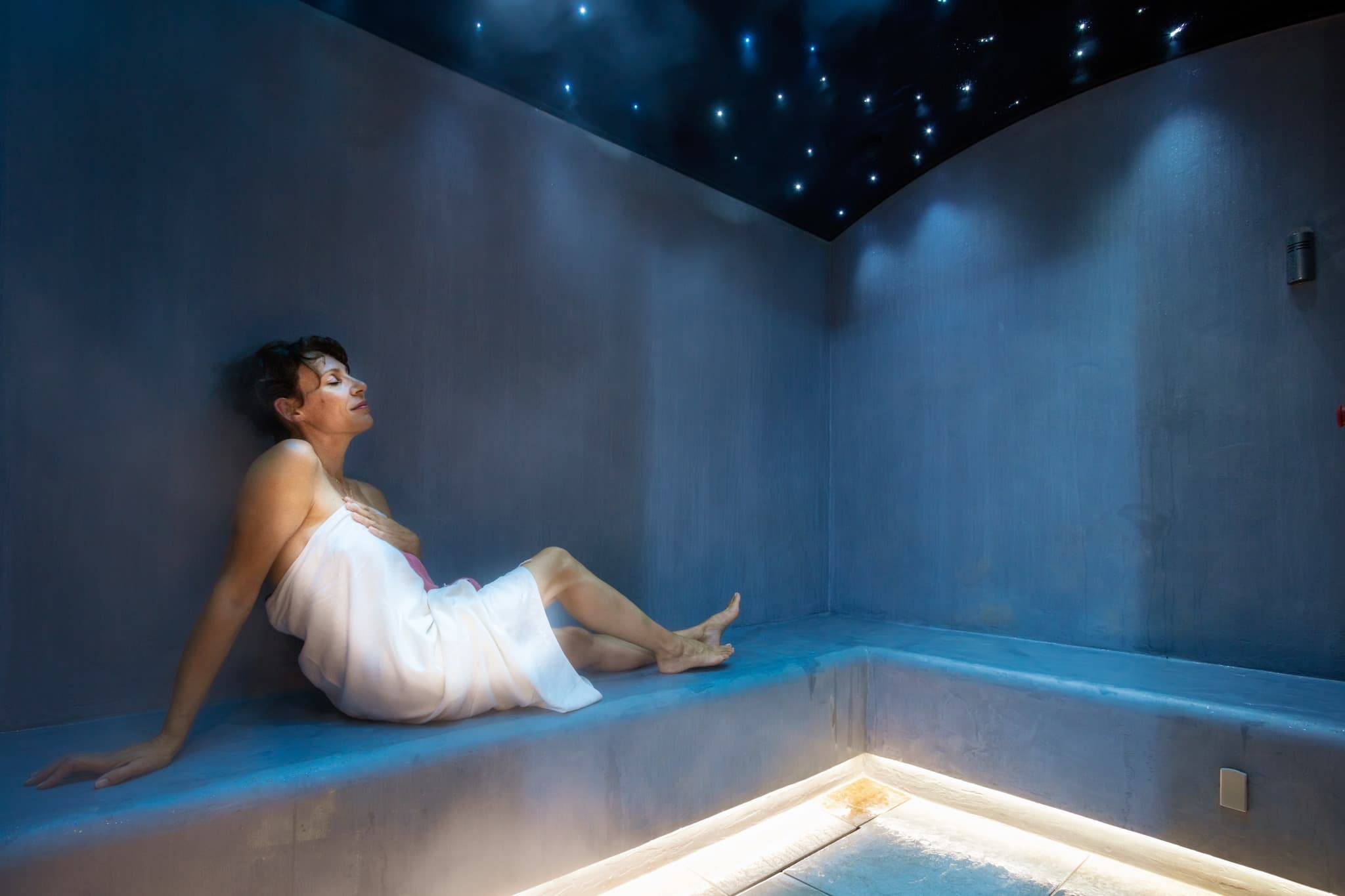
chateau de Siran - Siran
The pool is surrounded by repurposed stone alcoves and shaded nooks where a swim can naturally give way to an hour reading in the shade. The spa operates by reservation only, keeping the atmosphere calm and private.

There are no structured activity programmes or scheduled itineraries. Wellbeing here is woven into the fabric of the stay rather than packaged into offerings. For those who prefer the outdoors, there is tennis, bicycle storage, wine discovery workshops, and guided walks through the Minervois vineyards.
Carcassonne and Narbonne: Two Unmissable Day Trips
To the west, Carcassonne rises from the plain with genuine medieval drama. A UNESCO World Heritage Site, its double walls and towers have survived largely intact since the thirteenth century. Within them, restaurants, artisan shops, and ancient churches reward a full afternoon at an easy pace.

In the opposite direction, Narbonne is one of the oldest Roman cities in France. Elegant boulevards, a Gothic cathedral whose nave was never completed, and a covered market that has anchored local life for generations. Both cities sit within thirty minutes of the chateau, close enough to visit and return from in time for dinner.
Chateau de Siran works particularly well as a pause point within a wider journey through this corridor rather than as an isolated destination. The Minervois villages, vineyard routes, and nearby natural landmarks fill out the days in between.
Chateau de Paraza: Wine, History, and the Canal du Midi
Standing in the Minervois since the seventeenth century, Chateau de Paraza once housed Paul Riquet, the engineer behind the Canal du Midi. Since 2005, the Danglas family has restored both the chateau and its vineyards with a genuine commitment to quality and sustainable farming.

Inside the cellar, cement and stainless steel vats sit alongside oak barrels in the ageing room. The reds are built on Syrah, Grenache, and Mourvedre; the whites draw from Roussanne and white Grenache. The range runs from approachable everyday bottles to the sparkling "Les Bulles de Paraza" Cremant and the premium old-vine cuvees "X" and "MMV."
The panoramic view from the estate across the valley to the Canal du Midi, with the Pyrenees visible on a clear day, is alone worth the drive.
Clos Centeilles: Rare Varieties in Minervois La Liviniere
A couple of kilometres from Siran, down a road that winds through the vines, Clos Centeilles is one of the most important small estates in the Languedoc. Not important in a commercial sense, but in the way that matters more: it has done something genuinely irreplaceable.
The story begins with Daniel Domergue, a viticulture and oenology professor who spent years researching the grape varieties that had been quietly disappearing from the Languedoc over the course of the twentieth century. Varieties that had grown here for centuries, that had shaped the wines of this landscape, that had simply been abandoned as the industry chased easier, more fashionable grapes. He documented them, studied them, and understood what was at risk of being lost forever.

Patricia Boyer-Domergue took that research and turned it into a living estate. After studying oenology in Bordeaux, she bought the ancient Clos Centeilles plot in the late 1980s, drawn by the quality of its old vines and the beauty of its setting beside a thirteenth-century chapel. Her first vintage was 1990. Working with Daniel, she began the painstaking process of replanting the forgotten varieties he had identified: Araignan Blanc, Riveyrenc Blanc, Riveyrenc Gris, Riveyrenc Noir, Oeillade, Picpoul Noir. Varieties that at that point had less than a single hectare planted across the entire world.
Over the following decades, Patricia built Clos Centeilles into an estate with an international reputation, not for making obvious wines but for making wines no one else could make. Twelve walled hectares, twenty-three grape varieties, thirteen cuvees, everything produced by hand. No oak is used at any stage: Patricia believes the complexity comes from these ancient soils, which were once a sea bed, and she refuses to mask that with wood. The wines are fresh, precise, and unlike anything else in the region. From 2002 to 2015 she served as president of the Syndicat of Minervois La Liviniere, the appellation she helped earn cru status in 1999.
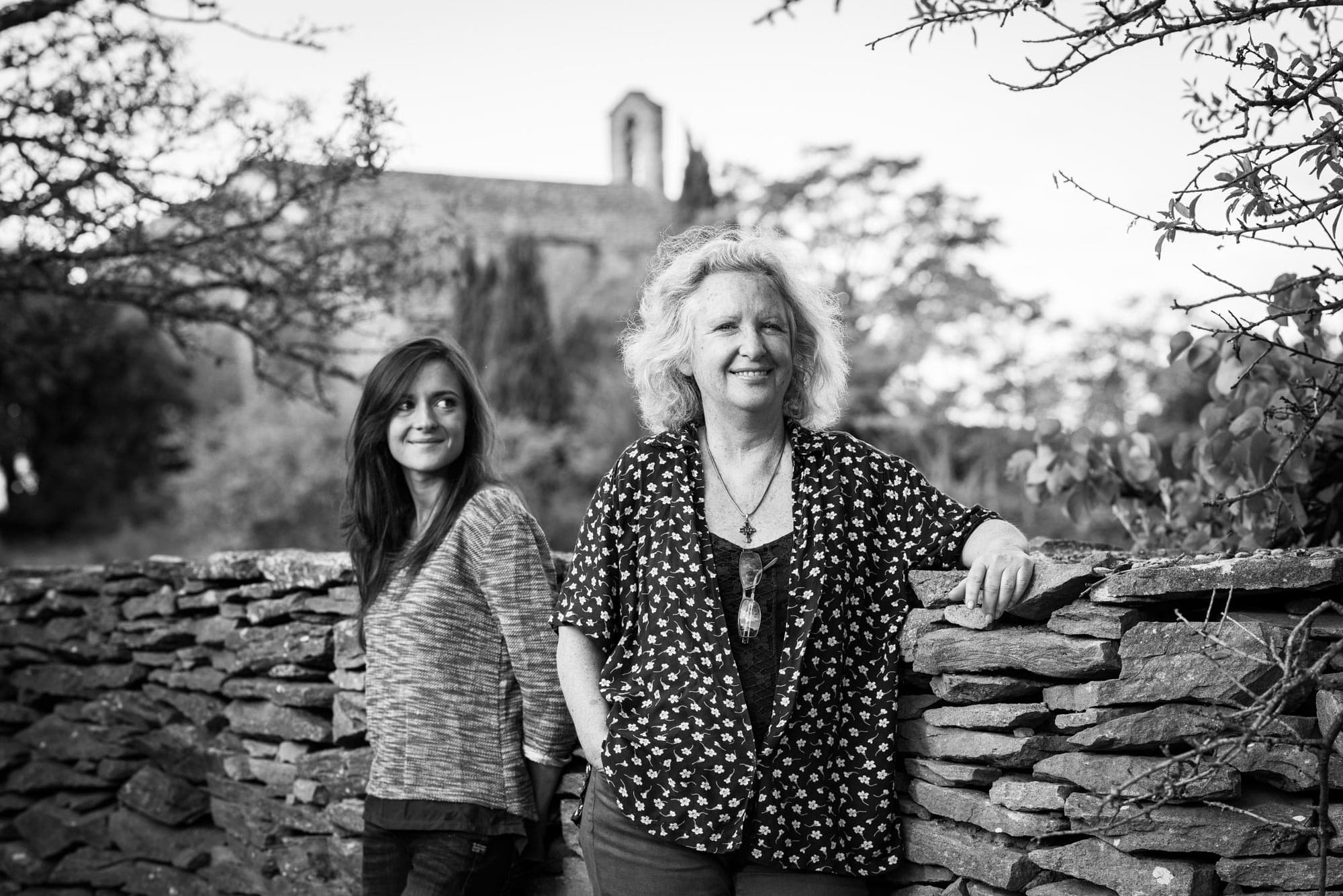
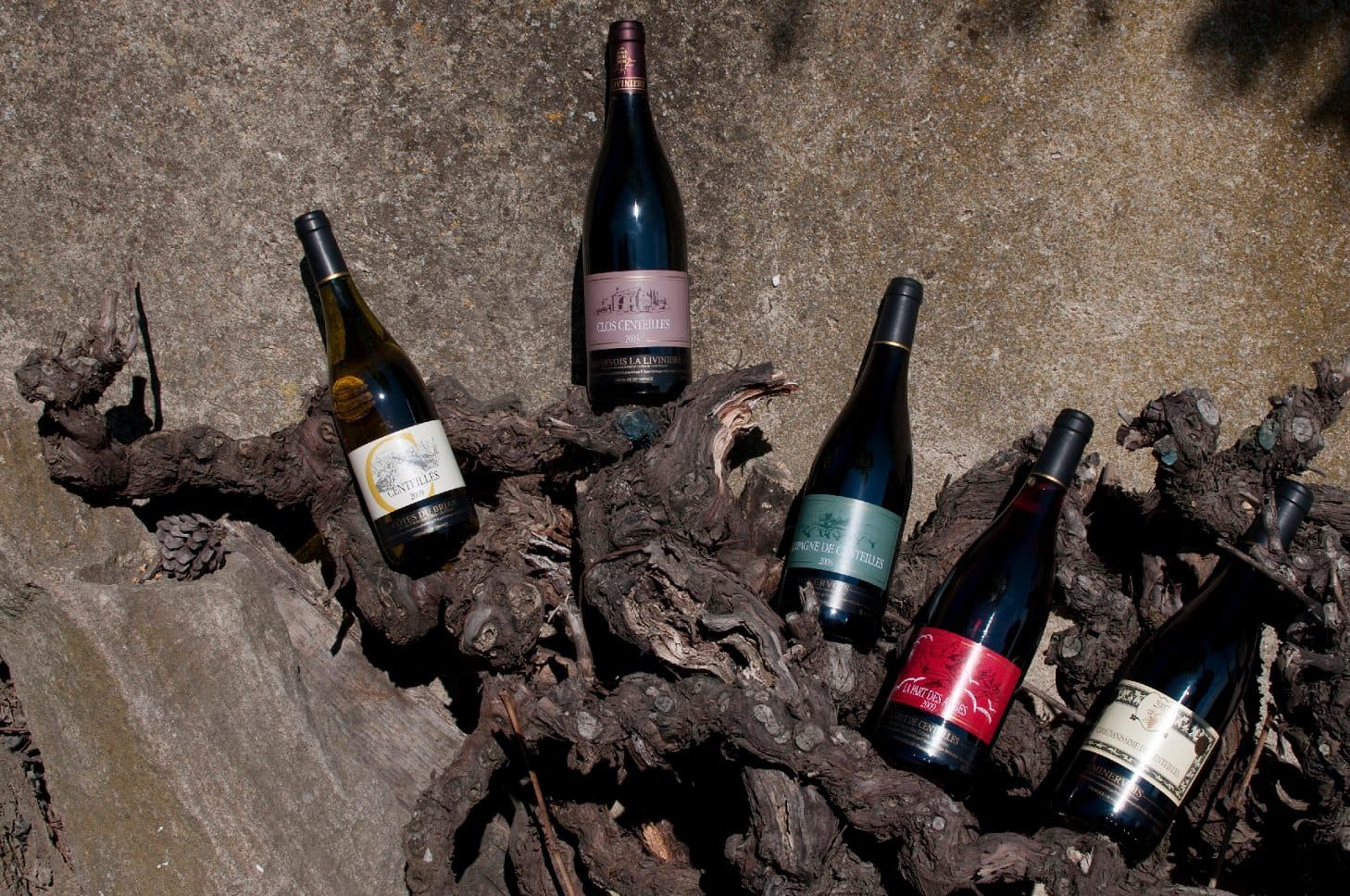
Now it is Cecile's turn. Raised in these vineyards, she grew up knowing every vine, every plot, every variety by name. She has taken over the running of the estate with the same intensity and precision her mother brought to building it, with Patricia still present and involved. Cecile's flagship, the Carignanissime, made from century-old Carignan vines and consistently ranked among the top wines in the region, is one of the clearest expressions of what this estate stands for: a variety that the wine world had largely written off, coaxed into something extraordinary by someone who understood it better than anyone else.
The whites are equally remarkable. The cuvee known simply as "C" is made from three varieties, Riveyrenc Blanc, Riveyrenc Gris, and Araignan Blanc, that have now practically disappeared from the world. The plot was planted in 1997 using old plant material collected by the estate, and it took ten years before the first harvest could take place. That is the kind of patience and commitment that defines this place.
Tastings take place in the cellar, in the midst of the vines. For anyone who wants to understand not just what is in the glass but what it took to get it there, this is essential.
Good to Know: Awards, Sustainability, and Practical Details
Chateau de Siran holds four-star status alongside Quality France certification. It also carries the Cozy Places Luxe, Cercle Prestige d'Occitanie, Vignobles and Decouvertes, and elegant Logis designations, as well as the Regional Natural Park brand. A growing programme of experiences includes cooking and pastry classes, guided tastings with winemakers, tailored food and wine pairings, and talks on the history of the Minervois. The entire property can be privatised for seminars, retreats, and private celebrations.

What draws people to Chateau de Siran is quite subtle. It has no interest in being fashionable, no ambition to be featured in the right circles for the right reasons. It knows exactly what it is: a family home, a great table, an exceptional cellar, and a piece of living history in one of France's most rewarding landscapes.
Languedoc has always been France's less glamorous wine region, the one that never quite gets the headlines it deserves. Chateau de Siran is the same. Not the destination that dazzles you instantly, but the one with depth, substance, and a story that stays with you. Not the pretty sister you fall for in a weekend, but the one you build a life around.
Glenn Harris
Glenn Harris is an accomplished journalist focusing on luxury travel, fine dining, and exclusive lifestyle events. His wanderlust has taken him to over 128 countries where he constantly strays off the beaten path to uncover exotic locations, travel gems and exciting experiences to capture.
Read More
Hyll Country House, A Restored Manor That Redefines the Cotswolds Escape
Asimina Suites Hotel Paphos Review: Cyprus Luxury Resort by the Sea
Château de la Resle Burgundy Review | Art, Wine, and Design Estate Stay in Auxerre France