Lolelunga Private Reserve: Zambia’s Conservation Driven Luxury Safari Experience
The African bush holds its beauty at any hour, but night brings something different. Perhaps it is the quiet unease, the awareness that unseen creatures are moving out there, hunting, feeding, existing just beyond sight. You cannot see them, but you know they are there.
Then come the sounds. Cicadas hum in endless waves and frogs call from the riverbanks, their overlapping voices shaping a chorus that never quite settles into rhythm. Above it all, the nightjars begin. They are small, secretive birds that come alive after sunset, their mottled plumage blending perfectly with the ground where they hide by day. Their song is a steady churring note from where ever you are, they always seem both near and far. From the trees, owls are not to be ignored and seem to purposely answer with their hoots.

It is at that moment that Darren, our lodge manager and host, joins the conversation. "Can you hear the hippos?" he asks. Two pods live along the bend of the Lunga River just in front of the lodge, where we are seated for dinner. I ask if they are grunting.
"No," he says. "Once you have been here a while, you start to sense them. You hear them moving through the water. You know they are there."
And that is how our first dinner begins at Lolelunga Private Reserve, a luxury safari lodge set along banks of the Lunga River in Zambia.
Why Zambia Remains Africa's Greatest Undiscovered Safari Destination
Many places in Africa promise wildlife, from rhinos to giraffes to every imaginable exotic species. For decades, travellers have crossed continents for these encounters, yet in some destinations the experience has become overrun, a procession of luxury jeeps circling a single sighting because every tracker already knows where the animal is resting that afternoon. There is another kind of safari, though. One that is harder to reach, less polished, less choreographed. A place where the roads disappear into bushland and where wilderness still feels genuinely untamed.
This is Zambia.
Zambia feels different from the safari circuits that dominate glossy brochures. The landscapes are immense and largely uninterrupted. Flying over the region, there are no sprawling developments, no visible cities, barely even roads. Only bush, forests, shifting terrain, and the changing colours of the land below. There is a rawness to it that immediately signals you are somewhere far removed from overtourism. It is also where the walking safari was born, in the South Luangwa Valley in 1950, when Norman Carr first led guests out of a vehicle and into the bush on foot. That philosophy still runs through how Zambia does safari differently than anywhere else: no safety vehicles trailing behind, no spotters on radio pre-positioning guests, no obligation on the part of the wildlife to perform for guests.

Lolelunga Private Reserve, which opened in August 2025 in Zambia's Kasempa district, 30 kilometres northwest of Kafue National Park, is one of those rare camps that feels shaped more by conviction than commerce. Spanning 30,000 hectares with 13 kilometres of frontage along the Lunga River, it is a place built around restoration, conservation, and an understanding that wilderness cannot be manufactured.
Rewilding Zambia: How Lolelunga Brought a Broken Landscape Back to Life
The name carries its origins lightly. Lolelunga fuses two words: Lole, the nickname of the Zambian owner's youngest child, and Lunga, the name of the river that forms the reserve's northern boundary. It is a family name for a family project, though the scale of what the family undertook is anything but domestic.

Not long ago, this land was on the brink of ecological collapse. Poaching, deforestation, dynamite fishing in the Lunga River, unsustainable livestock farming and indiscriminate logging had stripped the area of its natural wealth. The river, which originates in the Congo and runs perennial through this country, had been blasted open by illegal fishermen with explosives, collapsing populations of tigerfish and bream and the aquatic life that underpins an entire riverine food chain.
The Zambian owners saw not the ruin but what the land remembered. Over ten years they acquired and fenced the wilderness with a 2.4 metre boundary, making Lolelunga the only completely fenced reserve in Zambia. The fence protects wildlife from poaching and snares on the interior, and it protects the Kaonde communities on its borders from the very real dangers of living alongside big game without recourse.

The vision was never purely ecological. Lolelunga works directly with the Kaonde tribe to empower rather than to create dependence. The reserve has drilled more than 50 boreholes for fresh water, built two secondary schools for area children, supported a local clinic and provided agricultural support to 500 local families. Many of the 54 trained game scouts who patrol the reserve are former poachers, now its most effective guardians, with jurisdiction to make arrests and an inside knowledge of technique and terrain that no formal training can replicate. Former grazing areas were reclaimed, invasive species cleared, and indigenous wildlife gradually reintroduced. The transformation feels significant, not only environmentally but socially as well.
Before you leave, you cannot help but feel that you have not simply observed the wilderness but experienced a living restoration project. The cheetahs learning their territory. The lions preparing for open ground they have never known. The Lunga recovering its fish populations a decade after dynamite nearly silenced it. Being at Lolelunga now is being present at the beginning of something, and that is an irreplaceable feeling.
Getting to Lolelunga Private Reserve: The Journey Into the Bush
Reaching Lolelunga is part of the experience itself. Guests arrive via charter aircraft, a small plane crossing vast stretches of forest and savannah. Looking down from above, there is little evidence of human development: no towns, no villages, just bushland stretching toward the horizon. Eventually the aircraft lands on a simple dirt airstrip cut into the wilderness, about 1.1 kilometres of pale earth surrounded by recovering bush.

From the moment you arrive, the warmth begins. The team greets guests at the landing strip before transferring them by vehicle to the lodge, a five-minute drive through the reserve. There is an authenticity to the welcome that feels impossible to fabricate. Many of the staff come from surrounding communities, and there is an ease in the way they interact with guests: laughter, warmth, care, and genuine pride in sharing this part of Zambia. When departing, that warmth becomes even more apparent. The final evening often turns into an impromptu celebration with music, dancing, drums and singing from the staff. Their voices are extraordinary, and guests are encouraged to join in. It feels less like staged entertainment and more like a sincere expression of gratitude and community.
The Lodge: Riverfront Design on the Banks of the Lunga
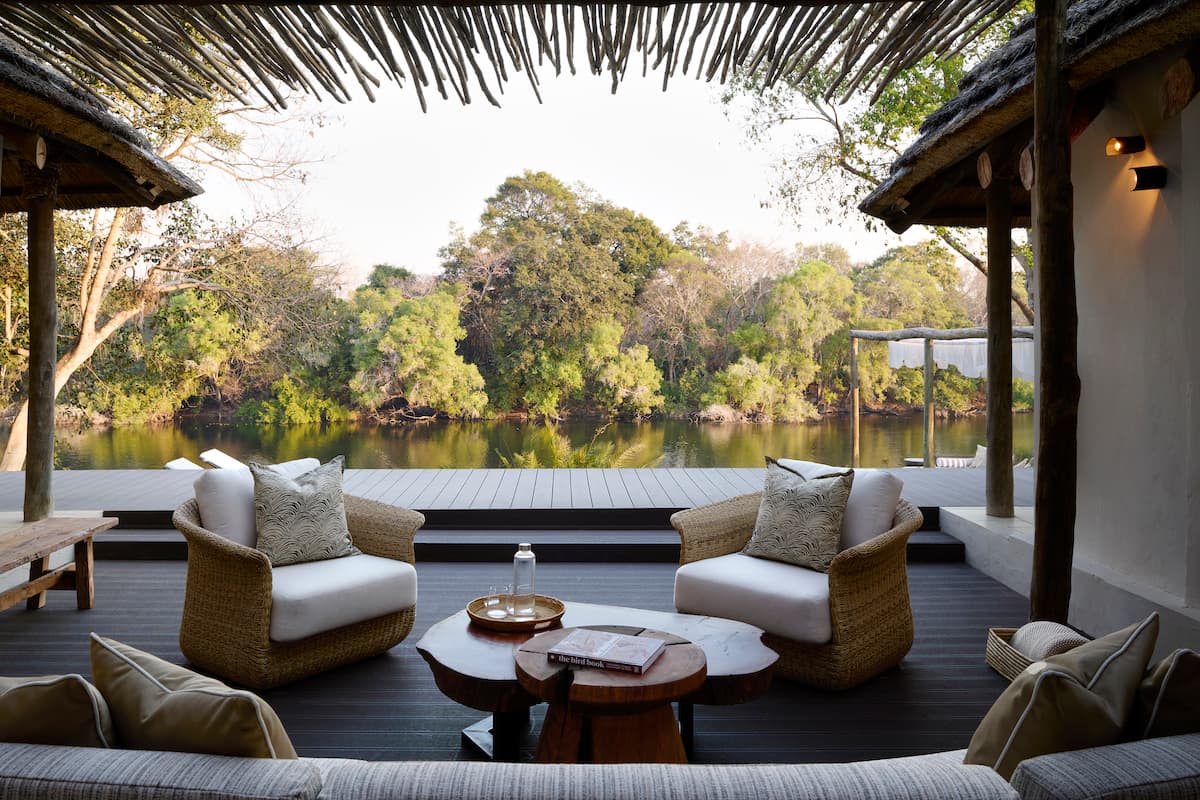
The lodge itself is open and deeply connected to its surroundings. The central structure sits beneath a large roof with wide open sides framing uninterrupted views of the river and surrounding wilderness. Inside are comfortable lounge areas, long communal dining tables, African-inspired décor and a fireplace that crackles throughout the day and evening. The design emphasizes understated elegance: stone, timber, thatch and woven natural textures that belong here rather than being placed here.

Outside, a vast terrace stretches toward the river, furnished with lounge chairs and a fire pit that becomes the natural gathering point after safaris, a place for drinks at sunset or late-night stargazing beneath impossibly dark skies.
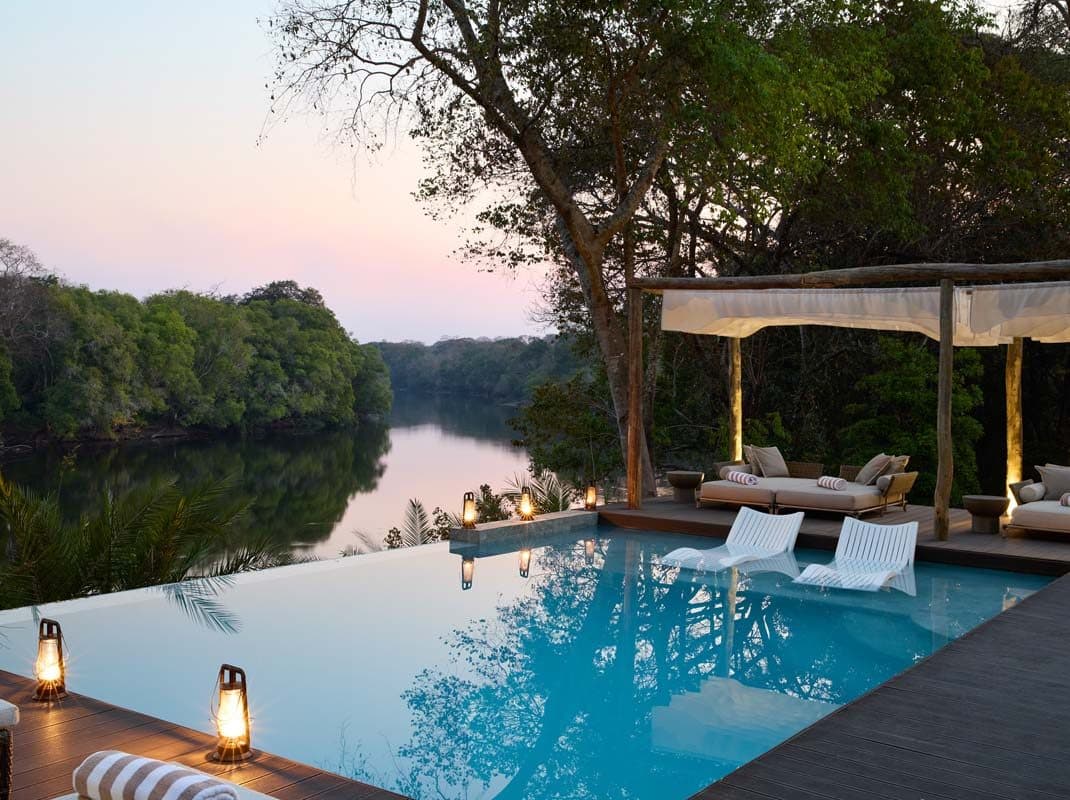
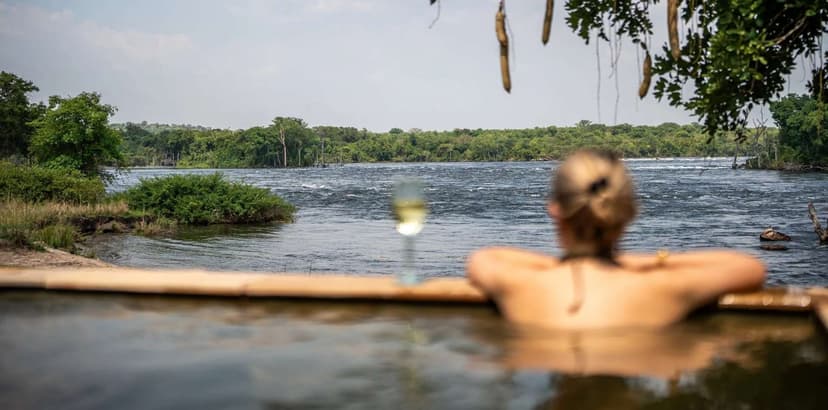
The rim-flow pool sits on the riverbank so its edge and the river's edge seem continuous, the boundary between the built and the wild deliberately blurred.

Yet despite the design and comforts, your attention is continually drawn outward. Guests often find themselves simply sitting in silence, watching the water move slowly past while wildlife gathers along its banks.
Accommodations at Lolelunga: Intimate, River-Facing and Genuinely Wild
Lolelunga accommodates only 14 guests across three standard king rooms, two junior suites and one family suite that can be split into two separate units. All rooms are river-facing, air-conditioned, with large windows and private verandas positioned for privacy and views of the wilderness beyond. African textiles and safari-inspired fabrics soften the interiors, while canopy beds draped in mosquito netting create a classic safari atmosphere without feeling forced or theatrical.

There is also a reminder throughout the stay that this is very much a real safari environment. Radios are kept in the rooms because guests are advised not to walk alone at night. Predators occasionally move through the area after dark, and staff members escort guests to and from dinner each evening. That detail alone tells you something about the nature of the place.
Dinning with a Purpose
But beyond the accommodations, the dining experience is at the highest standard as well. Meals at Lolelunga are served family style, which here means platters brought to a long communal table and passed between guests. The produce comes directly from the 500 local farming families the reserve supports as part of its community programme, a supply chain that is as much an act of conservation as the fence line, putting money into the hands of the people whose relationship with this land determines whether it survives.

It is handled with genuine care: salads built from seasonal leaves and herbs, beef and chicken kebabs charred properly over fire, crème brûlée that arrives with the right resistance under the spoon and the right depth underneath it. Breakfast is served overlooking the Lunga, the table positioned so that the water and the animals along its banks are the view rather than the background.. The food would be good anywhere. Eaten here, with the bush making its presence felt on all sides and the stars dense enough to seem structural, it becomes something else entirely.
Safari at Lolelunga: Game Drives, Walking Safaris and the Lunga River
Safaris take place daily, often twice with both morning and evening drives. The guides move through varied terrain searching for wildlife while also interpreting the smaller details of the ecosystem. The terrain shifts dramatically over short distances: open grassy plains, dense miombo woodland and swampy floodplain margins where the soil darkens and softens underfoot.

Some excursions include opportunities to leave the vehicle and walk through selected areas. Guests learn to read termite mounds towering from the earth like weathered headstones, constructed by snouted harvester termites from clayey soil, and hear how these structures shape the ecosystem around them. After summer rain the bush erupts with blood lilies in scarlet and mushrooms the size of dinner plates growing from the mounds. Water-based activities are a major differentiator, with guided canoeing, sunset cruises and river outings alongside catch-and-release fishing and birding. The tone throughout is flexible and personal rather than rigidly scheduled.
Wildlife at Lolelunga Private Reserve: Species, Rewilding and the Return of the Predators
One thing you’ll notice quickly is that the wildlife here feels genuinely wild.

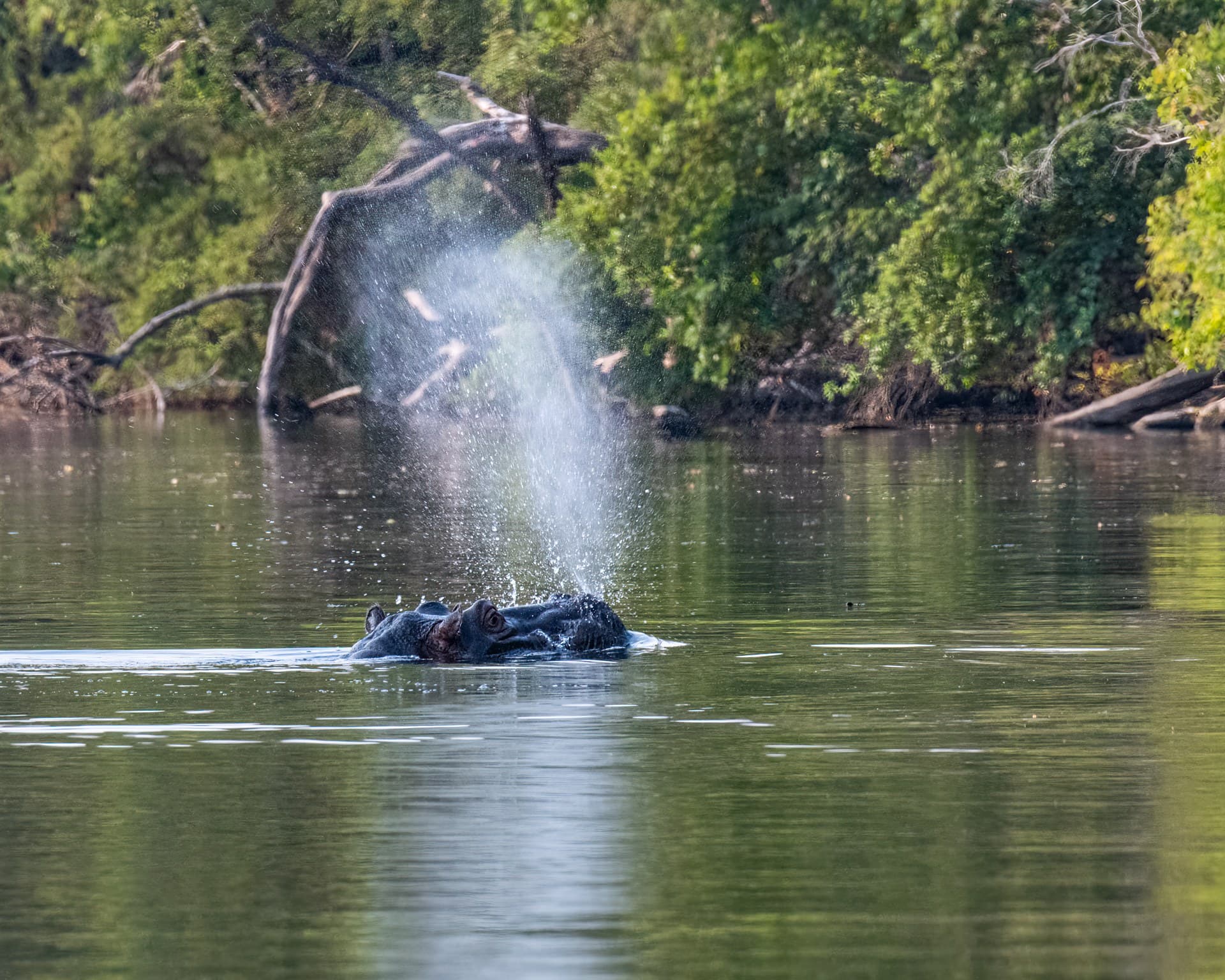
Hippos dominate much of the river system and quickly become one of the defining sights and sounds of the stay. They are widely considered among Africa's most dangerous animals, more aggressive than many visitors realise. On land they appear cumbersome, yet in the water they move with remarkable grace and power. Two pods live in the bend of the Lunga just in front of the lodge.

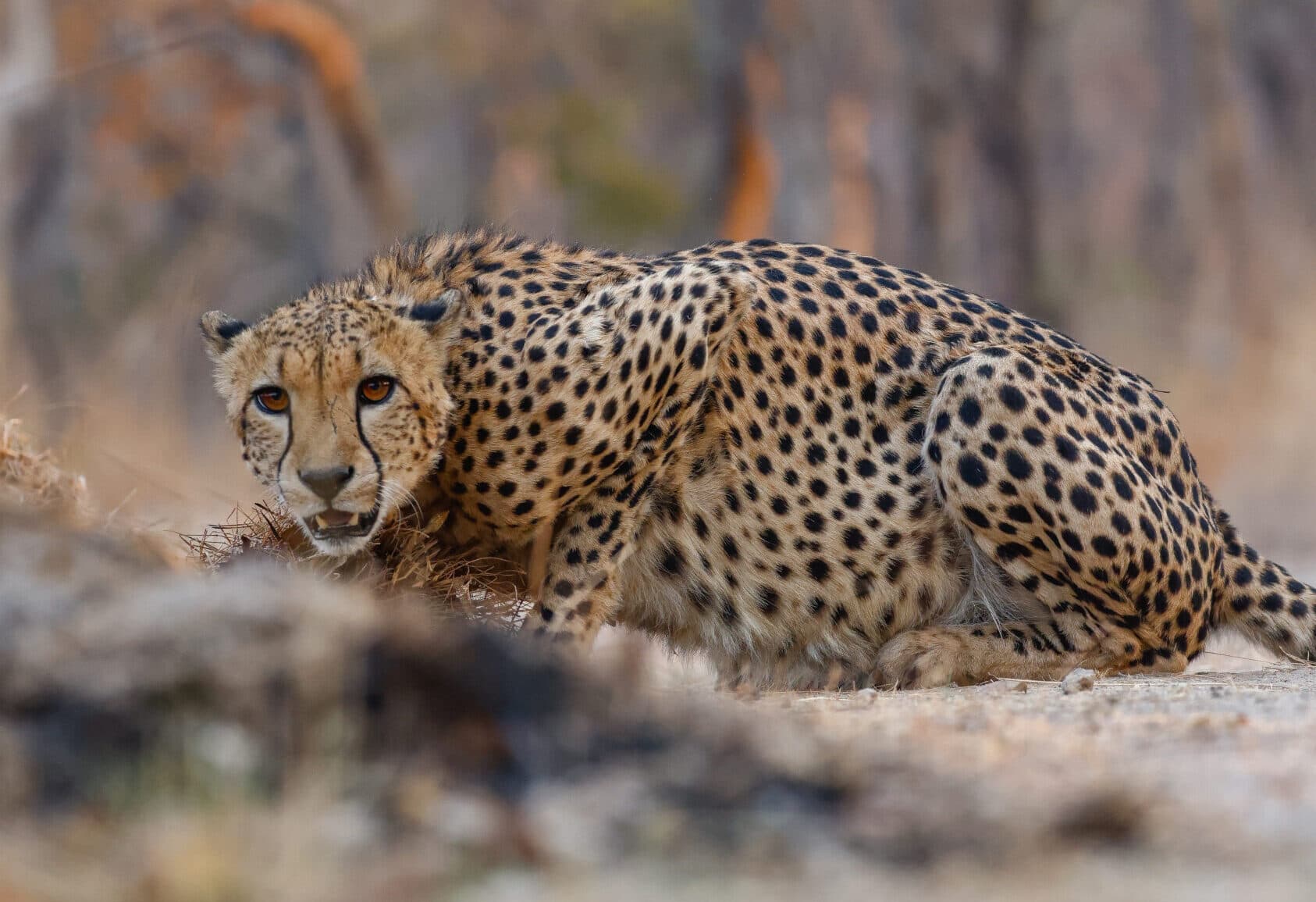
Cheetah is the reserve's signature conservation achievement. Only around 100 cheetahs are estimated to remain in the wild in Zambia. In August 2024, working with the Cheetah Metapopulation Initiative, five cheetahs were introduced to the reserve as part of the ongoing rewilding project. A year later, three healthy cubs were born on site, the first ever on Zambia's first fully fenced private reserve. The female, called Shanaya by the guides, delivered them in August 2025. The cheetah's biology makes its vulnerability easy to understand: after a chase reaching 112 km/h, it must spend up to 30 minutes recovering before eating, during which time it is susceptible to losing its kill to lions, leopards and hyenas. The fence eliminates that pressure at the moments that matter most.

On April 12, 2026, Lolelunga initiated the reintroduction of lions, marking the first-ever effort in Zambia to rewild captive-bred lions. A seven-year-old male and female were translocated from Mukuni Big Five in Livingstone to a landscape where lions had been absent for more than 15 years. They are to be released after a six-to-eight-week rehabilitation programme into the reserve proper.\

The sitatunga, depicted on the Lolelunga logo, occupies the swampy terrain at the reserve's lower edges. It is one of Africa's most specialised animals: an antelope with hooves elongate and splay like bananas to distribute weight across soft ground and floating vegetation, and its shaggy coat is sealed with an oily water-repellent secretion. When threatened, it submerges itself and lies with only its nostrils above the surface, an adaptation against leopards and wild dogs that has earned it a reputation as Africa's snorkelling antelope. A dawn sighting of a male at the swamp margin, its spiralling horns catching the first light, is not the kind of thing the bush offers easily.

The reserve also carries roan antelope forming harem groups of five to fifteen animals and a meaningful conservation contribution given how close to vanishing they are across eastern Africa. Sable antelope move through the woodland, the mature males a deep glossy black with backward-sweeping ringed horns among the most spectacular headgear in the bovid family. Puku, golden-yellow and abundant, are classified as Near Threatened on the IUCN Red List and form a critical part of the prey base for large predators. The reserve also supports red lechwe, kudu, impala, bushbuck, eland and zebra across its plains, alongside elephant, buffalo, warthog, hyena and vervet monkeys.

Along the river, spotted-necked otters have returned in numbers, their rapid chattering carrying across the water: proof that the Lunga is recovering. Pangolin have been recorded on the reserve too, among the most trafficked mammals on earth, present only where disturbance has meaningfully reduced. Crocodiles and Nile monitor lizards bask on every sun-warmed sandbar.
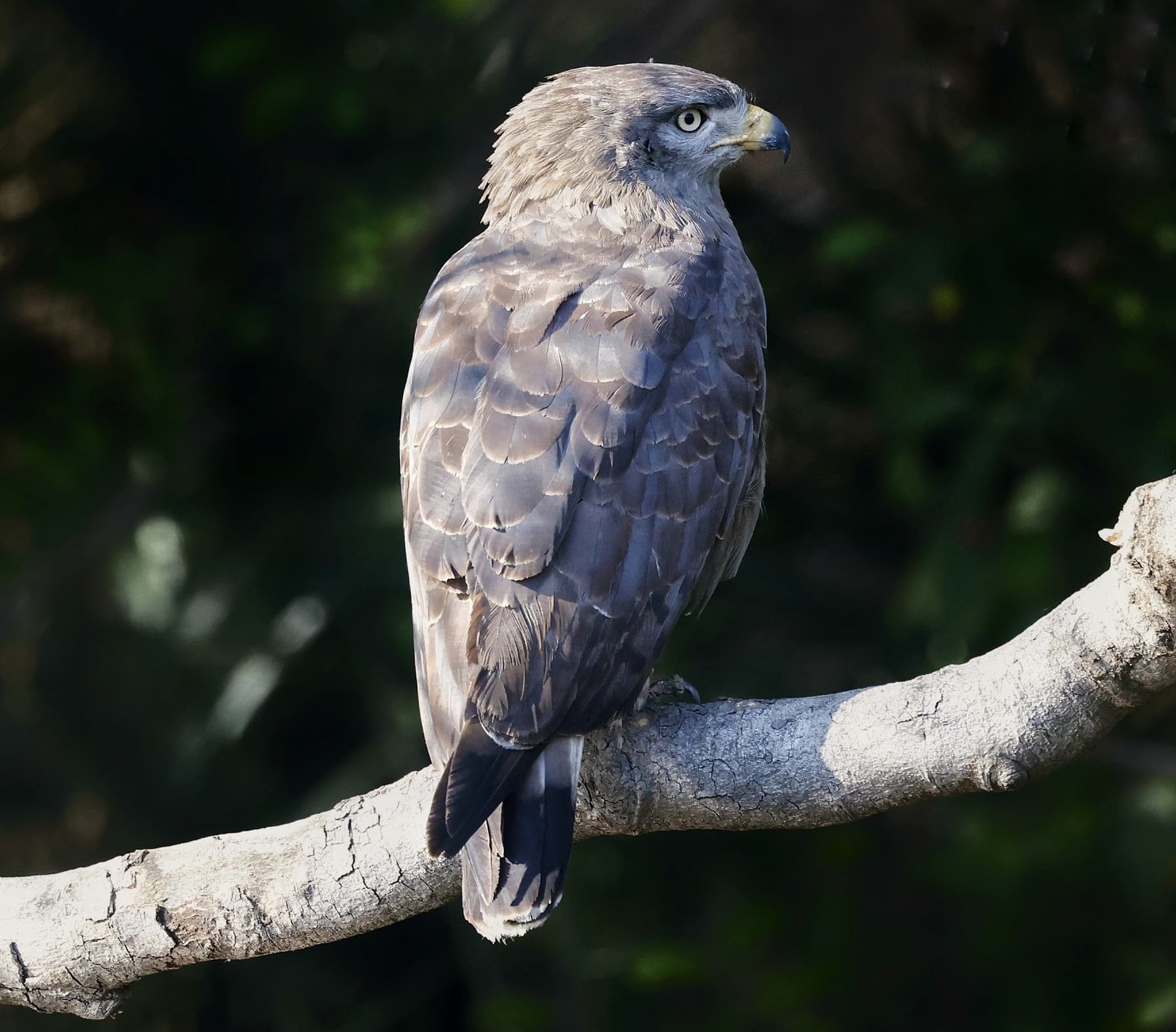
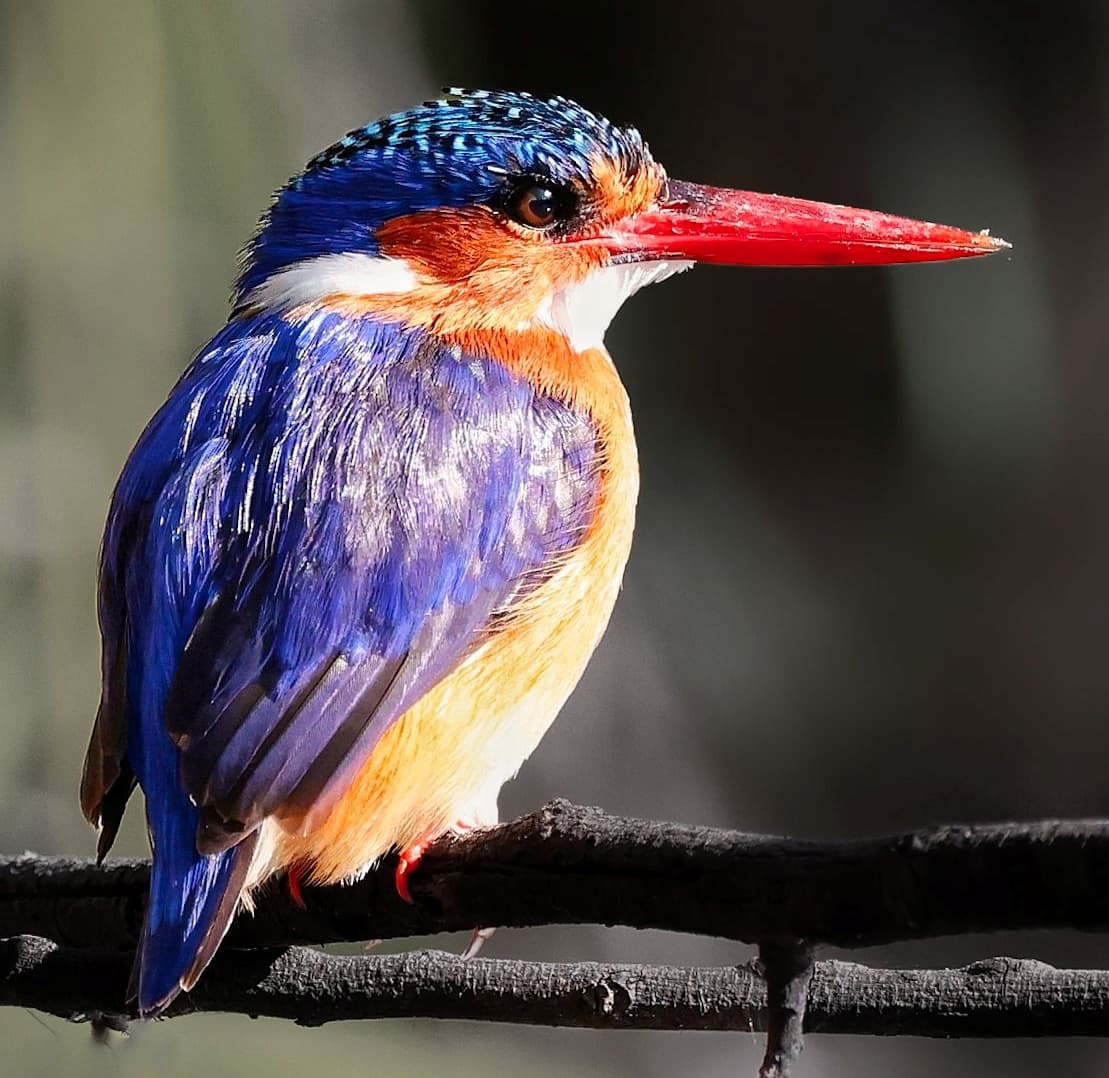
Birdlife is a defining feature, with over 270 species recorded across the reserve's varied habitats. The list includes African fish eagle, the notoriously elusive Pel's fishing owl, African darter, reed cormorant, saddle-billed stork, spur-winged goose, Ross's turaco, Schalow's turaco, orange-breasted bushshrike, bar-winged weaver and Verreaux's eagle-owl. But the bird that stops a serious birder cold is the Narina trogon: the male is an astonishment of emerald and deep crimson, sitting motionless in dappled shade like a jewel someone placed in a tree and forgot. It is named for a Khoikhoi woman admired by the French explorer François Le Vaillant. To see a pair above the lodge deck is what birders call a mega-tick.
Breakfast with Hippos
Some of the most memorable experiences are surprisingly simple. Sitting on the terrace at dusk beside the fire pit while watching the river drift past. Hearing hippos calling through the darkness from the water below. But others are much more elaborate and unforgettable.

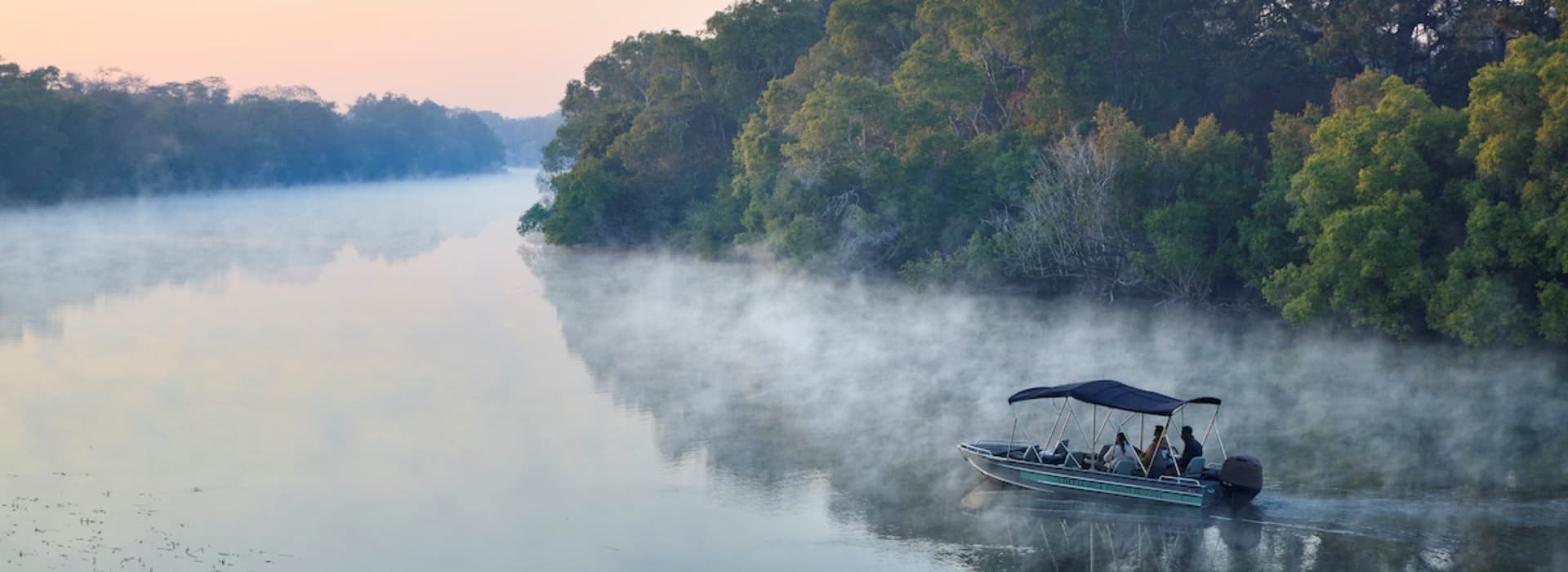
The morning river cruise is a full guided journey on the Lunga River, moving upstream through one of the most intact riverine corridors in Zambia.
The boat leaves in the cool of the morning, before the heat builds and the animals retreat to shade. The Lunga here runs clear and purposeful, its banks thick with riparian vegetation: stands of sycamore fig and waterberry, papyrus pushing out from the shallows, the root systems of riverine trees gripping the clay banks and trailing into the current. African skimmers work the surface with their longer lower mandible slicing the water, an engineering solution so precise it looks impossible in motion. Pied kingfishers hover and plunge. A giant kingfisher, the largest of the species, sits motionless on an overhanging branch, its chestnut breast the only warm colour in the cool morning light. Reed cormorants dry their wings on partially submerged logs, holding their posture with the stillness of carved things. Monitor lizards bask on every sun-warmed sandbar, armoured and prehistoric, watching the boat with the indifference of animals that have been here longer than the concept of a boat.

The hippos are the defining presence. The Lunga's pods surface in rotation, their nostrils and eyes appearing first, the rest of the animal following with the slow hydraulic weight of something that knows it does not need to hurry. They communicate in low resonant bellows that carry through the water and up through the hull of the boat before they reach the air. The guide reads their body language with practised ease: ears forward means curious, ears back means you should increase the distance, which the boat does quietly and without drama. Crocodiles hold the shallower sections, perfectly still, their ridged backs level with the surface, ancient and patient.

Then the food comes. The table is set on the water, which is to say the boat stops at a quiet bend where the current slows and the bank falls back, and the spread is laid out properly: a wooden board of cheeses,freshly baked bread still warm from the camp kitchen. Cold cuts, smoked salmon, a dish of marinated olives. A basket of pastries, croissants and pain au chocolat. Sliced seasonal fruit, papaya and pineapple and watermelon, cut clean and cold. Freshly pressed orange juice. And champagne, which arrives without apology, because the morning and the river and the absurd beauty of the whole thing demand it. A fish eagle calls from somewhere upstream, the sound carrying across the water with the precision of something aimed directly at you. A pod of hippos surfaces twenty metres off the beam, exhales, and submerges again. The champagne is cold. The Lunga is doing everything it does every morning, entirely indifferent to the fact that you are here to witness it.
The Ngoma Deck Sundowner Experience Above The Miombo Woodland
Another equally as unforgettable experience takes place on land on the Ngoma Deck, and it arrives as a surprise.
The game drive ends but the evening is not finished. The vehicle turns away from the river and climbs toward the highest point of the reserve, where the Ngoma Deck sits elevated above the surrounding miombo woodland on a raised timber platform, looking out over the open savannah below. There are no walls. There is no roof. There is just the platform, the chairs, the view, and the enormous African sky beginning to shift from blue to something richer.

The hosts are already there when you arrive, cooler boxes open, glasses ready. A gin and tonic appears, the tonic still fizzing, the ice not yet apologising for existing in this heat. There are cold local beers for those who want them, and wines, a good white already chilled to the right temperature for where you are and what you have just been through.
Then the food arrives. Canapés, but not the tired perfunctory kind: smoked salmon blinis with a curl of crème fraîche, mini bruschettas topped with fresh tomato and torn basil, small skewers of spiced chicken still warm from the kitchen. Alongside them a board of proper biltong, the southern African dried game meat cured in salt, vinegar and coriander that tastes like the continent itself, spiced and elemental. Roasted macadamias and cashews. A local cheese with a dark fruit chutney. It is more than enough, and the point is not satiety but ceremony: the careful laying out of good things at the end of a day that has already given you a great deal.
Below, the savannah opens up. The light is going golden now, long and horizontal, doing something extraordinary to the grass, turning it the colour of hammered copper. You are watching and then, without announcement, a small group of zebra moves across the plain below, unhurried, entirely indifferent to the platform above them. A moment later two puku pick their way through the tree line, pause, lift their heads and continue. They have no idea you are there.

This is the surprise Lolelunga keeps in its back pocket for the end of the day. You came for the game drive. You saw what the bush offered. But it is here, elevated above it all with a cold drink and the sun going down over a landscape that was nearly destroyed and is now, unmistakably, alive again, that the weight of the place settles on you fully. The privilege of being here is not abstract anymore. It is the zebra crossing below you, the copper light on the grass, the gin going warm in your hand because you forgot to drink it.
The sky does the rest.
Bush Spa Treatments Using Indigenous African Botanicals

And of course there is time for a bit of bush pampering. The spa is set apart from the main lodge, positioned away from the guest area in its own quiet structure that looks out over the surrounding grounds. This separation is intentional. You arrive on foot, the bush close on all sides, and the sounds of the reserve rather than the lodge become the atmosphere: birds moving through the canopy, the occasional distant call of something in the undergrowth, the Lunga audible if the wind is right. The treatment room holds two beds, accommodating couples and individuals, and the light inside is soft and unhurried.

The products are Africology, a South African brand that formulates entirely with African botanicals and pure essential oils, free from parabens and synthetic fillers. The signature massage oil used at Lolelunga carries marula seed oil, pressed from the fruit of the marula tree that has been used across southern Africa for centuries as a skin treatment and hair conditioner, alongside rooibos leaf extract, sweet almond oil and African potato root, an indigenous plant long used in traditional medicine for its anti-inflammatory properties. Clary sage and chamomile add their particular weight to the blend, and beneath them black pepper seed oil provides a warming undercurrent that you feel more than smell. The treatment begins with a foot soak, which is a small and considered act of reset after a day in the bush. Then the Swedish massage begins, long effleurage strokes working through the muscle tension that accumulates across a day in an open vehicle, combined with deeper kneading across the shoulders and lower back. The scent of the oil fills the room slowly, earthy and botanical and specific in a way that synthetic fragrances never are. Outside, something moves in the grass. A bird calls once and goes quiet. The sounds and the movement and the warmth of the oil work together and after a while the distinction between being awake and being asleep becomes genuinely unclear. You surface sometime later not quite sure how long you were gone.
The Rare Privilege Of Experiencing A Wilderness In Recovery
Lolelunga operates within the Zambia Luxury Lodge Collection alongside Puku Ridge and the reimagined Chichele Presidential in South Luangwa and Lolebezi in the Lower Zambezi, forming a circuit that covers the full range of what Zambia's wilderness can offer. The reserve runs primarily from May to November. Rates start at around USD 1,100 per person per night, with meals, drinks and guided activities included. The Nature Navigators Club offers child-focused conservation and bush programming, making the reserve genuinely suitable for families.

What stays with you after Lolelunga is not any single sighting or meal or evening on the Ngoma Deck, though all of them are worth the journey on their own terms. It is the accumulated weight of a place doing something genuinely difficult and doing it with conviction. The conservation is real. The community investment is real. The wildness is real, not manufactured or maintained for the benefit of the photograph. You sleep to the sound of animals that were not here ten years ago, moving through a landscape that was stripped and silenced and has, through stubborn and unglamorous work, been given back to itself. That is an unusual thing to be a guest inside.

Which brings it back to Shanaya. Somewhere inside the fence, in the recovering bush of the Lunga floodplain, she is raising three cubs in a wilderness that had to be rebuilt before it could receive them. She does not know about the boreholes or the schools or the former poachers turned rangers or the 76 kilometres of fence or the decade of work that preceded her arrival. She knows the river, the grassland, the prey moving through the long grass at dawn. That is enough. That is, in fact, everything. And for the guests who come to Lolelunga now, while the story is still becoming what it will be, it is a privilege of a particular and irreplaceable kind.
reservations@zambialuxurylodges.com | zambialuxurylodges.com/lolelunga
Glenn Harris
Glenn Harris is an accomplished journalist focusing on luxury travel, fine dining, and exclusive lifestyle events. His wanderlust has taken him to over 128 countries where he constantly strays off the beaten path to uncover exotic locations, travel gems and exciting experiences to capture.