Above the Fray: Taj 51 Buckingham Gate Suites and Residences London
London has always served the world's most discerning travellers, and with that comes an endless offering of posher, grander, more ostentatious options for those visiting the city. Barely a season passes without another grand opening in Mayfair, another branded tower announced for Belgravia, another collection staking its claim to the loyalty of the global ultra-wealthy with the breathless energy of the newly arrived. The city has never offered more luxury hotels, and it has never been more restless about it.
And then there is the Taj 51 Buckingham Gate Suites and Residences.
The Taj 51 Buckingham Gate Suites and Residences London is a hotel that has never jockeyed for position with whatever is new on London's luxury hotel scene. There is no celebrity chef imported for the season, no lobby engineered to photograph beautifully for social media. There is only 125 years of continuous occupation of one of the most consequential addresses in the Western world. To arrive here is not to discover somewhere new. It is to take up residence in something permanent.
A Westminster Address Steps From Buckingham Palace
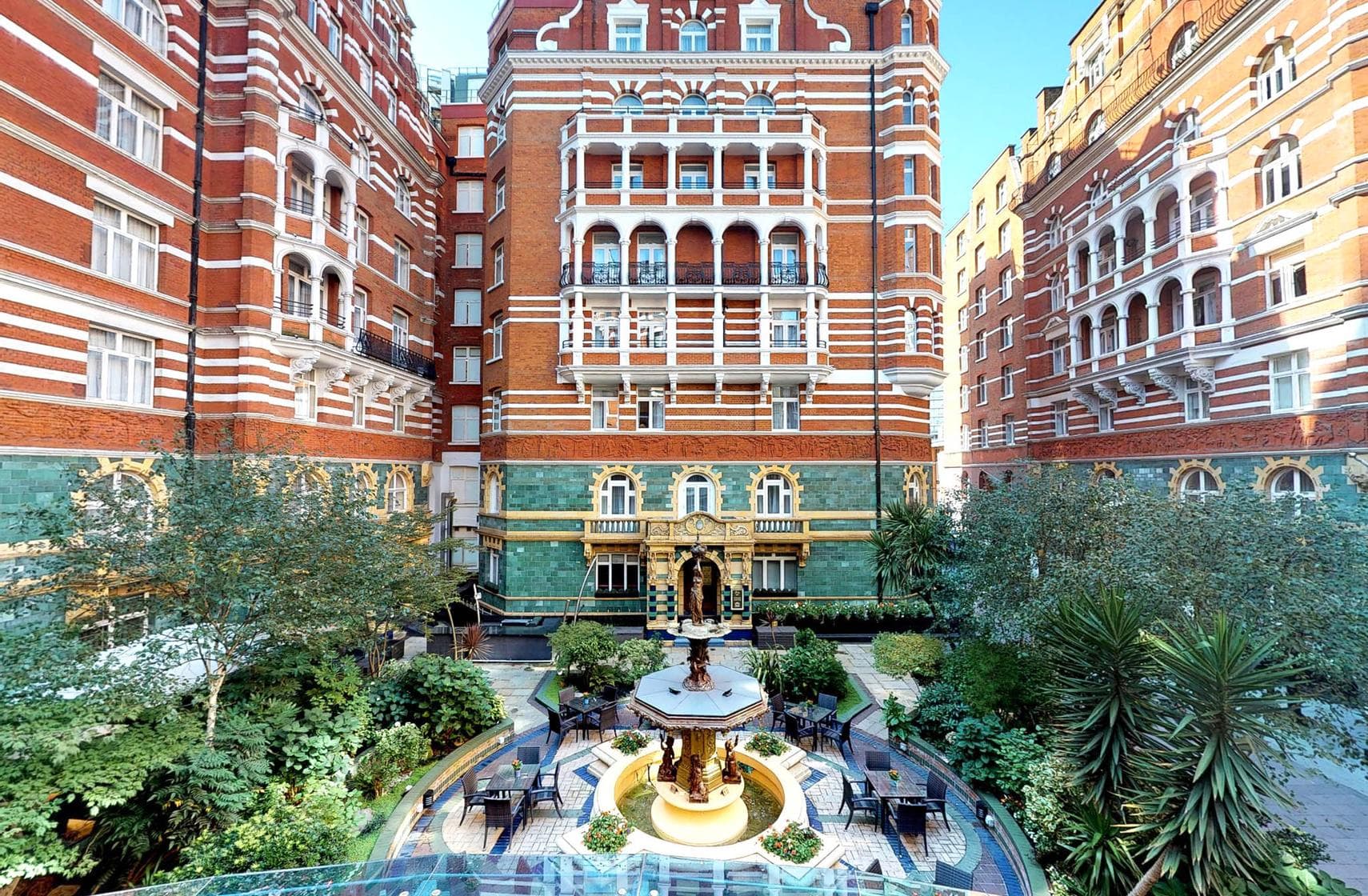
Set just moments from Buckingham Palace in the heart of royal Westminster, Taj 51 Buckingham Gate Suites and Residences occupies three elaborately detailed Victorian redbrick townhouses enclosing one of London's most extraordinary private courtyards. More private residence than conventional hotel, it carries a guest history stretching back over a century and a quiet authority that no amount of investment in a newer address could replicate.
Conceived from the outset as a sanctuary for the aristocratic and political establishment, it sits within walking distance of Buckingham Palace, the Houses of Parliament, Downing Street, and Westminster Abbey, at the precise centre of everything that makes London London. That original purpose has never really changed. The guests today are business titans, heads of state, those with business at the palace, and travellers who simply want to experience the city at its most historically concentrated, and they are received with the same unhurried attentiveness the address has always offered.
The History Behind Taj 51 Buckingham Gate Suites and Residences
The story of this address reaches far deeper into English history than its Victorian redbrick exterior suggests. Lord Dacre, treasurer to Queen Elizabeth I, originally commissioned almshouses here to house and educate children of the Westminster parish. In 1897, Major Charles Pawley acquired the land and transformed it, commissioning eight prestigious redbrick townhouses built to the highest Victorian standards, with a singular ambition: to create an oasis of calm and sophistication for the aristocratic and political establishment of the age.
In 1897, Major Charles Pawley acquired the land and commissioned eight prestigious redbrick townhouses in their place, built to the highest Victorian standards. His vision was singular: a private sanctuary for the aristocratic and political establishment, at the very centre of London's royal, cultural, and political life. Those who came would not merely pay to stay. They would relish the exclusivity of the address itself. Three of those original townhouses form today's Taj 51 Buckingham Gate Suites and Residences, named King's, Falconer's, and Minster's in keeping with their historical legacy.

The proximity to power here is not metaphorical. Within a short walk lie Buckingham Palace, the Houses of Parliament, Downing Street, St James's Palace, Westminster Abbey, and Westminster Cathedral. This has always been a place for those at the centre of things, and it remains so. Queen Elizabeth II and Prince Philip were among those who visited the property over the years. Nelson Mandela stayed here. So did Princess Diana. A photograph of Indian Prime Minister Narendra Modi, taken with hotel staff during his stay, sits discreetly framed on a shelf in the hotel lounge. The lead butler who cared for him during that visit speaks of it with visible pride and complete discretion, which is precisely the combination this kind of address requires of its people.

The Dacre family's coat of arms, a scallop shell, is woven in gilt into the vast wrought-iron gates at the hotel's entrance today. Those same shells are echoed in the stonework of the courtyard fountain, a physical chain of connection stretching four hundred years from a Tudor landowner to a modern luxury hotel that would have astonished him in every particular except, perhaps, the quality of its guests.
How the Taj Brand Shaped One of London’s Most Historic Hotels
To understand why Taj 51 Buckingham Gate Suites and Residences functions so differently from its rivals, one must understand what the Taj brand actually means. The Indian Hotels Company was founded in 1903 by Jamsetji Tata, and the guiding philosophy of the house has always been the ancient Indian principle of Atithi Devo Bhava: the belief that a guest should be treated with the reverence accorded to a deity. The Taj Group acquired this London property in 1982, and the marriage of that ethos with the formal traditions of British hospitality has produced something neither culture could have achieved alone. The staff here care, visibly and consistently, in ways that the transactional mechanics of most luxury hotels cannot replicate regardless of how many stars they carry. It is a quality the company calls "Tajness." The guests who keep returning year after year simply call it feeling at home.
Victorian Architecture and Historic Design Details
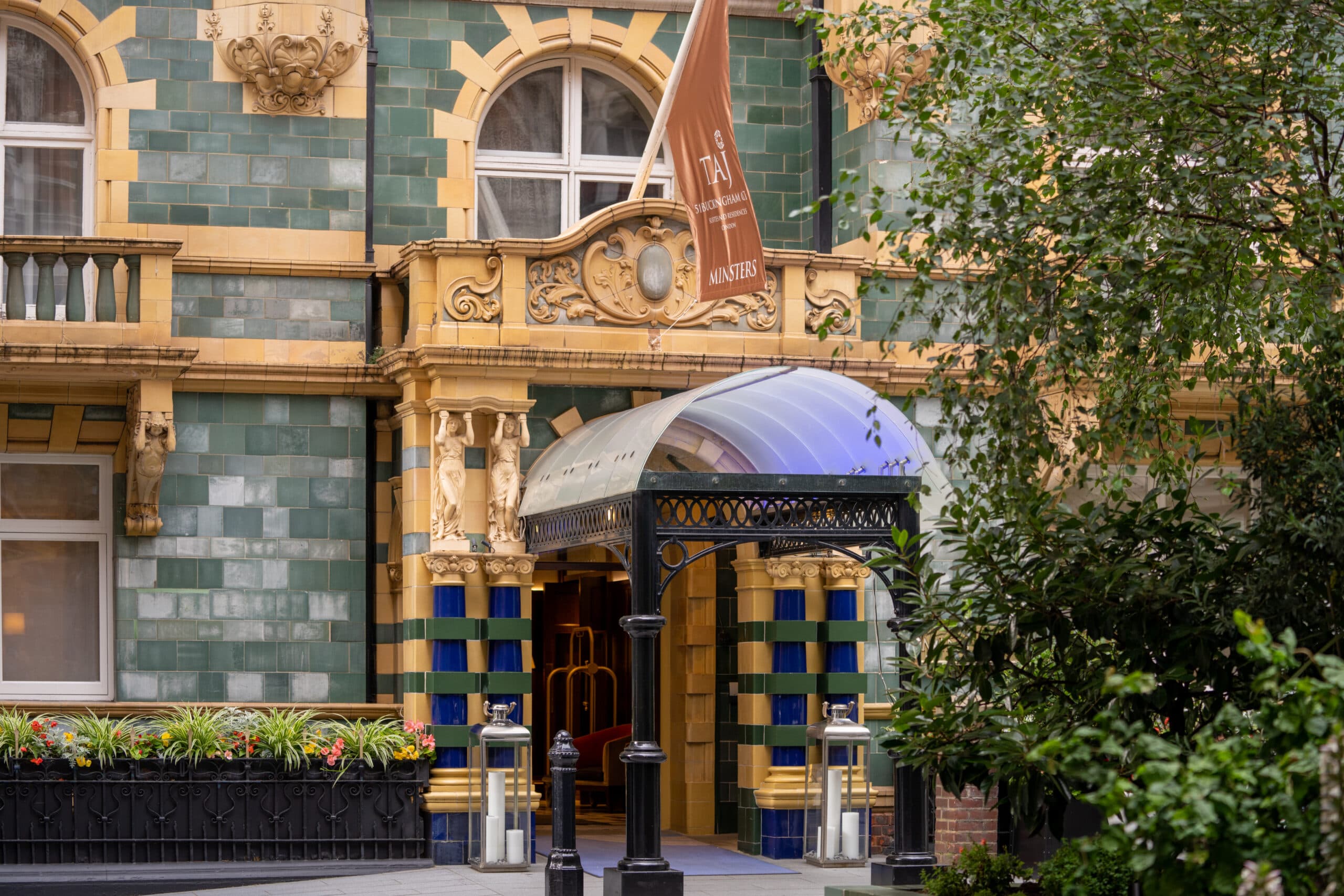
The exterior is striking and unapologetically opulent, deep red brick rising across three townhouse facades with an elaborateness that demands a slower look and deeper appreciation. Turrets, arched stone balconies, gargoyles, and coats of arms punctuate the elevations, drawing from Gothic and Baroque influences simultaneously, the whole composition carrying a natural grandeur entirely in keeping with its setting three minutes from Buckingham Palace.
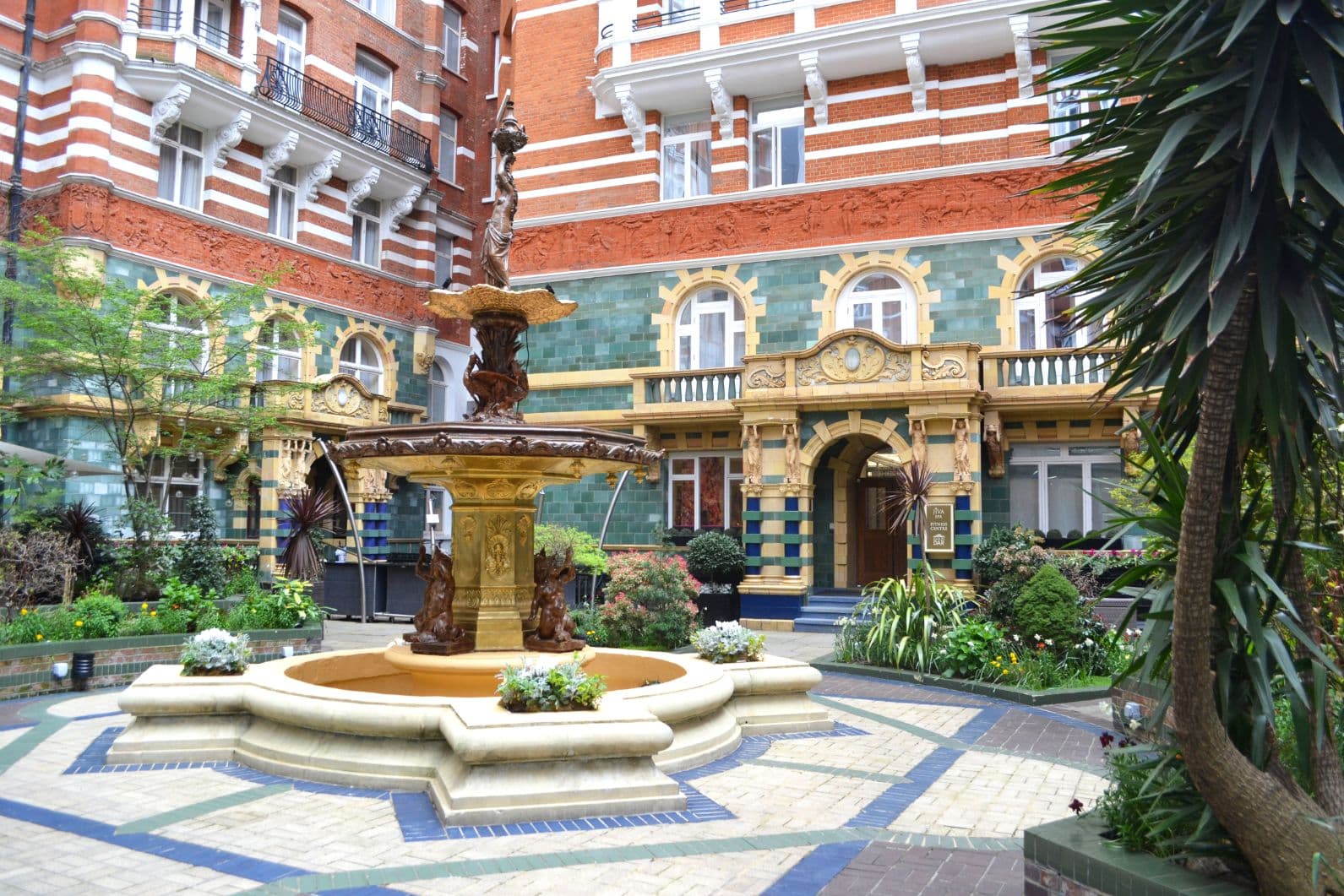
Passing through the great porticoed gateway, beneath those gilt-embossed wrought-iron gates with their Dacre scallop shells, the city drops away with a genuinely startling speed. The courtyard is as much an oasis from the city as it is the focal point of the hotel: enclosed, serene, and so far removed in atmosphere from the Westminster streets. Three townhouse facades rise on all sides, the deep red brick softened by climbing ivy and carefully tended planting in a shade of almost enamelled, emerald green tile facades that catch the London light with a particular vividness. Exotic greenery, trees strung with fairy lights, and outdoor seating create a setting that could belong to a private garden in a great country house but happens to sit at the heart of one of the world's most crowded capital cities.

At the courtyard's centre stands the Victorian cherub fountain, gifted by Queen Victoria herself, its tiers and faience glaze ornamented and ornate, adding both movement and a low, constant gurgle of water, adding melody to the space. Around the courtyard walls runs what is claimed to be the world's longest continuous Shakespearean frieze, a visual installation drawing from A Midsummer Night's Dream and running through the space as a single unbroken narrative. It is intricate, slightly surreal, and wholly unlike anything found in any comparable London hotel. It gives the courtyard a character that feels entirely its own: the Elizabethan and the Victorian existing in the same breath, as naturally as the Indian flag and the Union Jack do above the main entrance.

In warmer months this space becomes a sanctuary. Guests take tea and champagne at outdoor tables while the fountain provides its backdrop. After dark, the illumination that plays across the ivy and brickwork creates an atmosphere no rooftop bar in the city has ever managed to replicate. The hotel calls it London's inner sanctum. It is not an overstatement.
Taj 51 Buckingham Gate Suites and Residences: Residential Style Interiors, Lounges, and Library
What awaits inside is not what you might expect to find in a typical five-star hotel. There is no grand lobby designed to impress on arrival, no central bar positioned as a social theatre. This is a compound of townhouses and the interior logic follows accordingly. A series of elegant drawing rooms with marble floors, bright floral arrangements, and carefully chosen contemporary art create spaces that feel residential and inhabited rather than orchestrated. Antiques and period detail speak to an earlier era without any sense of preservation or pastiche. Indian craftsmanship and influences appear throughout: ornate trinkets and trunks scattered through the building, shimmering gold and silver work and dazzling mirror surfaces, and captivating artwork.
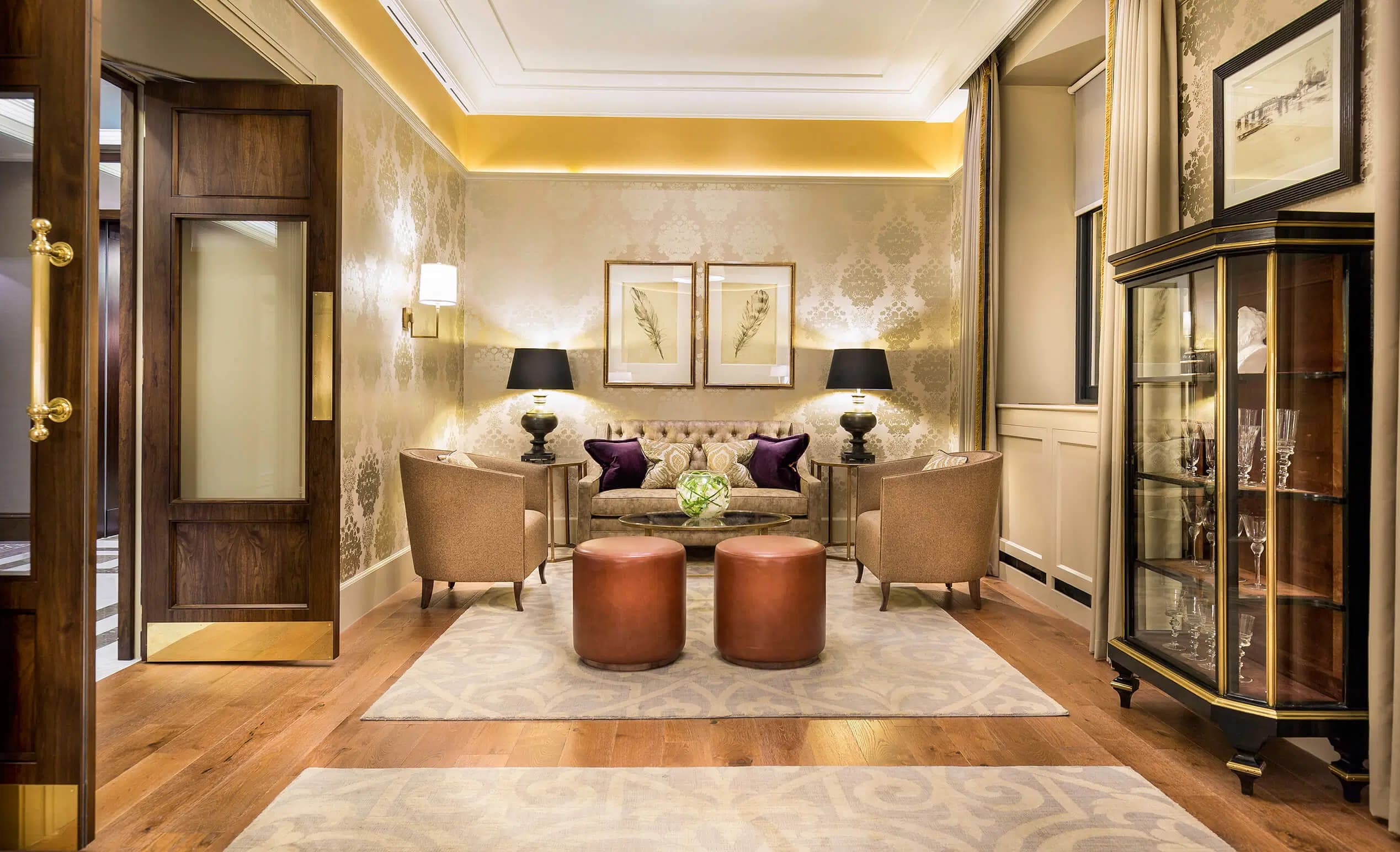
The Library is among the finest common rooms in any London hotel: dark-floored, properly stocked with books available to borrow, furnished with leather ottomans and armchairs in a palette that is unexpectedly bold given the sober grandeur of the building's bones. Gold leaf, dark wood, and modern Indian art create a visual conversation between the origins of the Taj brand and its London home that is conducted in a register of genuine sophistication.
Taj 51 Buckingham Gate Suites and Residences Offers Some of London’s Largest Luxury Suites

The central proposition of Taj 51 Buckingham Gate Suites and Residences is space. In a city where the standard luxury hotel room measures around thirty-five square metres and considers itself generous, the suites here begin at forty-six and expand toward nine-bedroom residential configurations commanding entire floors with private entrances. This is not a hotel of rooms. It is a hotel of homes. Every suite includes a fully fitted kitchen, washers and dryers, and separate living and dining areas, the kind of practical architecture that makes the difference between a hotel stay and something closer to a private residence in the city. Across 86 suites and residences, the offering ranges from generous one-bedroom configurations to sprawling multi-room apartments of up to six bedrooms, each distinct in its proportions, outlook, and character. Some open onto the courtyard, others occupy corner positions across two elevations, and the larger residences spread across entire floors.

Round-the-clock butler service and Golden Keys Les Clefs d'Or concierge attend to every personal requirement. The interaction with staff and concierge is personal and professional, more like having a friend who can sort out what you're after. It feels less like hotel service and more like simply being looked after.
Dining at Taj 51 Buckingham Gate Suites and Residences
The dining proposition at Taj 51 Buckingham Gate Suites and Residencesis a serious one. Four restaurants of individual distinction serve the property, from the Michelin-starred Quilon, holding its star continuously since 2008 under Chef Sriram Aylur, who has spent a quarter-century making the definitive case for south-west Indian coastal cooking in London, to Kona, where the afternoon teas are theatrical productions in their own right. TH@51 serves as the hotel's daily brasserie, with international plates and a glass conservatory overlooking the courtyard that is among the better rooms in which to eat breakfast in central London.
House of Ming and One of London’s Most Atmospheric Chinese Restaurants
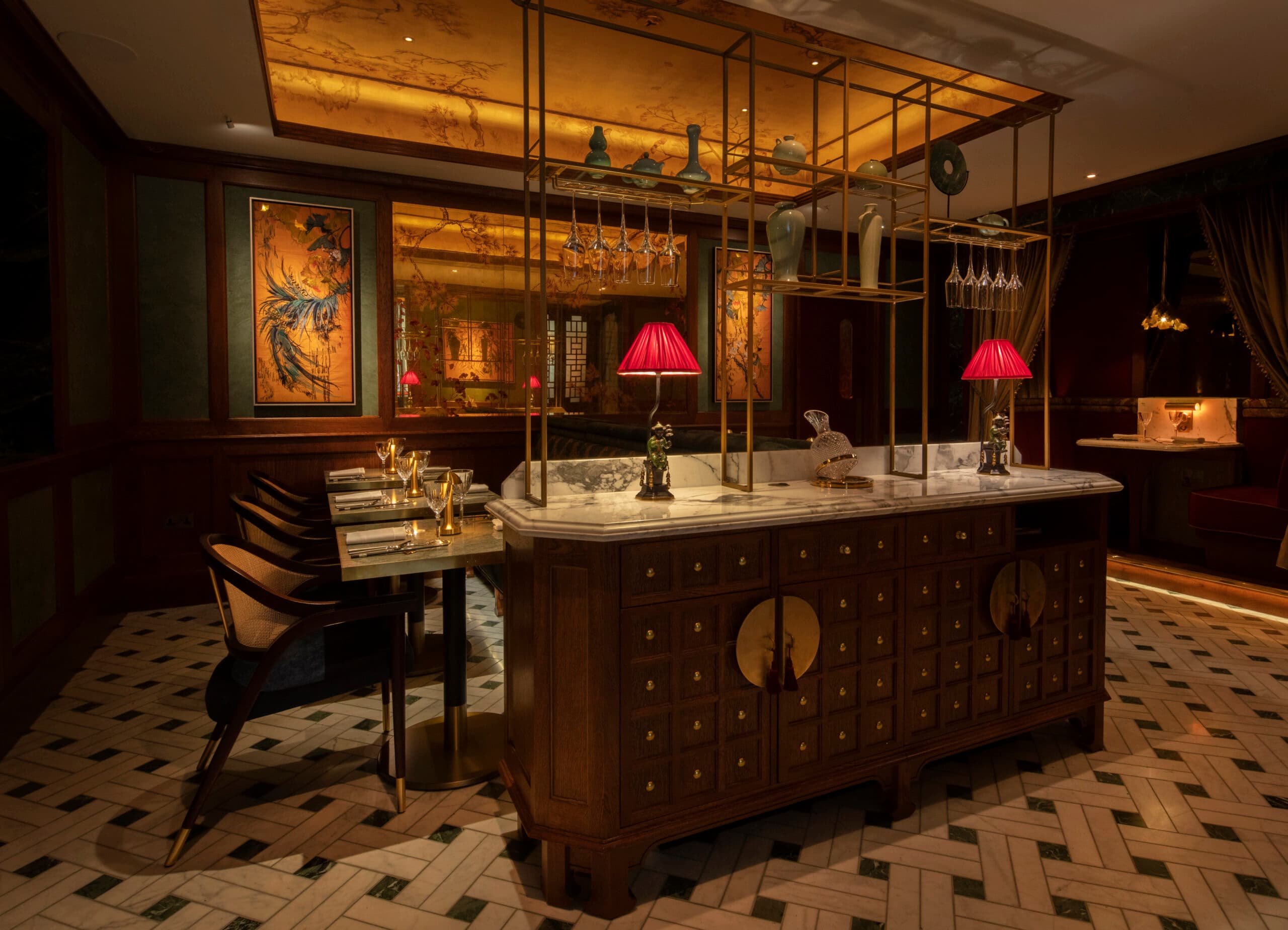
The House of Ming offers an East Asian dining experience that sets out to wow from the moment guests are shown to their table. The interior is draped in forest green and red lacquer, with velvet drapes, bespoke furniture, and antique brass accents, a combination that manages to feel simultaneously opulent yet never garish.

The private love seats that line the space are among the most romantically conceived in any London restaurant, deeply upholstered, intimately lit, and fitted with their own discreet call button for service. In practice, the button goes largely unused. The staff here read the room with the kind of quiet attentiveness that makes pressing anything feel unnecessary, appearing at precisely the right moment and vanishing just as efficiently.
The cocktail list is its own event. The Dragon Harmony is poured tableside with theatrical flames, combining spiced rum, Velvet Falernum, absinthe, cinnamon, and lime in a charmed teacup, the passion fruit catching the light as it ignites, the kind of production that would feel gimmicky at a lesser restaurant and here feels entirely right. A dedicated tea sommelier presides over a trolley of Chinese green, white, and black teas, and a wine list focused on small producers and Chinese Château wines completes a beverage programme of genuine breadth.

The kitchen’s Sichuan and Cantonese mandate is taken with absolute seriousness. The dim sum is handcrafted with real care: prawn truffle siu mai, crispy taro and oyster dumplings, and a scallop, prawn, and crab version that is delicate enough to make one reconsider every dim sum eaten previously. The golden garlic steamed lobster arrives as something as spectacular to look at as it is to eat, glistening and burnished, its fragrance preceding it across the room. The Peking duck is the dish guests return for most faithfully, arriving ceremonially with skin lacquered to a deep mahogany, carved with precision and served in the traditional manner with hoisin, cucumber, and wafer-thin pancakes, the whole exercise carried out with a level of quiet ritual that makes it feel like a privilege rather than simply an order.

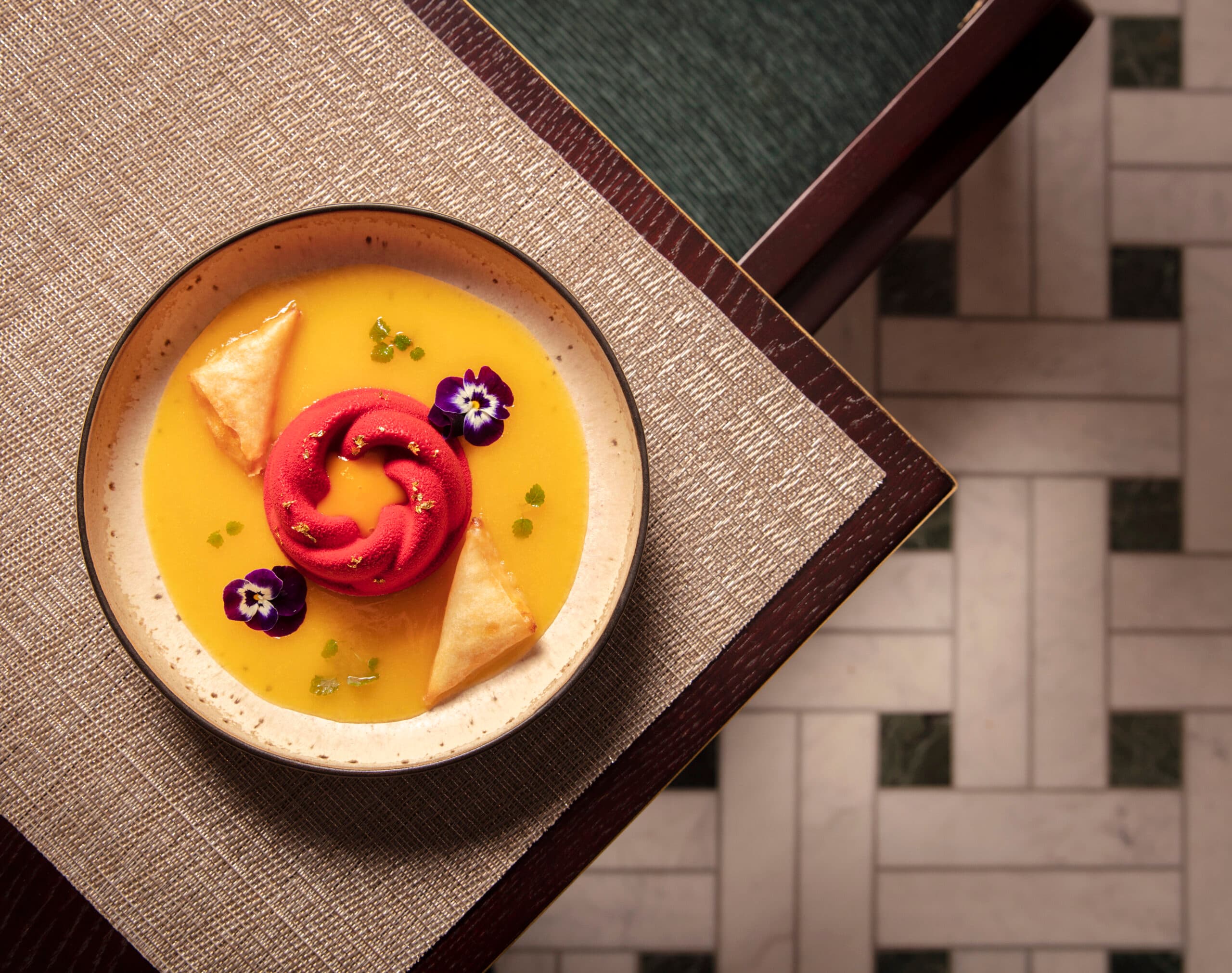
Dessert arrives with the same instinct for presentation. The raspberry sorbet comes served on liquid ice, a low cloud of smoke curling across the table as it lands, that single theatrical detail transforming something simple into something memorable. The meal ends not with fullness but with the particular satisfaction of having been genuinely, thoroughly impressed.
House of Ming Restraurant London
Wellness, Concierge Services, and Life in Royal Westminster
The J Wellness Circle spa operates from the philosophy of Ayurveda and yoga and is the only European location of the Taj Hotels' family of signature luxury spas. Treatments draw on Indian wellness tradition complemented by British brand Temple Spa, the East-West axis expressed in the treatment menu as naturally as it is in the architecture. Facilities include a sauna, steam room, vitality pool, and a full range of body treatments.
The fitness centre operates around the clock. The library lends books. The concierge arranges balloon rides over London, private transfers to any airport at any hour, and experiences that would not appear on any standard city guide. Buckingham Palace is a five-minute walk. Westminster Abbey and Big Ben are ten minutes. St. James's Park underground station is five minutes on foot; Victoria mainline ten. For visitors arriving in London to conduct serious affairs, diplomatic, commercial, familial, or simply the serious affair of inhabiting this city at its most magnificent, there is no more strategically or spiritually appropriate address in the capital.
What draws people back year after year is harder to articulate than any list of amenities. The kitchen, the butler, the space, the history are all part of it. But guests who have been coming for a decade, who know the staff by name and are known in return, who arrive to find everything exactly as they left it, tend not to reach for those words. They simply come back.
Why Taj 51 Buckingham Gate Suites and Residences Remains One of London’s Most Important Luxury Hotels
Some hotels rely on newness, novelty, and creating buzz. This one does not need to. The new addresses will keep opening, the lobbies will be photographed, and the press will attend. Here at the Taj 51 Buckingham Gate Suites and Residences, a short walk from the palace and at the centre of everything that has always mattered about this city, the gates will continue to open for the guests who already know, and for those discovering for the first time, that there are places in the world where the history is not decoration, the service is not performance, and the experience of being genuinely looked after has never gone out of fashion.

Glenn Harris
Glenn Harris is an accomplished journalist focusing on luxury travel, fine dining, and exclusive lifestyle events. His wanderlust has taken him to over 128 countries where he constantly strays off the beaten path to uncover exotic locations, travel gems and exciting experiences to capture.