Miiro Templeton Garden Review: A Reimagined Boutique London Hotel
There is a specific kind of London exhaustion that sets in around day two. The Tube at rush hour, navigating the mosh pit of tourists on Oxford Street, the fourteen-pound cocktail in a bar where the music prevents conversation and the view is simply other people's office windows. By the time you reach your room, the city has done something to you. Not hostile exactly, but relentless. It has treated you as foot traffic.

The more interesting question is where you go when you want London without that particular quality. The answer, for a growing number of travellers who have found their way to Miiro Templeton Garden, is a quiet Victorian terrace in Earl's Court, where the loudest thing most evenings is a neighbour closing a front door, and where a walled garden large enough to get properly lost in sits behind a row of white-pillared townhouses that look, from the pavement, like the kind of address where a successful barrister might live.
Behind the buttery cream facade and bottle-green front doors sits one of the most unexpectedly generous private gardens in the city, a walled, tree-lined expanse that makes the whole property feel closer to a private estate than a commercial hotel. From the pavement, you'll find it looks more like the kind of address where a successful barrister might live. As a hotel, it is the kind of place that makes you reconsider what a London hotel is actually supposed to do.
A Real Neighbourhood, a Short Tube Ride from Everything
Earl's Court has never been the "it" place to stay or the place to see and be seen. What it has instead is something more relevant: the kind of residential character that has been created over generations rather than being installed by a property developer. Tree-lined streets of white stucco townhouses, a proper local pub, an independent bookshop, a bakery with actual queues on Saturday mornings. Beatrix Potter lived nearby. Agatha Christie and Alfred Hitchcock both have connections to these streets. The Victorian professionals who first built here chose the neighbourhood for its elegance and its quiet, a combination that has survived into the present century with more grace than most of London has managed.

The geography works in a very particular way for anyone staying at Templeton Garden. Earl's Court Underground station is a three-minute walk from the front door. The Piccadilly Line runs direct to Heathrow, which matters considerably to the international travellers this hotel draws. The District Line puts South Kensington, Knightsbridge and Kensington within a few stops. The Natural History Museum, the V&A and the Science Museum are all within walking distance. So are Hyde Park, Kensington Palace, the Royal Albert Hall and Kensington High Street. Stamford Bridge is just over a mile away for the football-inclined.
The point is not that these things are close. It is that you can spend a full day among them, museums and a long lunch and a gallery and dinner somewhere loud and excellent, and return twenty minutes later to a street where the pace is entirely different and a fox cub occasionally crosses the garden lawn without anyone finding this particularly remarkable.
Seven Victorian Houses, One Hotel
Throughout London there are those beautiful townhouse rows, usually three or four storeys high, originally built as elegant private homes. Over the years, hoteliers have taken two, three, four, sometimes five of them side by side and transformed them into boutique hotels. Some became backpacker hostels. Others became polished five-star properties. Templeton Garden falls firmly into the latter category, occupying seven villas built around 1880, first converted into a hotel in the 1970s and comprehensively remade in a renovation completed in 2025 after roughly fifteen months of work.
What makes these townhouse hotels so appealing is that they exist inside actual neighbourhoods rather than business districts built around tourism and conferences. They feel more like grand homes than conventional hotels. Templeton Garden captures that feeling particularly well, though unlike many townhouse conversions it also feels unexpectedly spacious. Grand for a townhouse, really: wide open spaces, lots of light, a modern and contemporary treatment rather than the kind of heavy, historically burdened look that weighs down so many London luxury properties.

The exterior gives nothing away. Five stories of Italianate stucco in a warm buttery cream, arched windows, bracketed eaves and deep bottle-green front doors, with the original Victorian tiled entrance steps leading up from the pavement. Inside you’ll find a warmer, quieter, more domestic design aesthetic with a palette runs to sepia, biscuit, terracotta and blush. Design details include foliage murals painted directly onto walls and an oak-leaf chandelier that anchors the main space. The whole interior reads as a careful accumulation of handmade, commissioned and locally sourced objects. Nothing was assembled wholesale from a catalogue.

At the rear, a glass conservatory extension runs across the back of the building, designed to evoke a row of Victorian greenhouse structures. From the front door, a clear sightline extends straight through the house and out through the glass to the garden trees beyond, giving the building an unusual sense of depth and pulling the interior and the garden into a single continuous space.
More Living Room Than Lobby
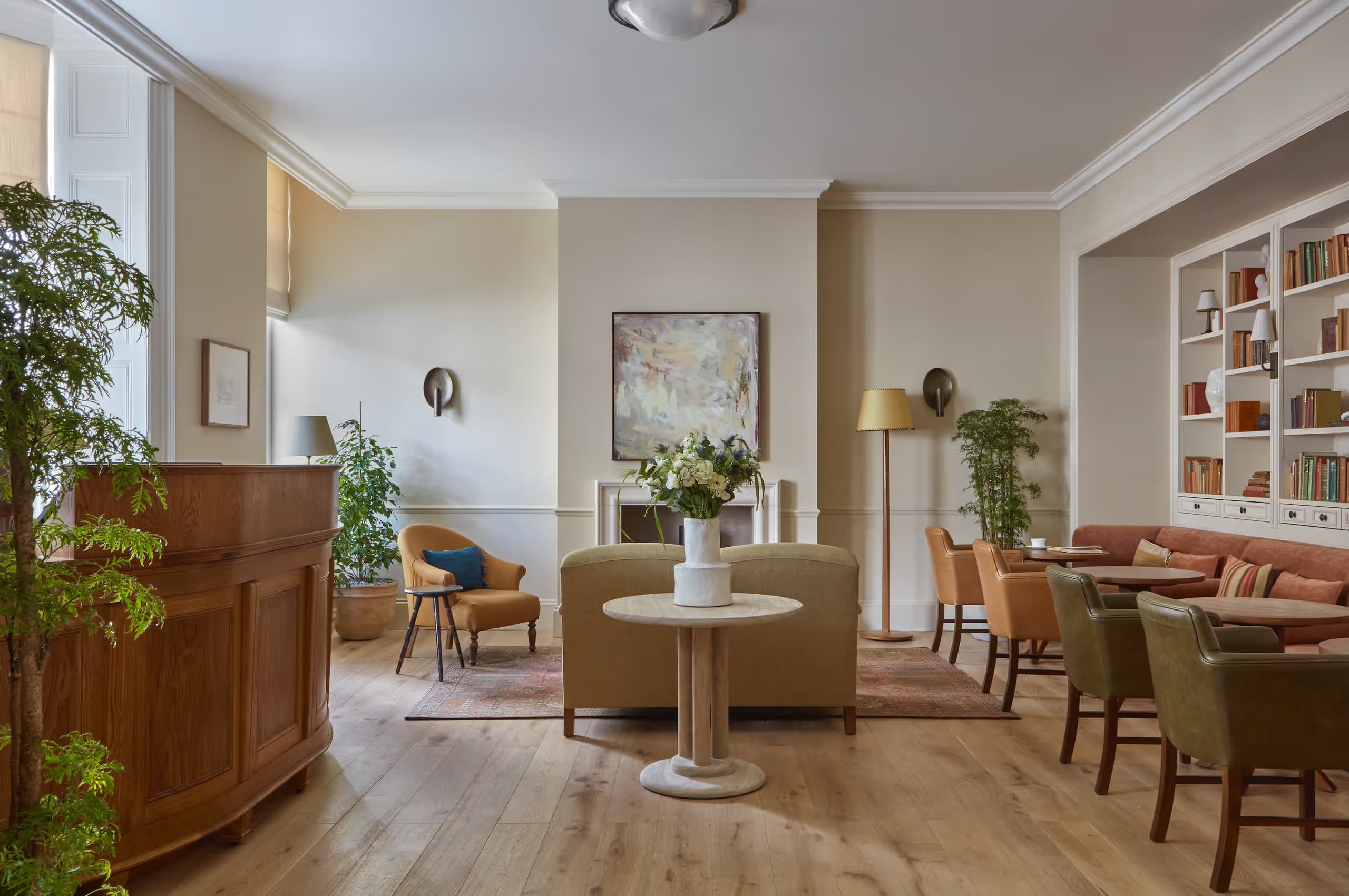
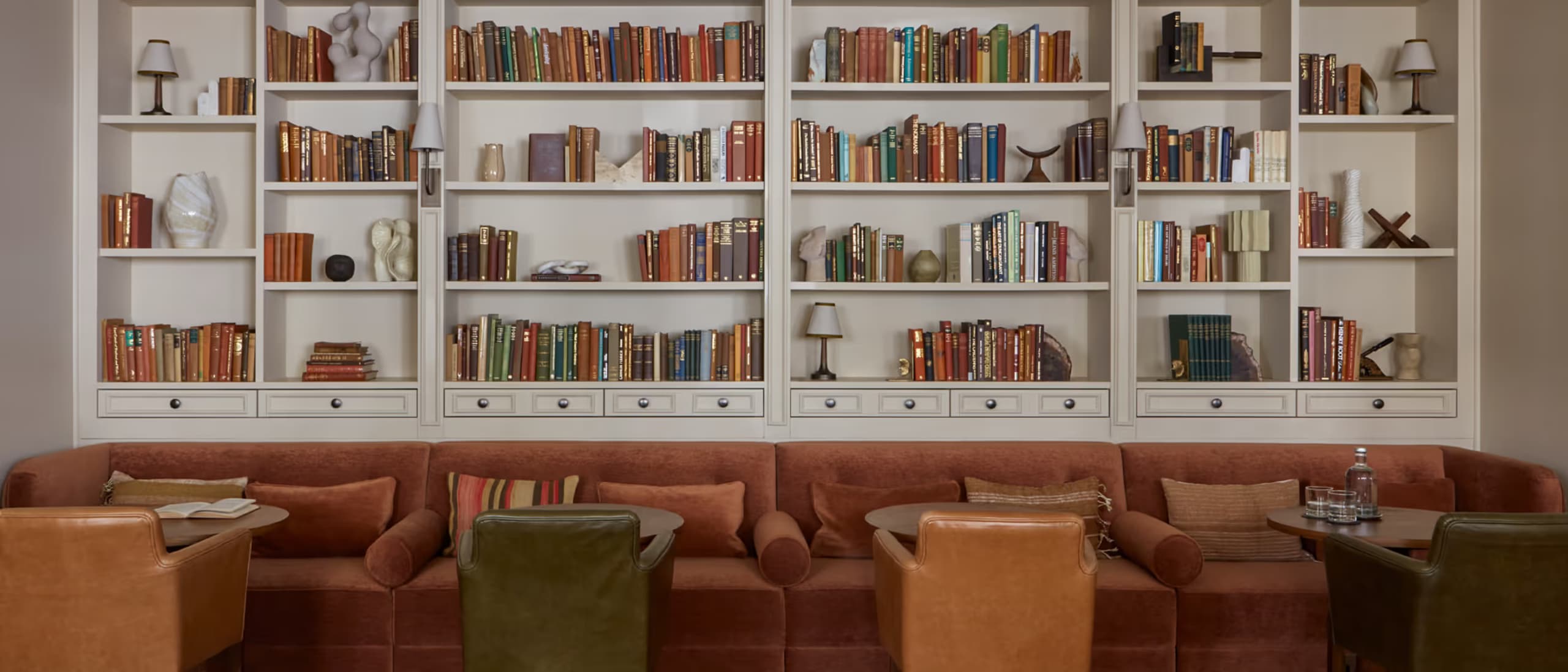
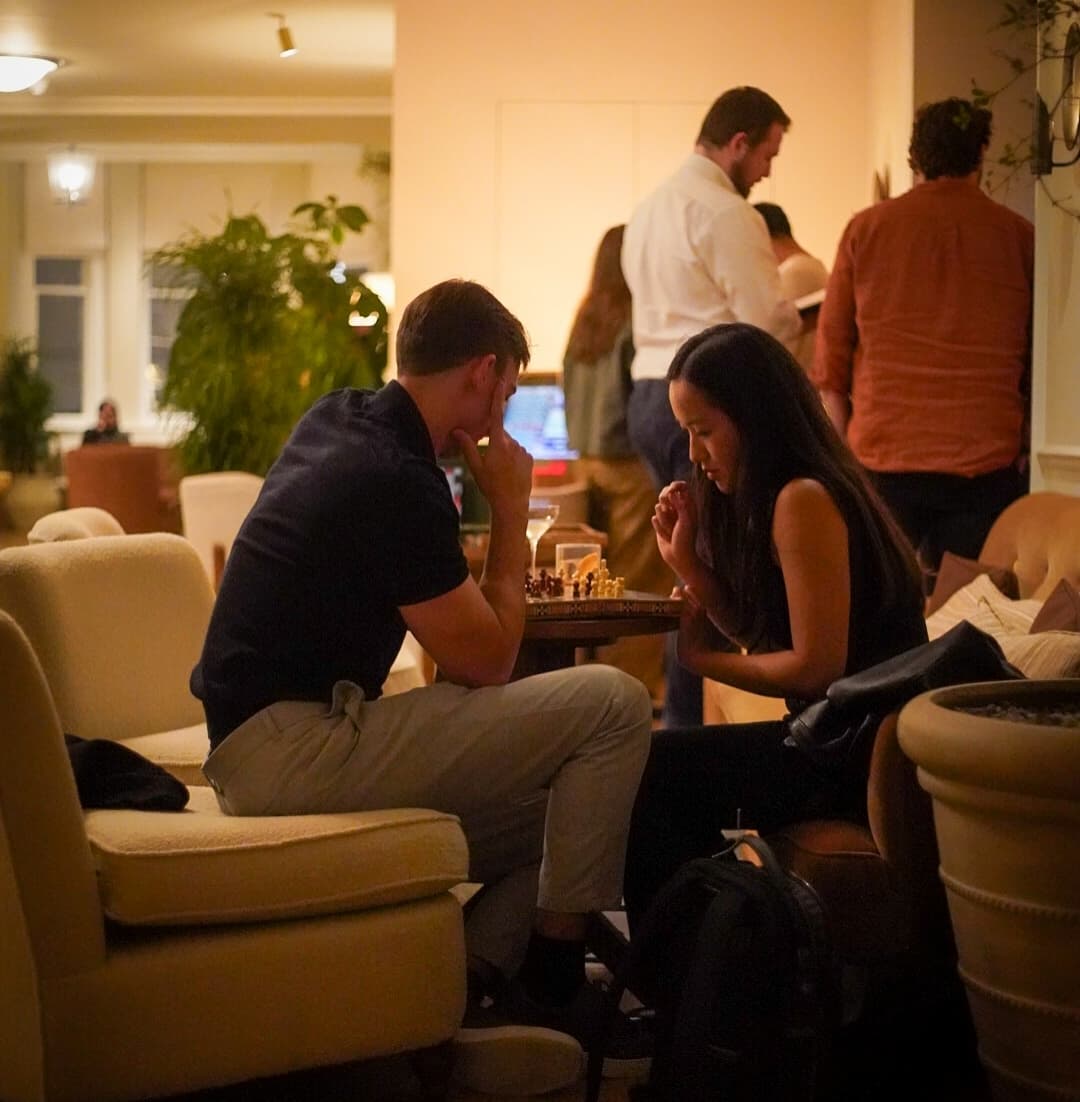
The design is easy and very homelike but elevated and contemporary. That combination is harder to pull off than it sounds, and most hotels that attempt it land somewhere unconvincing. Templeton Garden does not. The ground floor arranges itself as a series of interconnected domestic rooms: drawing rooms, reading corners, a library curated by the writer Raven Smith. There are working fireplaces, plush low-slung velvet seating in dusty rose and warm terracotta, richly grained wooden coffee tables and bookshelves that invite actual browsing. The scent is warm and particular, the lighting considered, the acoustics quiet enough that you notice both.

It feels like a club rather than a hotel: cool and happening without being stiff or self-congratulatory. The kind of place that attracts people who are, frankly, done with large corporate hotels and want something more special, more intimate, more theirs. Locals and visitors sit side by side most mornings, working, reading, occasionally meeting. Nobody moves quickly. A street-facing cafe named Pip's, built out in fluted glass and weathered timber, draws the neighbourhood in as readily as it draws hotel guests. The atmosphere is less members club than someone's very large and well-stocked house in which you happen to be a guest. That is a rarer quality in hotels than it should be.
The Garden at Templeton Garden
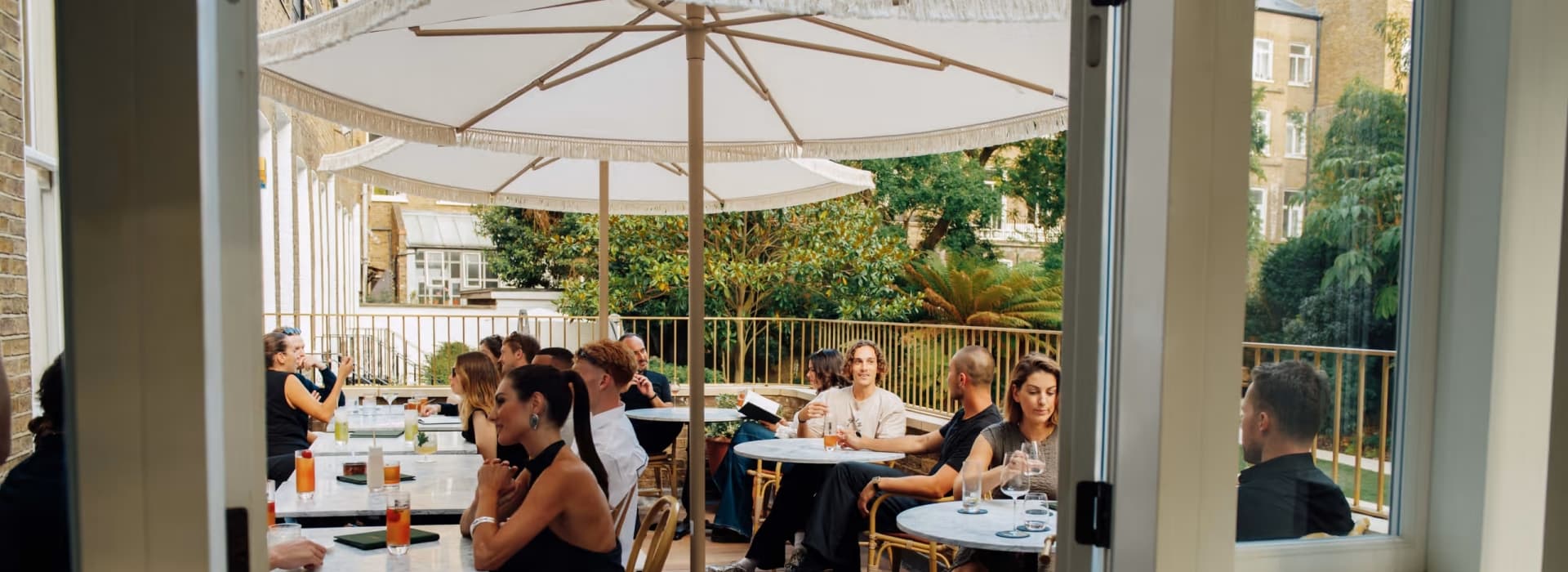
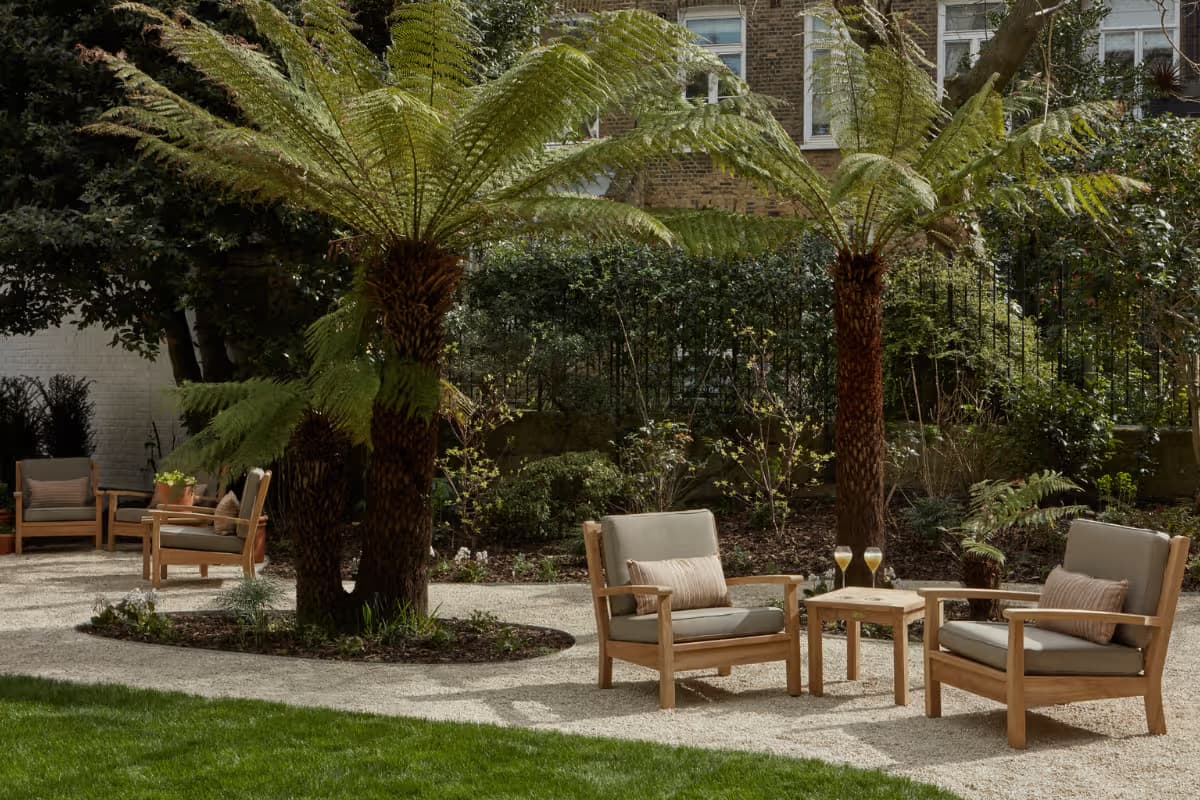
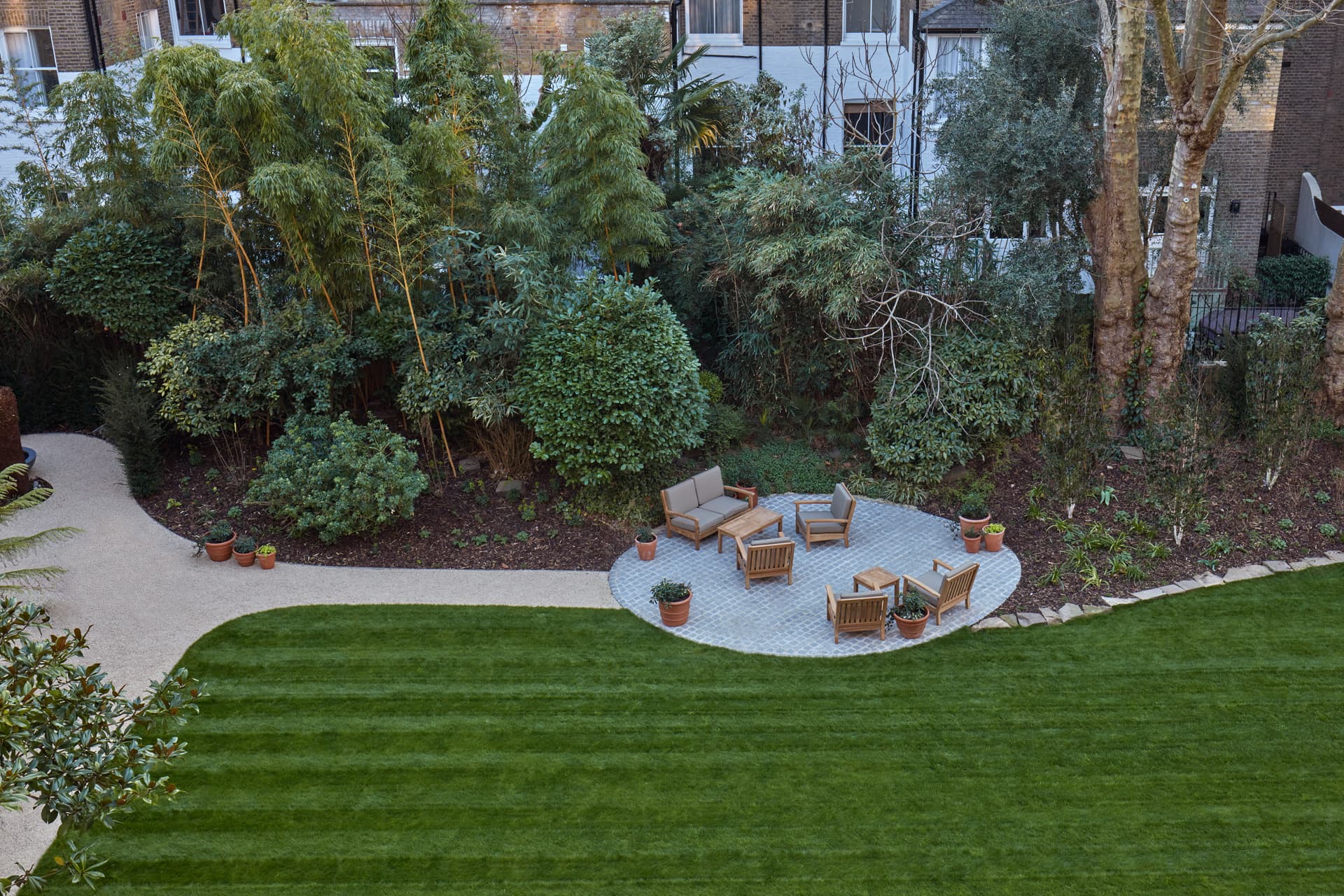
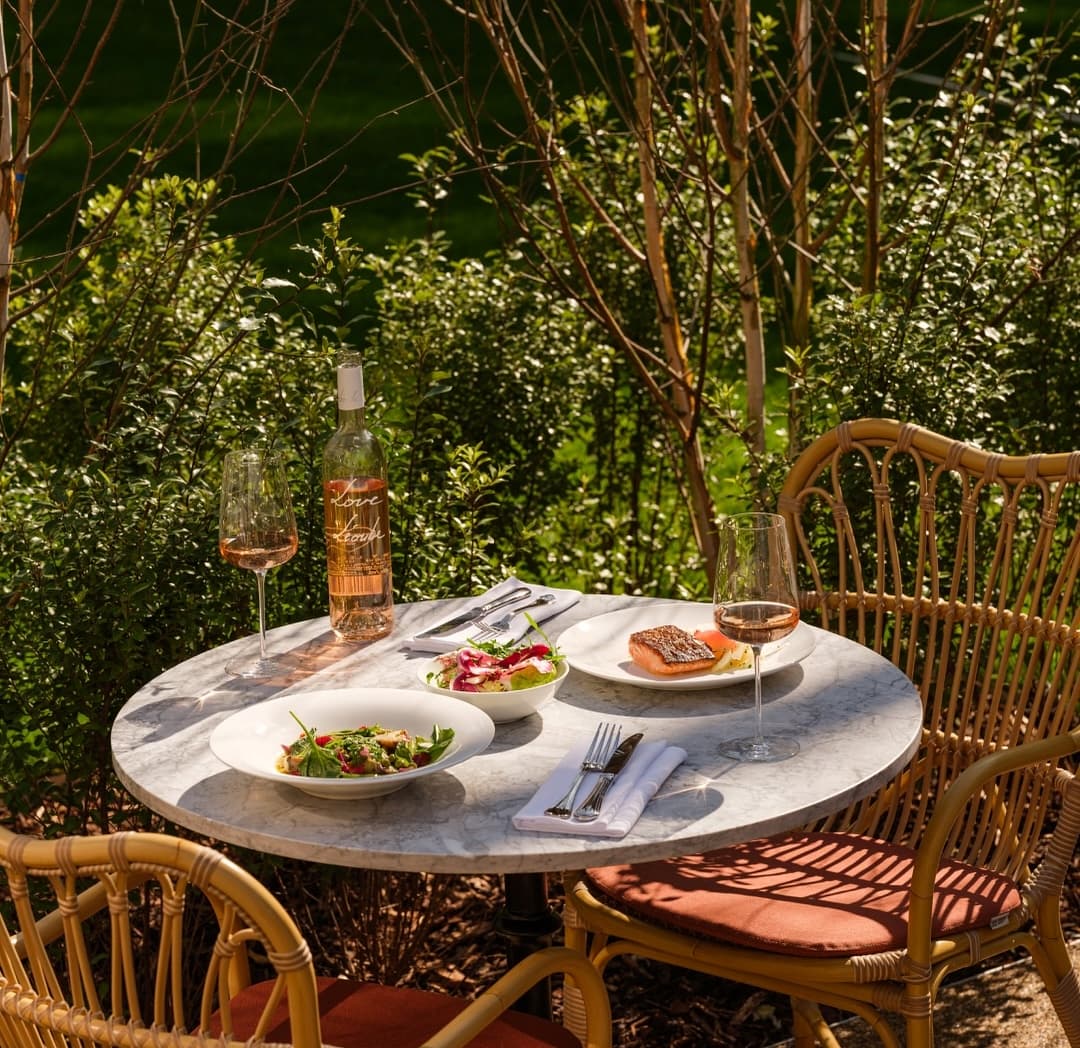
The garden is the thing. In London hospitality terms, a private walled garden of this scale in Kensington and Chelsea is close to unheard of, and the hotel is rightly named for it. Expansive green lawns spread out beneath mature plane trees. Stone paths wind through the planting. Shaded seating alcoves offer space for reading, working or simply sitting without an agenda. A wide flagstone terrace serves as an outdoor extension of the restaurant, arranged with comfortable dining furniture and used year-round for breakfast, lunch and afternoon drinks.

The whole space operates as a green lung in the most literal sense: city traffic noise drops away, the air is noticeably cleaner, the general psychological effect of being surrounded by actual grass and mature trees in the middle of London is surprisingly powerful. Grassy spaces to walk on, patios and lounge areas that are genuinely unusual for a townhouse hotel, and part of what makes Templeton Garden feel like a grand home rather than a place you are merely passing through.

Then there are the rabbits. In spring, the hotel sets up a small area in the garden where guests can step over the rail and spend time with them. It is an unusual touch, slightly whimsical, and it tells you something about the hotel's instincts: this is a property that understands the value of the unexpected and the unhurried. Children become completely transfixed. Adults, if they are honest, are not immune either. There is something about crouching on a lawn in SW5 with a rabbit that has absolutely no interest in your schedule that works on you in ways that are difficult to explain and easy to feel. Fox cubs visit occasionally too, and nobody seems to find any of this particularly out of place. That is the atmosphere the garden creates.
Dogs are welcome throughout the property, pets up to ten kilograms at no charge, with beds and bowls and treats provided. The garden was clearly conceived with them in mind as much as anyone else.

Garden View Rooms and Suites
The rooms continue the residential feeling established throughout the hotel. The palette mirrors the rest of the building: earth tones, natural materials, calming neutrals. Canopy beds soften the modern design and give the spaces warmth and a homely ease. Organic linens and mohair textures handle the comfort. The technology and practical amenities are all present, strong internet, quality televisions, espresso machines, but integrated quietly into the experience rather than dominating it.

Bathrooms are a genuine highlight. Handmade-tiled finishes, rainfall showers and Le Labo toiletries throughout, with freestanding soaking tubs added in the Junior Suites and above. The soaking bath in the suites overlooks the gardens, which gives the room a sense of calm separation from the city outside that is difficult to put a price on and easy to appreciate at length. The street itself is quiet, and the rooms feel it.

The garden-facing rooms are the most sought after. Classic Garden View and Superior rooms look out over the lawns. The Templeton Garden Suites go considerably further: each comes with either a private garden or direct access to the main garden, and the suites themselves have four-poster super-king beds, freestanding soaking baths and generous open-plan seating areas.
Waking up and stepping directly onto your own patch of that walled garden with a coffee is, by most accounts, a difficult thing to go back from. Both the Junior Suites and the Templeton Garden Suites feature four-poster beds, so the choice comes down to how much outdoor space matters to you. For families and groups, five sets of interleading rooms are available in different configurations.
Afterwork Vibe and Cocktail Culture at Sprout 
The bar is called Sprout and it is a focal point for the hotel's social life in the way that good hotel bars used to be before they became either too loud or too precious. The room is noticeably darker and moodier than the lobby, with velvet booths and hand-painted wood panelling, and presiding over all of it is a sculptural oak branch chandelier with bulb lights nested among the limbs like something dragged in from the garden and left to take root. Lively on Friday evenings, when business colleagues, couples and friends gather rather than retreating to their rooms. The music is cool. The atmosphere is relaxed and contemporary. It works best for smaller gatherings, one friend, a date, a few colleagues after work, and the crowd it draws are people who want somewhere with a genuine point of view.

The cocktail menu is built around the philosophy that what is growing, foraged and locally sourced should determine what is in your glass. Fresh ingredients, bold ideas, a touch of playful irreverence: each drink is rooted in seasonality, and it shows. No excessive foam, no smoke, no complexity for its own sake. The focus is on flavour combinations that are interesting and approachable in equal measure, drinks with a little kick that actually taste of something.
The Crystal Mint Grasshopper makes the case well: Cornish peppermint-washed Ocho Tequila with peach amazake and vetiver, finished with a chocolate dusting. It is elegant and slightly unexpected and nothing about it feels forced. Elsewhere on the menu, garden-picked herbs, perfectly ripe fruit and vegetables bursting with flavour tell their own stories: the Marmitini, built on Marmite, vodka and Cornish manuka tea, has become something of a house signature, and the broader list shifts with the seasons in the way a good kitchen menu should.
Dining at Pippin’s

The main restaurant, Pippin's, was conceived as a dining destination for the neighbourhood as much as for hotel guests, and it functions as one. Executive chef Liam Fauchard-Newman leads a kitchen built around seasonal British cooking: market-led, local-producer-focused, refined without being precious. The bar bites and small plates are strong and creative. Spiced shrimp crumpets. Chicken wings topped with King's caviar. Fresh ingredients, bold ideas, a playful irreverence that keeps the menu from taking itself too seriously.

Mains hold the same balance: a wagyu sirloin steak served with chips and your choice of béarnaise, peppercorn or bone marrow sauce sits alongside beer-battered haddock with tartare sauce, chips and mint crushed peas. Serious cooking that knows exactly what it is. Garden-facing windows with French doors open onto the terrace. The mood is unhurried and welcoming to solo diners, long lunches and local regulars in equal measure.
A New Miiro Hotel in London
The Miiro brand, with sister properties in Paris, Barcelona, Gstaad and Vienna, positions itself around boutique lifestyle hotels that embed themselves in their neighbourhoods rather than sitting apart from them. Templeton Garden is the group's UK opening and carries that ethos through to the operational details. The sustainability credentials are substantive: upcycled materials throughout, LED lighting, zero single-use plastics, an EV charging point on site and Green Key certification in progress.

The basement has a 24-hour gym with NOHRD wood-finish equipment, free weights and a stretching area. The concierge team provides customised neighbourhood walking guides for arriving guests. A Refresh Room with shower, lockers and charging stations handles the limbo hours before check-in or after check-out, a detail that anyone who has spent a morning dragging luggage around London will appreciate. High-speed Wi-Fi covers the building and the entire garden. Room rates run from roughly £166 to £290 per night depending on category and season.
A Different Kind of London Hotel
What Templeton Garden has worked out, and what so many London hotels have not, is that the city itself is already overwhelming enough. The job of the hotel is not to add to that intensity but to offer genuine relief from it. Seven Victorian townhouses on a quiet residential street, a garden that feels like it belongs to a private estate, rooms that are calm and considered and genuinely comfortable, a bar where the drinks have a point of view and a restaurant where the cooking takes the neighbourhood seriously. It is confident enough not to need to prove anything.

I started this piece with the exhaustion that London can produce by day two. What Miiro Templeton Garden offers is the answer to that feeling: a place where the city is immediately accessible and just as immediately escapable. You step out, you do London, you come back. The plane trees are still there. So, in all probability, is the fox cub. The pace drops the moment you turn onto Templeton Place, and it stays dropped. That is not a small thing. In a city that rarely lets you go, it is actually quite a significant one.

Glenn Harris
Glenn Harris is an accomplished journalist focusing on luxury travel, fine dining, and exclusive lifestyle events. His wanderlust has taken him to over 128 countries where he constantly strays off the beaten path to uncover exotic locations, travel gems and exciting experiences to capture.